Bruises on Black Skin: A Complete Medical Overview

Bruises occur when small blood vessels under the skin break and blood collects in nearby tissue. On darker skin tones, bruises may appear deep purple, blue-black, brown, gray, dark red or as a subtle area of changed tone.
Key Takeaways
- Bruises occur when small blood vessels under the skin break and blood collects in nearby tissue.
- On darker skin tones, bruises may appear deep purple, blue-black, brown, gray, dark red or as a subtle area of changed tone.
- Pain, tenderness, swelling or a firm area can be important clues when a color change is difficult to see.
- Most minor bruises improve gradually over days to a few weeks, but repeated or unexplained bruising should be evaluated.
- Urgent assessment is important for bruising after a significant injury, bruising with severe symptoms, or bruising alongside unusual bleeding.
Bruises on black skin can be less visibly obvious because higher melanin levels may mask the usual red, blue or purple color changes. Looking for tenderness, swelling, warmth, color changes under good lighting and changes over time can help identify a bruise and determine when medical assessment is needed.
Overview: Why Bruises Can Look Different on Black Skin
Bruises on black skin are caused by the same process as bruises on any skin tone: small blood vessels beneath the skin are damaged, allowing blood to leak into surrounding tissue. However, the visible appearance can be different. Melanin, the pigment that gives skin its color, may make the familiar early red, blue or purple shades less noticeable.
A bruise on dark skin may look dark purple, deep brown, blue-black, gray, dark red, or slightly darker than the surrounding area. In some cases, the main sign is not color but tenderness, swelling, warmth, or a feeling of firmness beneath the skin. Comparing the area with the matching area on the other side of the body may make subtle differences easier to recognize.
Most bruises follow a minor bump, fall, sports activity, injection, blood draw, or pressure on the skin and resolve without specific treatment. Bruising that appears frequently, is unusually large, occurs without a clear reason, or is accompanied by bleeding elsewhere deserves medical attention.
How to Identify a Bruise When Color Changes Are Subtle
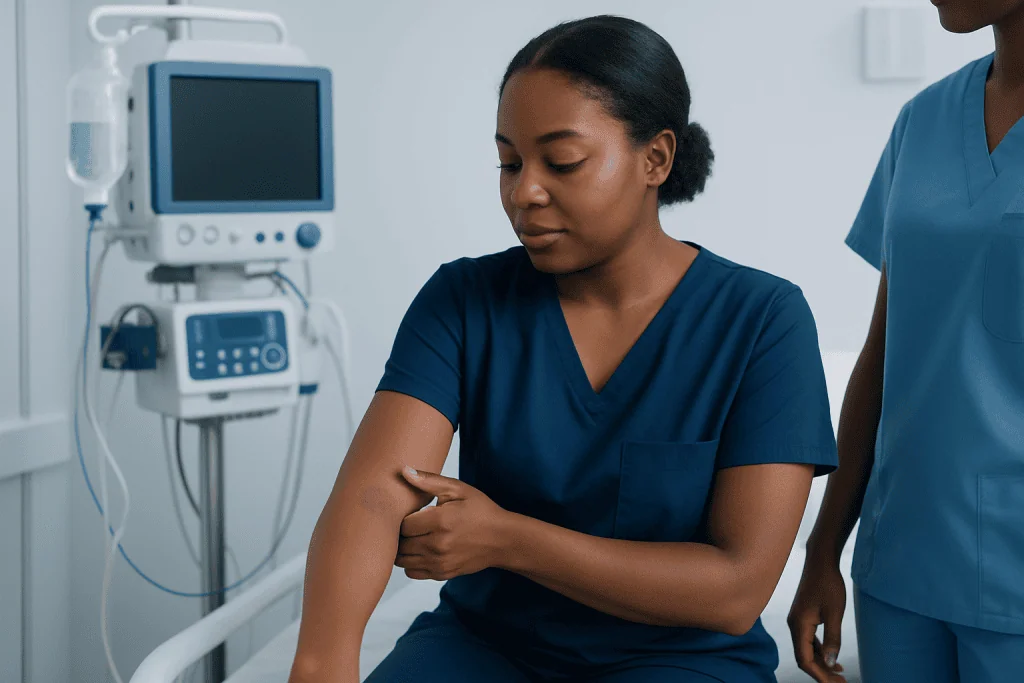
Good observation is often more useful than relying on one expected color. Examine the area in bright natural light or even lighting, rather than dim or strongly colored indoor light. A bruise may appear as an area that is darker, duller, more gray, or differently toned than nearby skin. It may become more visible over the next day or two after an injury.
Touch can provide additional information. A new bruise may be sore when pressed, mildly swollen, or feel like a tender knot. As it heals, tenderness usually decreases and the area may gradually change in shade before returning to the person’s usual skin tone. The timing and pattern of symptoms are important: bruising after a known impact is generally less concerning than repeated bruises with no remembered injury.
It is also helpful to distinguish a bruise from other discoloration. Dark marks that have been present for months, do not hurt, or follow acne, eczema, irritation, or a healed injury may be post-inflammatory hyperpigmentation rather than a bruise. A clinician can assess uncertain skin changes, especially if they are new, spreading, painful, or persistent.
- Check for pain, swelling, warmth, or tenderness in addition to color.
- Compare both sides of the body when possible.
- Take dated photographs in consistent lighting if the change is difficult to monitor.
- Notice whether the mark is improving, stable, enlarging, or joined by new bruises.
What Causes Bruising?

Minor trauma is the most common cause of bruises. Everyday activities can cause small injuries that may not be remembered, including bumping furniture, carrying heavy bags, exercise, or playing contact sports. Older adults may bruise more easily because skin and supporting tissues become thinner and blood vessels more fragile over time.
Some medicines can increase the likelihood or size of bruises by affecting platelets or blood clotting. These include prescribed blood thinners, antiplatelet medicines, and some anti-inflammatory pain medicines. Certain supplements may also affect bleeding risk. A person should not stop prescribed medication because of bruising without speaking with the clinician who prescribed it.
Less commonly, easy or unexplained bruising can be related to low platelet counts, clotting disorders, liver disease, nutritional deficiency, inflammation of blood vessels, or other medical conditions. Anemia does not usually cause bruising on its own, but related nutritional concerns or blood conditions may need assessment when a person has fatigue, pallor, frequent bruises, or other symptoms.
Children commonly develop bruises as they learn to walk and play. The location, pattern, developmental stage and explanation for an injury all matter. Caregivers who are concerned about unexplained, frequent, or unusual bruising in a child should arrange a prompt pediatric evaluation.
What Happens as a Bruise Heals
A bruise often changes over time as the body breaks down and reabsorbs the blood beneath the skin. On black skin, these transitions may not follow the familiar color sequence often described for lighter skin. The mark may simply become less tender and less distinct, with a gradual shift from a dark area toward the person’s baseline tone.
Small superficial bruises often improve within about two weeks, although larger or deeper bruises can take longer. A deep muscle bruise may cause more pain, stiffness, and swelling than a surface bruise. Bruising near the eye, around a joint, or under a nail can look concerning but should still be assessed if it follows a substantial injury or affects vision, movement, or sensation.
In some people with darker skin, a bruise or injury can leave temporary darkening after it has healed. This is known as post-inflammatory hyperpigmentation. It is not active bleeding under the skin, and it often fades gradually, though the process can take time. Persistent or changing pigmentation should be reviewed if there is uncertainty about its cause.
Diagnosis and Medical Evaluation
A clinician will usually begin by asking when bruises started, where they occur, whether an injury was noticed, and whether there are symptoms such as nosebleeds, bleeding gums, heavy menstrual bleeding, blood in urine or stool, fever, weight change, or fatigue. They will also ask about prescription medicines, over-the-counter medicines, supplements, alcohol use, diet, and family history of bleeding problems.
The examination may include looking at the skin in appropriate lighting and checking for swelling, joint injury, enlarged lymph nodes, or signs of illness elsewhere in the body. If clinically indicated, blood tests may check blood cell counts, platelet levels, clotting function, liver function, or nutritional status. The tests selected depend on the person’s symptoms and medical history.
Imaging is not needed for most uncomplicated bruises. It may be considered after a more significant injury, when a fracture, internal bleeding, muscle tear, or head injury is suspected. Assessment is tailored to the individual rather than based on skin color alone.
Care at Home and Reducing Further Bruising
For a minor, recent bruise, rest and protecting the area can reduce discomfort. A wrapped cold pack may be applied briefly at intervals during the first day or two, taking care not to place ice directly on the skin. Elevating an injured arm or leg when practical may help limit swelling. After the initial phase, gentle movement may be appropriate if it does not increase pain.
It is best to avoid vigorous massage of a new bruise, as this may worsen tissue irritation. A pharmacist or clinician can advise on appropriate pain relief, particularly for people who take blood thinners or have a bleeding condition. Anyone using anticoagulant or antiplatelet medication should report new, frequent, or unusually large bruises to their healthcare team.
Prevention focuses on reducing avoidable injury. Supportive footwear, adequate lighting at home, protective equipment for sports, and reviewing fall risks can all be useful. Nutritious eating that includes adequate protein, fruits, vegetables and other varied foods supports general health, but supplements should not be used to self-treat unexplained bruising without medical advice.
If bruising affects confidence or leaves persistent discoloration, a dermatologist can help distinguish a healing bruise from pigment change or another skin condition. Treatment should be based on an accurate diagnosis rather than on appearance alone.
When to Seek Medical Care
Medical care is appropriate for bruises that occur repeatedly without a known injury, become unusually large, do not start improving, or appear along with other bleeding symptoms. A clinician should also review new bruising after starting a medicine or supplement that may affect clotting. Keeping a record of when bruises appear and taking clear photographs can support the consultation.
Urgent medical assessment is needed after a head injury, particularly if there is loss of consciousness, worsening headache, repeated vomiting, confusion, weakness, seizure, or unusual sleepiness. Urgent care is also important for a rapidly enlarging painful bruise, severe swelling, inability to use a limb, bruising after a major accident, or any concern for internal bleeding.
People taking blood-thinning medicines should seek prompt advice after significant trauma, even if there is little visible bruising. Acibadem International’s multidisciplinary specialists and JCI-accredited hospitals diagnose and treat bleeding-related concerns and injuries for international patients when specialist assessment is needed.
Frequently asked questions
What color do bruises look like on black skin?
Bruises on black skin may appear dark purple, blue-black, deep brown, gray, dark red, or simply darker than the surrounding skin. Some bruises have little obvious color change, especially early on. Tenderness, swelling and a change in skin texture can be useful additional signs.
Why do I have a bruise but cannot see it clearly?
Higher melanin levels can make the color changes caused by blood under the skin less visible. The bruise may be easier to notice in bright, even lighting or by comparing it with the same area on the opposite side of the body. Pain or swelling may be present before a clear mark is visible.
Can bruises leave dark marks on black skin?
Yes. After an injury heals, some people develop post-inflammatory hyperpigmentation, which is a darker area of skin left by inflammation or injury. This is different from an active bruise and usually fades gradually, although it can take time. A dermatologist can assess marks that persist, change, or cause concern.
When is unexplained bruising a concern?
Unexplained bruising should be assessed when it is frequent, large, widespread, or accompanied by nosebleeds, bleeding gums, heavy menstrual bleeding, fatigue, fever, or weight loss. It is also important to seek advice if bruising begins after a medication or supplement change. A clinician can decide whether blood tests or other evaluation are needed.
How long should a bruise take to heal?
Many minor bruises improve over one to two weeks, although deeper or larger bruises can take longer. On dark skin, improvement may be noticed more through reduced pain and swelling than through dramatic color changes. A bruise that enlarges, remains painful, or does not improve should be reviewed.
Should someone taking blood thinners worry about bruises?
Blood-thinning medicines can make bruising more likely or more noticeable, but they should not be stopped without medical guidance. New, frequent, very large, or painful bruises should be reported to the prescribing clinician. Urgent assessment is needed after a significant fall, head injury, or accident.
References
- American Academy of Dermatology Association
- National Heart, Lung, and Blood Institute
- MedlinePlus, U.S. National Library of Medicine
- NHS
- Mayo Clinic
This article is for general information only and is not a substitute for professional medical advice. Please consult a qualified doctor about your individual situation.
Explore treatments in Turkey — costs, top hospitals & a free quote
JCI-accredited · board-certified surgeons · reply within 24h
Add us as a Preferred Source to see more of our trusted health content across Google Search, AI Overviews and Discover.

More from the Health Library

Epispadias: What Patients Need to Know

Tetralogy of Fallot: What Patients Need to Know

Neomycin — Explained by Medical Evidence, Not Myths

GERD and Anxiety — Explained by Medical Evidence, Not Myths

Cat Cow Stretch — Explained by Medical Evidence, Not Myths