

Buck Teeth: An Evidence-Based Guide for Patients

Buck teeth is a common everyday term, not a formal diagnosis; dentists often assess overjet, bite alignment, and jaw position. Causes can include genetics, thumb sucking, prolonged pacifier use, mouth breathing, missing teeth, and jaw growth patterns.
Key Takeaways
- Buck teeth is a common everyday term, not a formal diagnosis; dentists often assess overjet, bite alignment, and jaw position.
- Causes can include genetics, thumb sucking, prolonged pacifier use, mouth breathing, missing teeth, and jaw growth patterns.
- Treatment may involve monitoring, habit correction, braces, clear aligners, growth-guidance appliances, or sometimes jaw surgery.
- Early dental or orthodontic assessment can help identify problems while a child is still growing.
- Medical or dental review is important if protruding teeth cause trauma, speech problems, chewing difficulty, or concerns about sleep and breathing.
Buck teeth usually refers to upper front teeth that stick out more than expected, often because of an increased overjet or related bite problem. In many cases it can be improved with orthodontic care, and treatment is guided by the cause, age, dental health, and how much the bite affects function or appearance.
Overview: what buck teeth means
Buck teeth is a common, non-medical term people use when the upper front teeth appear to stick out. In dental practice, this may reflect an increased overjet, which means there is a greater horizontal distance between the upper and lower front teeth. Sometimes the appearance is mainly due to the position of the teeth; in other cases, the upper and lower jaws are also involved.
This distinction matters because treatment is not the same for every person. Some people have healthy teeth and gums with only a mild cosmetic concern, while others have a bite problem that affects chewing, lip closure, speech, or the risk of tooth injury. A dentist or orthodontist looks at the teeth, bite, jaw growth, and oral habits to understand the full picture.
Buck teeth can occur in both children and adults. They are often treatable, and in growing children there may be opportunities to guide development as the mouth and jaws mature. For adults, treatment usually focuses on moving the teeth into a healthier, more balanced position and, when necessary, correcting jaw alignment.
Signs, symptoms, and possible effects
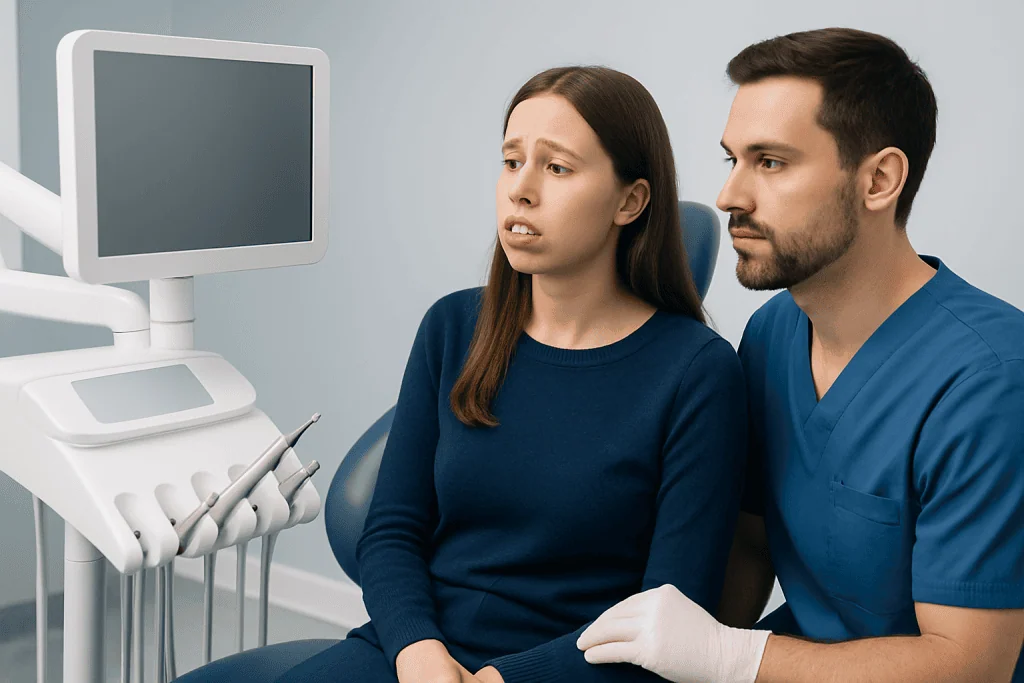
Many people with buck teeth notice the appearance first, especially when smiling or resting the lips. The upper front teeth may project forward, the lips may not close comfortably, or the front teeth may be more visible at rest. Some individuals have no symptoms beyond appearance, while others have a noticeable bite problem.
Functional effects can include difficulty biting into foods, altered chewing patterns, and speech differences with certain sounds. Protruding front teeth may also be more likely to chip or become injured during falls, sports, or everyday accidents. In some cases, the lower lip rests behind the upper front teeth and can reinforce the forward position over time.
Other signs may point to a broader orthodontic issue. These include crowding, spacing, mouth breathing, frequent lip strain when closing the mouth, or jaw mismatch. If the bite problem is more complex, it may overlap with other alignment concerns such as crossbite or underbite, which can affect how the teeth meet and how the jaws function.
Causes and risk factors
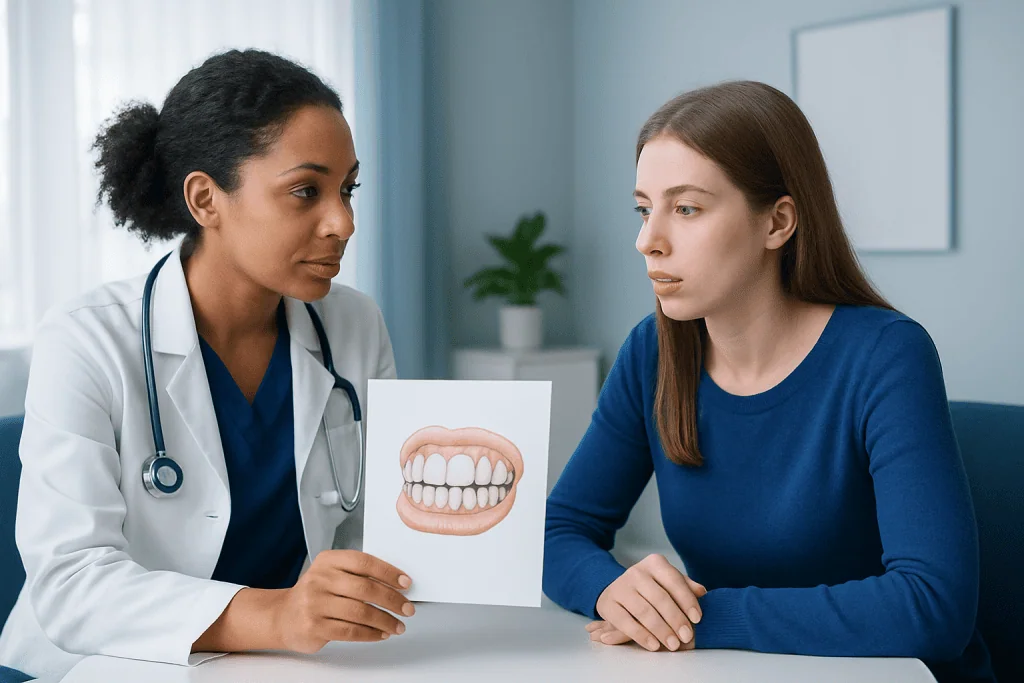
Buck teeth can develop for several reasons, and often more than one factor is involved. Genetics plays a major role. A person may inherit tooth size, jaw shape, or growth patterns that make the upper teeth look more prominent or create a mismatch between the upper and lower jaws.
Childhood habits can also contribute. Thumb sucking, prolonged pacifier use, and tongue thrusting may push the upper front teeth forward or influence jaw development if they continue beyond the toddler years. Mouth breathing, especially when linked to chronic nasal obstruction or enlarged adenoids, can affect tongue posture and facial growth in some children.
Dental factors matter too. Premature loss of baby teeth, missing permanent teeth, crowding, and gum disease in adults can change tooth position. In some cases, the upper teeth are truly protrusive; in others, the lower jaw sits farther back, which makes the upper teeth appear more prominent even if they are not excessively forward.
Because the causes vary, a careful assessment is important. What looks like the same problem in a mirror may be caused by teeth, jaws, habits, airway issues, or a combination of these. Identifying the underlying reason helps the clinician recommend the most suitable and lasting treatment plan.
How dentists and orthodontists diagnose buck teeth
Diagnosis starts with a clinical examination. A dentist or orthodontist checks how far the upper front teeth project, how the upper and lower teeth meet, whether the lips close easily, and whether there are signs of wear, crowding, gum problems, or tooth trauma. They will also ask about oral habits, breathing pattern, sleep symptoms, and family history.
In children and teenagers, growth stage is especially important because it can influence treatment timing. The clinician may assess jaw development and whether there is still an opportunity to guide growth. In adults, evaluation focuses more on dental alignment, gum support, jaw relationship, and whether bite correction can be achieved with tooth movement alone.
Dental records are often used to plan treatment. These may include photographs, impressions or digital scans, and X-rays such as panoramic or cephalometric images. The goal is not just to label the appearance as buck teeth, but to measure the bite accurately, understand the cause, and build a safe, individualized plan.
Treatment options and what they aim to correct
Treatment depends on severity, age, cause, and the person’s goals. Mild cases may only need observation, especially if the bite is functional and the person is not bothered by appearance. If habits such as thumb sucking or tongue thrusting are contributing, habit correction is an important first step because teeth can move back toward an unhealthy position if the driving factor continues.
Orthodontic treatment is the main approach for many patients. This may involve orthodontic treatment with braces or, in selected cases, clear aligners to move the teeth into a more balanced position. Some children benefit from appliances that help guide jaw growth or reduce overjet while they are still developing. The right option depends on whether the problem is primarily dental, skeletal, or both.
In more complex cases, treatment may include making space by expanding the dental arches or, less commonly, removing certain teeth if crowding and protrusion are significant. Adults with marked jaw mismatch may be evaluated for combined orthodontic and jaw correction surgery treatment when tooth movement alone cannot produce a stable, functional bite.
Good treatment planning also considers gum health, tooth roots, jaw joints, and long-term stability. The aim is not only to improve appearance, but also to protect the teeth, support healthy chewing and speech, and create a bite that is easier to maintain over time.
Prevention, early care, and self-care
Not all cases of buck teeth can be prevented, especially when genetics is the main cause. Even so, early attention to oral habits can reduce risk. Parents can seek advice if thumb sucking, pacifier use, or mouth breathing continues beyond the expected age. Regular dental visits help identify changes in bite as the child grows.
Children do not always need immediate treatment, but timely assessment can be helpful. Many professional groups recommend that children have an orthodontic evaluation by around age 7 if there are concerns about bite, facial growth, or protruding front teeth. This does not mean treatment always starts then; it means a specialist can decide whether to monitor or intervene at the most appropriate time.
For adults and children alike, self-care supports better outcomes. This includes careful brushing and flossing, using a mouthguard during sports if the front teeth are prominent, and following professional guidance during orthodontic treatment. If nasal blockage or mouth breathing is an ongoing problem, a medical review may be advised because addressing the underlying issue can support oral health and development.
When to seek medical care
It is reasonable to seek dental or orthodontic advice if buck teeth are causing concern about appearance, biting, or comfort. An assessment is especially important if the front teeth are at risk of injury, the lips do not close comfortably, or there is trouble chewing or pronouncing certain sounds. Children with persistent thumb sucking, mouth breathing, or a noticeably protrusive bite should also be evaluated.
Medical review may be helpful if protruding teeth occur alongside symptoms such as chronic nasal obstruction, snoring, restless sleep, or daytime mouth breathing, because these can point to airway or ENT concerns. Prompt dental attention is also needed after any trauma to the front teeth, or if there is pain, loose teeth, or bleeding gums.
Most cases are not emergencies, but early assessment can make treatment planning easier and may reduce the chance of complications. Near the end of the care journey, some patients may choose multidisciplinary evaluation. Acibadem International’s specialists in dentistry, orthodontics, maxillofacial surgery, and related fields at JCI-accredited hospitals diagnose and treat patients traveling from abroad when coordinated care is needed.
Frequently asked questions
Are buck teeth the same as an overbite?
Not exactly. People often use the term buck teeth for upper front teeth that stick out, while dentists may describe this as increased overjet. An overbite usually refers to how much the upper front teeth vertically overlap the lower front teeth.
Can buck teeth correct themselves as a child grows?
Some mild alignment changes improve as children develop, but not all do. If the front teeth are clearly protruding, especially with habits like thumb sucking or mouth breathing, an early dental or orthodontic check is sensible. A specialist can decide whether monitoring is enough or whether early treatment may help.
Do adults with buck teeth still have treatment options?
Yes. Adults can often be treated effectively with braces or clear aligners, depending on the cause and the condition of the teeth and gums. If the problem is mainly related to jaw position, a specialist may discuss whether combined orthodontic and surgical treatment is appropriate.
Are buck teeth only a cosmetic issue?
No. In some people the main concern is appearance, but protruding teeth can also increase the risk of dental injury and may affect biting, speech, or lip closure. Treatment decisions usually consider both function and appearance.
What causes buck teeth in children?
Common causes include inherited jaw and tooth patterns, thumb sucking, prolonged pacifier use, tongue thrusting, and mouth breathing. Sometimes more than one factor is involved. A dentist or orthodontist can help identify which influences are most important in a particular child.
When should someone see a dentist or orthodontist for buck teeth?
An evaluation is a good idea if the teeth are noticeably protruding, if there is teasing or self-consciousness, or if the bite affects eating or speech. Review is also important if the front teeth have been injured, if lips do not close comfortably, or if there are signs of chronic mouth breathing or sleep-related problems.
References
- American Association of Orthodontists
- American Dental Association
- National Institute of Dental and Craniofacial Research
- NHS
- World Health Organization
This article is for general information only and is not a substitute for professional medical advice. Please consult a qualified doctor about your individual situation.
Explore treatments in Turkey — costs, top hospitals & a free quote
JCI-accredited · board-certified surgeons · reply within 24h
Add us as a Preferred Source to see more of our trusted health content across Google Search, AI Overviews and Discover.

More from the Health Library

Non Comedogene: An Evidence-Based Guide for Patients

Skin Turgor: An Evidence-Based Guide for Patients

Actinomyces: What Patients Need to Know

Aripiprazole: A Complete Medical Overview

Schizencephaly — Explained by Medical Evidence, Not Myths

Saccharomyces Boulardii Probiotics — Explained by Medical Evidence, Not Myths
Oral & Dental Health Specialists at Acibadem

Dt. Akif Aydın Şen
Oral & Dental Health
Dt. Alara Güler
Oral & Dental Health
Dt. Alara Naz Kenir Çelik
Oral & Dental Health
Dr. Alen Palancıoğlu
Oral Dental & Maxillofacial Surgery