Schizencephaly — Explained by Medical Evidence, Not Myths

Schizencephaly develops before birth and is not caused by a person's behavior, parenting, or everyday activities. The condition may affect one side or both sides of the brain, and symptoms depend largely on the clefts' size and location.
Key Takeaways
- Schizencephaly develops before birth and is not caused by a person's behavior, parenting, or everyday activities.
- The condition may affect one side or both sides of the brain, and symptoms depend largely on the clefts' size and location.
- Seizures, delayed development, muscle stiffness or weakness, and difficulties with movement are common reasons for assessment.
- MRI is the main imaging test used to confirm schizencephaly and distinguish it from other brain conditions.
- Treatment focuses on each person's needs and may include seizure medicines, rehabilitation therapies, educational support, and occasionally surgery.
Schizencephaly is a rare brain malformation present from birth, in which one or more clefts extend through part of the brain and are lined with gray matter. Its effects vary widely: some people have mild difficulties, while others need ongoing support for seizures, movement, learning, feeding, or development.
What is schizencephaly?
Schizencephaly is a rare congenital malformation of the brain, meaning it develops before birth. It involves one or more clefts, or channels, within a cerebral hemisphere. These clefts extend from the surface of the brain toward the fluid-filled spaces inside it, called ventricles, and are characteristically lined by gray matter, the brain tissue involved in processing information.
The word “schizencephaly” can sound concerning, but it does not describe a mental health condition or a split personality. It is a structural difference in brain development. The outlook is highly individual: some people have relatively mild symptoms and live independently, while others have more significant developmental, physical, or seizure-related needs.
Symptoms depend on the location, size, and number of clefts, as well as on other brain differences that may occur alongside schizencephaly. Care is therefore tailored to the individual rather than determined by the diagnosis name alone. Early assessment and ongoing developmental support can help a child or adult reach their best possible level of function.
Types and how they can affect the brain
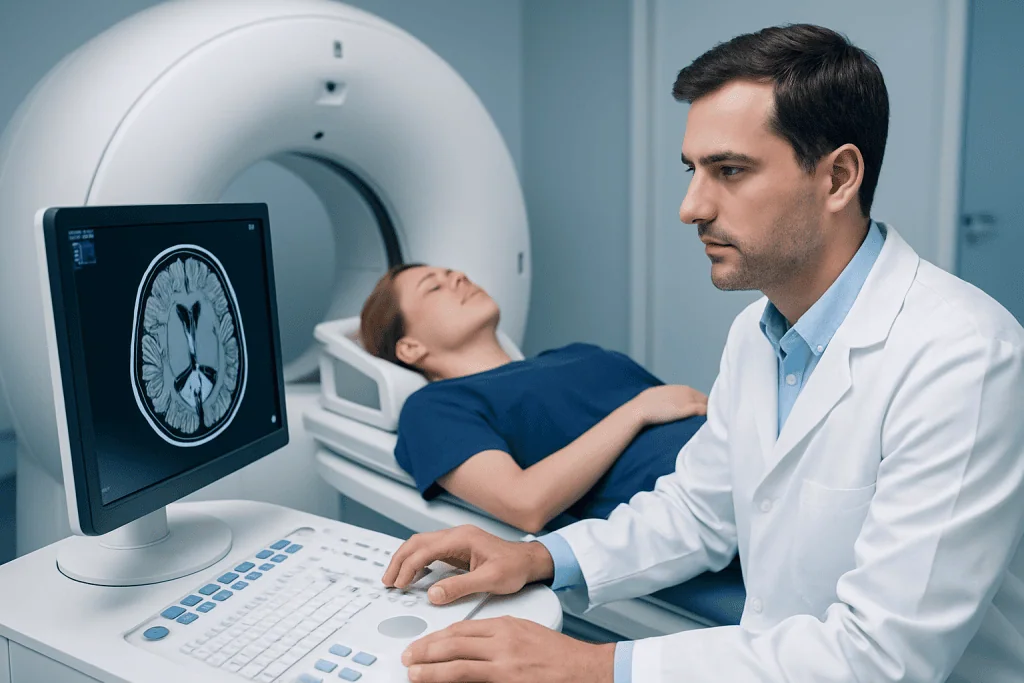
Doctors commonly describe schizencephaly according to the appearance of the cleft on brain imaging. In closed-lip schizencephaly, the sides of the cleft are close together or touching. In open-lip schizencephaly, the sides are separated and cerebrospinal fluid fills the space between them. Either type may occur on one side of the brain, called unilateral schizencephaly, or on both sides, called bilateral schizencephaly.
In general, a small cleft affecting one side of the brain may cause milder difficulties than larger or bilateral clefts. However, imaging findings cannot predict every person’s abilities. The brain’s capacity to adapt, the presence of associated conditions, access to therapy, and individual development all influence daily functioning.
Schizencephaly may occur with other differences in brain formation. These can include an absent or underdeveloped septum pellucidum, changes in the corpus callosum, polymicrogyria, or enlargement of the ventricles. A specialist reviews the full MRI scan rather than focusing on the cleft alone, because associated findings can help guide monitoring and support.
Possible symptoms at different ages

Schizencephaly is often identified in infancy or childhood because of developmental concerns, seizures, unusual muscle tone, or differences in movement. Some cases are found before birth during detailed prenatal imaging, while others are not recognized until later in childhood or adulthood, particularly when symptoms are mild.
Possible features include delayed sitting, crawling, walking, speech, or learning; weakness on one side of the body; poor coordination; muscle stiffness; involuntary movements; and difficulty with balance. A child with a cleft affecting one side of the brain may have weakness or increased muscle tone on the opposite side of the body. More extensive bilateral involvement may be associated with broader movement and developmental challenges.
Seizures can occur at any age and may vary in appearance. They may involve staring episodes, unusual repetitive movements, loss of awareness, stiffening, jerking, or changes in behavior. Some children also have feeding, swallowing, vision, hearing, or communication difficulties. Not every person with schizencephaly will have all of these symptoms, and symptom severity can change over time.
Causes and risk factors: what medical evidence shows
Schizencephaly results from an interruption in early brain development, but the exact cause is not identified in many cases. Current medical evidence suggests that it can arise through a combination of genetic and non-genetic factors. In a small number of families, changes in genes involved in brain development may contribute, although most cases are not inherited in a straightforward pattern.
Researchers have also considered events that affect blood flow or cause injury to the developing brain during pregnancy. Certain congenital infections and other prenatal exposures may be relevant in selected cases. Importantly, having a potential association does not prove that it caused an individual child’s condition. Families should not assume that a routine activity, stress, work, exercise, or something they did during pregnancy caused schizencephaly.
A clinical genetics consultation may be helpful when there are additional congenital differences, a family history of neurological conditions, or questions about future pregnancies. Genetic testing is not necessary for every person, but a specialist can explain whether it may provide useful information. Genetic counseling can also discuss what is known, what remains uncertain, and the limits of testing.
How schizencephaly is diagnosed
Magnetic resonance imaging, or MRI, is the primary test used to diagnose schizencephaly. MRI gives detailed pictures of brain structures and can show the defining gray-matter lining of the cleft. This detail helps distinguish schizencephaly from conditions that may look similar on other imaging tests, such as porencephaly, which is usually caused by a cavity from earlier brain injury and does not have the same gray-matter lining.
Before or after imaging, clinicians take a careful medical and developmental history and perform a neurological examination. They assess muscle tone, strength, reflexes, coordination, vision, hearing, growth, communication, and developmental milestones. Depending on symptoms, the care team may recommend an electroencephalogram (EEG) to evaluate suspected seizures, as well as hearing, vision, feeding, or swallowing assessments.
When schizencephaly is detected during pregnancy, fetal medicine, pediatric neurology, radiology, genetics, and neonatal specialists may help families understand the findings and prepare a care plan. Prenatal imaging can provide valuable information, but it may not fully predict a child’s future abilities. Follow-up assessment after birth remains important.
Treatment and day-to-day support
There is no single treatment that closes or reverses the brain cleft. Instead, treatment addresses symptoms, supports development, and helps prevent complications. A pediatric neurologist or neurologist may coordinate care with rehabilitation specialists, therapists, developmental professionals, neurosurgeons, nurses, educators, and other clinicians as needed.
If seizures occur, antiseizure medicines may be used and adjusted according to the seizure type, treatment response, and possible side effects. Families should seek medical advice before changing or stopping any seizure medicine. An EEG and regular clinical review can help the medical team decide whether treatment is working and whether further evaluation is needed.
Physical therapy can support mobility, posture, strength, and safe movement. Occupational therapy may help with everyday skills, hand use, play, and independence, while speech and language therapy can address communication and feeding concerns. Orthoses, mobility devices, adapted seating, and individualized educational plans may also be useful. In selected cases, surgery may be considered for complications such as hydrocephalus or seizures that remain difficult to control despite appropriate treatment.
Acibadem International’s multidisciplinary specialists and JCI-accredited hospitals can assess and treat neurological conditions such as schizencephaly for international patients, with care plans guided by the individual’s clinical needs.
Family care, monitoring and when to seek medical care
Regular follow-up helps clinicians identify changing needs early. Appointments may monitor seizure control, movement, growth, feeding, sleep, learning, behavior, communication, and emotional well-being. Parents and caregivers may find it useful to keep a short record of possible seizure events, developmental changes, medicines, therapy goals, and questions for appointments.
At home, consistent routines, age-appropriate activity, safe opportunities for play and participation, and school support can be valuable. Caregivers should follow individualized advice about positioning, mobility equipment, feeding, and seizure first aid. Support groups, social workers, and mental health professionals may also help families manage practical and emotional aspects of long-term care.
Medical care should be sought promptly for a first suspected seizure, a seizure that is different from usual, repeated seizures without recovery between them, breathing difficulty, blue or gray coloring, serious injury, sudden severe headache, persistent vomiting, marked drowsiness, or a new loss of skills. Emergency services should be contacted for a seizure lasting five minutes or longer, unless the person’s clinician has provided a different individualized emergency plan. For less urgent concerns, such as new stiffness, worsening balance, feeding difficulties, school problems, or developmental regression, families should arrange review with a qualified doctor.
Frequently asked questions
Is schizencephaly a form of cerebral palsy?
Schizencephaly and cerebral palsy are not the same diagnosis. Schizencephaly is a structural brain malformation that develops before birth, while cerebral palsy describes a group of movement and posture disorders caused by an early brain disturbance. Some people with schizencephaly may have movement patterns that are diagnosed as cerebral palsy.
Can schizencephaly be cured?
The brain cleft itself cannot currently be removed or repaired with a cure. However, many symptoms can be treated or supported through seizure management, therapies, educational planning, mobility support, and treatment of related complications. Needs and goals differ from person to person.
Does everyone with schizencephaly have seizures?
No. Seizures are common in schizencephaly, but they do not occur in every person. Their likelihood and severity may relate to the cleft's location, extent, and other brain findings. Any new event that could be a seizure should be assessed by a healthcare professional.
Can schizencephaly be seen before birth?
Some cases may be suspected on prenatal ultrasound and assessed further with fetal MRI. However, prenatal imaging may not identify every case or predict the full range of future developmental needs. Detailed evaluation after birth is often needed to confirm findings and plan follow-up.
Is schizencephaly inherited?
Most cases do not follow a simple inherited pattern, and the cause is often unknown. Genetic factors may contribute in some people, especially when there are other developmental differences or relevant family history. A genetics specialist can discuss whether testing or counseling may be appropriate.
What is the life expectancy for someone with schizencephaly?
Life expectancy cannot be determined from the diagnosis alone. It depends on the severity of neurological symptoms, seizure control, feeding and breathing issues, associated conditions, and access to ongoing care. Many people with milder forms can have a typical lifespan, while those with complex needs benefit from coordinated long-term medical support.
References
- National Institute of Neurological Disorders and Stroke
- National Organization for Rare Disorders
- MedlinePlus, U.S. National Library of Medicine
- American Academy of Pediatrics
- International League Against Epilepsy
This article is for general information only and is not a substitute for professional medical advice. Please consult a qualified doctor about your individual situation.
Explore treatments in Turkey — costs, top hospitals & a free quote
JCI-accredited · board-certified surgeons · reply within 24h
Add us as a Preferred Source to see more of our trusted health content across Google Search, AI Overviews and Discover.