Buddy Taping — Explained by Medical Evidence, Not Myths

Buddy taping works by using a nearby finger or toe as a natural splint. It may be appropriate for some mild sprains, jams, and stable minor fractures after medical advice.
Key Takeaways
- Buddy taping works by using a nearby finger or toe as a natural splint.
- It may be appropriate for some mild sprains, jams, and stable minor fractures after medical advice.
- Taping too tightly can reduce circulation and irritate the skin, so padding and regular checks are important.
- Severe pain, visible deformity, open wounds, numbness, or inability to move the digit need prompt medical care.
- Rest, ice, elevation, and activity modification are often used along with buddy taping.
Buddy taping is a first-aid method that supports an injured finger or toe by gently taping it to the neighboring one. It can help with some mild sprains and stable minor injuries, but it should not replace medical assessment when there is severe pain, deformity, numbness, or concern for a fracture.
What buddy taping means in practice
Buddy taping is a simple support technique used for certain finger and toe injuries. The injured digit is loosely secured to the healthy one next to it, allowing the uninjured “buddy” to help limit painful movement. This can provide comfort and light stabilization while tissues heal.
Medical evidence and routine orthopedic practice support buddy taping for selected minor injuries, especially mild sprains, strains, and some stable, non-displaced fractures after proper assessment. It is not a universal fix. If a finger or toe is badly swollen, bent out of shape, numb, deeply cut, or too painful to move, taping at home may delay needed treatment.
The main goal is support, not rigid immobilization. Buddy taping should not stop blood flow or compress the skin. A small piece of soft padding is usually placed between the two digits to reduce friction and moisture buildup, and the tape is wrapped snugly but gently.
When buddy taping may help
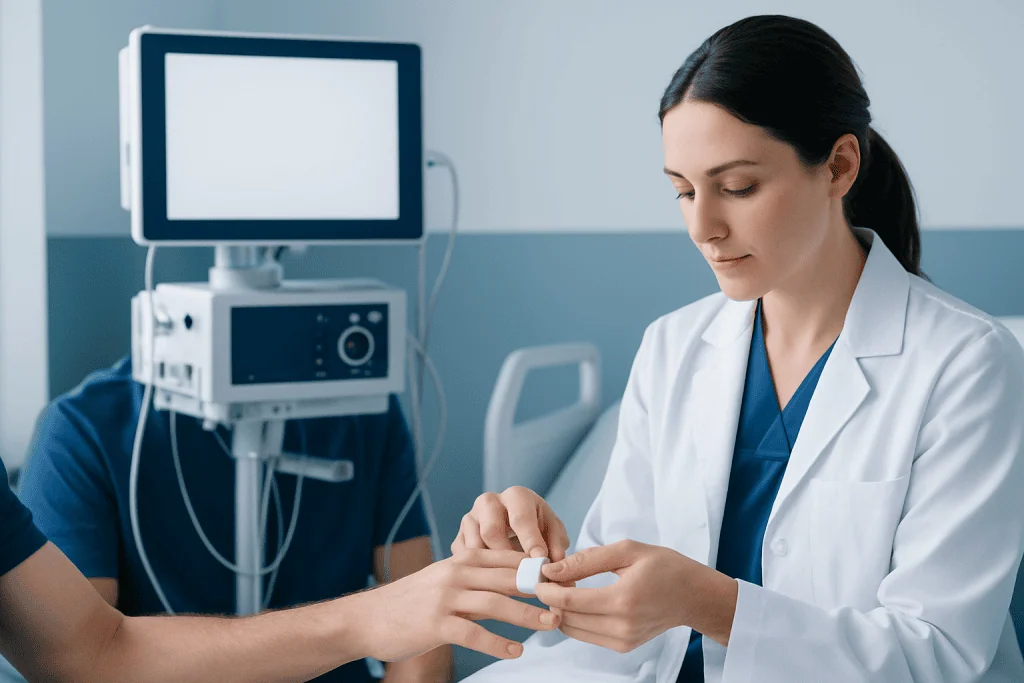
Buddy taping is most often used for mild to moderate soft-tissue injuries, such as a jammed finger, a minor ligament sprain, or a stubbed toe. In these situations, the injured digit is painful but still reasonably aligned, and there is no obvious open wound or severe instability.
It may also be recommended by a clinician for a stable fracture that does not need a cast or surgery. For example, after an examination and imaging, a doctor may advise buddy taping as part of conservative care for a small toe fracture or a simple finger injury. This is different from self-diagnosing at home.
Common situations where buddy taping may be considered include:
- Mild finger sprains after sports or everyday activities
- Jammed fingers with manageable swelling and no deformity
- Stubbed toes with pain but preserved alignment
- Stable minor fractures after a clinician confirms that taping is appropriate
Because similar symptoms can occur with more serious injuries, a careful assessment matters. A painful finger may reflect a ligament tear, tendon injury, dislocation, or fracture rather than a simple sprain. Related injuries may sometimes overlap with conditions such as trigger finger or require evaluation by specialists in orthopedics and traumatology when symptoms persist.
When buddy taping is not appropriate

Buddy taping should not be used as the only treatment when an injury looks severe or unusual. A finger or toe that is crooked, shortened, rotated, or clearly out of place may be fractured or dislocated. Trying to tape it without proper evaluation can worsen the injury or delay healing.
It is also not suitable when there is an open wound, active bleeding, broken skin under the tape area, signs of infection, or major swelling that makes circulation checks difficult. People with diabetes, poor circulation, peripheral neuropathy, or fragile skin should be especially cautious because they may not feel pressure damage early.
Children, older adults, and athletes may need individualized advice depending on the mechanism of injury and expected activity level. Some hand injuries need a custom splint or a more structured rehabilitation plan instead of buddy taping. If symptoms are significant, consultation in physical therapy and rehabilitation may also be part of recovery after the acute phase.
How buddy taping is usually done safely
A clean, dry skin surface is important before taping. A small piece of gauze, foam, or soft padding is typically placed between the injured and neighboring digit to reduce rubbing. Medical tape is then wrapped around both digits in one or two places, usually avoiding the joints that need to bend naturally unless a clinician advises otherwise.
The tape should feel supportive, not tight. After applying it, the digit should remain warm and pink, without numbness, tingling, or increasing throbbing. Rings should be removed from injured fingers early because swelling can make them hard to take off later.
General safety points include:
- Check the skin daily for redness, blisters, or moisture damage
- Retape if the tape becomes wet, dirty, or loose
- Do not tape so tightly that circulation is reduced
- Limit activities that worsen pain
- Follow medical advice on how long to continue
At home, people often combine buddy taping with rest, ice, elevation, and temporary activity modification. Pain that steadily improves over days is reassuring, but worsening swelling or function loss suggests the injury should be reassessed.
Diagnosis: why assessment matters before or after taping
Many injuries that seem minor can be difficult to classify without an examination. A clinician will usually ask how the injury happened, where the pain is located, whether there was a popping sensation, and whether the person can bend and straighten the finger or toe. Swelling, bruising, tenderness, joint stability, and alignment are then checked.
X-rays are commonly used when a fracture or dislocation is possible. Imaging helps determine whether buddy taping is enough or whether a splint, reduction, or another treatment is needed. In selected cases, ultrasound or other imaging may be considered if tendon or ligament injury is suspected.
Prompt diagnosis is particularly important for hand injuries because untreated tendon and joint problems can affect long-term function. If pain and stiffness continue despite initial care, referral to hand surgery or another relevant specialist may be appropriate to protect motion and grip strength.
Treatment and recovery beyond the tape
Buddy taping is only one part of treatment. Recovery also depends on the exact injury, the person’s age, general health, and how well the area is protected during healing. For minor soft-tissue injuries, rest and gradual return to activity are often enough. For fractures, the healing period is usually longer, and follow-up may be needed to confirm proper alignment and function.
Pain relief may include simple supportive measures such as ice packs wrapped in a cloth, elevation, and appropriate over-the-counter medicines if a doctor or pharmacist considers them suitable. Gentle movement may be encouraged at the right stage to reduce stiffness, but forcing painful motion too early can aggravate the injury.
Medical treatment may vary based on the diagnosis:
- Sprains may need brief support followed by mobility exercises
- Stable fractures may be managed with buddy taping or splinting
- Dislocations may need reduction by a trained clinician
- Tendon or complex joint injuries may require specialist care
For international patients who need evaluation or follow-up, Acibadem International’s multidisciplinary specialists in JCI-accredited hospitals diagnose and treat bone, joint, and hand injuries using evidence-based care plans.
When to seek medical care
Medical review is important if pain is severe, the digit looks deformed, movement is greatly limited, or the injury followed a major blow, fall, or sports impact. Immediate assessment is also recommended for numbness, bluish color, cold skin, uncontrolled swelling, or any open wound.
Even without dramatic symptoms, medical advice is wise if pain does not begin to improve after a few days, if the joint feels unstable, or if there is repeated reinjury. Toe injuries that make walking difficult and finger injuries that affect gripping, writing, or daily tasks should not be ignored.
People should seek urgent care if they notice:
- Visible deformity or suspected dislocation
- Severe swelling or rapidly increasing pain
- Numbness, tingling, or color change
- Open cuts, nail-bed injury, or signs of infection
- Persistent symptoms despite careful taping and rest
When symptoms are unclear or prolonged, evaluation can help rule out fractures, ligament damage, or related problems such as carpal tunnel syndrome in the hand region, though that condition itself is not treated with buddy taping.
Frequently asked questions
What is buddy taping used for?
Buddy taping is used to support an injured finger or toe by securing it to the neighboring digit. It may help with some mild sprains, jams, and certain stable minor fractures after appropriate medical assessment.
Can buddy taping heal a broken finger or toe?
It can be part of treatment for some stable, non-displaced fractures, but not all broken bones are suitable for taping alone. A clinician usually needs to confirm the diagnosis and decide whether buddy taping, splinting, or another treatment is best.
How tight should buddy taping be?
The tape should feel supportive but not tight. The finger or toe should stay warm and pink, and there should be no numbness, tingling, or increasing throbbing after the tape is applied.
Should padding be placed between the digits?
Yes, soft padding is usually recommended between the two digits. It helps prevent skin irritation, friction, and moisture buildup, especially if the tape will stay on for extended periods.
How long should buddy taping stay on?
The correct duration depends on the injury. Minor sprains may need support for a shorter time, while fractures can require a longer healing period, so it is best to follow a clinician’s instructions.
When should someone avoid buddy taping at home?
Buddy taping should be avoided if there is deformity, severe pain, numbness, open skin, heavy swelling, or concern for a fracture or dislocation. People with poor circulation, diabetes, or reduced sensation should also use extra caution and seek medical advice.
This article is for general information only and is not a substitute for professional medical advice. Please consult a qualified doctor about your individual situation.
Explore treatments in Turkey — costs, top hospitals & a free quote
JCI-accredited · board-certified surgeons · reply within 24h
Add us as a Preferred Source to see more of our trusted health content across Google Search, AI Overviews and Discover.

More from the Health Library

Ocular Migraine: An Evidence-Based Guide for Patients

Blood Brain Barrier: A Complete Medical Overview

Almond Oil for Hair — Explained by Medical Evidence, Not Myths

Shuffling Gait: What Patients Need to Know

Coriander Seeds Benefits: A Complete Medical Overview