Ocular Migraine: An Evidence-Based Guide for Patients
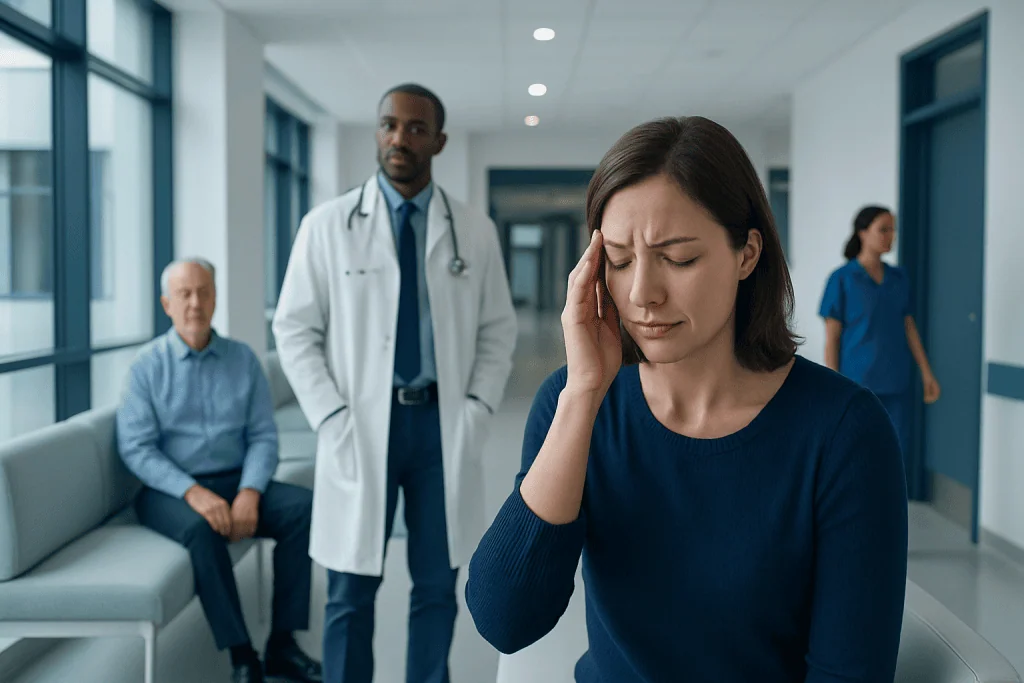
Ocular migraine often refers to migraine-related visual symptoms such as flashing lights, zigzags, or blind spots. Many episodes are brief and fully reversible, but sudden vision loss in one eye needs urgent medical assessment.
Key Takeaways
- Ocular migraine often refers to migraine-related visual symptoms such as flashing lights, zigzags, or blind spots.
- Many episodes are brief and fully reversible, but sudden vision loss in one eye needs urgent medical assessment.
- Triggers may include stress, lack of sleep, dehydration, bright light, and hormonal changes.
- Diagnosis is based on the pattern of symptoms and on excluding other eye, neurological, or vascular causes.
- Treatment depends on how often attacks happen, how disabling they are, and whether another condition is present.
Ocular migraine is a term commonly used for temporary visual disturbances linked to migraine, with or without headache. Because the phrase can refer to different conditions, new or one-sided vision loss should be assessed by a doctor to rule out eye or vascular problems.
What ocular migraine means
Ocular migraine usually describes temporary visual symptoms related to migraine. These symptoms may include shimmering lights, zigzag lines, blind spots, or blurred vision, and they can happen with a migraine headache or without any head pain at all. In many people, the episode lasts from a few minutes up to about an hour and then resolves completely.
The term can be confusing because it is used in different ways. Some clinicians use it informally to mean migraine with visual aura, which usually affects both eyes even if it seems stronger on one side. Others use it to refer to retinal migraine, a rarer condition that causes repeated, short-lasting visual changes in one eye only. This distinction matters because true one-eye vision loss can also be caused by eye disease or reduced blood flow and should not be assumed to be migraine without evaluation.
Most migraine-related visual symptoms are not dangerous and do not damage the eye. However, the first episode, a change from the usual pattern, or symptoms that last longer than expected deserve medical review. A careful history helps doctors decide whether symptoms fit migraine or suggest another condition that needs prompt treatment.
How it feels: common symptoms and patterns
People often describe ocular migraine as seeing flashing lights, sparkles, wavy lines, geometric shapes, or a patch of missing vision. Some notice a gradual expansion of a blind spot that moves across the visual field. Others have blurred vision that makes reading, screen use, or driving difficult during the episode.
These visual symptoms commonly build up over several minutes and then fade. When they are part of migraine aura, they usually affect both eyes, although this may be hard to recognize in the moment. A headache may follow, occur at the same time, or not happen at all. Some people also feel nausea, sensitivity to light, or sensitivity to sound.
Symptoms that may suggest something other than a typical migraine aura include total darkness in one eye, a curtain-like loss of vision, double vision, weakness, trouble speaking, or confusion. While migraine can sometimes overlap with other neurological symptoms, these features need prompt medical assessment because they can occur with stroke, transient ischemic attack, retinal disease, or other urgent conditions.
- Typical migraine-related visual symptoms: shimmering lights, zigzags, sparkles, blind spots
- Usual duration: several minutes to under 60 minutes
- Possible associated symptoms: headache, nausea, light sensitivity, sound sensitivity
- Warning features: one-eye vision loss, new severe headache, weakness, speech difficulty, persistent symptoms
Causes, triggers, and risk factors

Migraine is thought to involve changes in brain signaling and sensory processing. In migraine with visual aura, a wave of altered nerve activity in the brain’s visual cortex is believed to explain many of the positive visual effects, such as flashing or shimmering patterns. In retinal migraine, temporary changes in blood flow or nerve function affecting one eye may play a role, although this condition is less common and can be difficult to distinguish from other causes of transient monocular vision loss.
Triggers do not cause migraine on their own in every person, but they can make an attack more likely. Common triggers include emotional stress, poor sleep, missed meals, dehydration, bright or flickering light, prolonged screen exposure, hormonal fluctuations, certain foods or alcohol, and changes in routine. Not every person has obvious triggers, and triggers can vary over time.
Risk factors for migraine include a personal or family history of migraine, female sex, and certain hormonal states. Some people who have migraine experience aura regularly, while others develop visual aura only occasionally. Visual symptoms can also coexist with other headache patterns, so a clinician may look more broadly at headache history, general health, medications, and vascular risk factors such as smoking or high blood pressure.
How doctors diagnose ocular migraine
Diagnosis begins with a detailed description of the episode. Doctors often ask what was seen, whether symptoms affected one eye or both, how quickly they started, how long they lasted, whether a headache followed, and whether there were any neurological symptoms. Because many people are not sure if one or both eyes were involved, clinicians may ask whether covering either eye changed the visual disturbance during an episode.
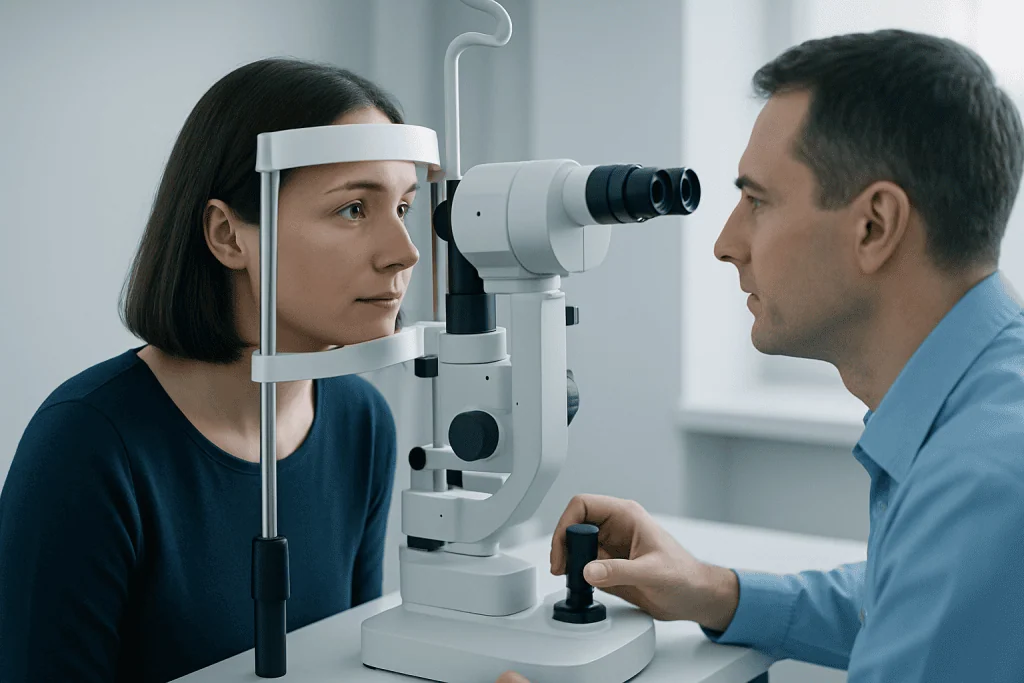
A diagnosis of migraine-related visual symptoms is often made from the history, especially when episodes are stereotyped, reversible, and accompanied by migraine features. Still, doctors may recommend an eye examination to check the retina, optic nerve, and blood vessels. Depending on age, risk factors, and symptom pattern, evaluation may also include neurological assessment, blood pressure measurement, and sometimes imaging or vascular studies to rule out other causes.
Conditions that may mimic ocular migraine include retinal tear, retinal detachment, optic nerve disorders, transient ischemic attack, seizure, and other causes of visual aura. If episodes are frequent, disabling, or atypical, a specialist assessment may be appropriate, including neurology evaluation or ophthalmology care. The goal is not only to confirm migraine but also to make sure a more urgent eye or brain condition is not being missed.
Treatment options and day-to-day management
Treatment depends on what type of symptoms the person is having and how often they occur. If episodes are infrequent and short, management may focus on trigger reduction, reassurance, and avoiding activities such as driving until vision returns to normal. Resting in a dim, quiet room and staying hydrated can help some people through an attack.
If a headache accompanies the visual symptoms, doctors may recommend standard migraine treatments. These can include medicines to relieve pain or nausea, and for people with frequent or disabling attacks, preventive migraine treatment may be considered. The choice of medication depends on age, medical history, pregnancy status, cardiovascular risk, and the exact diagnosis. Because visual symptoms in one eye can have non-migraine causes, treatment should not be started purely on self-diagnosis when episodes are new or unusual.
There is no single test or one-size-fits-all therapy for ocular migraine. A clinician may recommend keeping a symptom diary that records time of day, possible triggers, duration, foods, menstrual cycle, sleep, and whether the event involved one or both eyes. When visual symptoms are persistent, recurrent, or difficult to classify, further assessment such as brain MRI or collaboration with neurosciences specialists may be needed to exclude other disorders.
Prevention and self-care strategies
Preventing migraine-related visual episodes often begins with regular habits rather than medication alone. Many people benefit from consistent sleep, regular meals, good hydration, and stress management. Limiting prolonged exposure to glare, taking breaks from screens, and using appropriate lighting may also reduce attacks in those who are visually sensitive.
A symptom diary can be especially useful because triggers are personal. Over time, patterns may emerge, such as episodes after skipped meals, during periods of high stress, or around hormonal changes. This allows a doctor and patient to choose practical adjustments without unnecessarily restricting normal life.
General health also matters. Managing blood pressure, avoiding smoking, exercising regularly, and discussing contraception or hormone therapy with a clinician may be relevant in some individuals, especially if there are vascular risk factors or aura symptoms. For recurrent headache disorders, broader care plans may also address related issues such as recurring headaches or other neurological causes of visual symptoms when the presentation is not typical for migraine.
When to seek medical care
Medical care should be sought promptly if visual symptoms happen for the first time, are clearly limited to one eye, or are followed by weakness, numbness, trouble speaking, fainting, or severe imbalance. Urgent assessment is also important if vision loss is dark rather than shimmering, if there is eye pain, or if symptoms last longer than an hour or do not fully resolve.
Even in someone with a known history of migraine, a change in pattern deserves review. Examples include attacks becoming much more frequent, much more intense, occurring after age 50 for the first time, or being associated with a very sudden severe headache. These features do not necessarily mean something serious is wrong, but they should not be ignored.
For routine, non-urgent evaluation, people with repeated visual episodes may benefit from assessment by clinicians experienced in both eye and neurological conditions. Acibadem International’s multidisciplinary specialists and JCI-accredited hospitals evaluate and treat patients with migraine-related visual symptoms and other possible causes of transient vision changes, particularly when diagnosis is uncertain or symptoms are affecting daily life.
Frequently asked questions
Is ocular migraine the same as migraine with aura?
Not always. Many people use the term ocular migraine to describe visual aura from migraine, which typically affects both eyes. Some clinicians reserve the term for retinal migraine, which causes temporary visual symptoms in one eye only and is much less common.
How long does an ocular migraine last?
Most migraine-related visual symptoms last from a few minutes to under an hour. The visual changes usually build gradually and then fully resolve. Symptoms that persist longer than expected or do not go away should be medically assessed.
Can ocular migraine cause permanent vision loss?
Typical migraine aura does not usually cause permanent vision damage. However, true one-eye vision loss can sometimes reflect other eye or vascular problems that may threaten vision if not treated. That is why new or clearly monocular symptoms need evaluation.
Do all ocular migraines come with headache?
No. Visual migraine symptoms can happen before a headache, during a headache, or without any headache at all. When aura occurs without head pain, it can still be part of the migraine spectrum.
What triggers ocular migraine episodes?
Common triggers include stress, poor sleep, dehydration, missed meals, bright light, prolonged screen use, hormonal changes, and sometimes alcohol or specific foods. Triggers vary widely from person to person. Keeping a symptom diary can help identify patterns.
Should a person drive during an ocular migraine?
No, driving or operating machinery should be avoided while vision is disturbed. Even brief blind spots or shimmering lights can make it unsafe to judge distance or see hazards. It is best to stop the activity and wait until vision has completely returned to normal.
References
- American Migraine Foundation
- National Eye Institute
- American Academy of Ophthalmology
- National Institute of Neurological Disorders and Stroke
- Mayo Clinic
This article is for general information only and is not a substitute for professional medical advice. Please consult a qualified doctor about your individual situation.
Migraine in Turkey — costs, top hospitals & a free quote
JCI-accredited · board-certified surgeons · reply within 24h
Add us as a Preferred Source to see more of our trusted health content across Google Search, AI Overviews and Discover.
Check your numbers in seconds
BMI, calories, due date, blood pressure and 30+ more clinical calculators — free, instant, doctor-reviewed ranges.