Bursitis Foot: Diagnosis, Outlook, and Modern Treatment Approaches

Bursitis foot usually causes pain, swelling, and tenderness near a pressure point or joint in the foot. Common triggers include repetitive stress, poorly fitting shoes, foot shape issues, and nearby joint or tendon irritation.
Key Takeaways
- Bursitis foot usually causes pain, swelling, and tenderness near a pressure point or joint in the foot.
- Common triggers include repetitive stress, poorly fitting shoes, foot shape issues, and nearby joint or tendon irritation.
- Diagnosis is based on symptoms, physical examination, and sometimes imaging to rule out fractures, arthritis, or tendon problems.
- Treatment often starts with rest, footwear changes, ice, anti-inflammatory measures, and physical therapy.
- Medical care is important if pain is severe, persistent, worsening, or accompanied by redness, warmth, or fever.
Bursitis foot is inflammation of a small fluid-filled sac that helps reduce friction around foot joints and tendons. It often causes localized pain, swelling, and tenderness, and most cases improve with a clear diagnosis, activity changes, supportive footwear, and targeted treatment.
Overview: what bursitis foot means
Bursitis foot means inflammation of a bursa in the foot. A bursa is a small fluid-filled sac that cushions tissues such as bone, tendon, ligament, and skin, helping them move smoothly with less friction. When a bursa becomes irritated, it can swell and become painful, especially during walking, standing, or wearing shoes that place pressure on the area.
Several bursae can be affected in the foot. Symptoms may develop near the heel, the ball of the foot, the side of the big toe, or other pressure points. In some people, bursitis happens on its own after overuse or friction. In others, it develops alongside structural foot problems, inflammation in nearby tissues, or conditions such as arthritis.
The outlook is usually good. Many people improve with conservative care, but the best plan depends on the exact location of the inflamed bursa and whether another issue is contributing to it. That is why modern treatment focuses not only on reducing inflammation, but also on identifying the mechanical reason the bursa became irritated in the first place.
Symptoms and how foot bursitis feels
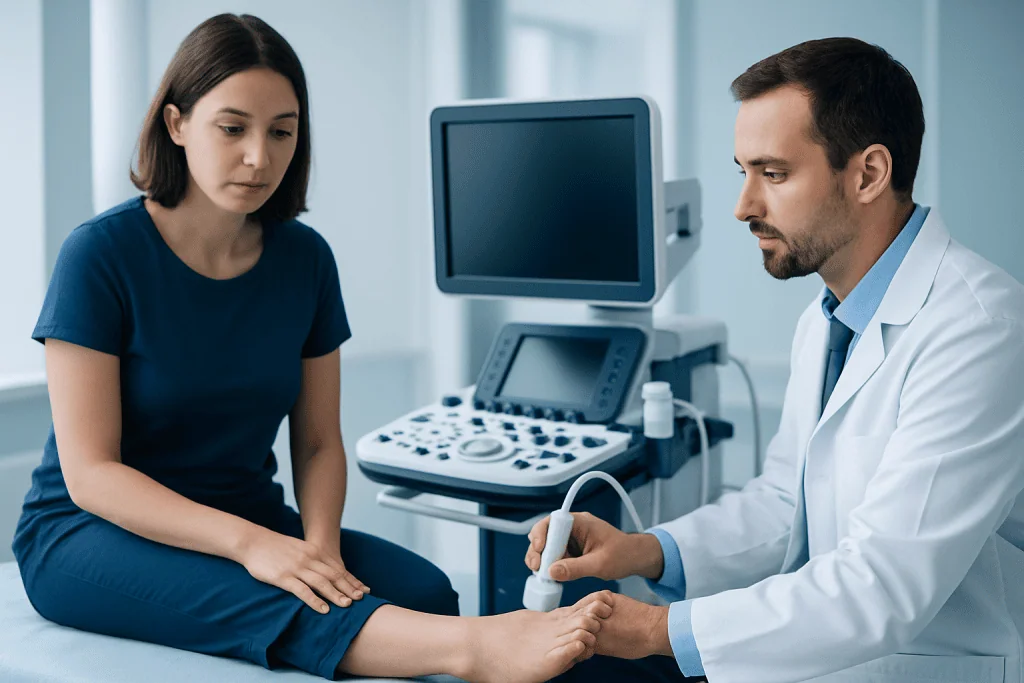
The most common symptom of bursitis foot is localized pain that becomes worse with pressure or movement. The area may feel tender to touch, and pain can increase when walking, exercising, climbing stairs, or wearing tight or unsupportive shoes. Some people notice a visible lump or puffiness over the affected area.
Swelling is common and may come with warmth or mild redness. The skin can feel irritated if the inflamed bursa sits close to the surface. Depending on the location, a person may also change the way they walk to avoid pressure, which can then strain other parts of the foot, ankle, knee, or hip.
Symptoms vary by site. Heel bursitis may cause pain at the back or underside of the heel, while bursitis near the forefoot can create discomfort under the ball of the foot. Bursitis associated with a bunion may produce soreness along the big toe joint. Because these symptoms can overlap with plantar fasciitis, tendon irritation, stress injuries, or joint inflammation, a proper assessment is important if symptoms persist.
- Pain with walking, standing, or shoe pressure
- Localized swelling or a soft lump
- Tenderness when the area is pressed
- Warmth or mild redness
- Reduced comfort during exercise or daily activity
Causes and risk factors
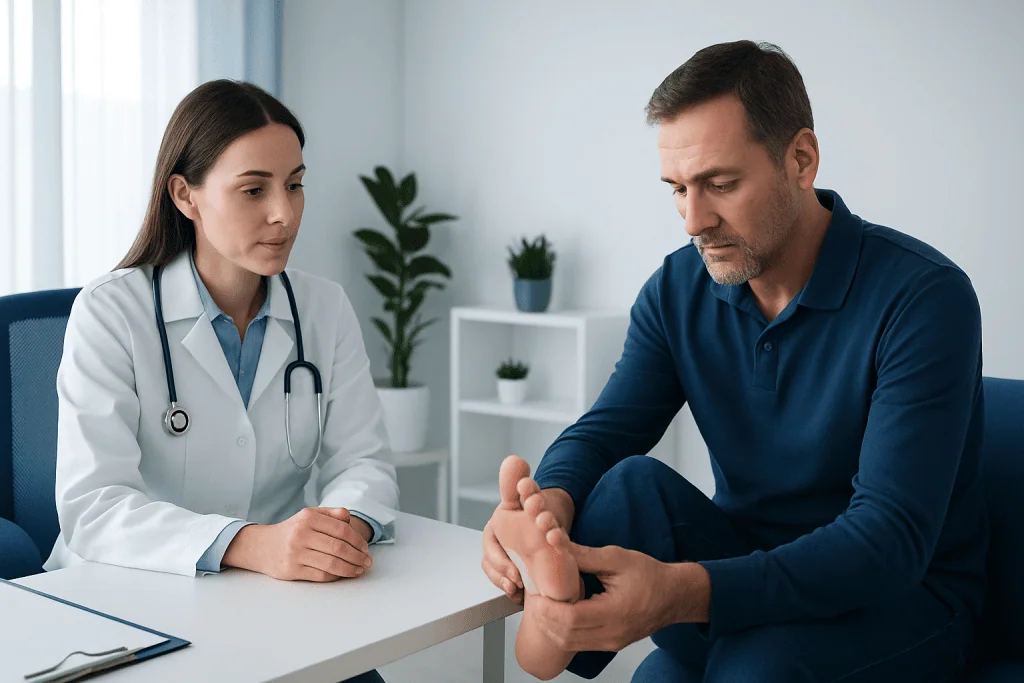
Foot bursitis often develops from repeated pressure, friction, or overuse. Activities that involve running, long periods of walking, jumping, or frequent kneeling can irritate a bursa over time. Shoes that are tight, stiff, narrow, or poorly cushioned may also increase rubbing and compress soft tissues in vulnerable areas.
Foot structure matters as well. Bunions, high arches, flat feet, limited ankle motion, and gait changes can shift pressure onto certain parts of the foot. When movement patterns become uneven, the bursa may act as a warning point where the tissue is repeatedly stressed. Nearby tendon or joint problems can also contribute, especially when inflammation spreads across a small area.
Some medical conditions increase risk. Inflammatory arthritis, crystal-related joint disease, infection, and previous injury can all be associated with bursitis. Extra body weight may place more load on the feet, and aging can make soft tissues less tolerant of repetitive stress. In modern practice, clinicians look at all of these factors because lasting relief often depends on correcting the trigger, not only calming the inflammation.
How diagnosis is made
Diagnosis usually begins with a medical history and physical examination. A doctor asks where the pain is located, how long it has been present, what activities worsen it, what shoes are typically worn, and whether there are symptoms such as redness, fever, numbness, or recent injury. During the examination, the foot is checked for swelling, tenderness, warmth, alignment, range of motion, and walking pattern.
Imaging is not always needed, but it can be helpful when the diagnosis is uncertain or when another problem must be ruled out. X-rays may be used to look for bone spurs, arthritis, alignment problems, or fractures. Ultrasound can sometimes show a swollen bursa and may help guide treatment. MRI is more likely to be considered if symptoms are ongoing, complex, or possibly related to tendon injury, stress fracture, or deeper soft tissue inflammation.
In selected cases, blood tests or aspiration of fluid from the bursa may be considered, especially if infection, inflammatory disease, or crystal arthritis is suspected. The goal is to distinguish bursitis from other causes of foot pain so treatment can be appropriately targeted. When joint disease or chronic soft-tissue problems are suspected, a broader orthopedic assessment may be recommended, including evaluation for orthopedic care.
Modern treatment approaches
Initial treatment for bursitis foot is usually conservative. This commonly includes reducing activities that trigger pain, applying ice, elevating the foot when possible, and using anti-inflammatory strategies recommended by a clinician. Footwear changes are often central to recovery. Shoes with a wider toe box, better cushioning, or a softer heel counter may reduce direct pressure on the irritated bursa.
Supportive devices can also help. Padding, shoe modifications, or custom orthotics may redistribute pressure away from the painful area. If walking mechanics are contributing, structured physical therapy and rehabilitation may improve flexibility, strength, and gait. Therapy may focus on calf tightness, foot muscle support, balance, and movement patterns that reduce repeated irritation.
When symptoms are more persistent, doctors may consider targeted treatments such as aspiration in selected cases or a carefully chosen injection to reduce inflammation. If infection is present, treatment is different and may include antibiotics and drainage. Surgery is uncommon, but it may be considered when there is an ongoing structural cause, severe recurrent bursitis, or associated deformity that does not respond to non-surgical care. In some cases, imaging such as MRI is used to guide decision-making when surgery is being considered or when the diagnosis remains unclear.
Self-care, prevention, and recovery outlook
Many people can support healing by protecting the irritated area while staying as active as comfort allows. Practical measures include avoiding shoes that rub, using cushioned insoles if advised, gradually returning to exercise, and changing high-impact activities temporarily to lower-impact options. Repetitive loading before symptoms settle can prolong recovery.
Prevention often depends on reducing pressure and improving foot mechanics. Well-fitting shoes, gradual training progression, stretching programs, and attention to early foot discomfort can all help. People with bunions, flat feet, high arches, or recurring heel or forefoot pain may benefit from a professional footwear and gait review. Managing inflammatory joint disease and maintaining a healthy body weight may also reduce recurrence.
The outlook for bursitis foot is generally favorable. Mild cases may improve within days to weeks, while more stubborn or mechanically driven cases can take longer and may require a combination of offloading, therapy, and medical follow-up. Recovery tends to be smoother when treatment is started early and the underlying trigger is addressed rather than ignored.
When to seek medical care
Medical assessment is advisable if foot pain lasts more than a short time, interferes with walking, returns repeatedly, or does not improve with simple self-care. A doctor should also evaluate symptoms that are severe from the start or that occur after an injury. An accurate diagnosis matters because different foot problems can feel similar but require different treatment.
Prompt care is especially important if there is marked redness, increasing warmth, fever, drainage, rapidly worsening swelling, or inability to bear weight. These features can suggest infection or another urgent problem rather than routine bursitis. People with diabetes, immune system problems, poor circulation, or inflammatory arthritis should seek medical advice sooner.
For patients who need specialist evaluation, Acibadem International’s multidisciplinary teams in JCI-accredited hospitals diagnose and treat foot conditions for international patients, including cases that need advanced imaging, rehabilitation, or surgical planning such as foot and ankle surgery.
Frequently asked questions
Can bursitis foot go away on its own?
Mild cases can improve with rest, pressure relief, and footwear changes. However, symptoms may return if the underlying cause, such as friction or abnormal foot mechanics, is not addressed.
What is the difference between foot bursitis and plantar fasciitis?
Foot bursitis is inflammation of a cushioning sac, while plantar fasciitis affects the thick band of tissue along the bottom of the foot. Both can cause pain, but the exact location, tenderness pattern, and triggers may differ, which is why a clinical examination is helpful.
Is walking good for bursitis foot?
Gentle walking may be acceptable if it does not significantly worsen pain. If walking increases symptoms, reducing activity temporarily and using supportive shoes or padding is usually more helpful until the inflammation settles.
Do all cases of bursitis foot need imaging?
No. Many cases can be diagnosed through history and examination alone. Imaging is more useful when symptoms are persistent, when another condition is suspected, or when treatment planning requires a closer look.
Can shoes cause bursitis in the foot?
Yes. Tight, narrow, stiff, or poorly cushioned shoes can increase friction and pressure on a bursa. Footwear that fits well and reduces rubbing is often an important part of treatment and prevention.
When is surgery considered for foot bursitis?
Surgery is not the usual first treatment. It may be considered when symptoms keep coming back, do not improve with conservative care, or are linked to a structural problem such as a deformity that continues to irritate the area.
References
- American Academy of Orthopaedic Surgeons
- American Orthopaedic Foot & Ankle Society
- National Institute of Arthritis and Musculoskeletal and Skin Diseases
- NHS
- Mayo Clinic
This article is for general information only and is not a substitute for professional medical advice. Please consult a qualified doctor about your individual situation.
Bursitis in Turkey — costs, top hospitals & a free quote
JCI-accredited · board-certified surgeons · reply within 24h
Add us as a Preferred Source to see more of our trusted health content across Google Search, AI Overviews and Discover.

Orthopedics & Spine
Care for bones, joints and the musculoskeletal system, including joint replacement, sports injuries and trauma.
125 specialists in this unitMore from the Health Library



Related Specialists

Dr. Ufuk Güngör
Physical Medicine & Rehabilitation
Dr. Cansu Yılmaz
Pediatrics
Dr. Derviş Melih Mutlu
Emergency Service
Dr. Uğur Öner
Aesthetic Plastic & Reconstructive Surgery