Cage Fusion: Procedure, Recovery and Results

A spinal fusion cage is typically filled with bone graft material and used alongside fixation such as screws and rods when needed. Cage fusion may be performed in the neck or lower back; the surgical approach depends on the spinal level and underlying condition.
Key Takeaways
- A spinal fusion cage is typically filled with bone graft material and used alongside fixation such as screws and rods when needed.
- Cage fusion may be performed in the neck or lower back; the surgical approach depends on the spinal level and underlying condition.
- Early pain and fatigue are common, while bone fusion develops gradually over several months.
- Walking, following activity restrictions, good nutrition and avoiding nicotine can support recovery.
- Although complications are uncommon, patients should understand risks such as infection, blood clots, nerve injury and incomplete fusion.
Cage fusion is a type of spinal fusion surgery in which a small implant, called a cage, is placed between two vertebrae to restore spacing, support stability and encourage bone to grow across the treated segment. It may help selected people with persistent pain, nerve compression or spinal instability when non-surgical treatment has not provided adequate relief.
Overview: What Is Cage Fusion?
Cage fusion is a spinal fusion procedure that uses a hollow or solid implant, known as an interbody cage, between two spinal bones (vertebrae). The cage helps maintain or restore the height of the disc space, supports alignment and creates a protected area for bone graft material. Over time, the aim is for new bone to grow through and around the cage, joining the vertebrae into one stable segment.
Cage fusion surgery may be considered when a damaged disc, spinal instability or narrowing around spinal nerves causes ongoing pain, weakness, numbness or reduced function. It is used most commonly in the lumbar spine, but cage fusion spine procedures can also be performed in the cervical spine. The procedure is planned individually after symptoms, examination findings and imaging results are reviewed together.
A fusion reduces motion at the treated level. This can relieve pain caused by abnormal movement or improve nerve space, but it does not treat every cause of back or neck pain. The expected result depends on the diagnosis, nerve health, overall health, number of levels treated and participation in recovery and rehabilitation.
How Cage Fusion Works and Who May Be a Candidate
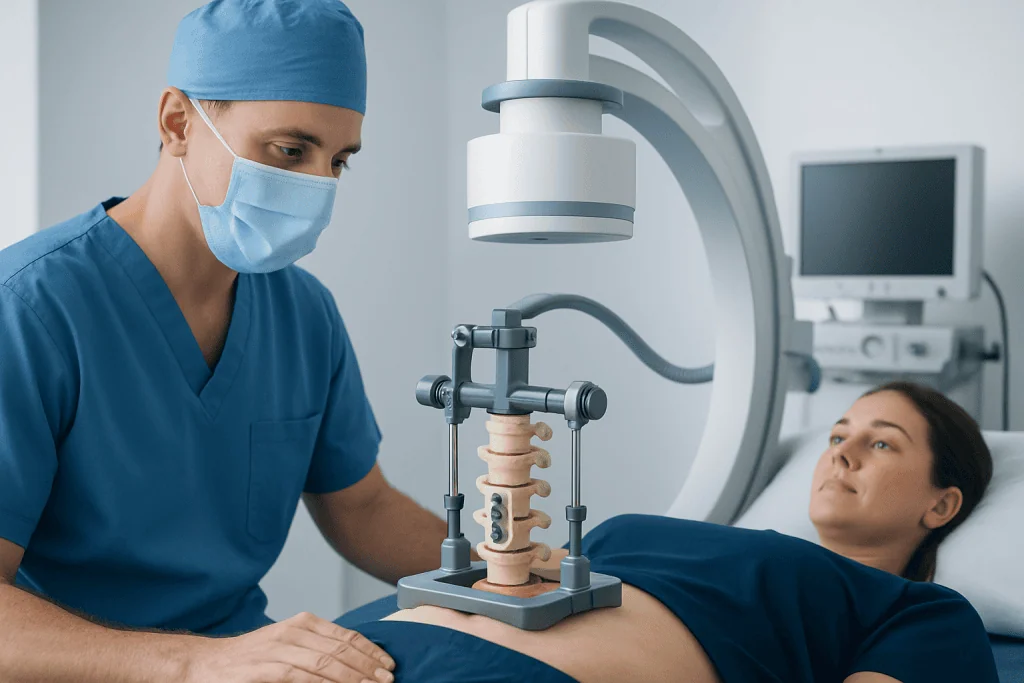
During a cage fusion, the surgeon removes all or part of a diseased spinal disc and prepares the bony surfaces of the neighboring vertebrae. A cage containing bone graft, bone-graft substitute or both is inserted into the disc space. In many operations, screws and rods are also placed to stabilize the spine while healing occurs. Cages may be made from materials such as titanium, polyetheretherketone (PEEK) or other biocompatible materials selected for the clinical situation.
People may be considered for cage fusion lumbar spine surgery when they have conditions such as degenerative disc disease with instability, spondylolisthesis, recurrent disc problems, spinal deformity, some fractures or nerve compression associated with loss of disc height. A cage may be used during surgery for spondylolisthesis when stabilization is needed after decompression or disc removal.
Before recommending surgery, clinicians usually consider non-surgical care when appropriate. This may include guided exercise, physical therapy, activity changes, pain-management strategies and selected injections. Surgery may become a reasonable option when symptoms remain disabling, progressive nerve problems are present, or imaging and clinical findings clearly identify a surgically treatable source.
- Symptoms should match the spinal level seen on imaging.
- Overall health should allow anesthesia and postoperative rehabilitation.
- Nicotine use, uncontrolled diabetes, osteoporosis and poor nutrition may need attention before surgery because they can affect bone healing.
- Patients should understand that the goal is improved stability and function, not necessarily complete absence of all pain.
Cage Fusion Surgery: Step by Step

The exact technique depends on the region of the spine, the number of levels involved and the reason for surgery. A cage fusion lumbar procedure may be approached from the front of the abdomen, the side of the body or the back. These approaches are often described as anterior, lateral or posterior lumbar interbody fusion. Cervical cage fusion is commonly approached through the front of the neck. The surgeon discusses the planned route and its particular benefits and risks before the operation.
Under general anesthesia, the surgical team positions the patient and uses imaging guidance to confirm the correct spinal level. The surgeon reaches the spine, removes the affected disc or releases pressure from compressed nerves as required, and carefully prepares the disc space. The cage and graft material are then positioned to support the space between the vertebrae. Additional screws, rods or plates may be used to improve stability.
After the procedure, the incision is closed and the patient is monitored in a recovery area. Some people stay in hospital for a short period, while others may need a longer stay depending on the approach, number of levels treated, pain control, mobility and medical needs. In appropriate cases, patients can discuss spinal fusion surgery with a spine specialist to understand whether an interbody cage is likely to be part of the surgical plan.
Modern techniques may involve smaller incisions in selected patients, but “minimally invasive” does not mean recovery is immediate. Bone fusion still requires time, and postoperative restrictions are based on the procedure and the individual’s healing progress rather than incision size alone.
Cage Fusion Recovery Time and Expected Results
Cage fusion recovery time has two parts: recovery from the operation and biological bone healing. Patients often begin short, supported walks soon after surgery, as advised by their care team. Pain, stiffness, tiredness and changes in sleep are common in the first days and weeks. The surgical team provides individualized guidance about wound care, pain relief, sitting, bending, lifting, driving and return to work.
Many people gradually increase daily activity over the first several weeks. Return to desk-based work may occur earlier than return to physically demanding work, but timing varies significantly. Follow-up visits and imaging help the surgeon assess alignment, implant position and progression toward fusion. Bone healing commonly continues for several months and may take longer in some individuals.
In successful cases, cage fusion can reduce pain related to instability, improve nerve-related leg or arm symptoms and make everyday movement more manageable. However, nerves that have been compressed for a long time may recover slowly or incompletely. Pain from arthritis, muscles, nearby discs or other health conditions may also persist despite a well-healed fusion.
Rehabilitation is often an important part of recovery. A tailored physical therapy and rehabilitation plan can help restore safe movement, build trunk strength and support return to usual activities. Exercises should be started or progressed only according to the treating surgeon and rehabilitation professional.
What Days Are the Worst After Spinal Fusion?
For many patients, the first several days after spinal fusion are the most uncomfortable because surgical pain, anesthesia effects, swelling, limited mobility and disturbed sleep occur at the same time. Some people notice that discomfort is most pronounced during the first week, particularly when changing position, coughing or beginning to walk more. The experience differs according to the surgical approach, number of fused levels, pain-control plan and individual health factors.
Symptoms should generally become more manageable over time, even though recovery is not always perfectly linear. A temporary increase in soreness can occur after doing more activity than the body is ready for. Taking medication exactly as prescribed, walking in short, frequent intervals when cleared, using safe movement techniques and resting between activities can help patients manage this early stage.
Severe or worsening pain that does not respond to the prescribed plan, new weakness, new numbness, fever, wound drainage or sudden shortness of breath should not be assumed to be normal recovery. The surgical team should be contacted promptly for guidance.
Is Spinal Fusion the Hardest Surgery to Recover From?
Spinal fusion can be a substantial operation with a meaningful recovery period, but it is not possible to label it the hardest surgery to recover from for every person. Recovery experiences vary widely across all surgical procedures. The extent of fusion, the spine region involved, the reason for surgery, preoperative fitness, emotional wellbeing, pain history and social support can all influence how challenging recovery feels.
Compared with a simpler decompression procedure, fusion generally requires more protection while the bones heal. This can make the recovery feel longer because patients need to avoid certain movements and gradually rebuild strength. At the same time, many people are able to make steady progress with an individualized recovery plan and appropriate support.
Clear expectations are helpful. Before cage fusion surgery, patients should ask about the expected hospital stay, help needed at home, restrictions, return to work, rehabilitation and the signs that should prompt a call to the care team. These discussions allow the plan to reflect the person’s health, home environment and daily responsibilities.
Risks, Benefits and Supporting Bone Healing
Potential benefits of cage fusion include better spinal stability, restoration of disc-space height, improved alignment in selected cases and relief of pressure on nerves when decompression is performed. The cage also provides a structured space for bone graft, supporting the goal of a stable fusion. Whether these benefits are likely should be discussed in relation to the person’s particular diagnosis rather than based on imaging alone.
Like all major surgery, cage fusion has risks. These can include bleeding, infection, blood clots, reactions to anesthesia, injury to nerves or nearby structures, persistent symptoms, hardware problems, failure of the bones to fuse fully and stress on spinal levels next to the fusion over time. Specific risks also vary by approach; for example, anterior or lateral lumbar surgery has considerations involving abdominal or vascular structures. The surgeon explains the relevant risks during informed consent.
What helps spinal fusion heal faster? Bone healing cannot safely be rushed, but patients can support it by following restrictions, attending follow-up appointments, taking only recommended medicines and gradually increasing activity as directed. Avoiding all nicotine products is particularly important because nicotine can interfere with bone healing. A balanced eating pattern with adequate protein and nutrients, management of chronic conditions such as diabetes, and adequate sleep can also support recovery.
Patients should not add supplements, resume anti-inflammatory medicines or begin strenuous exercise without checking with their surgical team. Individual recommendations may differ based on medical history, bone health, medications and the type of fusion performed.
Can a Spinal Fusion Cage Be Removed? When to Seek Medical Care
Can a spinal fusion cage be removed? In most cases, a spinal fusion cage is intended to remain in place permanently. Once a solid fusion has formed, it becomes incorporated into a stable segment of the spine. Cage removal or revision surgery is not routine, but it may be considered if there is a significant complication, such as infection, cage movement, nonunion, nerve compression, implant failure or another clearly identified problem.
Revision surgery can be more complex than the first procedure, so the decision is based on symptoms, examination, imaging and a careful review of likely benefits and risks. Persistent pain alone does not always mean the cage is the cause. A specialist may assess other potential contributors, including nearby spinal levels, joints, muscles or ongoing nerve sensitivity.
Medical care should be sought urgently for new or worsening leg or arm weakness, loss of bladder or bowel control, numbness in the groin or saddle area, chest pain, shortness of breath, or symptoms of a serious allergic reaction. Patients should contact their surgeon promptly for fever, increasing redness or drainage from the incision, worsening swelling, pain that is escalating rather than improving, or new neurological symptoms.
Acibadem International’s multidisciplinary spine specialists and JCI-accredited hospitals assess and treat spinal conditions for international patients, including patients who may need evaluation for fusion or revision care. Decisions should always be made with a qualified spine surgeon after an individualized assessment.
Frequently asked questions
What is a cage in spinal fusion surgery?
A spinal fusion cage is an implant placed in the disc space between two vertebrae. It helps restore spacing and stability while holding bone graft material that supports bone growth between the vertebrae. It may be used with screws, rods or plates for additional stabilization.
How long does it take for a cage fusion to heal?
Initial recovery from surgery commonly takes weeks, but bone fusion develops gradually over several months. Healing time varies with the spinal level treated, number of fused segments, surgical technique, nicotine exposure, bone health and other health conditions. Follow-up examinations and imaging are used to monitor progress.
Will a person be able to bend after lumbar cage fusion?
A lumbar fusion reduces movement at the treated spinal level, so some bending flexibility is permanently reduced. However, the hips and the remaining mobile spinal levels continue to provide movement. Many patients learn safe ways to perform daily activities during rehabilitation.
Is walking good after cage fusion surgery?
Short, frequent walks are commonly encouraged after surgery when the treating team says it is safe. Walking can support circulation, mobility and gradual conditioning without placing the same strain on the spine as heavy lifting or high-impact exercise. The distance and pace should increase gradually according to medical advice.
What should be avoided after cage fusion?
Patients are commonly advised to avoid smoking or nicotine products, heavy lifting, twisting, repetitive bending and high-impact activity during early healing. Exact restrictions differ according to the surgical approach and the surgeon’s instructions. Activities should be resumed only when cleared by the care team.
Can pain return after cage fusion?
Some people may have ongoing or recurrent symptoms after fusion for several possible reasons, including incomplete nerve recovery, nonunion, adjacent-level degeneration, muscle pain or another source of symptoms. New or worsening pain should be assessed rather than assumed to be a normal part of recovery. A clinician can determine whether examination, imaging or rehabilitation changes are needed.
References
- American Academy of Orthopaedic Surgeons
- American Association of Neurological Surgeons
- North American Spine Society
- National Institute of Arthritis and Musculoskeletal and Skin Diseases
- National Institute for Health and Care Excellence
This article is for general information only and is not a substitute for professional medical advice. Please consult a qualified doctor about your individual situation.
Joint and spine care in Turkey — expert assessment & treatment
JCI-accredited · board-certified surgeons · reply within 24h
Add us as a Preferred Source to see more of our trusted health content across Google Search, AI Overviews and Discover.