

Can a CT Scan Detect H Pylori: Preparation, Procedure and Results
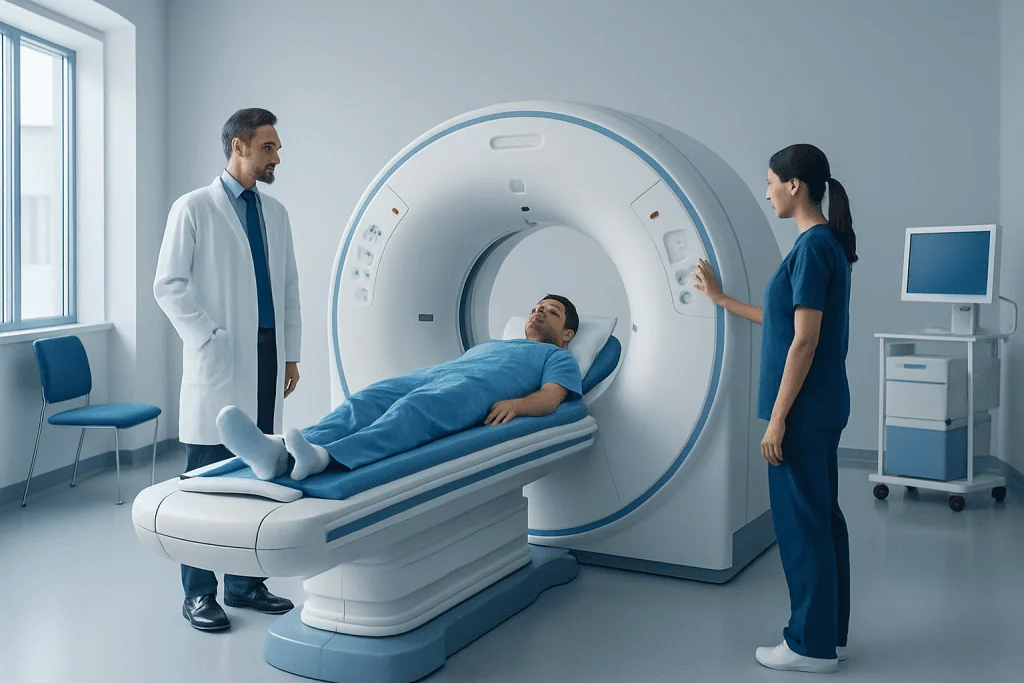
CT scans do not directly diagnose H. pylori infection. Urea breath and stool antigen tests are commonly used noninvasive tests for active H. pylori infection.
Key Takeaways
- CT scans do not directly diagnose H. pylori infection.
- Urea breath and stool antigen tests are commonly used noninvasive tests for active H. pylori infection.
- Endoscopy may allow a specialist to take stomach biopsies for H. pylori testing when clinically needed.
- Some medicines, especially antibiotics, bismuth products, and acid-suppressing drugs, can affect test accuracy.
- Successful H. pylori treatment should usually be confirmed with a follow-up test as advised by a clinician.
Can a CT scan detect H pylori? No. A CT scan cannot directly identify Helicobacter pylori bacteria, although it may help assess other causes of abdominal symptoms or complications affecting the stomach and nearby organs. H. pylori is usually diagnosed with a urea breath test, stool antigen test, or testing of tissue collected during endoscopy.
Overview: Can a CT Scan Detect H Pylori?
Can a CT scan detect H pylori? No. Computed tomography (CT) creates detailed cross-sectional images of the body, but it cannot see or confirm the presence of the microscopic bacterium Helicobacter pylori (H. pylori) in the stomach lining.
A clinician may order an abdominal CT scan for persistent pain, unexplained weight loss, vomiting, suspected bleeding, or concern about a condition involving the stomach, pancreas, liver, intestines, or other abdominal organs. While CT may show stomach-wall thickening, inflammation, an ulcer complication, or another possible cause of symptoms, these findings do not prove H. pylori infection.
H. pylori is a common bacterium that can inflame the stomach lining. It is an important cause of peptic ulcers and can contribute to longer-term stomach problems in some people. The diagnosis requires a test designed to detect the bacterium itself, its activity, or its genetic material.
Would H. pylori Show Up on a CT Scan?
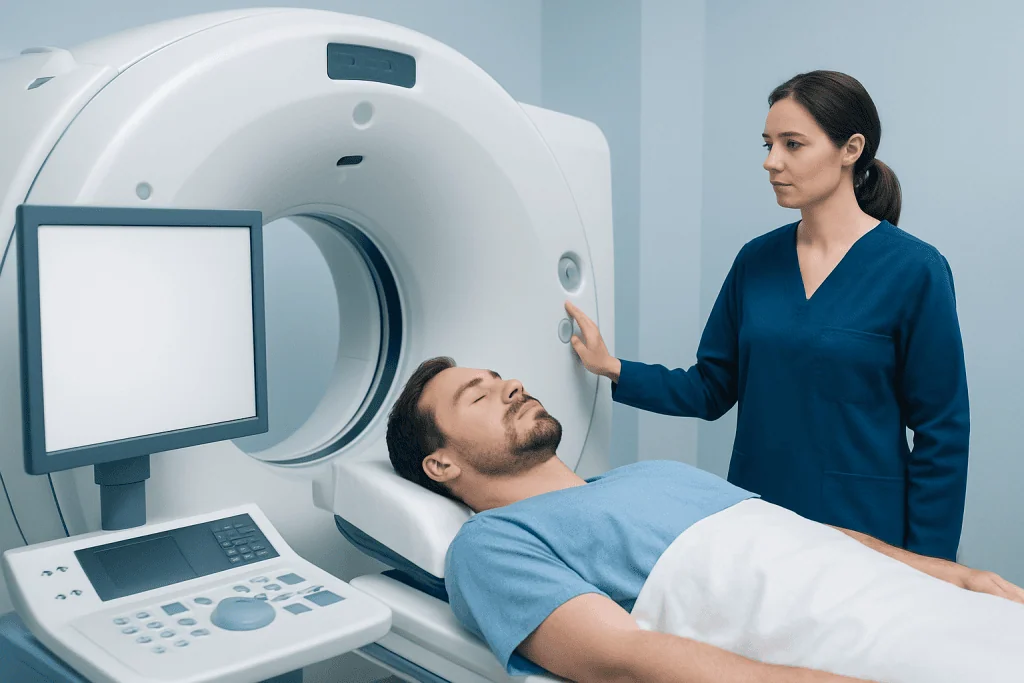
H. pylori itself does not show up on a CT scan. The bacteria are too small to be visualized with this type of imaging, and CT images cannot distinguish H. pylori-related irritation from inflammation caused by medicines, other infections, autoimmune conditions, or other digestive disorders.
CT can nevertheless be useful in selected situations. For example, it may help doctors evaluate severe abdominal symptoms, identify a perforated ulcer, investigate a blockage, assess internal bleeding, or look for another condition that needs prompt attention. It is therefore sometimes part of the wider assessment, but it is not an H. pylori test.
When symptoms suggest an ulcer or stomach condition, clinicians may use a combination of medical history, examination, blood tests, noninvasive H. pylori testing, endoscopy, and imaging when appropriate. The choice depends on a person’s age, symptoms, medical history, and the presence of warning signs.
What Is the Most Accurate Test for H. pylori?

For most people who have not recently received treatment, the urea breath test and stool antigen test are highly accurate noninvasive options for detecting an active H. pylori infection. Both can also be used after treatment to check whether the bacteria have been cleared, provided testing is timed correctly and medicines that interfere with results have been paused under clinical guidance.
During a urea breath test, the person drinks a prepared solution containing urea. If H. pylori is present, bacterial enzymes break down the urea and produce carbon dioxide that can be measured in the breath. A stool antigen test looks for proteins from H. pylori in a stool sample.
Endoscopic biopsy testing can be especially useful when a person needs endoscopy for other reasons, such as bleeding, anemia, vomiting, difficulty swallowing, recurrent ulcers, or concerning weight loss. A gastroenterologist can take small tissue samples and test them by rapid urease testing, microscopy, culture, or molecular methods. Blood antibody tests are generally less helpful for confirming an active infection because antibodies may remain positive after a past infection has resolved.
For people with persistent upper-abdominal discomfort, ulcer symptoms, or confirmed infection, evaluation and care may be coordinated through gastroenterology services.
How H. pylori Testing Works: Candidacy and Preparation
Testing may be considered for people with a current or previous peptic ulcer, unexplained indigestion that persists, certain types of stomach inflammation, or a close clinical reason to investigate H. pylori. A clinician will decide whether noninvasive testing is suitable or whether endoscopy is more appropriate.
Preparation is important because several medicines can temporarily suppress H. pylori or reduce the amount detected by a test. These include antibiotics, bismuth-containing medicines, and proton pump inhibitors (PPIs), a group of acid-lowering medicines. Stopping medicines without advice is not recommended; the clinician or testing center should provide individualized instructions on what to pause and when.
For a breath test, fasting for a specified period beforehand is commonly required. Stool testing usually does not require fasting, but collection instructions should be followed carefully. People should tell their healthcare professional about recent treatment for H. pylori, use of stomach medicines, gastrointestinal bleeding, and any difficulty providing a breath or stool sample.
- Breath test: detects active bacterial activity and is noninvasive.
- Stool antigen test: detects active infection using a stool sample.
- Endoscopic biopsy: examines stomach tissue when endoscopy is clinically indicated.
- Blood antibody test: may indicate previous exposure but cannot reliably distinguish past from active infection.
Step-by-Step: Breath, Stool and Endoscopic Testing
A urea breath test is usually simple and brief. After fasting as instructed, the patient provides an initial breath sample, drinks the test solution, then gives another breath sample after a waiting period. The laboratory compares the samples for evidence that H. pylori has broken down the urea.
For a stool antigen test, the patient collects a small stool sample using the container and instructions provided by the laboratory. The sample is sent for analysis, and results are reviewed in the context of symptoms, medication use, and treatment history.
Endoscopy is a different procedure. After appropriate preparation and sedation where used, a flexible camera is passed through the mouth to view the esophagus, stomach, and first part of the small intestine. Small biopsies can be collected without being felt. This approach provides direct information about the stomach lining as well as material for H. pylori testing.
These diagnostic tests do not treat the infection themselves. If H. pylori is confirmed, treatment generally involves a prescribed combination of medicines selected by a physician, with follow-up testing to confirm eradication.
Do They Always Check for H. pylori During Endoscopy?
No. H. pylori testing is not automatically performed during every endoscopy. The endoscopist decides whether to take biopsies based on the reason for the procedure, what the stomach lining looks like, symptoms, previous test results, and the person’s overall medical history.
Testing is more likely when there is gastritis, a stomach or duodenal ulcer, unexplained upper digestive symptoms, certain abnormal biopsy findings, or a history that raises concern for H. pylori. However, a normal-looking stomach does not completely rule out infection, and H. pylori can often be tested accurately without endoscopy.
People who are scheduled for endoscopy should ask their care team whether H. pylori testing is planned and whether any medications need to be adjusted beforehand. This can help ensure that the testing approach matches the clinical question and that results are as reliable as possible.
What Can Mess Up an H. pylori Test?
A negative H. pylori result may be less reliable if testing is performed too soon after antibiotics or treatment, while taking bismuth-containing products, or while using certain acid-suppressing medicines. These treatments can reduce the amount of bacteria or bacterial activity temporarily, leading to a false-negative result.
Recent upper gastrointestinal bleeding can also affect some tests. In biopsy testing, H. pylori may be unevenly distributed in the stomach, so sample location and the number of biopsies can influence detection. In addition, improper fasting before a breath test or incorrect specimen collection for a stool test may affect whether the laboratory can process the test properly.
A clinician may recommend repeat testing if symptoms, ulcer findings, or medical history strongly suggest H. pylori despite a negative result. They may also choose a different testing method. A positive result should be discussed with a qualified doctor so treatment is matched to the individual and local antibiotic-resistance considerations.
Benefits, Risks, Recovery and When to Seek Medical Care
Breath and stool antigen tests have important benefits: they are noninvasive, do not involve radiation, and can usually be completed without recovery time. A CT scan also has no recovery period, but it involves radiation and may include contrast material, which is not suitable for everyone. Its value is in assessing certain abdominal conditions, not diagnosing H. pylori.
Endoscopy provides a close view of the upper digestive tract and allows biopsies, but it is more invasive than breath or stool testing. Temporary throat discomfort, bloating, nausea, and drowsiness can occur after the procedure, particularly if sedation is used. Most people return home the same day and should follow the discharge instructions, including arranging support after sedation when required.
Medical care should be sought promptly for vomiting blood, black or tar-like stools, severe or worsening abdominal pain, fainting, persistent vomiting, trouble swallowing, or unexplained weight loss. These symptoms do not necessarily mean H. pylori is present, but they require timely assessment. Routine medical advice is also appropriate for persistent indigestion, recurrent ulcer symptoms, or a positive H. pylori test.
Acibadem International’s multidisciplinary specialists and JCI-accredited hospitals can assess digestive symptoms and provide diagnostic testing and treatment planning for international patients.
Frequently asked questions
Can a CT scan detect H pylori?
No. A CT scan cannot directly detect H. pylori because it does not visualize bacteria in the stomach lining. It may be used to investigate other causes of abdominal symptoms or complications, but breath, stool, or biopsy tests are needed to diagnose H. pylori.
Can a CT scan show an H. pylori ulcer?
A CT scan may sometimes show signs of an ulcer complication, such as a perforation or surrounding inflammation. However, it may miss uncomplicated ulcers and cannot determine whether H. pylori caused an ulcer. Endoscopy and H. pylori-specific testing are often more informative.
Which H. pylori test is best after treatment?
A urea breath test or stool antigen test is commonly used to confirm that treatment has cleared an active infection. Testing should be performed at the time advised by the treating clinician, since certain medicines can cause inaccurate results if taken too close to the test.
Do proton pump inhibitors affect H. pylori testing?
Yes. Proton pump inhibitors can suppress H. pylori and may lead to a false-negative breath test, stool antigen test, or biopsy test. A clinician can explain whether and when it is safe to temporarily pause this medication before testing.
Do they always test for H. pylori during endoscopy?
No. Testing during endoscopy is based on the reason for the procedure, symptoms, visible findings, and medical history. If biopsies are taken, they can be tested for H. pylori, but noninvasive tests are often suitable when endoscopy is not otherwise needed.
How soon can H. pylori symptoms improve after treatment?
Some symptoms may improve during or soon after treatment, but the timeline differs between individuals and depends on whether ulcers or gastritis are also present. It is important to complete prescribed treatment and attend follow-up testing if recommended, even if symptoms improve.
References
- American College of Gastroenterology
- National Institute of Diabetes and Digestive and Kidney Diseases
- Mayo Clinic
- World Gastroenterology Organisation
This article is for general information only and is not a substitute for professional medical advice. Please consult a qualified doctor about your individual situation.
Medical weight-loss options in Turkey — costs & eligibility
JCI-accredited · board-certified surgeons · reply within 24h
Add us as a Preferred Source to see more of our trusted health content across Google Search, AI Overviews and Discover.

More from the Health Library


Related Specialists

Assoc. Prof. Dr. Kamer Dere
Treatment of Pain Algology
Dr. Alper Albayrak
Family Medicine
Dt. Şerife Karaarslan
Oral & Dental Health
Prof. Dr. Fuat Bilgen
Cardiovascular Surgery