Can Black People Get Lice? Here Is What the Evidence Says

Head lice can affect people of any race or ethnicity, including Black people. Hair shape, styling practices, and product use may influence how easily lice spread or are noticed.
Key Takeaways
- Head lice can affect people of any race or ethnicity, including Black people.
- Hair shape, styling practices, and product use may influence how easily lice spread or are noticed.
- The main symptom is scalp itching, but a firm diagnosis usually requires seeing a live louse or viable nits close to the scalp.
- Most cases are not dangerous, though scratching can lead to skin irritation or infection.
- Medical advice is helpful when the diagnosis is unclear, symptoms are severe, or over-the-counter treatment has not worked.
Yes, Black people can get lice. Head lice can affect any person, but the likelihood of infestation may differ because lice grasp some hair types more easily, and because common hair care practices can change exposure and detection.
Overview: What the Evidence Says
Yes, Black people can get lice. Head lice are human parasites that can live on the scalp of any person, regardless of race, skin color, or ethnicity. In everyday practice, head lice are often harmless in the sense that they do not usually spread serious disease, but they can cause itching, irritation, and stress for families.
The reason this question comes up is that infestation rates are not always the same across groups. Research suggests that the structure of tightly coiled hair may make it harder for lice to grip and move compared with straighter hair, and some grooming practices may also reduce spread. Even so, “less common” does not mean “impossible,” so a child or adult with Black hair can still develop head lice after close head-to-head contact.
It is also important to separate myths from facts. Head lice are not a sign of poor hygiene, and they do not mean a home is unclean. They spread mainly through direct contact, especially among children, and anyone with an itchy scalp should be assessed based on symptoms and examination rather than assumptions about hair type.
How Head Lice Spread and Why Hair Type Matters
Head lice spread most often through direct head-to-head contact. They do not jump or fly. This is why transmission is common in households, schools, sports, sleepovers, and other settings where people spend time in close contact.
Lice use claw-like structures to grasp hair shafts. Some studies and clinical observations suggest that hair shaft shape and texture may affect how easily lice can hold on and move. Tightly curled or coiled hair may be a less favorable surface for some lice than straight hair, which may help explain lower infestation rates reported in some Black populations. However, this is not complete protection.
Shared personal items may occasionally contribute, but they are thought to be a less common route of spread than direct contact. Items that may play a role include combs, brushes, scarves, hats, helmets, pillowcases, and hair accessories. Certain hairstyles may also affect detection; lice or nits may be harder to spot quickly if the scalp is not examined closely.
- Direct head-to-head contact is the main route of spread.
- Hair texture may influence how easily lice attach, but any hair type can be affected.
- Protective styling does not completely rule out infestation.
- Finding lice depends on careful scalp inspection, not appearance alone.
Symptoms and What People Usually Notice First

The most common symptom is itching of the scalp. This itch is caused by a reaction to louse saliva and may take time to develop, so some people have lice before they feel noticeably itchy. Others may have only mild symptoms.
People may also notice a tickling or crawling sensation in the hair, trouble sleeping because lice are often more active in the dark, or small sore spots caused by scratching. In children, irritability may be the first clue. Sometimes the first sign is not a symptom at all, but visible nits attached firmly to hairs near the scalp or a live louse seen moving.
Because several scalp conditions can look similar, itching alone does not prove a person has lice. Dry scalp, dandruff, eczema, allergic reactions to hair products, and seborrheic dermatitis can all cause flaking or irritation. A careful look for live lice or viable nits is usually needed to make the diagnosis with confidence.
Common Myths, Misdiagnosis, and Other Scalp Conditions
One of the biggest misconceptions is that lice are linked to poor cleanliness. In fact, lice can infest clean hair just as they can any other hair. Another myth is that Black people cannot get lice at all. The evidence does not support that claim; the more accurate statement is that infestation may be less common in some groups, not absent.
Misdiagnosis is also common. Hair casts, product residue, dandruff, and scalp scaling may be mistaken for nits. True nits are usually oval, attached firmly to one side of the hair shaft, and found close to the scalp where warmth helps eggs develop. Flakes from dandruff or dry skin usually move more easily when touched.
Scalp itching may also be caused by inflammatory or fungal conditions rather than lice. Depending on symptoms, a doctor may consider eczema, contact dermatitis from styling products, or a fungal scalp infection such as ringworm. Getting the diagnosis right matters because treatment differs for each condition.
How Doctors Diagnose Head Lice
If medical review is needed, diagnosis starts with a history and scalp examination. A doctor will usually ask when the itching began, whether there has been close contact with someone known to have lice, what hair products or styles are used, and whether any treatments have already been tried. They may also ask about sleep, school exposure, or skin symptoms elsewhere on the body.
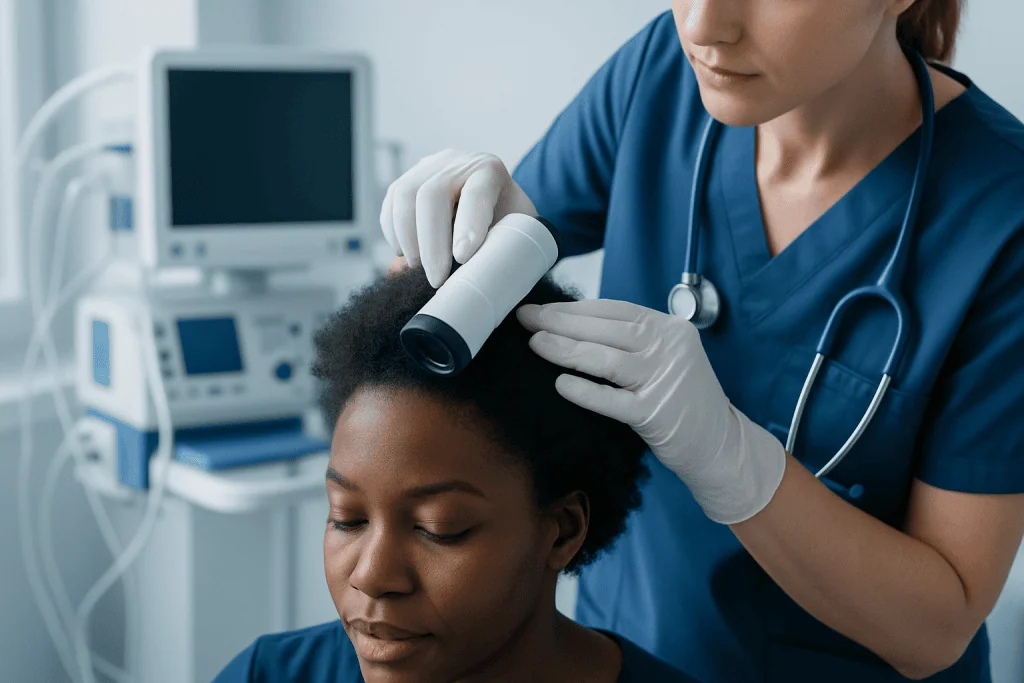
The physical exam focuses on the scalp, especially behind the ears and at the back of the neck. Doctors look for live lice, moving nymphs, and viable nits attached close to the scalp. A fine-toothed lice comb and good lighting are often more useful than a quick visual check alone, because seeing a live louse is the most reliable way to confirm active infestation.
If the findings are uncertain, the doctor may look for other explanations for itching and scale. In some cases, referral to a skin specialist may be helpful, particularly if symptoms continue after treatment or the scalp appears inflamed. This can be especially useful when several conditions overlap, such as lice plus irritation from scratching or styling products.
Treatment Options and Practical Care
Treatment depends on whether active lice are confirmed. Common approaches include medicated lotions or shampoos, careful combing to remove lice and nits, and checking close contacts. The exact treatment plan may vary by age, local guidance, previous treatment response, and whether lice are thought to be resistant to a product used before.
For many families, correct use matters as much as the product itself. Hair should be divided carefully, the scalp should be fully covered as directed, and nit removal may still be recommended even when a pediculicide is used. Household items that touch the hair can be cleaned according to public health advice, but extensive deep cleaning is usually unnecessary because lice survive poorly away from the scalp.
If a person has significant scalp irritation, scratching injuries, or uncertainty about what is causing symptoms, medical review is sensible before repeating treatments. A dermatologist may help distinguish lice from scalp disorders and treat complications such as secondary skin infection or inflammation. Where broader scalp assessment is needed, clinicians may also evaluate associated hair or skin concerns and discuss options in services such as dermatology or, if persistent scratching has contributed to hair thinning, hair restoration assessment when appropriate later on.
When to Seek Medical Care
Most head lice cases can be managed safely without urgent care, but some situations deserve medical attention. A person should seek review if the diagnosis is unclear, the scalp is very painful, there is pus or crusting that suggests infection, or itching is severe enough to disturb sleep or daily life. Medical advice is also helpful for infants, people with very sensitive skin, or anyone who has already used treatment correctly without improvement.
A doctor should also be consulted if there are signs of another condition rather than lice. Examples include patchy hair loss, swollen lymph nodes, a ring-shaped rash, marked scaling, or widespread redness. In these situations, treatment for lice alone may not solve the problem.
For international patients who need specialist evaluation, Acibadem International’s multidisciplinary teams in JCI-accredited hospitals assess scalp symptoms and related skin conditions, including through services such as specialist dermatology care.
Frequently asked questions
Can Black people really get head lice?
Yes. Head lice can affect any person, including Black children and adults. They may be less common in some groups, but they are still possible and should not be ruled out based on hair type alone.
Why do people say lice are less common in Black hair?
Researchers and clinicians believe hair shaft shape and texture may make it harder for lice to grasp and move through some tightly coiled hair types. Hair care practices may also reduce spread or change how quickly lice are noticed. Even so, these factors do not provide complete protection.
What is the clearest sign of active head lice?
The clearest sign is finding a live louse on the scalp or hair. Itching is common, but it is not specific because dandruff, eczema, and reactions to hair products can cause similar symptoms. Nits close to the scalp may support the diagnosis, but a live louse is the most reliable finding.
Can dandruff be mistaken for lice eggs?
Yes, quite often. Dandruff flakes and product residue usually move easily when touched, while nits tend to be firmly attached to the hair shaft. If there is doubt, a clinician or trained school nurse can help check the scalp.
Are head lice dangerous?
Head lice are usually more annoying than dangerous. The main problems are itching, sleep disruption, and skin irritation from scratching. Sometimes scratching can lead to a secondary bacterial skin infection, which is one reason persistent or severe symptoms should be assessed.
When should someone see a doctor instead of treating at home?
Medical care is a good idea if the diagnosis is uncertain, over-the-counter treatment has not worked, or the scalp looks infected or very inflamed. A doctor should also review symptoms if there is patchy hair loss, severe pain, or signs that another scalp condition may be present.
References
- Centers for Disease Control and Prevention
- American Academy of Dermatology
- National Health Service
- American Academy of Pediatrics
- Mayo Clinic
This article is for general information only and is not a substitute for professional medical advice. Please consult a qualified doctor about your individual situation.
Hair transplant in Turkey — costs, graft counts & a free assessment
JCI-accredited · board-certified surgeons · reply within 24h
Add us as a Preferred Source to see more of our trusted health content across Google Search, AI Overviews and Discover.

More from the Health Library



Related Specialists

Dr. Mehtap Baştugral
Clinical Laboratory
Dr. Ahsen Ercan
Physical Medicine & Rehabilitation
Dr. Injı Suleymanova
Gynecology & Obstetrics
Prof. Dr. Ferhan Öz
Otorhinolaryngology