Can Having Sex Delay Your Period? Causes, Explanations, and Next Steps

Sex itself usually does not directly delay a period. Pregnancy is an important possibility after unprotected sex or contraceptive failure.
Key Takeaways
- Sex itself usually does not directly delay a period.
- Pregnancy is an important possibility after unprotected sex or contraceptive failure.
- Stress, travel, illness, weight changes, and hormone shifts commonly affect cycle timing.
- A home pregnancy test and a symptom review are often the first practical next steps.
- Medical assessment is important for severe pain, heavy bleeding, repeated missed periods, or a negative pregnancy test with ongoing symptoms.
Can having sex delay your period? Usually, sex itself does not directly make a period late. In many cases the reason is harmless, such as normal cycle variation or stress, but pregnancy and certain health conditions should be considered if bleeding does not start as expected.
Overview: Can Having Sex Delay Your Period?
In most cases, having sex does not directly delay a period. Menstrual timing is mainly controlled by hormones, ovulation, and the normal month-to-month variation of the cycle. Many people notice a late period around the same time as sexual activity and naturally connect the two, but the delay is often due to another factor.
That said, sex can be linked to a late period in indirect ways. The most important is pregnancy after unprotected intercourse or after problems with contraception, such as a missed pill, condom break, or delayed injection. Emotional stress, poor sleep, travel, illness, and changes in exercise or body weight can also affect ovulation and make bleeding arrive later than expected.
In many healthy adults, a period that comes a few days earlier or later than usual is not a sign of disease. However, a delay that is unusual for that person, happens repeatedly, or comes with pain, fainting, fever, or abnormal bleeding deserves medical review. If pregnancy is possible, testing is a sensible first step.
Why a Period May Be Late After Sex
The timing of a menstrual period depends on whether ovulation happened and when it happened. If ovulation occurs later than usual, the next period will also come later. This is why a late period is often related to a shift in the cycle rather than to sexual intercourse itself.
Pregnancy is one explanation to consider after sex, especially if no contraception was used or if birth control may have failed. When pregnancy begins, hormone levels change and the expected period may not occur. Some people notice light spotting around the time of implantation or early pregnancy, which can be mistaken for a short or unusual period.
Another reason sex may seem connected to a delayed period is stress or emotional anticipation. Concerns about pregnancy, relationship issues, or anxiety around symptoms can influence the body’s stress response. Higher stress levels may affect hormone signaling between the brain and ovaries, leading to delayed ovulation and a later period.
Less commonly, pain during sex, pelvic inflammation, or hormonal conditions that were already present may become more noticeable around the same time. In that sense, sex may draw attention to symptoms, but it is not usually the direct cause of a missed or delayed period.
Common Causes of a Late or Missed Period

A late period has many possible causes, and many are temporary. A person who usually has regular cycles may still occasionally have a delayed period without a serious problem. Looking at the full context of symptoms, sexual activity, medications, and cycle history can help identify the most likely reason.
- Pregnancy: an important possibility after unprotected sex or contraceptive failure.
- Normal cycle variation: some cycles naturally vary by several days.
- Stress: emotional strain, lack of sleep, exams, work pressure, or travel can alter ovulation.
- Illness: fever, viral infections, or recovery from a medical condition may disrupt the cycle.
- Weight changes: significant weight loss, weight gain, or restrictive eating can affect hormone balance.
- Intense exercise: heavy training may delay ovulation or stop periods temporarily.
- Hormonal conditions: thyroid problems, elevated prolactin, and polycystic ovary syndrome can cause irregular periods.
- Birth control changes: starting, stopping, or missing hormonal contraception can change bleeding patterns.
- Perimenopause: in adults approaching menopause, cycle irregularity becomes more common.
People who have recently stopped the pill, changed an intrauterine device, or used emergency contraception may also notice a period that comes earlier, later, heavier, or lighter than usual. This can be temporary, but it is still reasonable to test for pregnancy if there has been unprotected sex.
Symptoms That May Point to Pregnancy or Another Cause
A late period by itself does not confirm pregnancy. Still, pregnancy becomes more likely when there has been vaginal intercourse without reliable contraception and the period does not arrive on time. Early signs can include breast tenderness, nausea, fatigue, increased urination, bloating, or a heightened sense of smell. Some people have only one symptom, while others notice none at all in the early days.
Other symptoms may suggest a different explanation. Acne, unwanted hair growth, weight changes, and very irregular cycles may suggest a hormone-related condition such as PCOS. Feeling unusually cold, constipated, or tired may raise suspicion for a thyroid problem. Pelvic pain, pain with sex, or very heavy periods can be seen with gynecologic conditions such as endometriosis.
Spotting after sex is different from a delayed period and should be considered separately. Light bleeding after intercourse can happen from cervical irritation, vaginal dryness, infection, or other local causes. If bleeding after sex happens repeatedly, a gynecologic evaluation is a good idea even if the menstrual cycle is otherwise regular.
What to Do Next: Testing and Medical Evaluation
If a period is late and pregnancy is possible, a home urine pregnancy test is usually the first step. Testing is generally most accurate after the missed period or according to the timing instructions on the test. If the result is negative but the period still does not come, repeating the test in a few days or seeking medical advice may be helpful.
When a doctor evaluates a late period, the discussion usually includes cycle length, the first day of the last menstrual period, sexual activity, contraception, recent stress, exercise habits, medications, and any symptoms such as pain or unusual bleeding. A physical examination may be recommended depending on the situation.
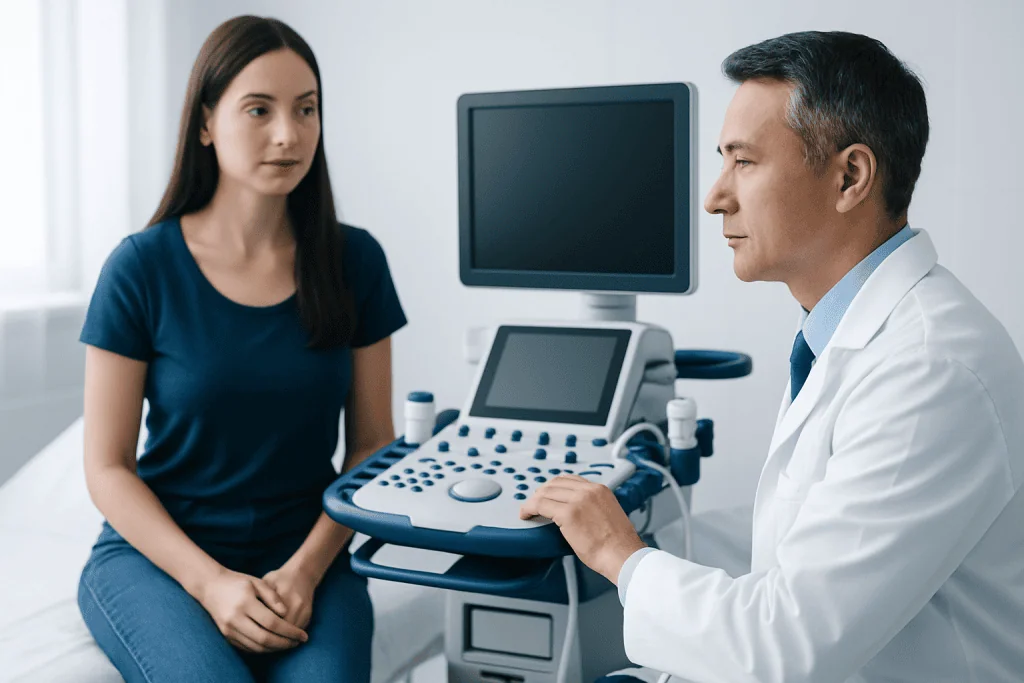
Further testing may include blood pregnancy testing, thyroid tests, hormone tests, and sometimes pelvic ultrasound. Ultrasound can help assess the uterus and ovaries and may be part of the workup if there is pelvic pain, recurrent irregular bleeding, or concern for conditions that may require gynecology care or check-up and diagnostic evaluation. The goal is not only to rule out pregnancy but also to identify treatable causes of cycle changes.
If pregnancy is confirmed, a clinician may discuss next steps for prenatal care and review symptoms that need urgent attention. Early assessment is especially important if there is one-sided pelvic pain, dizziness, or bleeding, because these can be warning signs that need prompt medical review.
Treatment and Self-Care Depend on the Cause
There is no single treatment for a late period because management depends on the reason behind it. If the delay is due to normal variation, mild stress, travel, or a temporary illness, no specific treatment may be needed other than observation. The cycle often returns to its usual pattern over time.
If pregnancy is the cause, care shifts to confirming the pregnancy and planning follow-up. If hormonal contraception is contributing to irregular bleeding, a doctor may review whether the current method is suitable and whether a change is needed. When an underlying condition is found, treating that condition often helps regulate the cycle.
Examples include managing thyroid disease, addressing eating or exercise patterns, or evaluating ovarian and uterine conditions. Some people may need support from obstetrics and gynecology specialists, while others may benefit from broader endocrinology assessment if hormone balance is a concern.
Simple self-care can also help: tracking menstrual dates, noting symptoms, taking medications as prescribed, maintaining regular sleep, and reducing stress where possible. However, self-care should not replace medical evaluation when periods are repeatedly missed or when warning signs are present.
When to Seek Medical Care
Many late periods are not dangerous, especially if the delay is only a few days and there are no other symptoms. Still, certain situations should prompt timely medical advice. It is sensible to seek care if a pregnancy test is positive, if pregnancy is possible but test results are unclear, or if the period has not returned after repeated negative tests.
- Severe or one-sided pelvic pain
- Heavy bleeding, large clots, or bleeding that causes dizziness
- Fainting, weakness, shoulder pain, or shortness of breath
- Fever or signs of infection
- Repeatedly missed or very irregular periods
- Bleeding after sex that happens more than once
- New symptoms such as unusual discharge, significant weight changes, or milky nipple discharge
Anyone with cycles that are becoming more unpredictable, especially with pain or troublesome symptoms, may benefit from professional assessment even when the cause is not urgent. Near the end of the diagnostic pathway, patients seeking coordinated care may consult Acibadem International, where multidisciplinary specialists in JCI-accredited hospitals evaluate menstrual concerns and related gynecologic or hormonal conditions for international patients.
Frequently asked questions
Can having sex delay your period by a few days?
Usually, sex itself does not directly delay a period. A delay of a few days is often due to normal cycle variation, stress, or later-than-usual ovulation. If pregnancy is possible, testing should be considered.
Can protected sex still lead to a late period?
Yes. A late period can happen even when pregnancy is unlikely because many non-pregnancy factors affect the menstrual cycle. Although contraception reduces the chance of pregnancy, no method is perfect, so a pregnancy test may still be appropriate if the period is missed.
How soon should someone take a pregnancy test after a missed period?
A home pregnancy test is often most reliable after the expected period has been missed. If the result is negative but the period still does not start, repeating the test in a few days can help. A doctor may recommend a blood test if uncertainty remains.
Is spotting after sex the same as a period?
No. Spotting after sex is usually lighter and shorter than a normal menstrual period and may come from cervical irritation, dryness, infection, or other local causes. Repeated post-sex bleeding should be discussed with a clinician.
What other symptoms should make someone worry about a late period?
Warning signs include severe or one-sided pelvic pain, heavy bleeding, fainting, fever, and a positive pregnancy test with pain or bleeding. These symptoms can point to conditions that need prompt evaluation. It is also wise to seek care for repeated missed periods or very irregular cycles.
Can stress about pregnancy make a period late?
Yes, stress can affect the hormonal signals that control ovulation and menstruation. This means anxiety, poor sleep, travel, or emotional strain can sometimes lead to a later period. Even so, pregnancy should still be ruled out when there has been recent sexual activity.
References
- American College of Obstetricians and Gynecologists
- National Institute for Health and Care Excellence
- Office on Women's Health
- Mayo Clinic
- World Health Organization
This article is for general information only and is not a substitute for professional medical advice. Please consult a qualified doctor about your individual situation.
IVF & fertility treatment in Turkey — success rates and costs
JCI-accredited · board-certified surgeons · reply within 24h
Add us as a Preferred Source to see more of our trusted health content across Google Search, AI Overviews and Discover.
Check your numbers in seconds
BMI, calories, due date, blood pressure and 30+ more clinical calculators — free, instant, doctor-reviewed ranges.