Can Neuromuscular Disease Be Life-Threatening? Risks, Complications, and Prognosis

Neuromuscular disease describes a group of disorders affecting nerves, muscles, or the connection between them. Some neuromuscular diseases can become life-threatening, especially if breathing, swallowing, or heart muscles are involved.
Key Takeaways
- Neuromuscular disease describes a group of disorders affecting nerves, muscles, or the connection between them.
- Some neuromuscular diseases can become life-threatening, especially if breathing, swallowing, or heart muscles are involved.
- Early symptoms may include muscle weakness, fatigue, cramps, trouble walking, or difficulty speaking and swallowing.
- Diagnosis often combines neurological examination, blood tests, imaging, nerve and muscle studies, and sometimes genetic testing.
- Treatment focuses on the underlying cause, symptom control, rehabilitation, and monitoring for complications.
- Regular follow-up helps reduce risks and supports quality of life over time.
Neuromuscular disease is not always life-threatening, but some forms can become serious when they weaken the muscles used for breathing, swallowing, or heart function. Prognosis varies widely, and timely diagnosis, monitoring, and supportive care can make a meaningful difference.
Overview: Can neuromuscular disease be life-threatening?
Neuromuscular disease is a broad term for conditions that affect the muscles, the nerves that control them, or the communication between nerves and muscles. These disorders include inherited, autoimmune, degenerative, inflammatory, and metabolic conditions. Because this group is so varied, the outlook can range from mild and slowly progressive to severe and potentially life-threatening.
In some people, neuromuscular disease mainly causes weakness in the arms and legs. In others, it may also affect the muscles needed for breathing, swallowing, facial movement, or heart function. When these vital muscles become weak, the risk of serious complications rises. This is why the answer to whether neuromuscular disease is life-threatening is: sometimes, depending on the specific diagnosis and how advanced it is.
Many people with neuromuscular disease live for years with careful treatment and monitoring. Even when a condition is chronic, modern care can often help manage symptoms, reduce complications, and support independence. The most important step is identifying the exact cause and following a treatment plan tailored to the person’s needs.
Symptoms and warning signs
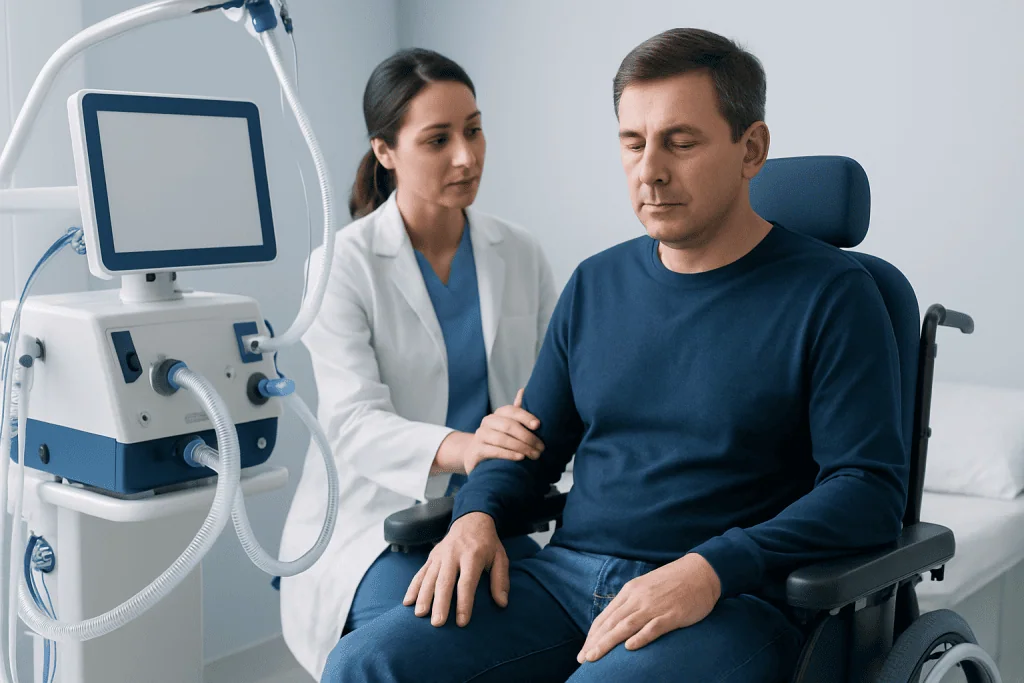
The most common symptom of neuromuscular disease is muscle weakness. This may begin gradually and affect the legs, arms, hands, face, or neck. Some people notice difficulty climbing stairs, lifting objects, walking long distances, or getting up from a chair. Others may experience muscle cramps, twitching, fatigue, or reduced coordination.
Symptoms can also involve speaking, swallowing, and breathing. A person may develop a weak voice, choking while eating, shortness of breath, especially when lying down, or frequent chest infections. In certain conditions, eye muscles are affected, leading to drooping eyelids or double vision.
Warning signs that need prompt medical attention include rapidly worsening weakness, new trouble breathing, repeated choking, confusion from low oxygen levels, chest pain, or fainting. These symptoms do not always mean a life-threatening emergency, but they can signal important complications that should be assessed quickly.
- Progressive muscle weakness
- Muscle wasting or shrinking
- Difficulty walking or frequent falls
- Trouble swallowing or speaking clearly
- Shortness of breath or poor cough strength
- Drooping eyelids or double vision in some disorders
Why some neuromuscular diseases become dangerous

Neuromuscular diseases become more dangerous when they affect essential body functions. The respiratory muscles, including the diaphragm and chest wall muscles, help a person breathe deeply and cough effectively. If these muscles weaken, mucus may build up in the lungs and increase the risk of infection, low oxygen levels, and respiratory failure.
Swallowing problems can also create serious risks. Weak throat muscles may allow food or liquid to enter the airway, a problem known as aspiration. This can lead to choking or aspiration pneumonia. People may also struggle to maintain adequate nutrition and hydration if eating becomes difficult.
Some neuromuscular conditions can involve the heart. In these cases, the heart muscle or its electrical system may be affected, leading to irregular heartbeat, reduced pumping strength, or other cardiac complications. The level of risk depends on the specific condition. For example, some inherited muscle disorders may have a recognized link with heart involvement, while others mainly affect skeletal muscles.
Progression speed matters too. A slowly evolving disease may allow time for supportive treatments and lifestyle adjustments. A rapidly progressing condition, by contrast, may require urgent specialist care. Conditions in the broader category of neuromuscular diseases are therefore evaluated not only by name, but also by which muscles are involved and how quickly symptoms are changing.
Causes, types, and risk factors
Neuromuscular disease can arise from many different causes. Some conditions are inherited and result from genetic changes that affect muscle structure or nerve function. Others are autoimmune, meaning the immune system mistakenly attacks the body’s own tissues. There are also inflammatory, metabolic, toxic, and degenerative causes.
Examples include muscular dystrophies, myasthenia gravis, peripheral neuropathies, motor neuron diseases, inflammatory myopathies, and spinal muscular atrophy. Although these disorders share certain features, they do not all carry the same level of risk. Some mainly affect mobility, while others may also threaten breathing, swallowing, or heart function.
Risk factors for worse outcomes can include older age at diagnosis in some conditions, severe baseline weakness, delayed diagnosis, respiratory muscle involvement, swallowing difficulties, recurrent chest infections, poor nutrition, and heart involvement. Inherited disorders may also run in families, making family history an important clue. Autoimmune forms may fluctuate, with periods of worsening and improvement.
Because this is a broad field, people often need a careful evaluation to understand exactly which disorder is present. In some cases, doctors may distinguish whether symptoms are due to a problem in the muscle itself, the peripheral nerves, the motor neurons, or the junction where nerves communicate with muscles, as in myasthenia gravis.
How diagnosis and prognosis are assessed
Diagnosis begins with a detailed history and neurological examination. The doctor asks about the pattern of weakness, how quickly symptoms appeared, whether there are swallowing or breathing issues, and whether similar problems run in the family. The examination helps identify which muscle groups are affected and whether signs point more strongly to a muscle disorder, a nerve disorder, or another neurological cause.
Tests may include blood work, pulmonary function testing, electrodiagnostic studies such as nerve conduction studies and electromyography, imaging, genetic testing, and sometimes muscle or nerve biopsy. When there are breathing symptoms, sleep-related testing or respiratory assessments may also be needed. If heart involvement is suspected, electrocardiography and echocardiography may be recommended.
Prognosis depends on the exact diagnosis, severity, age of onset, rate of progression, and response to treatment. Some conditions are highly manageable for many years. Others are more aggressive and require close monitoring. A prognosis is not based only on the disease name; it is also shaped by whether complications are recognized early and treated appropriately.
Regular follow-up is important because prognosis can change over time. Weakness may remain stable in some disorders, while in others it may fluctuate or gradually worsen. Ongoing monitoring allows clinicians to adjust treatment, recommend rehabilitation, and identify complications before they become emergencies.
Treatment options and supportive care
Treatment depends on the underlying cause. Autoimmune disorders may respond to medicines that calm the immune system, while inherited conditions may need long-term supportive management. In many cases, treatment includes physical therapy, occupational therapy, speech and swallowing therapy, nutritional support, and respiratory care. These approaches can help preserve strength, maintain safety, and support daily life.
Breathing support may range from airway clearance techniques to noninvasive ventilation in selected patients. Swallowing therapy and diet modifications may reduce the risk of choking and aspiration. When mobility is affected, braces, walking aids, or rehabilitation programs can improve comfort and independence. Some patients also benefit from structured care through physical therapy and rehabilitation.
Specific interventions may be needed depending on the condition. For example, some people require coordinated neurology care to guide diagnosis, medication choices, and long-term monitoring. If tests suggest heart involvement, respiratory compromise, or severe muscle weakness, treatment usually involves a multidisciplinary team rather than one specialist alone.
For patients with advanced disease, supportive care is not the same as giving up treatment. Instead, it means addressing breathing, nutrition, sleep, communication, mobility, and quality of life in a practical way. Near the end of the care pathway, some international patients may seek assessment at centers such as Acibadem International, where multidisciplinary specialists in JCI-accredited hospitals evaluate and treat complex neuromuscular conditions.
Prevention, self-care, and reducing complications
Not all neuromuscular diseases can be prevented, especially inherited forms. However, complications can often be reduced through consistent medical care and attention to daily habits. Following the treatment plan, attending regular checkups, and reporting new symptoms early are among the most effective steps a person can take.
Self-care usually focuses on conserving energy, preventing falls, protecting swallowing and breathing, and maintaining nutrition. Gentle exercise or rehabilitation may help preserve function when recommended by a clinician, but overexertion should be avoided if it worsens symptoms. Vaccinations, infection prevention, and prompt treatment of respiratory illnesses are often important because lung infections can be especially challenging in people with weak respiratory muscles.
Helpful self-care strategies may include:
- Eating slowly and following swallowing advice from a specialist
- Maintaining a balanced diet and adequate fluid intake
- Using mobility aids if falls are a concern
- Practicing breathing exercises or airway clearance methods if prescribed
- Getting enough rest and pacing activities through the day
- Keeping follow-up appointments with neurology, rehabilitation, and other specialists
Family and caregiver support can make a major difference. Loved ones can help notice early changes in breathing, swallowing, or mobility and encourage timely medical review. Education is often a key part of safe long-term care.
When to see a doctor
A person should see a doctor if they have persistent muscle weakness, frequent falls, trouble climbing stairs, unexplained fatigue, speech changes, muscle twitching, or difficulty swallowing. Even mild symptoms deserve evaluation if they are progressive or interfere with daily life. Early diagnosis can help clarify the cause and lower the chance of preventable complications.
Urgent medical attention is needed for sudden or rapidly worsening weakness, shortness of breath, inability to clear secretions, repeated choking, chest pain, fainting, or severe dehydration due to swallowing difficulty. These symptoms can signal a serious complication involving breathing, nutrition, or the heart.
Patients already diagnosed with a neuromuscular disorder should not wait for a routine visit if they notice a clear decline. Changes in sleep quality, morning headaches, increasing cough weakness, weight loss, or repeated respiratory infections may indicate that the disease is affecting vital functions more than before. Timely assessment can help doctors adjust care and improve safety.
Frequently asked questions
Are all neuromuscular diseases life-threatening?
No. Many neuromuscular diseases are chronic but not immediately life-threatening. The level of risk depends on the specific disorder and whether it affects breathing, swallowing, or the heart.
What complications make neuromuscular disease more serious?
The most important complications are respiratory weakness, swallowing difficulty, aspiration pneumonia, poor nutrition, and heart involvement in certain conditions. These problems can become serious if they are not recognized and treated early.
Can treatment improve prognosis in neuromuscular disease?
Yes, in many cases treatment can improve symptom control, reduce complications, and support daily function. Prognosis often improves when diagnosis is made early and care includes rehabilitation, respiratory monitoring, and management of the underlying cause.
How do doctors know if breathing muscles are affected?
Doctors assess symptoms such as shortness of breath, weak cough, disturbed sleep, and morning headaches. They may also use pulmonary function tests and other respiratory evaluations to measure how well the breathing muscles are working.
Is neuromuscular disease always progressive?
Not always. Some neuromuscular conditions progress slowly, some fluctuate, and others may remain relatively stable for long periods. The pattern depends on the diagnosis and the person’s response to treatment.
When should someone go to the emergency department?
Emergency care is important for severe shortness of breath, repeated choking, sudden worsening weakness, chest pain, fainting, or confusion. These symptoms may indicate urgent problems with breathing, swallowing, or heart function.
References
- National Institute of Neurological Disorders and Stroke
- Muscular Dystrophy Association
- National Institute of Arthritis and Musculoskeletal and Skin Diseases
- Mayo Clinic
- World Health Organization
This article is for general information only and is not a substitute for professional medical advice. Please consult a qualified doctor about your individual situation.
Explore treatments in Turkey — costs, top hospitals & a free quote
JCI-accredited · board-certified surgeons · reply within 24h
Add us as a Preferred Source to see more of our trusted health content across Google Search, AI Overviews and Discover.