Can Tea Tree Oil Kill Head Lice? Here Is What the Evidence Says

Head lice are a common, usually harmless problem that can be treated successfully. Tea tree oil has shown lice-killing activity in laboratory research, but high-quality clinical evidence remains limited.
Key Takeaways
- Head lice are a common, usually harmless problem that can be treated successfully.
- Tea tree oil has shown lice-killing activity in laboratory research, but high-quality clinical evidence remains limited.
- Undiluted tea tree oil can cause skin irritation or allergic reactions and should not be applied to the scalp without medical advice.
- Approved pediculicide treatments and careful wet combing have stronger evidence for treating active head lice.
- Medical review is helpful for scalp infection, severe reactions, uncertainty about the diagnosis, or treatment failure.
Head lice are common, harmless insects that do not reflect poor hygiene and do not spread serious disease. Tea tree oil may affect lice in laboratory studies, but it is not a proven first-line treatment and can irritate the scalp, especially when used undiluted.
Can tea tree oil kill head lice?
Tea tree oil may kill some head lice in laboratory settings, but it is not established as a reliable, first-line treatment for head lice in everyday use. Small studies and laboratory research suggest that tea tree oil, sometimes combined with other plant oils, may have insecticidal effects. However, products, concentrations, treatment methods, and study quality vary, so the results cannot confirm that home use will work safely or consistently.
Head lice are very common, particularly among school-aged children. They are uncomfortable and can cause itching, but they do not spread disease and are not a sign of poor cleanliness. Evidence-based treatments, used exactly as directed, together with combing to remove lice and eggs, remain the most dependable approach.
Tea tree oil can cause burning, redness, itching, or allergic contact dermatitis, especially if applied undiluted. It should never be swallowed, and essential oils should be kept away from young children. A pharmacist or clinician can help a person choose an age-appropriate, evidence-based treatment if head lice are suspected.
What head lice are and how they spread
Head lice are tiny wingless insects that live close to the scalp and feed on small amounts of blood. Their eggs, called nits, are attached firmly to hair shafts, often behind the ears and near the nape of the neck. Nits may look like dandruff, but unlike dandruff they do not brush away easily.
Lice usually spread through direct head-to-head contact. This is why transmission can occur among children during play, sports, sleepovers, or close family contact. Spread through hats, brushes, bedding, or furniture is possible but considered much less common because lice do not survive long away from the human scalp.
Having head lice is not caused by dirty hair, pets, or poor home hygiene. Pets do not carry human head lice. Routine cleaning is sufficient; extensive household fumigation, insecticide sprays, and throwing away belongings are unnecessary and may expose families to avoidable chemicals.
Symptoms and how head lice are confirmed

Itching is the best-known symptom of head lice, but it may not begin immediately. It is usually an immune response to louse saliva, and some people have little or no itching. A tickling sensation in the hair, scratching, irritability, difficulty sleeping, or visible insects and nits may also occur.
Active infestation is best confirmed by finding a live, crawling louse. A fine-toothed lice comb used on damp hair under good light can make this easier. Finding only nits does not always mean live lice are present, since empty egg casings can remain attached to hair after successful treatment.
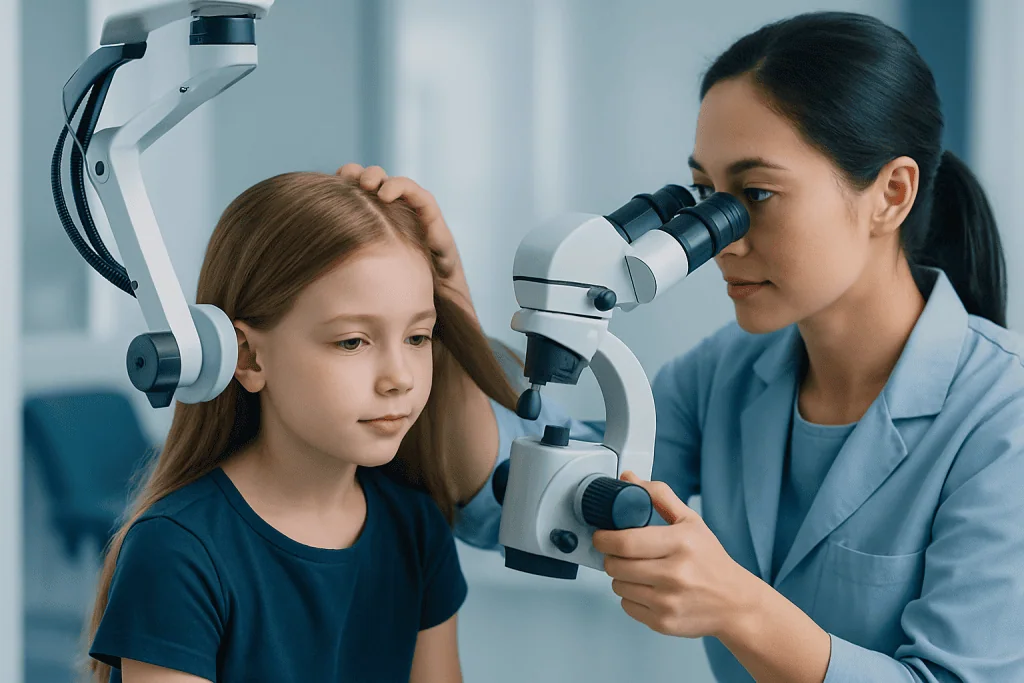
A doctor or trained healthcare professional may examine the scalp and hair closely, sometimes using magnification or combing. They can distinguish lice from dandruff, hair casts, eczema flakes, or other scalp conditions. This is useful before repeat treatment, since treating a condition that is not lice may irritate the scalp without solving the problem.
What the evidence says about tea tree oil
Tea tree oil is an essential oil derived from the leaves of Melaleuca alternifolia. In laboratory research, it has shown activity against lice and, in some studies, against lice eggs. A few small clinical studies have evaluated tea tree oil in combination with other ingredients, but they do not provide enough consistent evidence to recommend tea tree oil alone as a standard treatment.
Laboratory results do not necessarily predict treatment success on a person’s scalp. A product must reach live lice at an effective concentration, remain in contact for an appropriate time, be safe for the skin, and address newly hatched lice if eggs survive. Commercial essential-oil products also differ widely in their ingredients and concentration.
For these reasons, major public health guidance generally prioritizes treatments specifically tested and approved for head lice, alongside proper combing and follow-up. “Natural” does not automatically mean safer or more effective. If someone is considering an essential-oil product, they should discuss it with a healthcare professional, particularly for children, people with eczema, asthma, allergies, broken skin, pregnancy, or breastfeeding.
Tea tree oil should not be ingested. It can be toxic if swallowed and should be stored securely. Applying undiluted essential oil to the scalp is not recommended because it may cause irritant or allergic reactions.
Evidence-based options for treating head lice
When live lice are confirmed, an over-the-counter or prescription treatment may be recommended depending on a person’s age, medical history, local availability, and prior treatments. These products are designed for head lice and should be applied only according to the label or clinician’s instructions. More treatment is not better; repeated or prolonged use can irritate the scalp.
Many treatment plans also include wet combing. Hair is moistened, conditioner may be used if compatible with the selected product instructions, and a fine-toothed lice comb is passed systematically from the scalp to the ends of the hair. Combing every few days for about two weeks can help remove live lice and nits, although the exact schedule should follow the advice for the chosen treatment.
Some products do not reliably kill every egg, so a second application may be needed after an interval that targets newly hatched lice before they can lay more eggs. The correct timing depends on the medication. A pharmacist or clinician can explain the plan and help avoid unnecessary repeat use.
Only household members and close contacts with live lice generally need treatment. Checking close contacts is sensible, but preventive treatment for everyone is usually not needed. Avoid combining multiple lice products unless a healthcare professional specifically advises it, as this can increase the risk of scalp irritation and does not necessarily improve effectiveness.
Practical self-care and preventing reinfestation
After treatment, wash recently used pillowcases, hats, towels, clothing, and bedding in hot water and dry them using heat when the fabric allows. Items that cannot be washed can be sealed in a bag for a period advised by local public health guidance. Soak combs and brushes in hot water, and vacuum upholstered furniture or car seats if there has been close head contact.
These steps are intended to reduce the small chance of transfer from recently used items, not to disinfect the entire home. Insecticide sprays or foggers should not be used in the home for head lice. They are not necessary and can be harmful if inhaled or used around children and pets.
To reduce spread, avoid direct head-to-head contact while active lice are being treated. It is also sensible not to share brushes, hair accessories, hats, helmets, headphones, or pillows. Schools and childcare settings may have their own policies, but exclusion until every nit is removed is generally not medically necessary.
If live lice remain after a correctly used treatment and careful combing, it may be due to reinfestation, incorrect use, or reduced response to a product. Rather than repeatedly trying different remedies at home, medical advice can help identify the next appropriate option.
When to seek medical care
Most cases of head lice can be managed safely with appropriate treatment and do not require urgent care. Medical review is advisable when there is uncertainty about whether lice are present, when a child is very young, or when a person has a history of significant skin sensitivity, eczema, allergies, or reactions to lice products.
A clinician should assess scalp pain, spreading redness, swelling, crusting, pus, fever, or sores caused by persistent scratching, as these can indicate skin irritation or a secondary bacterial infection. Prompt advice is also important if tea tree oil or another product causes marked burning, rash, facial swelling, wheezing, or other signs of an allergic reaction. Severe breathing difficulty or swelling of the lips, tongue, or throat requires emergency care.
Medical advice is also useful when live lice are still seen after a treatment has been used exactly as instructed, including any recommended repeat application. A doctor can confirm the diagnosis, review prior treatment use, check for complications, and recommend an alternative option where appropriate. Acibadem International’s multidisciplinary specialists and JCI-accredited hospitals can assess scalp concerns and provide care for international patients.
Frequently asked questions
Is tea tree oil safe to put on the scalp for lice?
Tea tree oil can irritate the scalp and may trigger an allergic skin reaction, particularly when used undiluted. It should not be swallowed or used without professional advice in young children or people with sensitive skin. Proven lice treatments are generally a safer starting point.
Can tea tree oil kill lice eggs as well as live lice?
Some laboratory studies suggest tea tree oil may affect lice eggs, but evidence from real-world treatment studies is limited and inconsistent. Because no method reliably removes every egg in every case, careful combing and any recommended repeat treatment are important.
What is the fastest way to know if someone has head lice?
The most reliable sign is finding a live, crawling louse during close inspection or wet combing. Nits alone can be misleading because they may be old, empty egg cases or may resemble other scalp debris. A clinician can help if the diagnosis is unclear.
Do head lice mean a person has poor hygiene?
No. Head lice can affect people with clean or unwashed hair and are mainly spread through direct head-to-head contact. They are common in children and do not indicate poor personal hygiene or an unclean home.
Should everyone in the household be treated for head lice?
Usually, only people with live lice need treatment. Household members and close contacts should be checked carefully, and treatment can be started if live lice are found. Preventive use of lice medicines in people without lice is generally not recommended.
When should a doctor be consulted for head lice?
A doctor should be consulted if the diagnosis is uncertain, treatment has not worked despite correct use, or the scalp shows signs of infection or a significant reaction. Medical advice is also helpful for infants, people with skin conditions, and anyone who has reacted to a lice product or essential oil.
This article is for general information only and is not a substitute for professional medical advice. Please consult a qualified doctor about your individual situation.
Hair transplant in Turkey — costs, graft counts & a free assessment
JCI-accredited · board-certified surgeons · reply within 24h
Add us as a Preferred Source to see more of our trusted health content across Google Search, AI Overviews and Discover.

More from the Health Library

Can You Take Tylenol with Prednisone? Causes, Explanations, and Next Steps

Herpes Rash: Common Causes, Related Conditions, and When to See a Doctor

How to Treat Burning Sensation in Legs? A Doctor-Reviewed Answer

Rash and Pregnancy: Common Causes, Related Conditions, and When to See a Doctor

How Much Weight Can You Lose in a Week? Causes, Explanations, and Next Steps