Can Tmj Cause Dizziness? Causes, Explanations, and Next Steps

TMJ disorders and dizziness can occur together, but a direct cause-and-effect relationship is not always clear. Jaw muscle tension, pain pathways, stress, and nearby ear symptoms may help explain the association.
Key Takeaways
- TMJ disorders and dizziness can occur together, but a direct cause-and-effect relationship is not always clear.
- Jaw muscle tension, pain pathways, stress, and nearby ear symptoms may help explain the association.
- Brief or mild dizziness without warning signs is often not an emergency, but recurrent, worsening, or unexplained symptoms deserve medical review.
- Urgent assessment is important for dizziness with stroke-like symptoms, fainting, severe headache, chest pain, or sudden hearing changes.
- A clinician may assess the jaw, ears, balance system, medicines, blood pressure, and neurologic health before recommending treatment.
Can TMJ cause dizziness? Temporomandibular joint (TMJ) disorders can occur alongside dizziness in some people, particularly when jaw pain, muscle tension, headaches, or ear-related symptoms are also present. However, dizziness has many possible causes, so it should not automatically be attributed to the jaw without an appropriate medical assessment.
Can TMJ Cause Dizziness? The Short Answer
Yes, temporomandibular joint (TMJ) disorders may be associated with dizziness in some people. A TMJ disorder, also called temporomandibular disorder (TMD), affects the jaw joint and the muscles that move the jaw. People with TMD may report a sense of lightheadedness, unsteadiness, ear fullness, headache, facial pain, or neck tension alongside jaw symptoms.
Most jaw-related symptoms are not dangerous, and mild, short-lived dizziness can have a non-urgent explanation. Still, dizziness is a broad symptom rather than a diagnosis. Inner-ear conditions, migraine, dehydration, medication effects, blood pressure changes, anxiety, vision problems, and neurologic conditions can also cause it. For this reason, it is important not to assume that TMJ is the cause, especially if dizziness is new, frequent, severe, or changing.
The most helpful next step is to consider the full pattern. Dizziness that appears at the same time as jaw clenching, chewing discomfort, clicking, facial muscle pain, or morning jaw soreness may support a TMD connection. A doctor, dentist, or appropriately trained clinician can help determine whether the jaw is contributing and whether other causes need attention.
How a Jaw Disorder May Be Linked With Dizziness
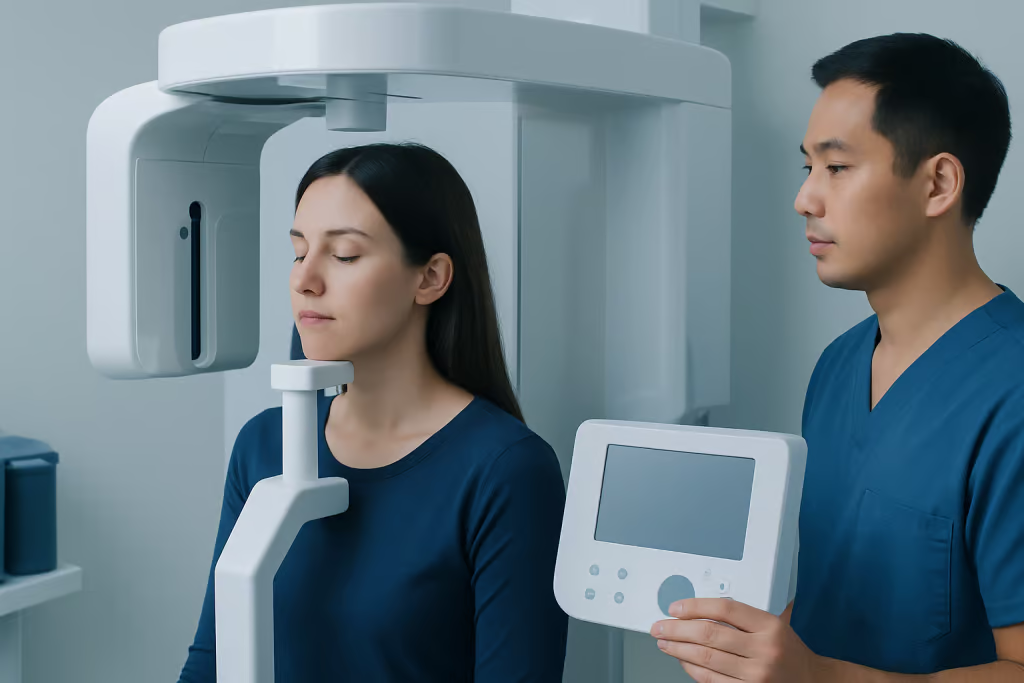
The TMJ sits close to the ear, and the jaw, face, neck, and head share interconnected muscles and sensory nerves. When jaw muscles are overworked or painful, such as with daytime clenching or nighttime teeth grinding, muscle tension may extend into the temples, scalp, and neck. This can contribute to headache, a feeling of pressure, and a nonspecific sense of imbalance in some individuals.
TMD can also be accompanied by ear symptoms, including earache, a blocked-ear sensation, ringing in the ears, or sound sensitivity. These symptoms do not necessarily mean there is an ear disease. Rather, they may reflect shared nerve pathways or referred pain from the jaw. Because the inner ear plays a central role in balance, a clinician may need to distinguish jaw-associated symptoms from a true vestibular, or balance-system, disorder.
Research has identified an association between TMD and dizziness, but it does not prove that TMD directly causes dizziness in every person. Many people have more than one contributing factor, such as migraine, stress, poor sleep, neck strain, or an inner-ear condition. A careful assessment is therefore more useful than relying on a single explanation.
Symptoms That May Suggest a TMJ Contribution

A TMJ contribution may be more likely when dizziness occurs together with recognizable jaw symptoms. These may be present on one or both sides and can fluctuate with stress, sleep quality, chewing habits, or prolonged speaking. Symptoms may be mild at first and become more noticeable during periods of increased muscle tension.
- Jaw pain, tenderness, stiffness, or tiredness
- Clicking, popping, grating, or catching of the jaw joint
- Pain when chewing, yawning, or opening the mouth widely
- Headaches, temple pain, facial aching, or neck discomfort
- Teeth grinding or clenching, especially on waking
- Ear fullness, ear discomfort, or ringing without signs of infection
- A vague feeling of unsteadiness rather than a spinning sensation
It is useful to describe the dizziness precisely. Vertigo usually feels as though the person or surroundings are spinning. Lightheadedness may feel like faintness, while disequilibrium means feeling off-balance while standing or walking. These distinctions help clinicians identify possible causes and decide whether an ear, dental, neurologic, or other evaluation is most appropriate.
Other Common Causes of Dizziness to Consider
Dizziness is common and can result from many everyday and medical factors. Not eating or drinking enough, overheating, standing up quickly, lack of sleep, alcohol, acute stress, and some medicines may cause temporary lightheadedness. Anxiety can also produce physical sensations such as dizziness, rapid breathing, tingling, and a feeling of unreality; these symptoms are real and deserve supportive care.
Inner-ear conditions are an important consideration, particularly when dizziness is spinning, triggered by head movement, or accompanied by nausea, hearing changes, or ear pressure. Migraine may cause dizziness with or without a severe headache. Problems involving vision, heart rhythm, blood pressure, anemia, blood sugar, or the nervous system may also be relevant depending on the individual and their symptoms.
For this reason, treating jaw tension alone may not resolve dizziness if another condition is involved. A clinician may ask about timing, triggers, recent illness, medicines, headaches, hearing, hydration, menstrual or hormonal changes, and medical history. This broader approach can be reassuring because it helps identify treatable contributors and avoids overlooking a separate problem.
When to Seek Medical Care
Medical advice is recommended for dizziness that is new and unexplained, repeatedly returns, lasts longer than expected, interferes with work or daily activities, or occurs without clear jaw symptoms. An appointment is also sensible when jaw pain, limited mouth opening, frequent headaches, tooth wear, or sleep-related clenching are affecting quality of life. Early assessment can often support simpler, conservative treatment.
Urgent medical care is needed if dizziness occurs with weakness or numbness on one side of the body, facial drooping, difficulty speaking or understanding speech, confusion, loss of consciousness, trouble walking, double vision, a sudden severe headache, chest pain, shortness of breath, or a very rapid or irregular heartbeat. Sudden hearing loss, persistent vomiting, or severe continuous vertigo also needs prompt evaluation.
These warning signs do not mean that a serious condition is likely, but they should not be managed as TMJ symptoms at home. If someone is feeling faint or unsteady, they should sit or lie down in a safe place, avoid driving, and seek appropriate help. A family member or friend may be able to assist if symptoms are significant.
How Doctors Diagnose the Cause
Diagnosis begins with a detailed history. A clinician will ask when dizziness started, how long episodes last, whether there is spinning or faintness, what triggers symptoms, and whether hearing, headache, jaw, neck, or neurologic symptoms are present. A symptom diary can be useful. Recording jaw pain, clenching, meals, sleep, stress, dizziness episodes, and associated symptoms may reveal patterns over time.
The examination may include blood pressure and pulse measurements, an ear examination, basic neurologic and balance checks, and an assessment of eye movements. When TMD is suspected, the clinician or dentist may examine jaw movement, tenderness in the chewing muscles, joint sounds, bite-related concerns, and signs of teeth grinding. Imaging is not always needed, but it may be considered for persistent jaw locking, injury, suspected joint changes, or symptoms that need further clarification.
Depending on the findings, referral may be made to a dentist experienced in TMD, an ear, nose and throat specialist, a neurologist, a physiotherapist, or another appropriate professional. This team-based approach is particularly helpful when dizziness has more than one possible contributor.
Treatment and Self-Care Options
When a TMJ disorder appears to be contributing, treatment usually begins with conservative measures. These may include temporarily choosing softer foods, avoiding gum chewing and very wide yawning, using gentle heat or cold according to comfort, and practicing relaxed jaw positioning. The resting position is generally with the lips together, teeth apart, and tongue resting lightly against the roof of the mouth.
Managing contributing strain can also help. A clinician may recommend jaw exercises, physical therapy for the jaw and neck, posture guidance, stress-management strategies, or a custom dental appliance when appropriate. Pain-relieving medicines may be considered by a qualified clinician based on the person’s health history and other medicines. Procedures or surgery are not first-line options for most TMD presentations.
If dizziness is caused by another condition, treatment will focus on that diagnosis. For example, vestibular rehabilitation may be helpful for selected balance disorders, while migraine-directed care or medication review may be needed in other cases. Acibadem International’s multidisciplinary specialists and JCI-accredited hospitals can assess jaw, ear, balance, and neurologic symptoms for international patients when coordinated care is needed.
Until an evaluation is complete, practical safety measures include drinking regular fluids, eating balanced meals, rising slowly from sitting or lying positions, limiting alcohol if it worsens symptoms, and avoiding driving or climbing when unsteady. These steps do not replace medical care, but they can reduce the risk of falls while the cause is being assessed.
Frequently asked questions
Can TMJ dizziness feel like vertigo?
Some people with TMJ symptoms describe a spinning or moving sensation, but true vertigo is more commonly associated with the inner ear or certain neurologic conditions. A clinician should assess spinning dizziness, especially if it is severe, recurrent, or accompanied by nausea, hearing changes, or difficulty walking. It is not safe to assume vertigo is caused by the jaw alone.
Why do TMJ symptoms and ear fullness occur together?
The jaw joint and chewing muscles are close to the ear and share some nerve pathways with nearby structures. Pain or muscle tension from the jaw can be felt as ear discomfort, pressure, or fullness even when the ear itself appears healthy. An ear examination may still be needed to rule out infection, fluid, or other ear conditions.
Can teeth grinding cause dizziness?
Teeth grinding can overwork the jaw and facial muscles, contributing to TMD symptoms such as jaw soreness, headaches, and neck tension. These symptoms may coexist with lightheadedness or imbalance in some people. However, grinding is not the only possible explanation for dizziness, so persistent symptoms should be reviewed.
Will treating TMJ make dizziness go away?
It may improve dizziness when jaw pain, muscle tension, and clenching are meaningful contributors. Improvement is not guaranteed because dizziness may have multiple causes at the same time. A targeted treatment plan works best after a clinician has considered ear, neurologic, medication-related, and other possible factors.
What kind of doctor should someone see for TMJ and dizziness?
A primary care clinician can provide an initial assessment and identify warning signs or common non-jaw causes of dizziness. A dentist or oral health professional with TMD experience may evaluate jaw symptoms, while an ear, nose and throat specialist or neurologist may be appropriate for balance, hearing, migraine, or neurologic concerns. The best referral depends on the symptom pattern and examination findings.
Is dizziness from TMJ dangerous?
Mild dizziness occurring with jaw tension is often not an emergency, but dizziness itself should be taken seriously when it is new, persistent, or disruptive. Immediate assessment is important when it occurs with stroke-like symptoms, fainting, chest pain, severe headache, sudden hearing loss, or major trouble walking. Prompt evaluation can clarify the cause and guide safe care.
References
- National Institute of Dental and Craniofacial Research
- American Dental Association
- American Academy of Otolaryngology–Head and Neck Surgery
- National Institute of Neurological Disorders and Stroke
- Mayo Clinic
This article is for general information only and is not a substitute for professional medical advice. Please consult a qualified doctor about your individual situation.
Joint and spine care in Turkey — expert assessment & treatment
JCI-accredited · board-certified surgeons · reply within 24h
Add us as a Preferred Source to see more of our trusted health content across Google Search, AI Overviews and Discover.
Check your numbers in seconds
BMI, calories, due date, blood pressure and 30+ more clinical calculators — free, instant, doctor-reviewed ranges.

More from the Health Library



Related Specialists

Prof. Dr. Bülent Güçyetmez
Intensive Care
Dr. Sema Çetin
Physical Medicine & Rehabilitation
Dr. Gamze Bereket
Pediatrics
Dyt. Elif Derya Cinisli
Nutrition & Diet