Can You Be Ovulating While Pregnant? A Doctor-Reviewed Answer

Pregnancy hormones normally suppress the hormonal cycle that leads to ovulation. Ovulation predictor kits are not reliable for confirming ovulation during pregnancy.
Key Takeaways
- Pregnancy hormones normally suppress the hormonal cycle that leads to ovulation.
- Ovulation predictor kits are not reliable for confirming ovulation during pregnancy.
- Light spotting and mild cramps can have non-serious causes, but they should not automatically be attributed to ovulation.
- Heavy bleeding, severe or one-sided pain, dizziness, fainting, fever, or shoulder pain require urgent medical assessment.
- A clinician may use pregnancy testing, examination, blood tests, and ultrasound to clarify symptoms.
Can you be ovulating while pregnant? In almost all established pregnancies, the answer is no: hormonal changes prevent the ovaries from releasing another egg. Mild cramping, spotting, or changes in vaginal discharge are relatively common in pregnancy and do not usually mean ovulation, but certain symptoms should be assessed promptly.
The short answer: ovulation normally stops in pregnancy
In an established pregnancy, ovulation almost always stops. After conception and implantation, rising levels of hormones including human chorionic gonadotropin (hCG), progesterone, and estrogen signal the brain and ovaries to pause the usual menstrual cycle. This prevents the development and release of another egg.
As a result, symptoms sometimes described as “ovulation symptoms” during pregnancy—such as lower abdominal twinges, bloating, breast tenderness, or changes in discharge—are more likely to reflect normal pregnancy-related changes or another cause. Many are harmless, particularly when they are mild and short-lived, but symptoms should be considered in their full context.
Rare reports of a second conception after an existing pregnancy, sometimes called superfetation, exist in medical literature. However, this is considered exceptionally uncommon in humans and is not an explanation for typical cramps, spotting, or perceived cycle changes during pregnancy.
Why the body does not release another egg
Ovulation is controlled by a coordinated hormone system involving the brain, pituitary gland, and ovaries. In a non-pregnant menstrual cycle, follicle-stimulating hormone and luteinizing hormone help an ovarian follicle mature and release an egg. After pregnancy begins, hormonal feedback interrupts this process.
Progesterone is especially important in maintaining the uterine lining and supporting pregnancy. Together with estrogen and hCG, it suppresses the hormonal surge needed for another ovulation. The cervix and uterine environment also change during pregnancy in ways that support the developing pregnancy rather than a new conception.
This is why a positive pregnancy test generally means that ovulation has already occurred in the past, not that it is continuing. The exact timing of ovulation before a pregnancy test can vary from person to person, especially when menstrual cycles are irregular.
Symptoms that can be mistaken for ovulation

Mild cramping is common in early pregnancy. The uterus begins to grow, blood flow to the pelvis increases, and supporting ligaments gradually stretch. Some people notice brief pulling, pressure, or twinges on one or both sides of the lower abdomen. These sensations may resemble the mid-cycle discomfort sometimes associated with ovulation.
Vaginal discharge can also change in pregnancy. Increased clear or whitish discharge without a strong odor, itching, or irritation is often normal. This is not evidence of ovulation. However, discharge that is green, yellow, foul-smelling, painful, or associated with burning when urinating should be evaluated for infection.
Light spotting can occur for several reasons, including cervical sensitivity after sex, a pelvic examination, or early pregnancy changes. Still, any bleeding in pregnancy deserves discussion with a healthcare professional, particularly if it recurs, increases, or occurs with pain. Learn more about ectopic pregnancy as one important condition clinicians consider when early pregnancy bleeding and pain occur together.
Could an ovulation test be positive during pregnancy?
Ovulation predictor kits detect luteinizing hormone (LH) in urine. They are designed to identify an LH rise before ovulation in people who are not pregnant. They are not intended to diagnose pregnancy or to determine whether someone is ovulating after pregnancy has begun.
During pregnancy, some ovulation tests may show a positive or unclear result because hCG and LH have similar chemical structures. Test sensitivity, urine concentration, timing, and product differences can also affect results. A positive ovulation test during pregnancy does not prove that an egg has been released.
A home pregnancy test is more appropriate when pregnancy is suspected, although it should be followed by medical advice when results are unclear or symptoms are concerning. For questions about cycle timing, conception, or early pregnancy assessment, clinicians may recommend pregnancy follow-up and individualized testing.
When symptoms need medical review
Most mild, occasional discomfort in pregnancy is not dangerous. Nevertheless, it is safest not to assume that pain or bleeding represents ovulation. Contact a maternity care provider, obstetrician, or doctor soon if there is new spotting, persistent pelvic discomfort, unusual discharge, or symptoms that are worrying or worsening.
Urgent medical care is needed for heavy vaginal bleeding, severe abdominal or pelvic pain, pain mainly on one side, fainting, marked dizziness, shoulder-tip pain, fever, or feeling very unwell. These symptoms can have different causes and require timely evaluation, particularly in early pregnancy.
Medical review is also appropriate if a person has a positive pregnancy test but is unsure of the pregnancy location or gestational age, has had an ectopic pregnancy before, uses an intrauterine device, has undergone fertility treatment, or has a history of pelvic surgery. These factors do not mean that a complication is present, but they may affect the assessment plan.
How a doctor assesses pain, spotting, or uncertain pregnancy symptoms
A clinician will usually begin by asking about the first day of the last menstrual period, pregnancy test results, bleeding pattern, pain location and severity, prior pregnancies, medicines, and relevant medical history. They may also ask about urinary symptoms, bowel changes, fever, or recent sexual activity because these details can help identify likely causes.
Depending on the situation, assessment may include a physical examination, urine testing, blood tests to measure hCG over time, and ultrasound. In early pregnancy, repeat testing or a follow-up ultrasound may be needed because a single scan or blood result cannot always answer every question immediately.
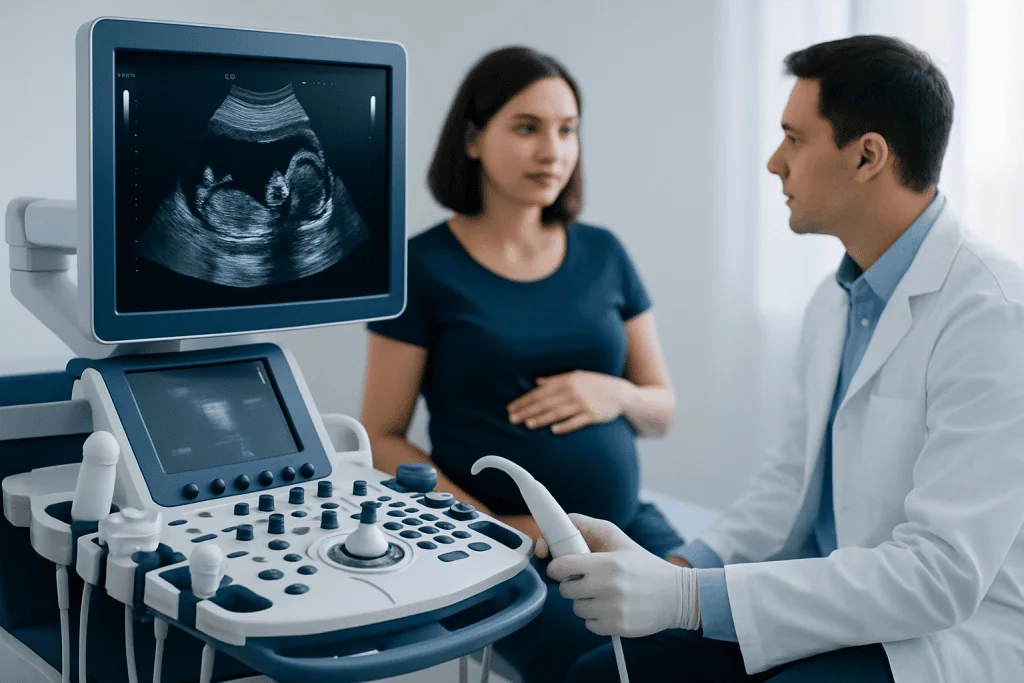
Ultrasound can help confirm the location and development of a pregnancy and evaluate the ovaries or other pelvic structures when indicated. Obstetrics and gynecology care can provide appropriate evaluation and support for symptoms throughout pregnancy.
Practical self-care and pregnancy health
For mild discomfort that has been discussed with a healthcare professional, rest, hydration, and gentle activity may be helpful. Avoid starting new medicines, herbal remedies, or supplements during pregnancy without checking with a qualified clinician or pharmacist. Some medicines that are suitable outside pregnancy may not be appropriate during it.
Keeping a brief symptom record can be useful. Note when pain or spotting starts, where it is felt, what makes it better or worse, whether it is accompanied by bleeding, and any test results. This information can help a clinician decide whether monitoring, testing, or urgent assessment is appropriate.
Routine prenatal care remains the best way to monitor pregnancy health, even when symptoms are mild. Acibadem International’s multidisciplinary specialists and JCI-accredited hospitals provide diagnosis and treatment for international patients who need obstetric and gynecological assessment.
Frequently asked questions
Can someone get pregnant again while already pregnant?
In nearly all pregnancies, a person does not ovulate again, so another conception cannot occur. Extremely rare medical reports describe superfetation, but it is not considered a typical or expected event in humans. Symptoms such as cramps or spotting are much more likely to have another explanation.
Why do I feel ovulation pain while pregnant?
Lower abdominal twinges or cramps in pregnancy can come from uterine growth, changes in blood flow, digestive changes, or stretching tissues. These sensations can resemble ovulation pain but do not usually mean ovulation is occurring. Persistent, severe, one-sided, or painful symptoms with bleeding should be assessed promptly.
Can an ovulation test be positive if I am pregnant?
Yes, an ovulation predictor kit may sometimes appear positive during pregnancy, but it cannot confirm ovulation. Pregnancy-related hCG may interfere with some LH-based ovulation tests. A pregnancy test and clinical assessment are more appropriate for checking pregnancy status.
Is spotting during pregnancy normal?
Light spotting can occur in pregnancy and may have non-serious causes, including cervical sensitivity. However, bleeding should always be reported to a healthcare professional so that the person can receive advice based on the stage of pregnancy and associated symptoms. Heavy bleeding or bleeding with significant pain needs urgent assessment.
Does pregnancy stop periods immediately?
A true menstrual period does not occur during pregnancy because the uterine lining is maintained rather than shed. Some people experience bleeding or spotting during pregnancy, which can be mistaken for a period. Any bleeding after a positive pregnancy test should be discussed with a clinician.
When should pelvic pain in pregnancy be treated as urgent?
Urgent care is appropriate for severe or worsening pelvic or abdominal pain, heavy bleeding, fainting, dizziness, shoulder pain, fever, or feeling very unwell. These symptoms may indicate conditions that need rapid evaluation. If there is uncertainty, seeking prompt medical advice is the safest option.
References
- American College of Obstetricians and Gynecologists
- National Health Service
- Mayo Clinic
- Merck Manual Consumer Version
- World Health Organization
This article is for general information only and is not a substitute for professional medical advice. Please consult a qualified doctor about your individual situation.
IVF & fertility treatment in Turkey — success rates and costs
JCI-accredited · board-certified surgeons · reply within 24h
Add us as a Preferred Source to see more of our trusted health content across Google Search, AI Overviews and Discover.
Check your numbers in seconds
BMI, calories, due date, blood pressure and 30+ more clinical calculators — free, instant, doctor-reviewed ranges.