Can You Get Lab Testing Without an Appointment?

Some laboratories accept walk-in patients for routine tests, while others require scheduled appointments. Certain tests need preparation such as fasting, timed collection, or special handling, so an appointment may be recommended or necessary.
Key Takeaways
- Some laboratories accept walk-in patients for routine tests, while others require scheduled appointments.
- Certain tests need preparation such as fasting, timed collection, or special handling, so an appointment may be recommended or necessary.
- A doctor’s order is often needed, depending on the country, test type, and laboratory policy.
- Bringing identification, insurance information if applicable, and any instructions can help the visit go smoothly.
- People with urgent symptoms should seek medical care rather than rely on routine walk-in testing.
Lab testing without an appointment may be available for some routine tests, but not every laboratory or test type accepts walk-ins. Whether a person can be tested the same day usually depends on the test ordered, required preparation, and the facility’s workflow and safety policies.
Overview
Lab testing without an appointment is often possible for common blood, urine, or other routine laboratory tests, especially at facilities that offer walk-in services. However, policies vary between hospitals, outpatient laboratories, and private diagnostic centers. Some locations reserve certain hours for walk-ins, while others prefer appointments to reduce waiting times and organize sample collection more efficiently.
Whether a person can be seen right away depends on several practical factors. These include the type of test, whether a doctor’s order is required, if the test needs special preparation, and how busy the laboratory is at that time. A walk-in option may work well for straightforward tests, but more specialized testing often benefits from prior scheduling.
It is also important to understand that “no appointment needed” does not always mean “no preparation needed.” Many lab tests are accurate only when instructions are followed carefully. For example, some blood tests require fasting, while others may need to be collected at a specific time of day or after avoiding certain medicines, exercise, or supplements.
Which Tests May Be Available as Walk-Ins
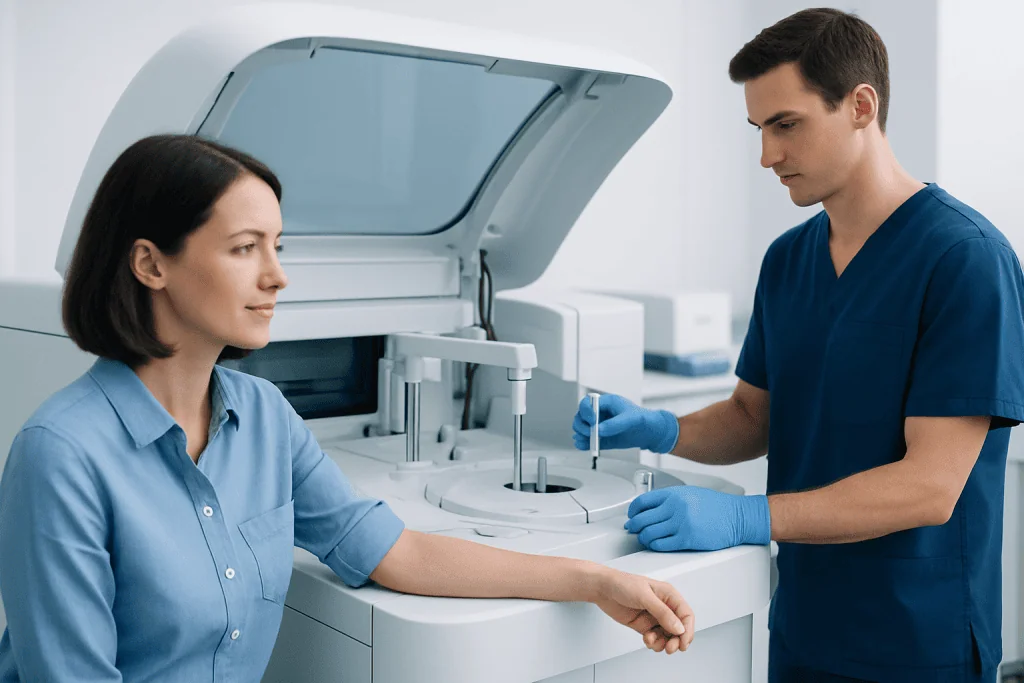
Many laboratories can perform routine tests for walk-in patients when the proper paperwork and preparation are in place. These commonly include standard blood counts, basic chemistry panels, urine tests, and some screening tests. If the laboratory already has the test order and the person has followed any instructions, the sample may be collected during the same visit.
More specialized tests are less likely to be available immediately. Some require specific handling, transport conditions, or collection at a certain time. Others may need pre-authorization, consultation with a doctor, or coordination with another department. Imaging-guided procedures or advanced diagnostics are usually scheduled rather than done on a walk-in basis.
Examples of tests that may have special requirements include:
- Fasting blood glucose or lipid testing
- Hormone tests collected at a certain time of day
- Glucose tolerance tests that take several hours
- Stool, sputum, or 24-hour urine collection tests
- Genetic, pathology, or advanced microbiology tests
Because requirements differ, it is wise to contact the laboratory before arriving. A quick check can confirm whether the test is offered on a walk-in basis, what documents are needed, and how to prepare properly.
When an Appointment Is More Likely to Be Needed

An appointment is more likely to be required when testing is complex, time-sensitive, or tied to a larger care plan. For example, tests that involve multiple timed blood draws, samples from more than one department, or coordination with a specialist are usually scheduled in advance. This helps ensure the right staff, materials, and timing are available.
Appointments are also common when there are infection-control considerations or when a sample must be collected in a highly specific way. Children, older adults with mobility needs, and people who have a history of difficult blood draws may also benefit from a scheduled visit, as extra time can be set aside for comfort and safety.
In some hospitals, laboratory services are integrated with broader diagnostic pathways. A person being evaluated for a condition such as thyroid cancer or kidney stones may need testing that is coordinated with clinic visits, imaging, or procedures. In these situations, an appointment helps keep the evaluation organized and reduces delays.
What to Bring and How to Prepare
Even if a laboratory accepts walk-ins, arriving prepared can make the visit easier and faster. Most centers will ask for identification and, when applicable, insurance details or payment information. If a doctor has ordered the test, bringing the request form or ensuring it has already been sent to the lab is helpful.
Preparation instructions matter because they affect the accuracy of results. A person may need to fast, drink water, avoid strenuous exercise, or pause certain vitamins or nonprescription supplements if advised by a clinician. Medications should not be stopped unless a qualified doctor or pharmacist has given clear instructions.
Useful items to bring may include:
- Photo identification
- Doctor’s referral or electronic test order
- Insurance card if relevant
- A list of current medications and supplements
- Any written preparation instructions
If there is any uncertainty, calling ahead is the safest choice. The laboratory can explain whether fasting is required, how early to arrive, and whether there are age-related or sample-specific instructions.
Benefits and Limitations of Walk-In Testing
The main advantage of walk-in laboratory testing is convenience. It allows people to fit routine tests into busy schedules without waiting days for an appointment. This can be especially useful for follow-up blood work, simple urine testing, or monitoring tests that do not need complex preparation.
Walk-in testing may also support faster progress in diagnosis or treatment planning. For example, a clinician may request blood work before a consultation, or a patient may be sent for same-day sample collection as part of a broader check-up. Some care pathways are linked to other services such as check-up and screening or blood tests, making timely sampling helpful.
At the same time, walk-in testing has limitations. Waiting times may be longer during busy periods, and some tests cannot be performed safely or accurately without scheduling. There may also be cut-off times for certain samples, especially if they must be processed quickly or transported to another facility. A person who prefers a specific time slot, has accessibility needs, or requires coordinated care may find appointments more practical.
How Results Are Given and What Happens Next
After sample collection, results are usually reviewed by the requesting doctor or released through a secure patient portal, depending on local practice. Timing varies widely. Some routine tests may be available the same day or the next day, while others take longer because they need specialized analysis or external processing.
It is best for patients to discuss in advance who will explain the results and what follow-up may be needed. Laboratory values should be interpreted in context. A number that falls outside the reference range does not always mean disease, and a normal result does not always rule out every condition. Clinical symptoms, medical history, and any imaging or examination findings are also important.
If laboratory testing is part of a broader evaluation, doctors may recommend additional diagnostic steps. Depending on symptoms, this could include MRI or ultrasound alongside blood or urine testing. In international centers such as Acibadem International, multidisciplinary specialists in JCI-accredited hospitals coordinate testing and follow-up for patients who need structured diagnostic care.
When to Seek Medical Advice Instead of Walk-In Testing
Routine walk-in lab testing is not a substitute for urgent medical care. If a person has symptoms such as chest pain, severe shortness of breath, fainting, sudden weakness, heavy bleeding, or signs of stroke, emergency assessment is needed rather than a standard laboratory visit. Delaying care in these situations may be unsafe.
Medical advice is also important when symptoms are persistent, unexplained, or worsening. A doctor can decide which tests are most appropriate and whether same-day examination, imaging, or specialist referral is needed. This helps avoid incomplete testing or misinterpretation of results.
For non-urgent concerns, contacting the laboratory or the ordering clinician before arrival is usually the best approach. They can explain whether lab testing without an appointment is suitable, whether preparation is needed, and if another form of evaluation would be more helpful.
Frequently asked questions
Can a person get a blood test without an appointment?
Sometimes yes. Many laboratories accept walk-in patients for routine blood tests, but availability depends on the facility, the type of test, and whether any preparation is required. Calling ahead can confirm whether the test can be done the same day.
Is a doctor’s order always required for lab testing?
Not always, but often. Requirements depend on the country, the laboratory’s policies, and the specific test being requested. Even when direct-access testing is available, medical guidance is helpful for choosing the right test and understanding the results.
What tests usually need an appointment?
Tests that involve fasting schedules, multiple timed samples, special handling, or coordination with other departments are more likely to need appointments. Complex hormone testing, glucose tolerance testing, and some microbiology or genetic tests are common examples.
How can someone prepare for walk-in lab testing?
Preparation depends on the test. A person may need to fast, drink water, avoid certain activities, or bring a referral and identification. It is safest to follow the instructions from the doctor or laboratory exactly, because preparation affects result accuracy.
Are walk-in lab results available immediately?
Usually not immediately, although some routine tests are processed quickly. The time frame depends on the type of sample and whether the analysis is performed on-site or sent to another laboratory. The ordering doctor or patient portal typically provides the results.
Should someone use walk-in testing for urgent symptoms?
No. Walk-in laboratory testing is designed for routine or planned diagnostics, not emergencies. Urgent symptoms such as severe pain, shortness of breath, fainting, or stroke-like signs need prompt medical assessment.
This article is for general information only and is not a substitute for professional medical advice. Please consult a qualified doctor about your individual situation.
Explore treatments in Turkey — costs, top hospitals & a free quote
JCI-accredited · board-certified surgeons · reply within 24h
Add us as a Preferred Source to see more of our trusted health content across Google Search, AI Overviews and Discover.

More from the Health Library
Interventional Radiology: Minimally Invasive Treatments Guided by Imaging

Neuropsychological Testing: Memory, Attention, and Brain Function Assessment

Lab Tests vs Imaging Tests: Which Type of Diagnostic Exam Do You Need?
Echocardiogram: Heart Ultrasound for Valves, Pump Function, and Symptoms

Neuroimmunology Testing: MRI, Spinal Fluid, and Antibody Tests Explained