Can You Smoke after Cataract Surgery: Procedure, Recovery and Results

Avoid smoking and secondhand smoke after cataract surgery, especially during the early healing period. Many eye specialists advise waiting at least several weeks before smoking, but the surgeon’s instructions take priority.
Key Takeaways
- Avoid smoking and secondhand smoke after cataract surgery, especially during the early healing period.
- Many eye specialists advise waiting at least several weeks before smoking, but the surgeon’s instructions take priority.
- Do not rub, press, splash, or apply cosmetics close to the operated eye until cleared.
- Watching television and gentle walking are usually acceptable when comfortable, with activity restrictions followed.
- Sudden vision loss, increasing pain, worsening redness, flashes, floaters, or discharge need urgent eye-care assessment.
Smoking is best avoided after cataract surgery, particularly during the first days and weeks of healing. Smoke can irritate the recovering eye, worsen dryness and coughing, and may interfere with the body’s normal healing response; the operating eye specialist should provide individual timing advice.
Can You Smoke After Cataract Surgery?
It is best not to smoke after cataract surgery. Tobacco smoke and secondhand smoke can irritate the eye, contribute to dryness and coughing, and may affect the body’s healing process while the small surgical incision is closing.
Cataract surgery is commonly performed as an outpatient procedure and usually has a smooth recovery. However, the eye remains vulnerable to irritation and infection during the first phase of healing. People who smoke should discuss a realistic cessation plan with their eye surgeon or primary care clinician before surgery, and should follow the surgeon’s specific aftercare instructions.
A cataract is a clouding of the eye’s natural lens that can make vision appear blurred, dim, or less colorful. Surgery removes the cloudy lens and replaces it with a clear artificial intraocular lens. For more information about the condition, see cataracts.
How Cataract Surgery Works and Who May Benefit
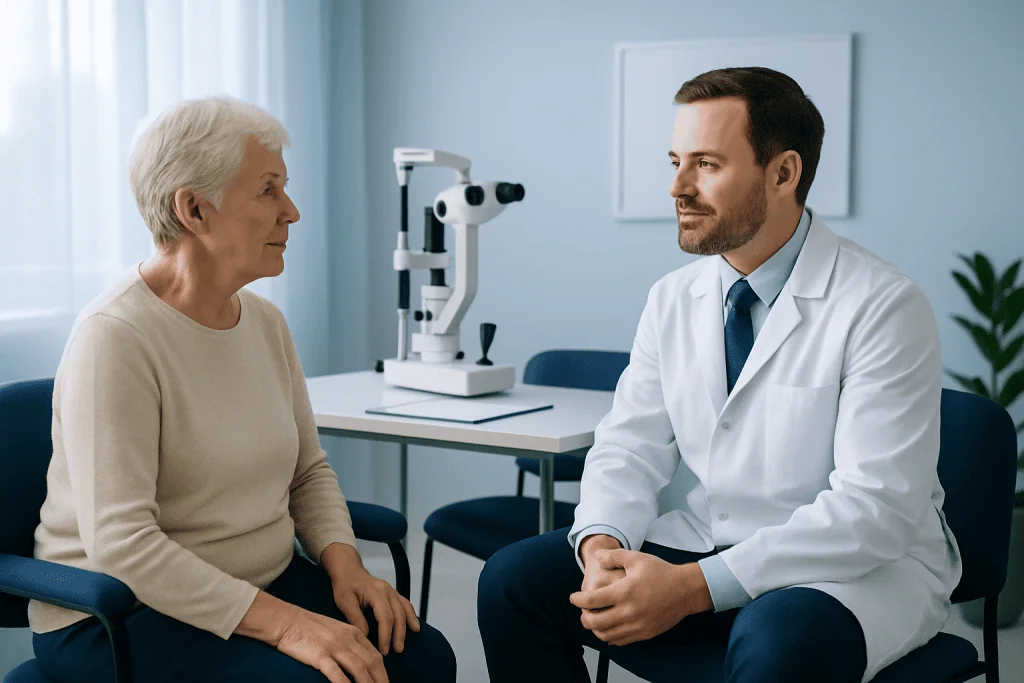
Cataract surgery is considered when a cataract affects daily activities, such as reading, driving, recognizing faces, working, or safely moving around. The decision is based on a person’s symptoms and visual needs rather than the cataract’s appearance alone. An ophthalmologist also considers eye health, general health, medicines, and expectations for vision after surgery.
During the most common approach, called phacoemulsification, the surgeon makes a very small opening in the eye, uses ultrasound energy to break up and remove the cloudy lens, and places an artificial lens in its position. The lens type is selected in advance and may be designed mainly for distance vision or to reduce dependence on glasses at more than one distance.
Before surgery, the eye team measures the eye to help select the appropriate lens and checks for other conditions that may influence results, including glaucoma, macular degeneration, diabetic eye disease, or corneal problems. These conditions do not always prevent surgery, but they can affect the expected improvement in vision.
Patients considering the procedure can learn more about cataract surgery and discuss whether it is appropriate for their individual visual goals.
What Happens During the Procedure?
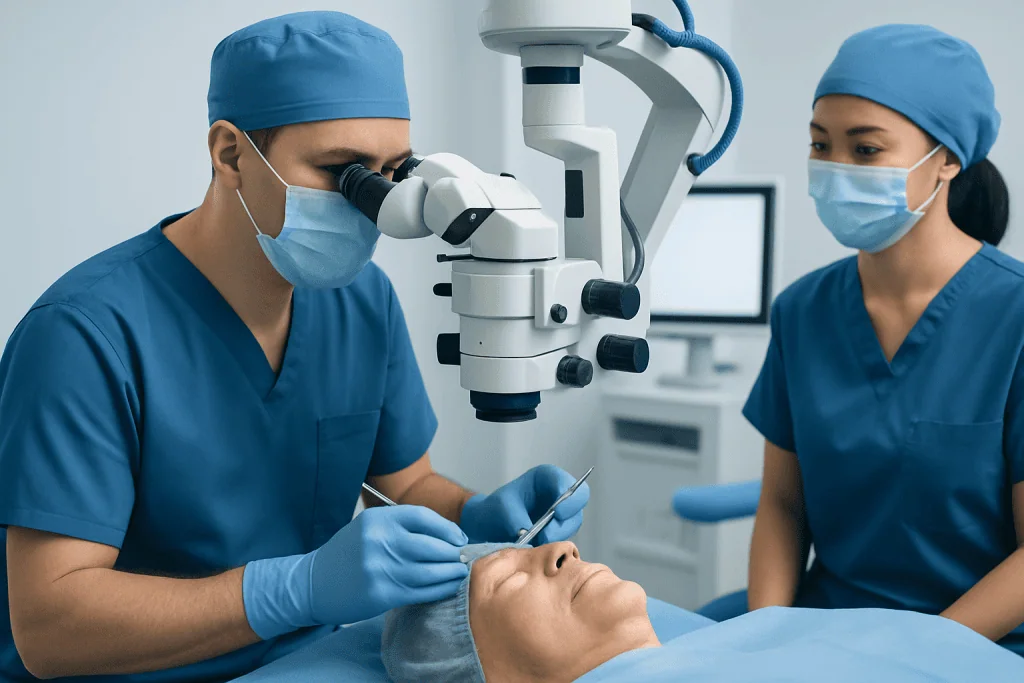
Cataract surgery is usually performed under local anesthetic eye drops, sometimes with medication to help the patient relax. The person is awake but the eye is numbed, and the eyelids are kept gently open. The procedure itself is often brief, although preparation and recovery time at the clinic take longer.
The surgeon creates a small incision, removes the cloudy natural lens, and inserts the selected intraocular lens. Stitches are often not needed because the incision is designed to seal on its own. A protective shield may be placed over the eye after surgery.
Most people return home on the same day and need an adult to accompany them because vision may be temporarily blurred and sedative medication can affect alertness. The care team provides prescribed eye drops and clear instructions about using them, protecting the eye, bathing, exercise, and follow-up appointments.
Vision often starts improving within days, but full stabilization can take several weeks. If both eyes need surgery, they are commonly treated on separate dates so that the first eye can heal and be assessed.
Recovery Timeline, Benefits and Possible Risks
During the first 24 to 48 hours, mild grittiness, watering, light sensitivity, and slightly blurred vision can occur. These symptoms generally improve with time. The eye should not be rubbed or pressed, even if it feels itchy, because rubbing can disturb the healing incision and increase irritation.
Over the first week, many people notice clearer vision, although brightness, glare, halos around lights, and fluctuations in focus may still be present. The ophthalmologist may recommend a shield while sleeping and will advise when normal activities can resume. Eye drops should be used exactly as directed and should not be stopped early unless the clinician advises it.
The main benefit of cataract surgery is clearer vision caused by removal of the cloudy lens. It may improve independence in daily tasks and reduce glare. Outcomes also depend on the health of the retina, optic nerve, cornea, and other parts of the eye.
Serious complications are uncommon, but can include infection, retinal detachment, swelling inside the eye, increased eye pressure, bleeding, lens-position problems, or persistent visual symptoms. Later, some people develop clouding of the capsule behind the artificial lens, which can often be treated with a laser procedure. Prompt follow-up helps identify concerns early.
How Long After Cataract Surgery Can You Smoke?
There is no single timeframe that is right for every patient, but smoking should be avoided throughout the early recovery period. Many surgeons recommend avoiding smoking for at least several weeks, and longer-term abstinence is preferable for overall eye and vascular health. The operating ophthalmologist’s guidance should always be followed because healing needs can differ.
Smoke contains particles and chemicals that may make the eye sting, water, or feel dry. Smoking can also trigger coughing, and forceful coughing or straining may temporarily raise pressure around the eye. Avoiding secondhand smoke is also sensible while the eye is healing.
Nicotine products, including vaping, should not be assumed to be harmless after surgery. Patients using cigarettes, e-cigarettes, nicotine replacement, or other tobacco products should tell their surgical team before the procedure. A clinician can advise on safer options for smoking cessation and support during recovery.
What Should I Do With My Face After Cataract Surgery?
The face can be washed carefully, but water, soap, shampoo, and skincare products should be kept out of the operated eye. For the first days after surgery, it is often easiest to use a clean damp cloth to gently clean the face while avoiding the eyelids and eye area. Patients should follow the precise bathing instructions given by their surgical team.
Do not rub, press, massage, or apply pressure around the operated eye. Hands should be washed before using eye drops or touching near the eye. Cosmetics, face creams close to the lash line, and eye makeup are usually postponed until the surgeon confirms that the eye has healed enough.
Hair washing may be possible with care, but it is important to avoid splashing water directly into the eye. Swimming pools, hot tubs, saunas, and potentially contaminated water should be avoided until the ophthalmologist gives permission, as these can increase the risk of irritation or infection.
Protective sunglasses outdoors can improve comfort in bright light and help shield the eye from wind, dust, and debris. The eye shield should be worn as instructed, especially during sleep if recommended.
Can I Watch TV After Cataract Surgery?
Most people can watch television after cataract surgery when they feel comfortable. Television does not damage the surgical incision or cause the cataract to return. However, vision may be blurred at first, and bright screens can feel uncomfortable because light sensitivity is common during early recovery.
It can help to watch for short periods, sit at a comfortable distance, reduce screen brightness, and take breaks if the eye becomes tired or dry. Blinking regularly is useful because people tend to blink less while concentrating on a screen. Prescribed drops should be used as directed, rather than adding over-the-counter drops without checking with the eye team.
Reading, mobile phone use, and computer work are also usually acceptable in moderation if they are comfortable. These activities should not replace rest, medication schedules, or follow-up care. A person should not drive until the ophthalmologist says vision meets the required standard and it feels safe to do so.
Can I Walk After Cataract Surgery? When to Seek Medical Care
Gentle walking is usually encouraged after cataract surgery, as long as the person feels steady and follows any individual restrictions. A quiet walk can support general wellbeing without putting direct pressure on the eye. Patients should avoid strenuous exercise, heavy lifting, bending repeatedly at the waist, contact sports, and dusty environments until cleared by their surgeon.
Someone who received sedating medication should not walk alone immediately after the procedure and should have support getting home. Outdoor walking is generally more comfortable with sunglasses, and care should be taken on uneven ground if vision is still blurred or depth perception feels different.
Urgent medical advice is needed for increasing or severe eye pain, a sudden reduction in vision, rapidly worsening redness, thick discharge, persistent nausea or vomiting, new flashes of light, a sudden shower of floaters, or a dark curtain or shadow in the vision. These symptoms do not always mean a serious complication, but they need prompt assessment.
Acibadem International’s multidisciplinary specialists and JCI-accredited hospitals provide assessment and treatment for cataracts and related eye conditions for international patients. Follow-up with the operating ophthalmologist remains an important part of safe recovery.
Frequently asked questions
Can smoking cause problems after cataract surgery?
Smoking can irritate the recovering eye and contribute to dryness, stinging, and coughing. It may also affect normal healing, so avoiding cigarettes and secondhand smoke is recommended during recovery. The surgeon can provide advice based on the individual procedure and eye health.
Is vaping safe after cataract surgery?
Vaping should not be considered risk-free during early recovery. Aerosols may irritate the eyes and airways, while nicotine can affect the body in ways that may not support healing. It is best to discuss vaping and nicotine use with the eye surgeon before and after surgery.
Can I shower after cataract surgery?
Showering is often possible with care, but water, soap, and shampoo should be kept out of the operated eye. The face and eyelid area should not be rubbed. Specific instructions can vary, so the surgical team’s advice should be followed.
How long should I avoid heavy lifting after cataract surgery?
The length of restriction varies by surgeon and by the person’s recovery. Heavy lifting, straining, and strenuous exercise are commonly avoided during the early healing period because they can raise pressure around the eye. The ophthalmologist should confirm when normal exercise and work tasks can safely resume.
Can I sleep on the side of my operated eye?
Many surgeons advise using a protective eye shield at night for a period after surgery and may recommend avoiding pressure on the operated side initially. This reduces the chance of accidentally rubbing or pressing the eye while asleep. The surgeon’s instructions should guide sleeping position and shield use.
Why is my vision still blurry after cataract surgery?
Blurred vision can be normal in the first days as the eye heals and adjusts to the artificial lens. Dryness, swelling, inflammation, and the type of lens used can also affect clarity temporarily. Worsening blur, sudden vision loss, or blur with pain or increasing redness should be reported urgently.
References
- American Academy of Ophthalmology
- National Eye Institute
- Mayo Clinic
- World Health Organization
This article is for general information only and is not a substitute for professional medical advice. Please consult a qualified doctor about your individual situation.
Cataract Surgery in Turkey — costs, top hospitals & a free quote
JCI-accredited · board-certified surgeons · reply within 24h
Add us as a Preferred Source to see more of our trusted health content across Google Search, AI Overviews and Discover.

Ophthalmology
Comprehensive eye care from laser vision correction to retina, cornea and cataract surgery.
75 specialists in this unit