Can You Take a Pregnancy Test on Your Period? Here Is What the Evidence Says

Menstrual-type bleeding does not usually interfere with a urine pregnancy test. Home pregnancy tests work by detecting hCG, not by checking whether bleeding is present.
Key Takeaways
- Menstrual-type bleeding does not usually interfere with a urine pregnancy test.
- Home pregnancy tests work by detecting hCG, not by checking whether bleeding is present.
- A negative result during bleeding can still happen if testing is done too early.
- Light bleeding in early pregnancy can be mistaken for a period.
- Heavy bleeding, severe pain, fainting, or one-sided pelvic pain need prompt medical evaluation.
Yes, a person can take a pregnancy test while having what seems like a period. Bleeding itself usually does not change the result, but the timing of ovulation, implantation, and testing can make an early test negative even when pregnancy is present.
Overview: Can a Pregnancy Test Be Taken During a Period?
In most cases, yes. A person can take a home pregnancy test while having bleeding that seems like a period, because the test looks for the pregnancy hormone human chorionic gonadotropin (hCG) in urine. Blood or menstrual flow does not usually make the test inaccurate by itself.
What matters more is when the test is taken. If pregnancy began very recently, hCG may still be too low to detect, especially if the bleeding is not a true period but early pregnancy bleeding. This is why a person may have bleeding, test negative, and later find out they are pregnant.
This situation is often harmless and commonly reflects normal cycle variation, a slightly late period, or testing too early. Still, some types of bleeding deserve medical review, particularly when they come with strong pain, dizziness, or unusually heavy flow.
How Pregnancy Tests Work and Why Bleeding Usually Does Not Matter
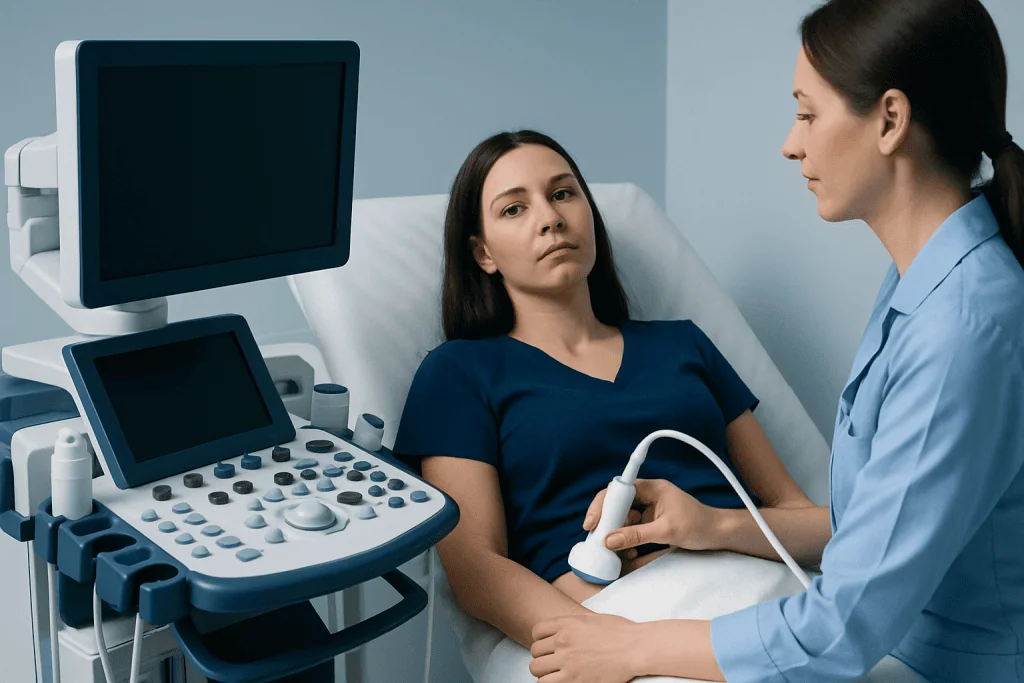
Home pregnancy tests detect hCG, a hormone made after a fertilized egg implants in the uterus. Once implantation happens, hCG levels begin to rise and can usually be measured in urine after enough time has passed. The presence of vaginal bleeding does not stop the body from making hCG.
For that reason, taking a pregnancy test during bleeding is generally acceptable. The main practical issue is not the bleeding itself, but whether urine is collected and the test is used correctly. Following package instructions, checking the expiration date, and reading the result within the advised time window all help reduce confusion.
Many people assume that if bleeding looks like a period, pregnancy is impossible. However, some early pregnancy bleeding can resemble a light period. This is one reason doctors sometimes recommend repeating a test after 48 to 72 hours or arranging a blood test if symptoms and timing do not match the initial result.
Why a Negative Test Can Happen Even If Pregnancy Is Present

The most common reason for a false-negative result is testing too early. Ovulation does not always happen on the same day each cycle, and implantation can occur several days later. If hCG has not risen enough yet, a urine test may show negative even though pregnancy has started.
Another common reason is assuming that bleeding means the menstrual cycle has fully restarted. Some people have light spotting or bleeding in early pregnancy, and this can be mistaken for a normal period. A person who has lighter-than-usual bleeding, unusual cramping, breast tenderness, nausea, or fatigue may decide to retest in a few days.
Less often, user error can affect the result. Examples include diluted urine after drinking large amounts of fluid, using the test before the recommended testing day, or misreading a faint line. Using first-morning urine may help in very early testing because hCG can be more concentrated then.
If repeated home tests remain unclear, a doctor may order a blood pregnancy test and, if needed, an ultrasound. This is especially important if symptoms raise concern for ectopic pregnancy or another cause of abnormal bleeding.
Bleeding in Early Pregnancy: What Is Possible?
Not all bleeding means the same thing. Some people experience light spotting around the time of implantation, while others may notice cervical irritation, hormonal changes, or bleeding from causes unrelated to pregnancy. This bleeding is often lighter, shorter, or different in color than a usual period.
At the same time, true menstrual bleeding and early pregnancy bleeding can overlap in appearance, so it is not always possible to tell the difference at home. A flow that is much lighter than usual, starts and stops, or comes with pregnancy symptoms may justify repeat testing.
Bleeding can also occur in early pregnancy for reasons that need assessment. Miscarriage and ectopic pregnancy are important examples, although they are not the most common explanation for every episode of early bleeding. The key point is that the pattern of symptoms matters as much as the bleeding itself.
- Bleeding that is lighter than a normal period may still be compatible with pregnancy.
- Bleeding with worsening one-sided pain is not typical and should be assessed promptly.
- Bleeding with tissue passage, strong cramps, or fainting needs medical care.
When to Seek Medical Care
Most episodes of bleeding around the expected time of a period are not emergencies. However, prompt medical review is important if bleeding is heavy enough to soak pads quickly, if severe pelvic or abdominal pain is present, or if a person feels faint, weak, or short of breath.
Urgent care is also needed for one-sided pelvic pain, shoulder pain, or dizziness along with a positive or uncertain pregnancy test, because these can be warning signs of an ectopic pregnancy. Fever, foul-smelling discharge, or severe ongoing pain also deserve medical attention.
Even when symptoms are milder, it is reasonable to contact a doctor if bleeding is unusual, pregnancy is possible, and test results are confusing. A clinician can help distinguish a late or irregular period from miscarriage or other gynecologic concerns in a safe, stepwise way.
What a Doctor May Do to Find the Cause
When a person has bleeding and is unsure whether pregnancy is involved, doctors usually begin with the menstrual history, sexual history, symptoms, and timing of the last possible conception. They often ask whether the bleeding is lighter or heavier than usual, whether pain is present, and whether home tests have already been done.
The next steps commonly include a urine or blood pregnancy test. A blood hCG test can detect lower levels of the hormone than many home tests and can be repeated over time to see whether the level is rising as expected. This is especially useful when the first result is negative but pregnancy is still possible.
If pain, persistent bleeding, or uncertain test results are present, imaging may be recommended. A pelvic exam and ultrasound can help check the uterus and ovaries, confirm whether a pregnancy is inside the uterus, and look for other causes of bleeding such as ovarian cysts or fibroids. In some cases, laboratory tests may also assess anemia or infection.
Evaluation is tailored to the person’s symptoms and stage of the cycle. If fertility concerns are part of the picture, a specialist may also discuss cycle tracking and, when relevant, options such as IVF treatment in a separate fertility work-up.
Practical Tips for More Accurate Testing at Home
If pregnancy is possible and bleeding has started, it is still fine to use a home pregnancy test. For the most reliable result, many clinicians advise testing on or after the day a period is expected, or at least 10 to 14 days after possible conception if cycle timing is uncertain.
If the first test is negative but pregnancy is still suspected, repeating the test after 48 to 72 hours is often helpful. hCG usually rises over time in early pregnancy, so a repeat test may become positive if the first one was simply too early. First-morning urine may be useful when testing very early.
It can also help to keep a simple record of symptoms and dates. Useful details include the first day of bleeding, whether the flow is lighter or heavier than usual, cramping, breast changes, nausea, and the dates of home tests. This information can make medical review faster and more accurate if an appointment becomes necessary.
For people needing specialist assessment, Acibadem International’s multidisciplinary teams in JCI-accredited hospitals evaluate bleeding, early pregnancy questions, and reproductive health concerns, including advanced imaging and obstetrics and gynecology care for international patients.
Frequently asked questions
Can period blood affect a pregnancy test result?
Usually no. Home pregnancy tests detect hCG in urine, and vaginal bleeding itself does not normally change whether that hormone is present. The more important issue is whether the test is taken early enough for hCG to be detectable.
If a person is bleeding like a period, can they still be pregnant?
Yes, it is possible, especially if the bleeding is lighter or different from a usual period. Some early pregnancy bleeding can look similar to menstrual bleeding. If pregnancy is possible, repeating the test in a few days or speaking with a doctor is sensible.
How soon should a pregnancy test be repeated after a negative result?
A common approach is to repeat it after 48 to 72 hours if pregnancy is still suspected. This allows time for hCG to rise if conception and implantation happened recently. If symptoms are concerning, medical advice should be sought sooner.
Is it better to test with first-morning urine?
First-morning urine can be helpful when testing very early because it may contain a higher concentration of hCG. Later in pregnancy, the timing of urine collection usually matters less. Following the test instructions remains important.
What symptoms with bleeding should prompt urgent medical care?
Heavy bleeding, severe abdominal or pelvic pain, fainting, dizziness, shoulder pain, or one-sided pain need urgent evaluation. These symptoms can signal a problem such as ectopic pregnancy or significant blood loss. Fever or foul-smelling discharge should also be assessed.
What if home pregnancy tests are negative but pregnancy symptoms continue?
A doctor may recommend a blood pregnancy test, repeat testing, or an ultrasound depending on the timing and symptoms. Home tests can miss a very early pregnancy. Persistent symptoms deserve a professional assessment, especially if bleeding is unusual.
References
- American College of Obstetricians and Gynecologists
- Mayo Clinic
- National Health Service
- Office on Women's Health
- Cleveland Clinic
This article is for general information only and is not a substitute for professional medical advice. Please consult a qualified doctor about your individual situation.
IVF & fertility treatment in Turkey — success rates and costs
JCI-accredited · board-certified surgeons · reply within 24h
Add us as a Preferred Source to see more of our trusted health content across Google Search, AI Overviews and Discover.
Check your numbers in seconds
BMI, calories, due date, blood pressure and 30+ more clinical calculators — free, instant, doctor-reviewed ranges.