Cardiac Catheterization: What Patients Need to Know

Cardiac catheterization uses a thin tube inserted through a blood vessel to examine the heart and nearby arteries. It can be used for diagnosis, treatment planning, or immediate treatment such as opening a narrowed artery.
Key Takeaways
- Cardiac catheterization uses a thin tube inserted through a blood vessel to examine the heart and nearby arteries.
- It can be used for diagnosis, treatment planning, or immediate treatment such as opening a narrowed artery.
- Most procedures are performed with local anesthesia and sedation, and many patients go home the same day.
- Doctors may recommend it for chest pain, abnormal heart tests, suspected blocked arteries, or some valve and congenital heart conditions.
- Recovery is usually straightforward, but patients should follow instructions about activity, medicines, and wound care.
Cardiac catheterization is a common minimally invasive procedure used to diagnose and sometimes treat heart and blood vessel problems. For many patients, it provides clear answers about symptoms such as chest pain or shortness of breath and helps guide the next steps in care.
Overview: what cardiac catheterization is and why it is done
Cardiac catheterization is a medical procedure in which a doctor guides a thin, flexible tube called a catheter through a blood vessel to the heart. It is used to look closely at the heart chambers, valves, coronary arteries, and blood flow. In many cases, it helps explain symptoms quickly and accurately when noninvasive tests have not provided enough information.
The procedure may be performed for diagnostic reasons, therapeutic reasons, or both during the same session. For example, a doctor may use it to measure pressure inside the heart, inject contrast dye to visualize the coronary arteries, or identify the cause of chest discomfort, breathlessness, fainting, or abnormal test results. If a narrowing is found, treatment may sometimes be carried out right away with coronary angioplasty and stent placement.
Although the idea of a heart procedure can feel intimidating, cardiac catheterization is widely performed and is considered minimally invasive. It does not usually require open surgery. The care team monitors heart rhythm, blood pressure, oxygen levels, and comfort throughout the procedure, which helps make it both controlled and carefully supervised.
What happens before, during, and after the procedure
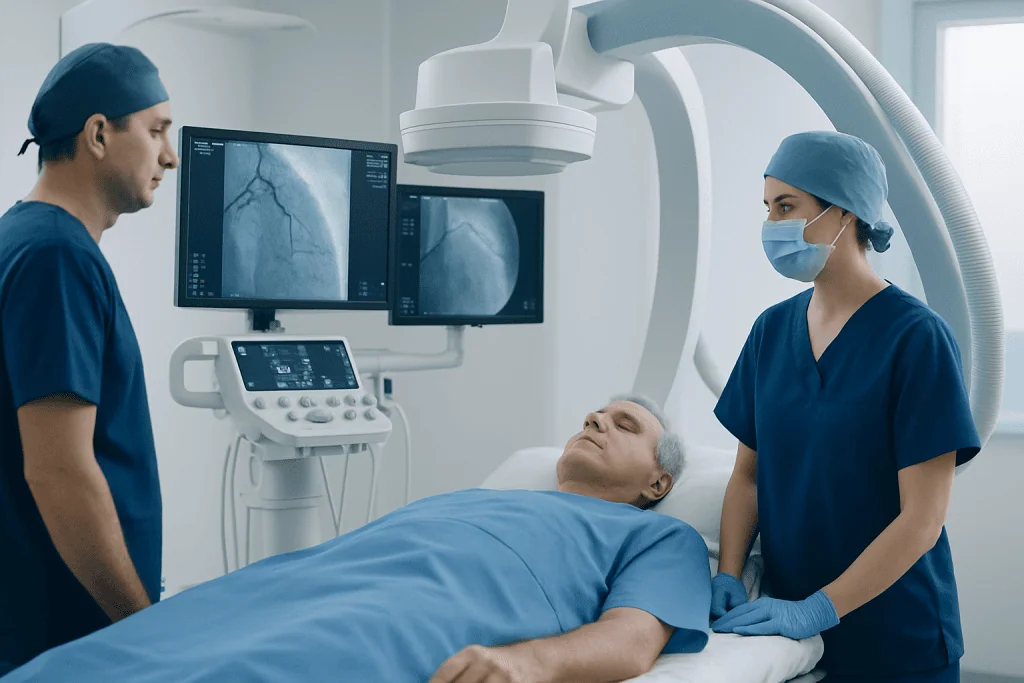
Before cardiac catheterization, the medical team reviews symptoms, past medical history, allergies, kidney function, and current medicines. Patients are usually told when to stop eating or drinking and whether any medications, such as blood thinners or diabetes medicines, should be adjusted. Blood tests and an electrocardiogram may be done beforehand, and the procedure is explained so the patient knows what to expect.
During the procedure, the doctor typically inserts the catheter through an artery in the wrist or groin after numbing the skin with local anesthetic. Mild sedation may be given to help the patient relax, though many people remain awake and can respond to simple instructions. Contrast dye may be injected so the doctor can see the coronary arteries on X-ray images, a test often called coronary angiography. Some patients feel brief warmth when the dye is injected, which is usually normal and short-lived.
After the catheter is removed, pressure or a closure device is used to reduce bleeding at the insertion site. Patients are observed for a period of time while the team checks circulation, blood pressure, and the puncture site. Depending on why the procedure was done and whether treatment was performed, some patients go home the same day, while others stay overnight for monitoring.
When doctors recommend cardiac catheterization

Doctors recommend cardiac catheterization when they need detailed information about the heart that cannot be obtained fully from symptoms, physical examination, blood tests, or imaging alone. A common reason is suspected coronary artery disease, especially when a person has chest pain, an abnormal stress test, or signs of reduced blood flow to the heart. It may also be used after a heart attack to identify and treat a blocked artery quickly.
The procedure can help evaluate several heart conditions beyond blocked arteries. These include valve disease, congenital heart defects, cardiomyopathy, <a href="https://acibademinternational.com/diseases/pulmonary-hypertension/”>pulmonary hypertension, and some rhythm-related problems. It may also be used to measure oxygen levels and pressure inside different parts of the heart to understand how well it is functioning.
In some cases, catheterization supports planning for other procedures or surgery. For instance, it may clarify the severity of coronary artery disease or help assess complex problems such as heart valve disease. The information gathered can be important in choosing between medication, catheter-based treatment, or surgery.
Benefits, possible risks, and how doctors reduce complications
One of the main benefits of cardiac catheterization is that it provides direct, detailed information about the heart and blood vessels. This can lead to a more precise diagnosis and a treatment plan tailored to the patient’s condition. In urgent settings, it may also allow diagnosis and treatment to happen without delay, which can be especially important if blood flow to the heart is reduced.
As with any invasive procedure, there are possible risks, but serious complications are uncommon. Potential issues include bleeding or bruising at the insertion site, irregular heart rhythm, allergic reaction to contrast dye, kidney strain from contrast, infection, or damage to a blood vessel. More serious events such as stroke, heart attack, or emergency surgery are rare, and the risk depends partly on the patient’s overall health and the reason for the procedure.
Doctors reduce these risks by carefully selecting patients, reviewing kidney function and allergies, using sterile technique, and monitoring throughout the procedure. In many cases, using the wrist artery can lower the risk of certain bleeding complications. Patients can help by sharing a full medication list, reporting any previous reactions to contrast dye, and closely following instructions before and after the procedure.
Recovery, home care, and returning to daily activities
Recovery after cardiac catheterization is often smooth, but it varies according to the access site, whether a treatment was performed, and the patient’s general health. Mild soreness, tenderness, or bruising where the catheter entered the body is common for a few days. Many people can resume light activities soon, but the care team usually advises avoiding heavy lifting or strenuous exercise for a short period.
Patients are generally encouraged to drink fluids unless a doctor has advised otherwise, as this can help clear the contrast dye from the body. The insertion site should be kept clean and observed for swelling, increasing pain, persistent bleeding, or color changes in the limb. Medicines may be started, stopped, or adjusted after the procedure, especially if a stent was placed or if the results show the need for treatment.
Longer-term care depends on what the procedure finds. Some patients continue with medicines and lifestyle changes, while others may need additional treatment such as coronary bypass surgery for more extensive disease. At Acibadem International, multidisciplinary specialists in JCI-accredited hospitals evaluate cardiac catheterization findings and coordinate further care for international patients when needed.
Prevention and self-care for heart health
Cardiac catheterization can identify or treat a heart problem, but it does not replace long-term heart-healthy habits. Preventive care remains essential for reducing the risk of future cardiovascular events. This includes taking prescribed medicines as directed and attending follow-up visits so the doctor can review symptoms, blood pressure, cholesterol, blood sugar, and overall recovery.
Healthy daily habits can support the heart before and after catheterization. Helpful measures often include:
- Not smoking and avoiding secondhand smoke
- Following a balanced eating pattern rich in vegetables, fruits, whole grains, and lean proteins
- Staying physically active within the limits advised by a doctor
- Maintaining a healthy weight
- Managing diabetes, high blood pressure, and high cholesterol
- Getting enough sleep and addressing ongoing stress
These steps are especially important for people with conditions linked to blocked arteries, including heart disease in general. Even when a catheter-based treatment is successful, continued prevention helps protect the heart over time.
When to seek medical care
Medical advice should be sought promptly if a person has chest pain, pressure, unexplained shortness of breath, fainting, marked exercise intolerance, or a sudden worsening of known heart symptoms. A doctor may recommend urgent evaluation if these symptoms suggest reduced blood flow to the heart or another serious cardiovascular problem. Emergency care is especially important for severe chest pain, trouble breathing, sudden weakness, or symptoms that begin abruptly.
After cardiac catheterization, patients should contact their care team if they develop increasing pain, swelling, redness, fever, drainage from the insertion site, or bleeding that does not stop with pressure. Numbness, coolness, or a change in color in the arm or leg used for the procedure should also be reported quickly. New chest pain, severe shortness of breath, or fainting after the procedure requires urgent medical attention.
It is also reasonable to seek medical care if there are questions about medicines, wound care, travel, or when to return to work or exercise. Clear follow-up helps patients recover with confidence and lowers the chance of avoidable complications.
Frequently asked questions
Is cardiac catheterization the same as surgery?
No. Cardiac catheterization is usually considered a minimally invasive procedure rather than open-heart surgery. It is performed through a blood vessel, most often in the wrist or groin, using a thin catheter.
How long does cardiac catheterization take?
The procedure itself may take less than an hour in straightforward diagnostic cases, but total time at the hospital is often longer. Preparation, recovery monitoring, and whether treatment is performed during the same session can all affect the timeline.
Will the patient be awake during cardiac catheterization?
Many patients are awake but relaxed with mild sedation. Local anesthetic is used to numb the insertion site, so there should not be sharp pain, though there may be some pressure or temporary discomfort.
What is the difference between cardiac catheterization and coronary angiography?
Cardiac catheterization is the broader procedure of placing a catheter into the heart or nearby vessels. Coronary angiography is one part of that process in which contrast dye and X-ray imaging are used to look specifically at the coronary arteries.
How soon can normal activities be resumed after cardiac catheterization?
Many people return to light daily activities within a day or two, especially after a diagnostic procedure. The exact timing depends on the access site, whether a stent or other treatment was done, and the doctor’s advice about lifting, exercise, and work.
Are there alternatives to cardiac catheterization?
Sometimes yes. Depending on the medical question, tests such as echocardiography, stress testing, CT coronary angiography, or cardiac MRI may provide useful information. However, catheterization may still be the best choice when direct measurement, detailed artery imaging, or immediate treatment is needed.
This article is for general information only and is not a substitute for professional medical advice. Please consult a qualified doctor about your individual situation.
Heart care in Turkey — expert evaluation and treatment
JCI-accredited · board-certified surgeons · reply within 24h
Add us as a Preferred Source to see more of our trusted health content across Google Search, AI Overviews and Discover.
Check your numbers in seconds
BMI, calories, due date, blood pressure and 30+ more clinical calculators — free, instant, doctor-reviewed ranges.

More from the Health Library

Ferber Method — Explained by Medical Evidence, Not Myths

Anastomotic Leak: What Patients Need to Know

Streptococcus Agalactiae — Explained by Medical Evidence, Not Myths

Transmasculine: An Evidence-Based Guide for Patients

Hair Restoration for Men: Procedure, Recovery and Results