Cardiac Resynchronization Therapy: How It Works, Results and What to Expect

CRT uses pacing leads to coordinate contraction of the heart’s lower pumping chambers. It is usually considered for selected people with heart failure, reduced pumping function, and a widened QRS pattern on ECG.
Key Takeaways
- CRT uses pacing leads to coordinate contraction of the heart’s lower pumping chambers.
- It is usually considered for selected people with heart failure, reduced pumping function, and a widened QRS pattern on ECG.
- CRT may be delivered by a pacemaker alone (CRT-P) or combined with a defibrillator (CRT-D).
- Recovery commonly involves a short hospital stay followed by several weeks of activity and wound-care precautions.
- Benefits vary by person and depend on heart rhythm, heart structure, medications, and device programming.
Cardiac resynchronization therapy (CRT) is an implanted device treatment that helps the lower chambers of the heart beat in a more coordinated way. For carefully selected people with heart failure and electrical conduction delay, it can improve symptoms, support daily activity, and lower the risk of heart-failure hospitalization.
Overview: What Is Cardiac Resynchronization Therapy?
Cardiac resynchronization therapy, often called CRT, is a treatment for certain people with heart failure whose heart chambers are not contracting in a coordinated pattern. It uses a small implanted device, similar to a pacemaker, to send carefully timed electrical signals to the heart. These signals help the right and left lower chambers, called ventricles, pump together more effectively.
In heart failure, the heart may be weakened and may also have an electrical delay that makes one side of the heart contract later than the other. This lack of synchrony can further reduce pumping efficiency and worsen symptoms such as breathlessness, tiredness, swelling, and reduced exercise tolerance. CRT is designed to address this electrical timing problem; it does not replace heart-failure medicines or healthy lifestyle measures.
Some devices provide pacing only and are known as CRT-P devices. Others also include an implantable cardioverter-defibrillator, or ICD, to detect and treat certain dangerous fast heart rhythms; these are called CRT-D devices. The appropriate option is decided individually after assessment by a cardiology and electrophysiology team.
How CRT Works and Who May Be a Candidate
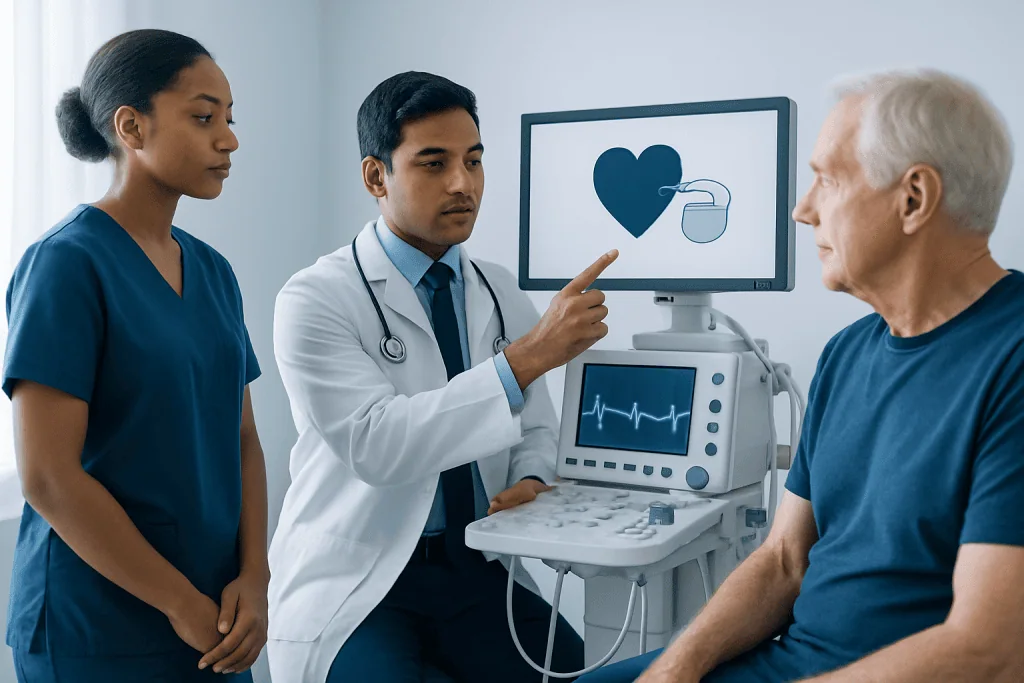
A CRT device is placed beneath the skin, usually below the collarbone. Thin insulated wires, called leads, are guided through veins into the heart. One lead is commonly positioned in the right ventricle, while another is placed to stimulate the left ventricle through a vein on the heart’s surface. The device coordinates the timing of these signals so both ventricles can contract more closely together.
CRT is generally considered when a person has ongoing heart-failure symptoms despite guideline-directed medical treatment, reduced left-ventricular pumping function, and evidence of delayed ventricular activation on an electrocardiogram (ECG). A broad QRS complex, particularly a left bundle branch block pattern, may indicate that CRT could be beneficial. Candidacy also depends on symptoms, heart rhythm, anatomy, other medical conditions, and the person’s goals of care.
Not everyone with heart failure needs or benefits from CRT. People with a narrow QRS complex or without meaningful ventricular dyssynchrony are less likely to benefit. Assessment may include an ECG, echocardiogram, blood tests, medication review, and sometimes coronary evaluation. Related heart conditions, including heart failure, should be evaluated and treated comprehensively before and after device implantation.
- Heart failure with reduced ejection fraction despite appropriate medicines
- Persistent symptoms that affect daily life
- Electrical conduction delay seen on ECG
- A clinical profile in which paced coordination is expected to improve heart function
Cardiac Resynchronization Therapy Procedure: Step by Step

Before implantation, the clinical team reviews the person’s medications, allergies, blood-thinning treatment, kidney function, heart rhythm, and imaging results. Instructions about eating, drinking, and medicines before the procedure are individualized. The procedure is usually performed in a cardiac catheterization or electrophysiology laboratory using sterile technique, local anesthetic, and sedation when appropriate.
A small incision is made beneath the collarbone and a pocket is created under the skin for the device. The clinician guides the leads through a vein using X-ray imaging and tests their position and electrical function. The left-ventricular lead can occasionally be more technically challenging because it is placed through the coronary venous system on the outer surface of the heart.
Once the leads are secured, they are connected to the CRT device and the incision is closed. The device is programmed to suit the person’s rhythm and heart function. If a CRT-D is being implanted, its defibrillator functions are also checked and programmed. The procedure commonly takes several hours, although timing varies with anatomy and the complexity of the implant.
CRT implantation is one component of a broader treatment plan. Ongoing care often includes heart-failure medicines, monitoring of blood pressure and kidney function, exercise and dietary guidance, and follow-up device checks. Cardiac resynchronization therapy treatment should be discussed with a qualified cardiology team that can explain the potential benefits and limitations for the individual.
Recovery Timeline, Follow-Up and Daily Living
Many people stay in hospital overnight after CRT implantation, although the exact length of stay depends on the procedure, symptoms, and other health needs. The incision area may feel sore or bruised for several days. The team checks the wound, performs a chest X-ray or other imaging when needed, and confirms that the device and leads are working correctly before discharge.
During the first few weeks, patients are generally advised to keep the incision clean and dry according to their discharge instructions and to avoid heavy lifting, vigorous upper-body activity, or repeated stretching of the arm on the implant side. These precautions help the wound heal and reduce the chance of a lead moving before it settles in place. The care team gives personalized guidance about driving, work, bathing, and return to exercise.
Follow-up appointments are important because CRT settings may need adjustment. Device checks can be performed in clinic and, for many devices, through remote monitoring. The team also reviews heart-failure symptoms, fluid balance, medicines, and heart rhythm. People should carry their device identification card and tell healthcare professionals, including dentists and imaging staff, that they have an implanted cardiac device.
Most household appliances are safe when used normally. However, people should ask the device clinic about strong magnetic fields, certain industrial equipment, and imaging procedures. Magnetic resonance imaging may be possible with MRI-conditional devices and appropriate protocols, but this must always be confirmed by the treating team.
Benefits, Risks and Expected Results
For appropriate candidates, CRT can improve coordination of the heartbeat and may lead to less breathlessness and fatigue, better exercise capacity, and improved quality of life. It can also reduce heart-failure hospitalizations and, in selected populations, improve survival. Improvement is often gradual rather than immediate, because the heart may need time to respond to more efficient pumping and optimized medical treatment.
Not every person responds in the same way. The likelihood of benefit is influenced by the ECG pattern, severity and cause of heart failure, heart rhythm, scar tissue, lead position, medication use, and device programming. Some people have substantial improvement, while others notice limited change. Regular follow-up helps clinicians identify possible reasons for an incomplete response.
Possible procedural risks include bleeding or bruising, infection, damage to a blood vessel, a collapsed lung, blood clots, lead displacement, or rarely injury to the heart. Longer-term concerns can include lead malfunction, device-pocket problems, and the need for generator replacement when the battery becomes depleted. A CRT-D can also deliver shocks for dangerous rhythms; inappropriate shocks are uncommon but can occur and should be evaluated promptly.
People should contact their clinical team if they develop increasing redness, warmth, swelling, drainage, fever, worsening pain around the device site, fainting, new palpitations, or a shock from a CRT-D. New or worsening heart-failure symptoms also need assessment, as device therapy works best alongside ongoing medical care.
What Is the Success Rate of Cardiac Resynchronization Therapy?
There is no single success rate for cardiac resynchronization therapy because success can mean different things: improvement in symptoms, fewer hospital admissions, better heart pumping function, or longer survival. In clinical practice and research, many appropriately selected patients show meaningful improvement, but a proportion do not have a substantial clinical response despite technically successful implantation.
Response is most likely when the person meets evidence-based selection criteria, especially when there is reduced pumping function and a characteristic electrical delay such as left bundle branch block. The underlying cause of heart failure, the amount of heart muscle scarring, atrial fibrillation, and whether the device achieves consistent biventricular pacing can all affect results.
The procedure itself is generally successful in placing and activating a CRT system, but the expected health benefit should be discussed separately. A cardiologist can explain how the individual’s ECG, echocardiogram, symptoms, and other conditions influence the chance of response. Device optimization and treatment of associated rhythm disorders may improve the effectiveness of CRT over time.
How Long Does It Take to Recover From Cardiac Resynchronization Therapy (CRT)?
Initial physical recovery after CRT implantation often takes days to a few weeks. Discomfort at the incision site usually improves during the first week or two, while the skin and tissues around the device continue healing over several weeks. Many people return to light daily activities soon after discharge, provided they follow their clinician’s instructions.
Restrictions on lifting, strenuous activity, and movement of the arm on the device side commonly last for several weeks, but the exact timeframe varies. A person whose job involves physical labor may need more time away from work than someone with desk-based duties. Follow-up visits are used to confirm wound healing and lead stability before activity is increased.
Symptom improvement from CRT may take weeks to months. Some people notice better energy or breathing relatively early, while others improve more gradually as the device settings and heart-failure medications are adjusted. Keeping follow-up appointments and reporting symptoms early gives the care team the best opportunity to support recovery.
What Is the Average Life Expectancy of a Person With Cardiac Resynchronization Therapy (CRT)? Can CRT Reverse Heart Failure?
It is not possible to give one average life expectancy for a person with CRT. Prognosis depends on the underlying heart condition, severity of heart failure, age, kidney and lung health, heart rhythm, response to treatment, and whether serious complications occur. CRT can improve outcomes for selected patients, but it does not make life expectancy predictable for any one individual.
CRT does not usually cure heart failure, but it can improve heart function and reduce the effects of abnormal electrical timing. In some people, the left ventricle becomes less enlarged and its pumping function improves, a process sometimes described as reverse remodeling. This can be associated with fewer symptoms and better day-to-day functioning.
Even when heart function improves, heart failure requires continued long-term care. Medicines should not be stopped or changed without medical advice, and the implanted device still requires monitoring. Cardiologists may also assess and manage related problems such as coronary artery disease, valve disease, atrial fibrillation, sleep-disordered breathing, and high blood pressure.
Acibadem International’s multidisciplinary specialists and JCI-accredited hospitals provide assessment and treatment planning for international patients who may need CRT and ongoing heart-failure care.
When to Seek Medical Care
Anyone with possible heart-failure symptoms, including persistent breathlessness, reduced ability to exercise, ankle or leg swelling, rapid weight gain from fluid retention, unusual tiredness, or waking short of breath, should arrange a medical evaluation. These symptoms can have several causes, and prompt assessment helps identify the right treatment plan.
After CRT implantation, urgent medical advice is appropriate for fever, wound redness or drainage, increasing swelling around the device, chest pain, fainting, severe shortness of breath, or a new sustained rapid heartbeat. A person with a CRT-D who receives a shock should follow the device clinic’s instructions; repeated shocks, severe symptoms, or feeling unwell after a shock require urgent assessment.
Emergency services should be contacted immediately for severe chest pain, severe breathing difficulty, loss of consciousness, or symptoms of stroke such as sudden facial drooping, arm weakness, or difficulty speaking. These symptoms should not be managed by waiting for a routine device appointment.
Frequently asked questions
Is cardiac resynchronization therapy the same as a pacemaker?
CRT uses pacing technology, but it is more specialized than a standard pacemaker. It is designed to coordinate the pumping of both lower heart chambers, usually by pacing the right and left ventricles. Some CRT devices also include defibrillator capability.
What is the success rate of cardiac resynchronization therapy?
There is no single success rate because outcomes may include symptom relief, improved heart function, fewer hospital admissions, or survival. Many carefully selected patients benefit, but some do not have a significant response. ECG findings, heart rhythm, scar tissue, lead placement, and medical treatment all influence results.
How long does it take to recover from cardiac resynchronization therapy (CRT)?
The wound and implant area usually heal over several weeks, while many people resume light activities earlier with medical guidance. Restrictions on lifting and strenuous arm movement are common during early healing. Improvements in heart-failure symptoms may take weeks to months.
What is the average life expectancy of a person with cardiac resynchronization therapy (CRT)?
A single average cannot accurately predict an individual’s life expectancy. It depends on the cause and severity of heart failure, other health conditions, heart rhythm, response to CRT, and ongoing treatment. CRT can improve outcomes for suitable patients, but continued heart-failure care remains essential.
Can CRT reverse heart failure?
CRT does not generally cure heart failure. However, it can improve pumping coordination and may allow the heart to remodel in a more favorable way in some patients. This can improve symptoms and heart function, especially when CRT is combined with appropriate medication and follow-up.
Will a CRT device need to be replaced?
The device battery gradually depletes over time, so the generator will eventually need replacement. The timing depends on the device type, pacing needs, and whether it provides defibrillator therapy. Leads may remain in place if they are functioning properly, but this is assessed individually.
References
- American Heart Association
- European Society of Cardiology
- Heart Rhythm Society
- National Heart, Lung, and Blood Institute
- Mayo Clinic
This article is for general information only and is not a substitute for professional medical advice. Please consult a qualified doctor about your individual situation.
Heart care in Turkey — expert evaluation and treatment
JCI-accredited · board-certified surgeons · reply within 24h
Add us as a Preferred Source to see more of our trusted health content across Google Search, AI Overviews and Discover.
Check your numbers in seconds
BMI, calories, due date, blood pressure and 30+ more clinical calculators — free, instant, doctor-reviewed ranges.