Carotid Artery Stenosis: Stroke Risk, Ultrasound Diagnosis, and Treatment

Carotid artery stenosis can reduce blood flow to the brain or release small clots, increasing the risk of TIA or stroke. Warning symptoms may include face drooping, arm weakness, speech difficulty, sudden vision loss, dizziness, or severe imbalance.
Key Takeaways
- Carotid artery stenosis can reduce blood flow to the brain or release small clots, increasing the risk of TIA or stroke.
- Warning symptoms may include face drooping, arm weakness, speech difficulty, sudden vision loss, dizziness, or severe imbalance.
- Carotid duplex ultrasound is commonly the first test because it is noninvasive and can estimate the degree of narrowing.
- Treatment may include lifestyle changes, antiplatelet medicines, cholesterol and blood pressure control, or a procedure such as endarterectomy or stenting.
- The best treatment depends on symptoms, stenosis severity, plaque features, age, anatomy, and overall medical condition.
Carotid artery stenosis is a narrowing of the carotid arteries in the neck, usually caused by atherosclerotic plaque, which can increase the risk of transient ischemic attack or stroke. Many people have no symptoms, so diagnosis often relies on vascular ultrasound and careful assessment of overall stroke risk.
Overview
Carotid artery stenosis means that one or both of the carotid arteries have become narrowed. These arteries run along each side of the neck and carry oxygen-rich blood to the brain, face, and scalp. The most common cause is atherosclerosis, a gradual buildup of fatty deposits, cholesterol, calcium, and inflammatory material inside the artery wall.
The main concern is stroke risk. A narrowed carotid artery can contribute to stroke in two ways: by limiting blood flow to part of the brain, or more commonly by allowing small pieces of plaque or blood clot to travel upward and block a smaller brain artery. A temporary blockage may cause a transient ischemic attack, often called a TIA or “mini-stroke,” while a lasting blockage can cause an ischemic stroke.
Not every carotid narrowing carries the same risk. Mild disease may be managed with medical therapy and monitoring, while severe narrowing, especially after TIA or stroke symptoms, may need a procedure to improve blood flow and reduce future risk. A careful evaluation helps doctors balance the benefits and risks of each option for the individual patient.
Symptoms and Warning Signs
Many people with carotid artery stenosis have no symptoms. The condition may be discovered during a physical examination, after a doctor hears a whooshing sound in the neck called a bruit, or during imaging performed for another reason. Because silent disease is possible, risk factor management is important even when a person feels well.
When symptoms occur, they are usually related to a TIA or stroke. They often begin suddenly and may last minutes to hours, or they may persist. Common warning signs include weakness or numbness on one side of the face or body, trouble speaking or understanding speech, sudden vision loss in one eye, double vision, dizziness, loss of balance, or sudden severe difficulty walking.
A helpful emergency reminder is FAST: Face drooping, Arm weakness, Speech difficulty, Time to call emergency services. Sudden vision loss in one eye, sometimes described as a curtain coming down, is also a classic symptom of reduced blood flow from the carotid artery. Even if symptoms disappear, urgent medical evaluation is needed because a TIA can be a warning sign of a future stroke.
Causes and Risk Factors

The usual cause of carotid artery stenosis is atherosclerosis. Over time, the inner lining of the artery can be damaged by risk factors such as high blood pressure, smoking, diabetes, and abnormal cholesterol levels. The body’s repair response may lead to plaque formation, which can slowly enlarge and narrow the artery.
Some factors cannot be changed, including increasing age, family history of vascular disease, and a previous history of stroke, TIA, or heart disease. However, many important risk factors can be improved with medical care and daily habits. These include tobacco use, high LDL cholesterol, uncontrolled blood pressure, diabetes, physical inactivity, unhealthy diet, excess weight, and untreated sleep apnea in some patients.
Carotid disease often occurs together with atherosclerosis in other arteries, such as the coronary arteries of the heart or the arteries of the legs. For this reason, a diagnosis of carotid stenosis is also a signal to evaluate overall cardiovascular health. The aim is not only to treat the narrowed artery but also to reduce the person’s total risk of heart attack and stroke.
Ultrasound Diagnosis and Other Tests
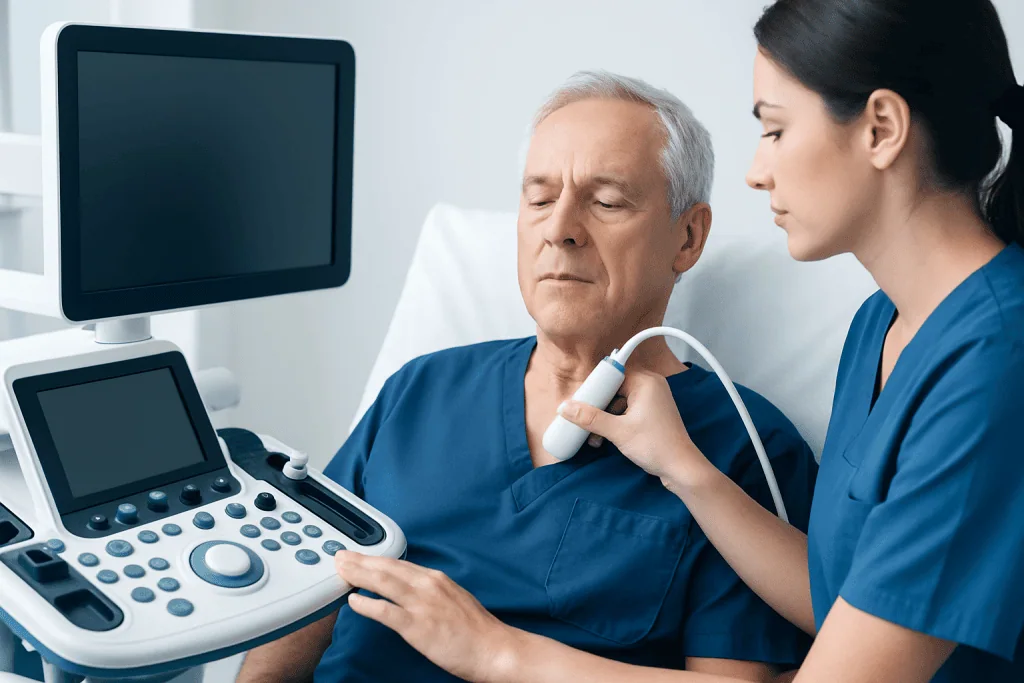
Carotid duplex ultrasound is commonly the first test used to evaluate suspected carotid artery stenosis. It is noninvasive, does not use radiation, and combines standard ultrasound images with Doppler measurements of blood flow speed. Faster flow through a narrowed segment helps estimate how severe the narrowing is.
The ultrasound report may describe stenosis as mild, moderate, or severe, or it may provide an estimated percentage. Results must be interpreted in context because measurements can vary depending on technique, artery shape, calcification, and local laboratory standards. A vascular specialist may repeat the scan or compare it with other imaging if the result will affect treatment decisions.
Additional tests may include CT angiography or MR angiography, which provide detailed images of the neck and brain arteries. These tests can help confirm the degree of narrowing, show plaque characteristics, and guide planning if a procedure is being considered. Catheter angiography is less commonly used only for diagnosis because it is invasive, but it may be performed in selected cases or as part of a stenting procedure.
Treatment Options
Treatment depends on whether the patient has symptoms, how severe the stenosis is, and the person’s overall health. Medical therapy is important for nearly everyone with carotid artery stenosis. It usually includes antiplatelet treatment when appropriate, cholesterol-lowering therapy such as a statin, careful blood pressure control, diabetes management, smoking cessation, and lifestyle changes that support vascular health.
For some patients, especially those with significant narrowing and recent TIA or stroke symptoms, a procedure may be recommended. Carotid endarterectomy is a surgery in which the surgeon opens the carotid artery and removes the plaque. It has been used for many years and may be preferred for suitable patients with severe symptomatic stenosis when the expected benefit is greater than the procedural risk.
Carotid artery stenting is another option. A catheter is used to place a small mesh tube inside the artery to hold it open, often with a protection device designed to reduce the chance of plaque fragments traveling to the brain. Stenting may be considered for patients who are at higher risk for open surgery or who have anatomy that makes surgery more difficult. Some centers also use transcarotid artery revascularization, a hybrid technique that combines surgical access with stenting and temporary flow reversal for brain protection.
Choosing among medical therapy, endarterectomy, and stenting is a personalized decision. Doctors consider stenosis severity, timing of symptoms, age, plaque features, other illnesses, previous neck surgery or radiation, and patient preferences. The goal is to reduce stroke risk while avoiding unnecessary procedures.
Prevention and Self-Care
Self-care for carotid artery stenosis focuses on protecting the arteries throughout the body. Patients are usually advised to stop smoking completely, avoid secondhand smoke, eat a heart-healthy diet, and stay physically active within the limits recommended by their doctor. Even small, steady changes can support blood pressure, cholesterol, blood sugar, and weight control.
A practical prevention plan may include vegetables and fruits, whole grains, legumes, fish or lean protein, unsaturated fats, and less salt, added sugar, and highly processed food. Regular walking or other aerobic activity is often encouraged, but anyone with recent stroke symptoms, chest pain, or major medical conditions should ask a clinician what level of activity is safe.
Medication adherence is also a key part of prevention. Patients should not stop antiplatelet medicines, statins, blood pressure medicines, or diabetes medicines without medical advice, especially after a vascular procedure. Follow-up ultrasound may be recommended to monitor the artery over time, check the opposite side, or evaluate the treated artery after surgery or stenting.
When to See a Doctor
Emergency care is needed immediately for any sudden stroke-like symptom, including weakness or numbness on one side, facial drooping, speech difficulty, sudden confusion, sudden vision loss, severe dizziness, or loss of coordination. The person should not drive themselves to the hospital. Rapid assessment can determine whether urgent stroke treatment is possible and whether carotid disease is involved.
A non-urgent medical appointment is appropriate for people who have risk factors such as smoking, diabetes, high blood pressure, high cholesterol, peripheral artery disease, coronary artery disease, or a family history of early vascular disease. A doctor can decide whether carotid evaluation is needed and help manage risk factors. Routine screening of everyone without symptoms is not always recommended, so decisions should be individualized.
Patients who have already been diagnosed should seek follow-up if they develop new neurological symptoms, have questions about medications, or are considering a procedure. At Acibadem International, multidisciplinary specialists in JCI-accredited hospitals evaluate and treat carotid artery disease for international patients, using individualized diagnostic and treatment planning.
Frequently asked questions
Is carotid artery stenosis the same as a stroke?
No. Carotid artery stenosis is a narrowing of the neck artery that can increase the risk of stroke, but it is not itself a stroke. A stroke occurs when blood flow to part of the brain is blocked or interrupted long enough to injure brain tissue.
Can carotid artery stenosis be found before symptoms occur?
Yes, it may be found incidentally during an examination or imaging test. Carotid ultrasound can detect narrowing before symptoms, but screening decisions depend on individual risk factors and should be discussed with a qualified doctor.
What percentage of narrowing is considered serious?
Severity is usually described as mild, moderate, or severe, often based on an estimated percentage of narrowing. Severe stenosis is more concerning, especially if the person has had recent TIA or stroke symptoms, but treatment decisions also depend on age, health, anatomy, and procedural risk.
Can medicines reverse carotid plaque?
Medicines and lifestyle changes may stabilize plaque, slow progression, and reduce the risk of clots forming on the plaque. Significant narrowing may not fully disappear, so follow-up imaging and ongoing risk factor control are important.
Which is better: carotid endarterectomy or carotid stenting?
Neither option is best for every patient. Endarterectomy may be preferred for many suitable patients with severe symptomatic disease, while stenting may be better for selected patients with higher surgical risk or certain anatomy. A vascular specialist can compare the expected benefits and risks.
How often should carotid stenosis be monitored?
The follow-up schedule depends on the degree of stenosis, whether symptoms have occurred, and whether a procedure has been performed. Some patients need periodic ultrasound monitoring, while others may need closer follow-up if the narrowing is progressing.
What should a person do if TIA symptoms go away?
They should still seek urgent medical care. TIA symptoms can disappear quickly, but they may be an early warning sign of a future stroke, and prompt evaluation can help identify treatable causes such as carotid artery stenosis.
References
- American Heart Association and American Stroke Association
- Society for Vascular Surgery
- European Society for Vascular Surgery
- National Institute for Health and Care Excellence
- World Stroke Organization
This article is for general information only and is not a substitute for professional medical advice. Please consult a qualified doctor about your individual situation.
Ultrasound in Turkey — costs, top hospitals & a free quote
JCI-accredited · board-certified surgeons · reply within 24h
Add us as a Preferred Source to see more of our trusted health content across Google Search, AI Overviews and Discover.
Check your numbers in seconds
BMI, calories, due date, blood pressure and 30+ more clinical calculators — free, instant, doctor-reviewed ranges.

Check-up & Preventive Medicine
Comprehensive health screenings designed for early detection and prevention.
3 specialists in this unit