Cataract Surgery Both Eyes at Same Time: Procedure, Recovery and Results

Same-day surgery for both eyes is not appropriate for everyone; the decision is individualized after a detailed eye examination. Each eye is treated as a separate procedure with separate sterile instruments, medications and supplies.
Key Takeaways
- Same-day surgery for both eyes is not appropriate for everyone; the decision is individualized after a detailed eye examination.
- Each eye is treated as a separate procedure with separate sterile instruments, medications and supplies.
- Vision often improves within days, but complete healing and prescription stabilization can take several weeks.
- Having one recovery period may be convenient, but temporary blurred vision in both eyes can make early aftercare more challenging.
- Sudden pain, worsening redness, reduced vision, flashes, many new floaters or discharge require urgent ophthalmic assessment.
Cataract surgery on both eyes at the same time, also called immediate sequential bilateral cataract surgery, can be a safe and practical option for carefully selected patients. The decision depends on eye health, infection-control protocols, the need for different lens calculations, and a person's ability to manage recovery in both eyes simultaneously.
Overview: Cataract Surgery Both Eyes at Same Time
Cataract surgery both eyes at same time is possible for selected people and is commonly called immediate sequential bilateral cataract surgery (ISBCS). During the same visit, an ophthalmic surgeon removes the cloudy natural lens from one eye and replaces it with an artificial intraocular lens, then treats the other eye as a separate operation under fresh sterile conditions. It can reduce travel and create a single recovery period, but it is not automatically the best choice for every patient.
A cataract develops when the normally clear lens inside the eye becomes cloudy. It may cause blurred or dim vision, glare from lights, faded colours, double vision in one eye, or difficulty with reading and driving. Surgery is usually considered when cataract symptoms interfere with daily activities and a person wishes to improve vision.
The aim of surgery is to restore clearer vision by replacing the clouded lens with an artificial lens implant. Whether treatment is staged on separate days or performed in both eyes on one day, careful assessment, accurate lens planning and appropriate follow-up are essential.
How same-day bilateral cataract surgery works
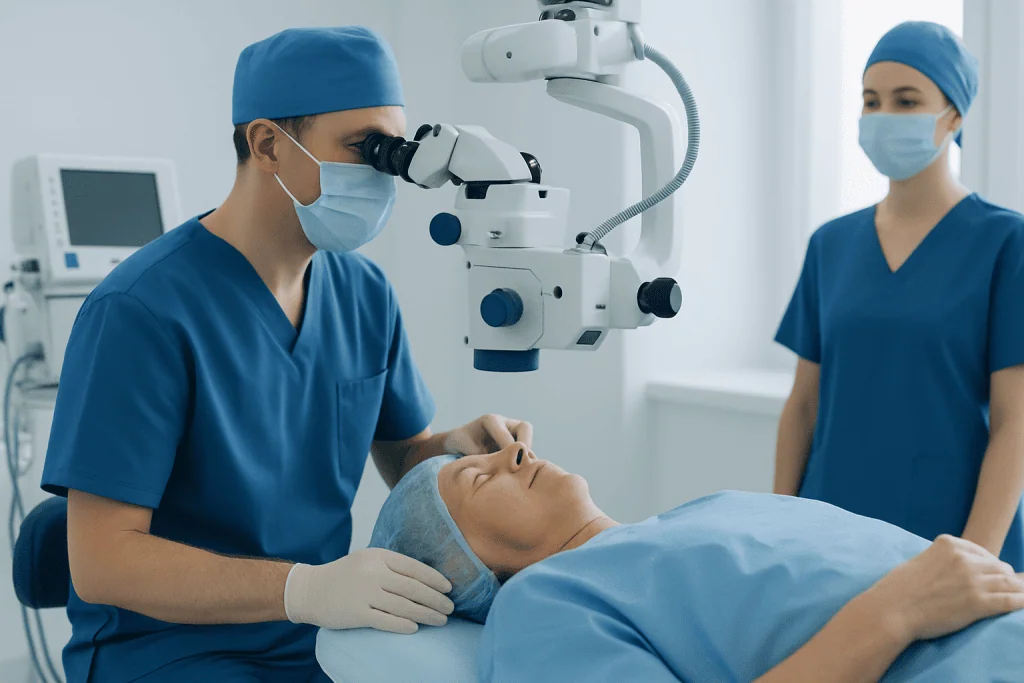
Modern cataract surgery is usually performed with phacoemulsification. Through a very small incision, the surgeon uses ultrasound energy to break up and remove the cloudy lens, while preserving the lens capsule. An intraocular lens is then placed inside the capsule to focus light onto the retina.
When both eyes are operated on during one appointment, the first eye is completed before the second begins. The care team follows strict separation procedures: new sterile drapes, instruments, gloves, fluids and medications are used for the second eye. This approach is intended to reduce the already uncommon risk of a problem affecting both eyes through shared equipment or materials.
Lens selection is planned before surgery. Some people choose lenses designed mainly for distance vision, while others may be suitable for lenses that reduce reliance on glasses at near or intermediate distances. The best option depends on eye measurements, corneal health, lifestyle goals and the advantages and limitations of each lens type.
Who may be a candidate?

Same-day surgery may be considered when cataracts are present in both eyes, both eyes have been carefully measured, and there are no important factors likely to make the outcome in one eye difficult to predict. It can be especially convenient for people who travel a long distance for care, need support with transport, or prefer to avoid two separate recovery periods.
It may be less suitable when there is a higher risk of infection or inflammation, uncertain lens measurements, significant corneal disease, advanced glaucoma, retinal disease, previous complicated eye surgery, or a need to assess the first eye’s result before finalizing the plan for the second. A surgeon may also recommend staging surgery if a person would find temporary blur in both eyes difficult to manage at home.
The preoperative assessment includes a review of medical history and medicines, an examination of the front and back of each eye, measurements for lens power, and discussion of visual needs. People should tell the eye team about diabetes, use of blood-thinning medicines, prostate medications, previous eye procedures and any history of eye infection or inflammation.
- Good candidates have stable eye measurements and an appropriate risk profile.
- They should have reliable support for travel and early recovery if needed.
- They should understand that glasses may still be needed for some tasks after surgery.
What happens during the procedure?
Before surgery, dilating and antiseptic eye drops are used. Most adults have local anaesthetic drops, sometimes with medication to help them relax; they are awake but should not feel pain. The procedure for each eye is commonly short, although the overall visit includes preparation, checks and recovery monitoring.
The surgeon makes a small opening in the cornea, removes the cataract and inserts the selected intraocular lens. The incision usually seals without stitches. After the first eye is finished, it is protected and the operating area is reset completely before surgery starts on the second eye.
Afterward, the person rests briefly while the team checks comfort and initial recovery. They will receive instructions about prescribed drops, eye protection, bathing, activity limits and follow-up. They should arrange for a responsible adult to take them home; driving immediately after surgery is not safe.
How long is recovery for cataract surgery on both eyes?
Many people notice clearer vision within a few days after cataract surgery on both eyes, although vision can be hazy, variable or sensitive to light at first. Mild scratchiness, watering and a feeling that something is in the eye are common early symptoms. These should gradually improve rather than worsen.
Most people can resume light indoor activities within a day or two if they feel comfortable, but they should use prescribed drops exactly as directed and avoid rubbing the eyes. For around the first week, clinicians commonly advise avoiding heavy lifting, strenuous exercise, dusty environments and water entering the eyes while bathing. Swimming is usually postponed until the surgeon confirms that it is safe.
The surface of the eye generally heals over several weeks, while vision and refraction can continue to settle for four to six weeks or longer. If each eye receives a different lens target, such as one optimized for near vision and the other for distance, adapting to the new visual balance may also take time.
Is it a good idea to have cataract surgery on both eyes at the same time?
It can be a good option when an experienced ophthalmic team considers both eyes suitable and can apply robust infection-control procedures. Potential advantages include fewer clinic visits, one period of using postoperative drops and activity restrictions, less travel, and faster binocular visual rehabilitation than waiting between separate operations.
The main trade-off is that there is no opportunity to use the visual result of the first eye to refine the lens plan for the second eye. Although serious complications are uncommon, having surgery in both eyes means that an unexpected issue could affect vision or recovery in both eyes at once. Temporary blur in both eyes can also make practical tasks more difficult during the first days.
Staged surgery remains an excellent and common approach. It allows the clinician to review healing and vision in the first eye before treating the second. A personalized conversation with an ophthalmologist is the safest way to weigh convenience, visual needs, eye findings and individual risk.
Can I watch TV after 3 days of cataract surgery?
Most people can watch television three days after cataract surgery if their vision is comfortable enough and the surgeon has not provided different instructions. Watching TV does not usually harm the healing eye. However, images may still look blurred, overly bright or different in colour while the eyes adjust.
It helps to keep viewing sessions comfortable: use adequate room lighting, take breaks if the eyes feel tired or dry, and avoid touching or rubbing the eyes. Lubricating drops may be recommended by the eye team if dryness occurs. Screen use should be reduced if it causes discomfort, headache or significant eye strain.
People should continue all prescribed postoperative drops even if vision seems to improve quickly. New pain, increasing redness, worsening vision or marked light sensitivity is not a normal effect of television viewing and should be reported promptly.
How long after cataract surgery on both eyes can you drive?
A person should not drive on the day of cataract surgery. Driving can resume only when vision is clear enough to meet local legal requirements, the person feels confident judging distance and traffic conditions, and the ophthalmologist or optometrist has confirmed that it is appropriate. This may be within a few days for some people, but it can take longer.
After surgery on both eyes at the same time, it is particularly important not to assume that early improvement means driving is safe. Vision may fluctuate, glare can be troublesome, and depth perception may need time to adapt. Anyone with remaining blur, double vision, dizziness or discomfort should wait and arrange other transport.
A follow-up appointment gives the care team an opportunity to check healing, eye pressure and vision. People should follow the specific advice given by their surgeon, especially if they have eye conditions beyond cataracts or if their job involves professional driving.
Benefits, risks and when to seek medical care
Potential benefits of same-day bilateral surgery include one anesthesia and preparation period, fewer appointments, reduced disruption to work or travel, and earlier use of both eyes together. Cataract surgery overall has a high likelihood of improving vision when the cataract is the main cause of visual difficulty, but the final result may also be influenced by conditions affecting the cornea, optic nerve or retina.
Possible risks include temporary dry eye, glare, halos, inflammation, raised eye pressure, residual refractive error, infection, retinal swelling, retinal detachment and, rarely, serious loss of vision. The artificial lens can also become slightly cloudy behind it months or years later; this is often treatable with a laser procedure. A clinician will explain risks based on the individual eye examination.
When to seek medical care: urgent assessment is needed for severe or increasing pain, sudden reduction in vision, increasing redness, thick discharge, flashes of light, a curtain-like shadow, many new floaters, nausea with eye pain, or injury to the operated eye. Attending scheduled reviews is important even when recovery appears uncomplicated.
Acibadem International’s multidisciplinary specialists and JCI-accredited hospitals diagnose and treat cataracts for international patients, with care plans tailored to each person’s eye health and visual goals.
Frequently asked questions
Is cataract surgery on both eyes at the same time safe?
For carefully selected patients, same-day surgery can be performed safely using strict protocols that treat each eye as a separate sterile procedure. It is not suitable for everyone, so the decision should follow a detailed examination and discussion with an ophthalmologist.
Will both eyes be bandaged after same-day cataract surgery?
Most modern cataract procedures do not require a large bandage. The eyes may be covered briefly after surgery or protected with shields, particularly while sleeping, according to the surgeon's instructions.
Can cataract surgery correct my need for glasses?
An intraocular lens can be selected to improve distance, near or intermediate vision depending on the lens type and eye measurements. Many people still need glasses for some activities, particularly close work or reading.
What should I avoid after cataract surgery on both eyes?
People are usually advised not to rub their eyes and to avoid heavy lifting, strenuous exercise, dusty conditions and water entering the eyes during early healing. The specific restrictions and their duration depend on the surgeon's instructions and recovery progress.
Why might a surgeon recommend separate cataract operations?
Separate operations allow the surgeon to evaluate healing and vision in the first eye before operating on the second. This may be preferable when lens calculations are uncertain, eye disease increases risk, or the person needs one eye to remain fully functional during recovery.
When does vision become stable after cataract surgery?
Vision often improves quickly, but it may fluctuate during the first days and weeks. In many cases, the eye's prescription is more stable by about four to six weeks, though some people need longer depending on healing and other eye conditions.
References
- American Academy of Ophthalmology
- National Eye Institute
- European Society of Cataract and Refractive Surgeons
- Royal College of Ophthalmologists
This article is for general information only and is not a substitute for professional medical advice. Please consult a qualified doctor about your individual situation.
Cataract Surgery in Turkey — costs, top hospitals & a free quote
JCI-accredited · board-certified surgeons · reply within 24h
Add us as a Preferred Source to see more of our trusted health content across Google Search, AI Overviews and Discover.

Ophthalmology
Comprehensive eye care from laser vision correction to retina, cornea and cataract surgery.
74 specialists in this unit