Cellulitis: Skin Redness, Swelling, and Antibiotic Treatment

Cellulitis is usually caused by bacteria entering through a break in the skin, even a very small cut, scratch, insect bite, or area of eczema. Typical symptoms include a red, warm, swollen, painful area of skin that may spread over time and can sometimes be accompanied by fever or chills.
Key Takeaways
- Cellulitis is usually caused by bacteria entering through a break in the skin, even a very small cut, scratch, insect bite, or area of eczema.
- Typical symptoms include a red, warm, swollen, painful area of skin that may spread over time and can sometimes be accompanied by fever or chills.
- Antibiotics are the main treatment, and the choice of medicine depends on the likely bacteria, severity, medical history, and local clinical guidance.
- People should seek medical care promptly if redness spreads, symptoms worsen, fever develops, or cellulitis affects the face, eye area, hand, genitals, or a person with reduced immunity.
- Good wound care, moisturising dry skin, treating athlete's foot, controlling swelling, and managing diabetes can help lower the risk of cellulitis returning.
Cellulitis is a common bacterial infection of the deeper layers of the skin that usually causes redness, swelling, warmth, and tenderness. With timely medical assessment and appropriate antibiotics, most people recover well and can reduce the chance of recurrence through careful skin care.
Overview
Cellulitis is a bacterial infection of the skin and the soft tissues just beneath it. It most often affects the lower legs, but it can occur anywhere on the body, including the arms, face, hands, or around a wound. The affected skin typically becomes red, swollen, warm, and painful or tender to touch.
Cellulitis is not the same as cellulite, which is the dimpled appearance of skin caused by fat distribution. Cellulitis is an infection that needs medical attention because bacteria can spread in the skin if not treated. Most cases improve with the right antibiotic treatment, especially when care begins early.
The condition usually develops when bacteria enter through a break in the skin. This break may be obvious, such as a cut, surgical incision, ulcer, or burn, or it may be very small, such as a scratch, insect bite, cracked heel, or skin softened by athlete’s foot. A doctor can assess the skin, look for risk factors, and recommend treatment that fits the person’s situation.
Cellulitis Symptoms
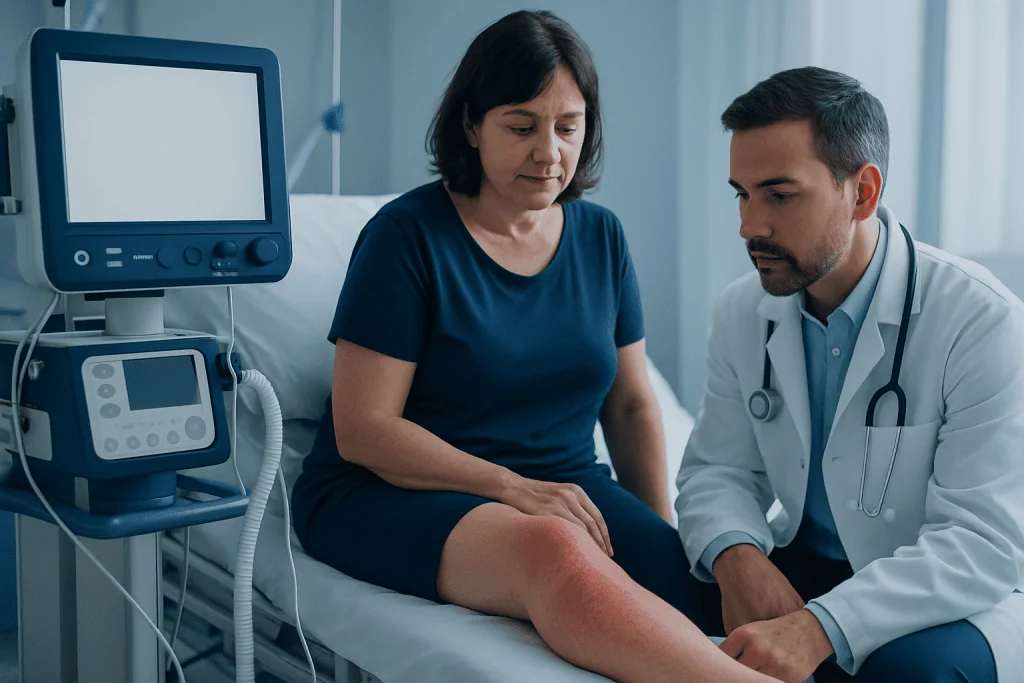
Cellulitis symptoms can begin gradually or appear within a short time. The infected area often feels warm, swollen, and painful, and the redness may expand over hours or days. In people with darker skin tones, the area may look darker, purplish, greyish, or simply more swollen and shiny rather than bright red.
Common signs and symptoms include:
- Redness or a change in skin colour that spreads
- Swelling, tightness, or a shiny appearance of the skin
- Warmth and tenderness in the affected area
- Pain that may increase when standing, walking, or touching the area
- Blisters, weeping skin, or small areas of broken skin in some cases
- Fever, chills, tiredness, or swollen lymph nodes when the infection is more active
Cellulitis most often affects one side of the body, for example one lower leg rather than both legs at the same time. However, other conditions can look similar, including eczema, contact dermatitis, blood clots, gout, venous disease, or inflammation from an injury. Because treatment differs, a medical examination is important if cellulitis is suspected.
Causes and Risk Factors

Cellulitis is most commonly caused by bacteria that normally live on the skin or in the environment. Streptococcus and Staphylococcus species are frequent causes. These bacteria can enter when the skin barrier is damaged, even if the opening is small and no longer easy to see.
Several factors can increase the risk of developing cellulitis. These include recent cuts, scrapes, burns, surgical wounds, ulcers, insect bites, eczema, psoriasis, athlete’s foot, or cracked skin between the toes. Swelling of the legs or arms, known as oedema or lymphoedema, can also make the skin more vulnerable to infection.
Medical conditions that affect circulation or immune defence may raise the risk as well. Diabetes, peripheral vascular disease, obesity, previous cellulitis, and reduced immunity from illness or medicines can all contribute. People who have had cellulitis before may be more likely to have it again, particularly if the original risk factors remain present.
Cellulitis itself is usually not highly contagious from person to person during normal contact. The bacteria involved are common, but infection generally occurs when they enter through damaged skin. Covering wounds, washing hands, and avoiding sharing personal items such as towels when skin infections are present are sensible precautions.
Diagnosis
Doctors usually diagnose cellulitis by examining the skin and asking about symptoms, how quickly they developed, possible injuries, previous infections, and medical conditions. The clinician may check temperature, pulse, blood pressure, and the size and borders of the affected area. Sometimes the edge of the redness is marked with a pen so that spreading or improvement can be monitored.
In many straightforward cases, laboratory tests are not required before starting treatment. Blood tests may be considered if a person has fever, feels very unwell, has a weakened immune system, or has signs of a more severe infection. If there is pus, an open wound, or drainage, a sample may be sent for culture to help identify the bacteria and guide antibiotic choice.
Imaging tests are not routinely needed, but they may be used if the diagnosis is uncertain or complications are suspected. Ultrasound can help look for an abscess, which is a pocket of pus that may need drainage, or evaluate other causes of swelling. In selected cases, imaging may help assess deeper infection, joint involvement, or circulation-related conditions that can resemble cellulitis.
Antibiotic Treatment and Medical Care
Antibiotics are the main treatment for cellulitis. The type of antibiotic depends on the likely bacteria, the location and severity of the infection, allergies, pregnancy status, kidney or liver function, previous infections, and local resistance patterns. Mild cases are often treated with oral antibiotics, while more severe cases may require intravenous antibiotics in hospital.
It is important to take antibiotics exactly as prescribed and to complete the course unless a doctor advises otherwise. Symptoms often begin to improve within a few days, but swelling and skin colour changes can take longer to settle. If pain, redness, fever, or swelling worsens after starting treatment, or if there is no improvement in the expected time, the person should contact a healthcare professional for reassessment.
Supportive care can help comfort and recovery. Elevating an affected arm or leg may reduce swelling, and gentle rest can help when movement is painful. A doctor may recommend appropriate pain relief, wound dressings, or treatment for related skin problems such as fungal infection between the toes.
If an abscess is present, antibiotics alone may not be enough. A clinician may need to drain the pus safely in a sterile setting. People should not squeeze, cut, or try to drain infected skin at home, as this can worsen infection or cause injury.
Prevention and Self-Care
Preventing cellulitis focuses on protecting the skin barrier and addressing conditions that allow bacteria to enter. Small daily habits can make a meaningful difference, especially for people who have had cellulitis before or who live with leg swelling, diabetes, eczema, or circulation problems.
Helpful prevention measures include:
- Wash minor cuts and scrapes with clean water and cover them with a clean dressing until healed.
- Keep skin moisturised to reduce cracking, especially on the feet and lower legs.
- Treat athlete’s foot, cracked skin between the toes, eczema, and other skin conditions with medical guidance.
- Wear protective gloves or footwear when gardening, working outdoors, or doing activities that may injure the skin.
- Check the feet regularly if diabetes, reduced sensation, or poor circulation is present.
- Follow medical advice for managing chronic swelling, which may include leg elevation, movement, or compression when appropriate.
During recovery, the skin may remain dry, flaky, or discoloured for a period after the infection has improved. Gentle skin care and follow-up with a doctor are useful if symptoms persist. Recurrent cellulitis may require a more detailed plan to identify and reduce ongoing risk factors.
When to See a Doctor
Anyone who suspects cellulitis should seek medical advice promptly, because early treatment can help the infection settle and reduce the risk of complications. Same-day assessment is especially important if redness is spreading, the area is very painful, fever or chills are present, or the person feels generally unwell.
Urgent medical care is needed if cellulitis affects the face or around the eye, the hands, the genitals, or a surgical wound, or if there are red streaks spreading from the area. People with diabetes, poor circulation, lymphoedema, a weakened immune system, or a history of recurrent cellulitis should not delay seeking care. Infants, older adults, and people who are pregnant also need careful assessment.
After treatment has started, follow-up may be needed to confirm that the infection is improving. A healthcare professional should reassess the situation if the redness continues to expand, swelling increases, fever persists, vomiting prevents taking oral medicine, or new blisters, numbness, severe pain, or darkening skin develops. These signs do not always mean a serious problem, but they do require prompt review.
Acibadem International’s multidisciplinary specialists and JCI-accredited hospitals diagnose and treat cellulitis and related skin infections for international patients, with care planned according to each patient’s medical needs. Patients should always follow the advice of their treating doctor and seek urgent care when symptoms are progressing.
Frequently asked questions
What does cellulitis look and feel like?
Cellulitis usually causes an area of skin to become red or discoloured, swollen, warm, and tender. The area may feel tight or painful, and it can spread over time. Some people also develop fever, chills, tiredness, or swollen glands.
Is cellulitis contagious?
Cellulitis is usually not easily spread through normal contact. It typically occurs when bacteria enter through broken or weakened skin. Good hand hygiene, covering wounds, and not sharing towels or dressings are still sensible precautions.
How is cellulitis treated?
Cellulitis is treated with antibiotics chosen by a doctor based on the likely bacteria and the person’s health situation. Mild cases may be treated with oral antibiotics, while more severe infections may need intravenous antibiotics. Supportive care such as elevation of the affected limb and appropriate wound care may also help.
How quickly should cellulitis improve after antibiotics?
Many people begin to feel some improvement within a few days of starting the correct antibiotic, although swelling and skin colour changes can take longer to resolve. The affected area may look slightly worse early on before it improves. If symptoms continue to spread, fever persists, or the person feels worse, medical reassessment is important.
Can cellulitis come back?
Yes, cellulitis can recur, especially when risk factors such as leg swelling, athlete's foot, eczema, ulcers, diabetes, or poor circulation are present. Preventive skin care and treatment of underlying conditions can reduce the chance of recurrence. People with repeated episodes should discuss a prevention plan with their doctor.
What conditions can be mistaken for cellulitis?
Several conditions can resemble cellulitis, including eczema, contact dermatitis, insect bite reactions, gout, venous stasis inflammation, and blood clots. Because these conditions require different care, a medical examination is important. A doctor may use the pattern of symptoms, examination findings, and sometimes tests to clarify the diagnosis.
References
- World Health Organization
- Centers for Disease Control and Prevention
- National Institute for Health and Care Excellence
- Infectious Diseases Society of America
- American Academy of Dermatology Association
This article is for general information only and is not a substitute for professional medical advice. Please consult a qualified doctor about your individual situation.
Cellulitis in Turkey — costs, top hospitals & a free quote
JCI-accredited · board-certified surgeons · reply within 24h
Add us as a Preferred Source to see more of our trusted health content across Google Search, AI Overviews and Discover.
Check your numbers in seconds
BMI, calories, due date, blood pressure and 30+ more clinical calculators — free, instant, doctor-reviewed ranges.