Cerebral Palsy Foot Brace: An Evidence-Based Patient Guide
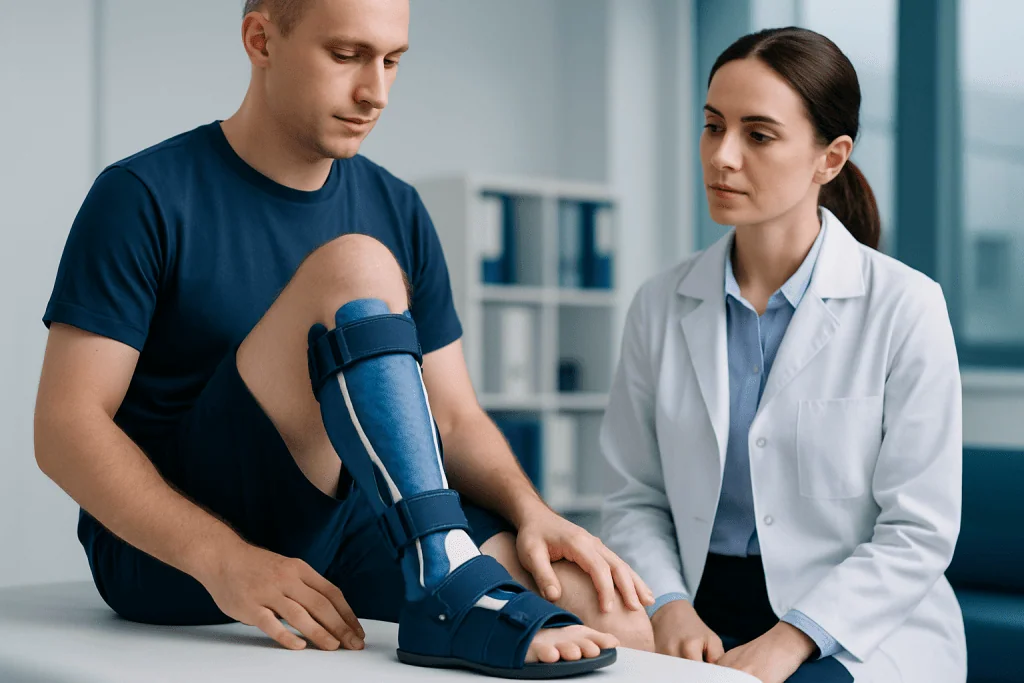
Foot and ankle braces are commonly used to support mobility in people with cerebral palsy. An AFO may improve foot clearance, stability and alignment, but it should be selected individually.
Key Takeaways
- Foot and ankle braces are commonly used to support mobility in people with cerebral palsy.
- An AFO may improve foot clearance, stability and alignment, but it should be selected individually.
- A specialist assessment helps determine the brace design, wearing plan and need for physical therapy.
- Regular reviews are important, especially for growing children or when comfort and walking change.
- Pain, skin redness that persists or a sudden change in walking should be assessed promptly.
A cerebral palsy foot brace, often called an ankle-foot orthosis (AFO), is a custom or prefabricated device that supports the foot and ankle during standing and walking. It may help improve alignment, stability and efficiency of movement, but the most appropriate brace depends on the person’s muscle tone, walking pattern, range of motion and daily goals.
Cerebral Palsy Foot Brace: How It Helps
A cerebral palsy foot brace is a device worn around the foot and ankle to guide positioning and provide support during standing, walking or other activities. The most common type is an ankle-foot orthosis, or AFO. It is usually made of molded plastic, carbon-fiber composite or other durable materials and is worn inside an appropriately sized shoe.
Cerebral palsy can affect muscle tone, strength, coordination and selective control of movement. These differences may cause the foot to point downward, turn inward or outward, or make it difficult to clear the ground during walking. A brace does not cure cerebral palsy, but it can be one part of an individualized rehabilitation plan that supports function, comfort and participation.
In cerebral palsy evidence based practice, orthoses are considered alongside physical therapy, activity goals, footwear, management of spasticity and, when appropriate, medical or surgical care. The expected benefit is personal: for one person it may be safer walking, while for another it may be better standing tolerance, easier shoe wear or maintenance of joint range.
How a Cerebral Palsy Brace for Leg Works
A cerebral palsy brace for leg may extend from below the knee to the foot and ankle. By influencing ankle position, it can help control excessive downward pointing of the foot, often called equinus, and reduce instability caused by inward or outward rolling. This may help the toes clear the floor during the swing phase of walking and provide a more stable base when the foot contacts the ground.
Several designs are available. A solid AFO provides firmer control, while a hinged or articulated AFO allows selected ankle movement. A posterior leaf-spring AFO may assist foot lift in people with milder weakness or foot drop. Supramalleolar orthoses are shorter devices that mainly support foot alignment around the ankle, and more extensive braces may be considered when knee control is also affected.
The best device balances support with movement. Too little control may not meet the functional goal, while too much restriction can interfere with activities such as stair climbing, running or rising from a chair. A physiotherapist, orthotist and rehabilitation physician or orthopedic specialist can help define practical goals before recommending a design.
Who May Be a Candidate for Cerebral Palsy Foot Support?

A cerebral palsy foot support may be considered for children, adolescents or adults whose foot and ankle position affects mobility, balance, endurance, comfort or shoe wear. It may also be used to help maintain a more functional resting position when muscles are tight or when a person is at risk of developing fixed shortening around the ankle.
Candidacy is based on an assessment rather than on diagnosis alone. Clinicians look at muscle tone, strength, joint flexibility, leg-length differences, foot shape, skin health, pain, balance, current walking ability and personal priorities. Walking may be observed without shoes, with usual footwear and, where suitable, with trial bracing. Video gait assessment or instrumented gait analysis can sometimes provide additional information.
A brace may be useful for a person who walks independently, uses mobility aids, stands for transfers or has limited mobility. However, not everyone benefits from the same type of orthosis. A brace should not be used as a substitute for evaluation when there is new pain, a worsening deformity, unexplained falls or a notable change in function.
- Common goals include improving foot clearance and reducing tripping.
- Some people need support for ankle stability or more even weight-bearing.
- Others use bracing to complement stretching, strengthening and gait training.
- Growing children generally require frequent fit checks and replacement as needed.
Assessment and Fitting: Step by Step
The process usually begins with a clinical assessment by a multidisciplinary team. This may include a pediatric rehabilitation specialist, neurologist, orthopedic surgeon, physiotherapist and orthotist. The team discusses activities that matter to the individual, such as walking at school, playing, managing stairs, standing at work or moving safely at home.
Next, the clinician examines alignment and movement of the hips, knees, ankles and feet. The orthotist may take measurements, use a digital scan or make a cast of the lower leg and foot for a custom device. In some settings, a prefabricated brace may be tried first when it is clinically suitable. The chosen brace is then manufactured or adjusted for the planned position and level of support.
At the fitting appointment, the brace is checked with socks and footwear. The clinician assesses comfort, pressure areas, walking pattern and ease of putting the device on and taking it off. Families and patients receive instructions on wearing time, skin checks, footwear and cleaning. A gradual wearing schedule is often recommended so that comfort and skin tolerance can be monitored.
Follow-up is essential. The brace may need adjustment as the person grows, gains strength, develops changes in tone or alters activity levels. Physical therapy can help the individual learn how to walk, transfer or exercise effectively with the new support.
Benefits, Limitations and Possible Risks
When appropriately prescribed, a cerebral palsy foot brace may improve foot position, stability and walking efficiency. Some people experience fewer trips, better confidence on uneven surfaces or less fatigue during daily activities. Bracing can also support a therapy program by providing more consistent alignment during practice and by helping preserve available range of motion.
Benefits vary according to the brace design, the person’s movement pattern and the outcome being measured. A brace that improves stability may feel less flexible, and a device designed for walking may not be ideal for every sport or activity. Clear goals and follow-up assessment help determine whether the brace is providing meaningful benefit.
Possible problems include pressure marks, blisters, skin irritation, sweating, discomfort or difficulty finding suitable shoes. A poorly fitting brace can cause pain or alter walking in an unhelpful way. Redness that does not fade after the brace is removed, broken skin, persistent pain or refusal to bear weight should be reported to the clinical team rather than managed by continuing to wear the brace.
Bracing is not always sufficient if there is a fixed contracture, significant bone alignment change or severe spasticity. In those circumstances, clinicians may discuss additional rehabilitation approaches, tone-management treatments or orthopedic assessment. Decisions should be individualized and made with the patient and family.
Recovery Timeline and Daily Care
There is no surgical recovery period after receiving a foot brace, but there is an adjustment period. During the first days or weeks, the person may need time to become familiar with the fit, feel and effect on walking. The healthcare team may advise a gradual increase in wearing time, especially for a first brace or after a major design change.
A physical therapist may recommend exercises and gait training to support adaptation. The specific plan depends on the person’s strength, balance, age, movement goals and type of brace. Some people notice an immediate change in stability, while others require several therapy sessions before they can use the device comfortably and confidently.
Daily care includes checking the skin before and after use, wearing clean seamless socks when advised, and ensuring the shoe is wide and deep enough for the brace. The device should be cleaned according to the orthotist’s instructions and examined for cracks, rough edges, loose straps or worn padding. Do not attempt major modifications at home.
Review appointments may be scheduled after fitting and then periodically. Children may need more frequent reviews because growth can quickly affect fit. Adults also need reassessment when there is weight change, altered muscle tone, reduced mobility, increased falls, pain or a change in daily demands.
When to Seek Medical Care
Contact the prescribing team if the brace causes persistent pain, numbness, swelling, blisters, skin breakdown or redness that remains after removal. Prompt review is also appropriate if the brace no longer fits, becomes damaged, is difficult to fasten or seems to worsen balance or walking.
A medical assessment is important for a new limp, sudden loss of walking ability, repeated falls, new joint pain, fever with limb pain or a rapidly changing foot position. These symptoms may have causes beyond the brace and should not be assumed to be a routine adjustment issue.
For planned care, a coordinated assessment can help identify whether bracing, rehabilitation, spasticity management or orthopedic treatment is most appropriate. Acibadem International’s multidisciplinary specialists and JCI-accredited hospitals assess and treat cerebral palsy-related mobility concerns for international patients.
Understanding the Word “Cerebral”
What does it mean to be cerebral? In medical language, cerebral means related to the brain. In everyday language, it can also describe something focused on thinking, ideas or intellectual interests. The word itself does not mean that a person has cerebral palsy.
What does it mean to be a cerebral person? A cerebral person is commonly described as someone who is thoughtful, analytical or strongly interested in ideas. This is a personality description, not a diagnosis and not a judgment about someone’s abilities or emotional life.
What does it mean if someone calls you cerebral? Usually, it means the person sees someone as intellectual, reflective or inclined to approach things through thought and analysis. The intended meaning can depend on tone and context, but it is separate from the medical use of the term in cerebral palsy.
What does cerebral show mean? “Cerebral show” is not a standard medical term. In entertainment or conversation, a “cerebral show” generally means a program that emphasizes complex ideas, psychological themes, puzzles or thoughtful storytelling. It has no connection to a cerebral palsy foot brace unless the discussion specifically says so.
Frequently asked questions
What is the most common cerebral palsy foot brace?
The most common device is an ankle-foot orthosis, also called an AFO. It supports the foot and ankle and can be made in different designs depending on walking pattern, muscle tone, joint movement and activity goals.
Can a foot brace help a child with cerebral palsy walk?
A foot brace may help some children walk with improved alignment, foot clearance or stability. Its effect varies from person to person, so it should be prescribed after an assessment and reviewed alongside physical therapy and the child’s functional goals.
How long should a cerebral palsy brace be worn each day?
Wearing time is individualized by the prescribing clinician and orthotist. Many people begin gradually and increase use as comfort and skin tolerance are confirmed; the brace should not be worn through pain or skin breakdown.
Can an AFO correct cerebral palsy?
No. An AFO does not cure cerebral palsy, which is a lifelong condition affecting movement and posture. It can be a useful support for mobility, positioning and maintaining range of motion as part of a broader care plan.
Does a cerebral palsy foot brace need to be custom made?
Not always. Some people can use a prefabricated device, while others need a custom-made brace because of their foot shape, level of support required or movement pattern. An orthotist can advise which approach is suitable.
What should be done if a brace leaves red marks?
Brief mild redness can occur after pressure, but it should fade soon after the brace is removed. Persistent redness, pain, blisters or broken skin should be reported to the orthotist or healthcare team before the brace is worn again.
References
- Centers for Disease Control and Prevention
- American Academy for Cerebral Palsy and Developmental Medicine
- National Institute for Health and Care Excellence
- Cerebral Palsy Alliance
- World Health Organization
This article is for general information only and is not a substitute for professional medical advice. Please consult a qualified doctor about your individual situation.
Cerebral Palsy in Turkey — costs, top hospitals & a free quote
JCI-accredited · board-certified surgeons · reply within 24h
Add us as a Preferred Source to see more of our trusted health content across Google Search, AI Overviews and Discover.

Physical Medicine & Rehabilitation
Restoring movement and function after injury, surgery or neurological conditions.
103 specialists in this unit