

Cerianna PET Scan: Preparation, Procedure and Results
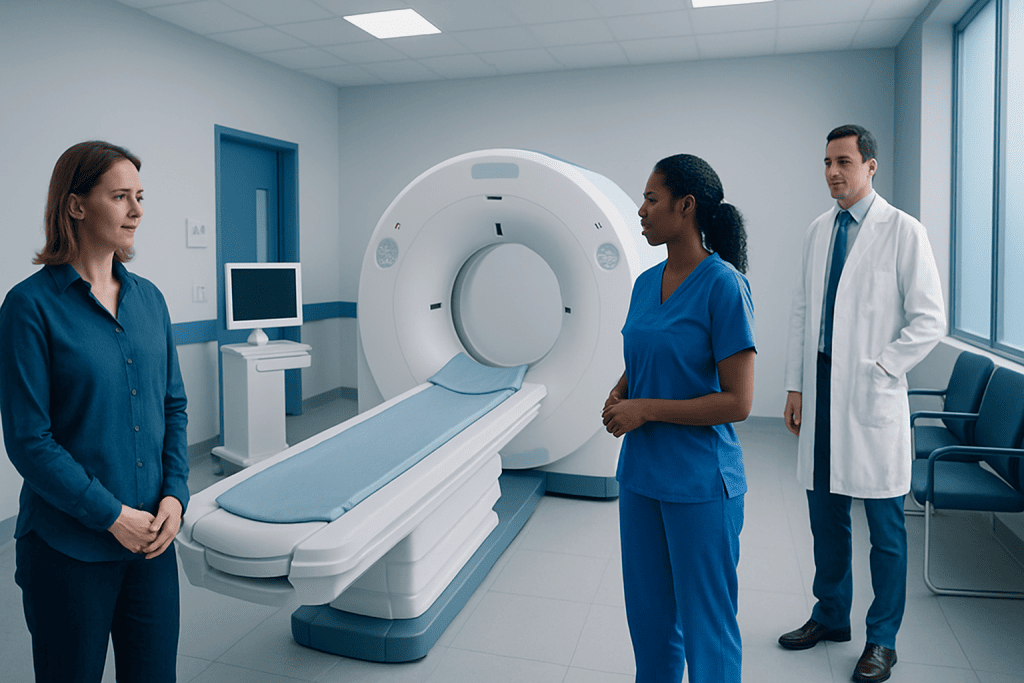
Cerianna is a PET tracer that binds to estrogen receptors, helping clinicians evaluate certain breast cancers. Food restrictions are usually not required for a Cerianna PET scan, unlike some other PET scans.
Key Takeaways
- Cerianna is a PET tracer that binds to estrogen receptors, helping clinicians evaluate certain breast cancers.
- Food restrictions are usually not required for a Cerianna PET scan, unlike some other PET scans.
- Patients should tell the imaging team about pregnancy, breastfeeding, allergies, medicines and recent imaging tests.
- Results must be interpreted alongside pathology, symptoms and other imaging; the scan does not replace a biopsy when tissue confirmation is needed.
- After the scan, drinking fluids and following local radiation-safety instructions can help the tracer leave the body.
A Cerianna PET scan is a specialized imaging test used to show estrogen receptor-positive areas in the body, most often in people with recurrent or metastatic breast cancer. It involves an injection of a small amount of radioactive tracer followed by PET/CT imaging, and preparation is usually simpler than for a standard glucose-based FDG PET scan.
Overview: What Is a Cerianna PET Scan?
A Cerianna PET scan is a type of positron emission tomography (PET) imaging that uses the tracer fluoroestradiol F 18, also called FES. The tracer is designed to attach to estrogen receptors, which are proteins found on many breast cancer cells. The images can help a cancer care team see where estrogen receptor-positive disease may be present in the body.
A Cerianna PET CT scan combines PET images, which show tracer uptake, with CT images, which show body structures in detail. It is mainly used as an adjunct to other assessments in adults with recurrent or metastatic breast cancer when estrogen receptor-positive lesions are suspected. It does not diagnose breast cancer on its own and cannot determine whether a cancer will respond to a particular hormone treatment.
Because it evaluates tumor biology rather than simply anatomy, this test may provide useful information when a biopsy is difficult, unsafe or unlikely to represent all sites of disease. The referring oncology team decides whether the scan is appropriate within an individual diagnostic and treatment plan.
How the Scan Works and Who May Be a Candidate
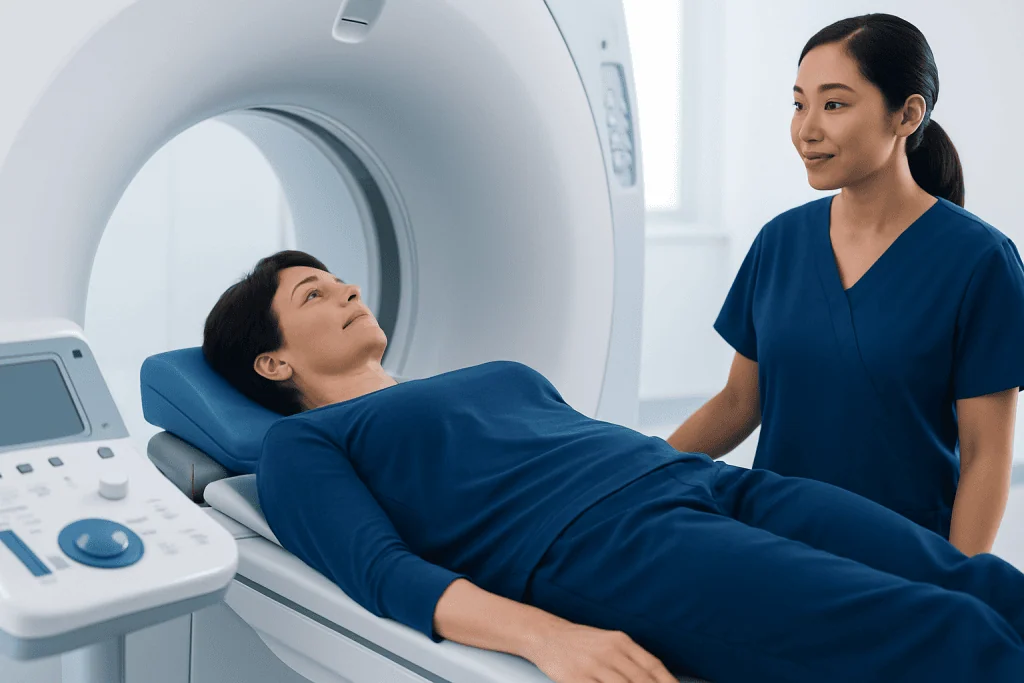
After injection into a vein, the Cerianna tracer circulates through the bloodstream and can bind to estrogen receptors. A PET scanner detects the small amount of radiation released by the tracer and creates images of areas with uptake. CT is usually performed during the same appointment to help locate these findings accurately.
The main Cerianna PET indications are assessment of estrogen receptor-positive lesions in adults with recurrent or metastatic breast cancer. It may be considered when results could help clarify the extent of disease or guide discussion about a biopsy or treatment strategy. A positive area of uptake is not automatically cancer, and a negative scan does not exclude all cancer or all estrogen receptor-positive disease.
Cerianna is not generally intended for routine screening, for assessing early breast symptoms, or as a substitute for standard pathology testing. It is also important to recognize that some treatments affecting estrogen receptors may influence tracer uptake. The oncology and nuclear medicine teams review current and recent medicines when planning the examination.
People seeking Cerianna PET scan locations should ask their oncologist or imaging center whether the tracer is available locally, as availability varies by region and facility. A center may also coordinate scan timing with other cancer imaging and care appointments.
Cerianna PET Scan Protocol: Preparation and Planning

The Cerianna PET scan protocol is individualized by the imaging department. In many cases, patients may eat and drink normally before the examination because Cerianna is not a glucose-based tracer. This differs from an FDG PET scan, for which fasting and blood glucose management are often important. The appointment instructions provided by the specific imaging center should always take priority.
Before the visit, patients should give the team a complete list of prescription medicines, over-the-counter products, supplements and hormone-related therapies. They should also mention prior breast cancer pathology results, past scans, surgery, radiation treatment and any recent biopsy. Comfortable clothing without metal may be helpful, although the center may provide a gown.
Pregnant patients, those who may be pregnant and people who are breastfeeding should notify the care team before the tracer is administered. The potential benefits and radiation considerations can then be discussed carefully. Patients with diabetes should not assume that they need the same preparation used for an FDG PET scan; they should follow the center’s specific instructions.
- Bring identification, referral information and prior imaging records if requested.
- Arrive early enough to complete screening and consent procedures.
- Ask whether any estrogen receptor-blocking or hormone-related medicine needs special timing before the scan; do not stop prescribed treatment without the oncologist’s advice.
What Not to Do 24 Hours Before a PET Scan?
What to avoid in the 24 hours before a PET scan depends on which PET tracer is being used. For a typical FDG PET scan, a center may ask patients to avoid strenuous exercise and to follow a low-carbohydrate or fasting plan. Those instructions help reduce normal muscle and glucose-related uptake that could affect image interpretation.
For a Cerianna PET scan, strict fasting, carbohydrate restriction and exercise avoidance are often not required in the same way. However, patients should not apply general PET advice automatically. They should follow their own appointment instructions and avoid starting, stopping or changing hormone-related medication unless their oncology team directs them to do so.
Alcohol, smoking and routine medicines may also be addressed differently between imaging centers and between types of scans. When instructions are unclear, contacting the nuclear medicine department before the appointment is the safest approach.
Can I Eat Scrambled Eggs the Day Before a PET Scan?
In most situations, scrambled eggs are acceptable the day before a Cerianna PET scan because this examination usually does not require dietary carbohydrate restriction or fasting. A normal, balanced diet is commonly permitted unless the imaging center has given a different instruction for medical or logistical reasons.
The answer may differ if the scheduled examination is an FDG PET scan or if Cerianna imaging is being performed alongside another test with separate preparation requirements. For that reason, patients should confirm the exact tracer and scan plan rather than relying on general online advice.
If a person has diabetes, nausea, dietary limitations or is taking medicines that affect glucose or hormones, the imaging team can give tailored guidance. Maintaining usual nutrition is often preferable unless a clinician specifically advises otherwise.
What Happens During the Procedure and Recovery?
At the appointment, a technologist confirms relevant medical details and places a small intravenous line. The Cerianna tracer is injected through the vein. There may be a short waiting period while the tracer distributes in the body, followed by the imaging portion of the exam. The full visit commonly takes longer than the actual scanning time.
During the scan, the patient lies flat on a padded table that moves slowly through the PET/CT scanner. Remaining still helps produce clear images. The scanner is open at both ends, and the team can communicate with the patient throughout. Some people need an iodinated contrast agent for the CT part, but this is not always necessary; the center will explain this in advance.
Most people can return to usual activities soon after the scan. Drinking extra water, unless a clinician has restricted fluids, and urinating regularly can help the body eliminate the tracer. The radiology or nuclear medicine staff may recommend limiting close, prolonged contact with pregnant people and young children for a short period, according to local guidance.
To reduce radiation exposure to others, patients may be advised to flush the toilet twice after a PET scan, particularly after urinating. Small amounts of tracer leave the body in urine, and double flushing is a practical hygiene precaution. Good handwashing is also recommended.
Results, Benefits and Possible Risks
A nuclear medicine physician or radiologist reviews the Cerianna PET CT images and prepares a report for the referring clinician. The report describes whether areas show FES uptake and where they are located. The oncology team then interprets this information together with biopsy findings, blood tests, symptoms and other imaging, such as CT, MRI or bone scans.
A key benefit is that Cerianna may offer a whole-body view of estrogen receptor expression in visible lesions. This can complement tissue testing, especially because receptor status can differ among cancer sites or change over time. Still, a scan result cannot replace clinical judgment or a biopsy when confirmation is needed.
The radiation exposure is limited and is similar in principle to that of other nuclear medicine imaging examinations, but it should be used only when clinically appropriate. Side effects are uncommon and generally mild, such as temporary discomfort, bruising or bleeding at the injection site. If CT contrast is used, there can be additional considerations, including allergic-type reactions or kidney-related precautions for some patients.
Eating carbohydrates the day before a Cerianna scan is not expected to interfere in the way it can with FDG PET imaging. If a patient eats carbs before an FDG scan despite instructions, the team may need to assess whether image quality could be affected and whether the scan should proceed. This distinction is one reason accurate pre-scan instructions matter.
When to Seek Medical Care
Patients should contact the imaging center before the appointment if they become pregnant, think they may be pregnant, start a new hormone-related medicine, develop an acute illness or are unable to follow the instructions they received. The team can determine whether changes to the schedule or protocol are needed.
After the injection, urgent medical attention is appropriate for signs of a severe allergic reaction, such as trouble breathing, swelling of the face or throat, widespread hives, fainting or severe dizziness. Although serious reactions are uncommon, prompt assessment is important.
People should also contact their treating clinician if they have new or worsening symptoms related to cancer, such as persistent new pain, marked shortness of breath, new weakness or neurological changes. These symptoms should be evaluated based on their clinical urgency and should not wait only for planned imaging results.
Acibadem International’s multidisciplinary specialists and JCI-accredited hospitals support international patients with breast cancer evaluation and imaging planning when clinically indicated.
Frequently asked questions
Is a Cerianna PET scan the same as an FDG PET scan?
No. Cerianna uses fluoroestradiol F 18, a tracer that binds to estrogen receptors, while FDG is a glucose-like tracer that highlights areas using increased glucose. Their clinical uses and preparation instructions can therefore differ.
Do I need to fast before a Cerianna PET scan?
Many patients do not need to fast for Cerianna imaging. However, the imaging center's instructions should be followed exactly, particularly if another scan or procedure is scheduled at the same visit.
Can Cerianna PET replace a biopsy?
No. Cerianna PET provides imaging information about estrogen receptor-positive lesions, but it does not replace pathology when tissue confirmation is needed. A clinician may still recommend biopsy to establish or clarify a diagnosis.
How long does a Cerianna PET scan take?
The total appointment includes registration, screening, tracer injection, a waiting period and image acquisition. Timing varies by facility and by the type of CT performed, so patients should ask their center what to expect.
Can I drive home after a Cerianna PET scan?
Most people can drive and resume ordinary activities after the scan. If sedation is used for another reason or if a patient feels unwell, different arrangements may be needed.
Why are radiation-safety instructions given after the scan?
A small amount of radioactive tracer remains in the body for a limited time and leaves mainly through urine. Instructions such as drinking fluids, washing hands and sometimes double flushing help reduce unnecessary exposure to others.
References
- U.S. Food and Drug Administration
- Society of Nuclear Medicine and Molecular Imaging
- National Cancer Institute
- American Cancer Society
This article is for general information only and is not a substitute for professional medical advice. Please consult a qualified doctor about your individual situation.
Oncology care in Turkey — second opinion and treatment plan
JCI-accredited · board-certified surgeons · reply within 24h
Add us as a Preferred Source to see more of our trusted health content across Google Search, AI Overviews and Discover.

More from the Health Library


Related Specialists

Prof. Dr. Ercüment Yılmaz
Cardiology
Dr. Canan Çelebi
Internal Medicine
Dr. Aysun Işıklar
Internal Medicine
Assoc. Prof. Dr. Ceren Yıldız Eren
Gynecology & Obstetrics