Cervical Disc Herniation: Arm Pain, Numbness, and Treatment Options

A cervical disc herniation affects the discs between the bones of the neck. Symptoms often include neck pain plus arm pain, tingling, numbness, or weakness.
Key Takeaways
- A cervical disc herniation affects the discs between the bones of the neck.
- Symptoms often include neck pain plus arm pain, tingling, numbness, or weakness.
- Diagnosis is based on symptoms, a physical exam, and sometimes MRI or other imaging tests.
- Many cases improve with rest, activity changes, medication, and physical therapy.
- Surgery may be considered if pain is severe, symptoms persist, or nerve weakness worsens.
Cervical disc herniation happens when a disc in the neck bulges or ruptures and irritates a nearby nerve. It can lead to neck pain, arm pain, tingling, numbness, or weakness, and many people improve with nonsurgical treatment.
Overview
Cervical disc herniation is a common spine problem that affects the neck. The cervical spine contains seven vertebrae, and soft discs sit between these bones to provide cushioning and support movement. When part of a disc pushes outward or tears, it may press on a nearby nerve root or, less commonly, the spinal cord.
This pressure can cause symptoms not only in the neck but also in the shoulder, arm, and hand. Many people describe sharp or burning arm pain, pins-and-needles sensations, or numbness in certain fingers. If a nerve is significantly irritated, weakness may also develop in the arm or hand.
The condition may happen suddenly after a strain, but it can also develop gradually as discs lose water and flexibility with age. Although the symptoms can be uncomfortable and worrying, many cases improve over time with conservative care and careful follow-up.
Symptoms of Cervical Disc Herniation
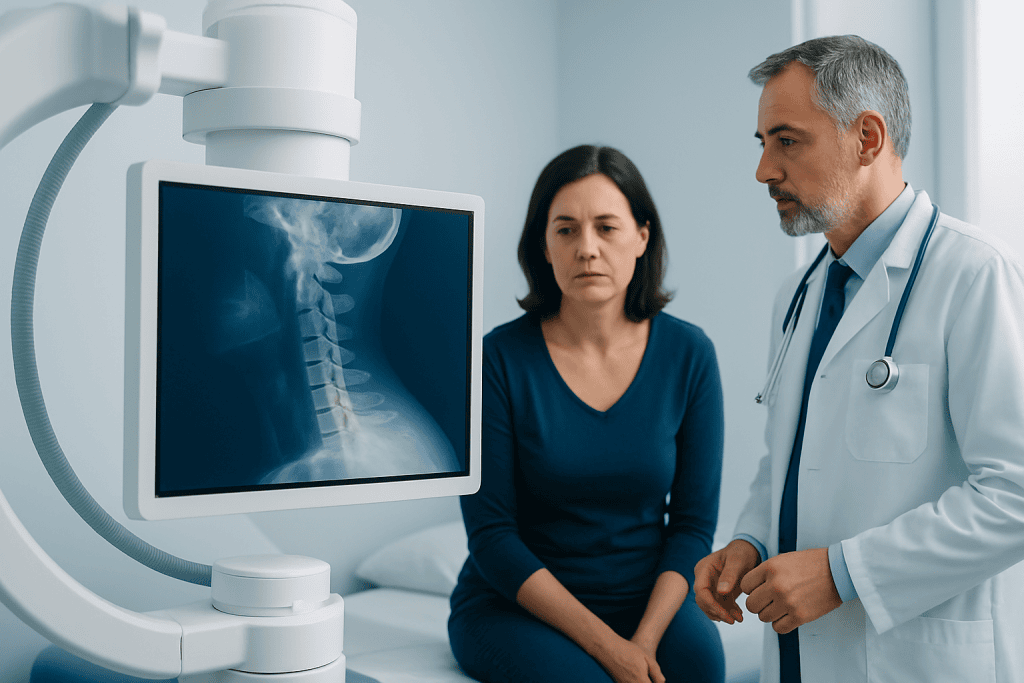
Symptoms vary depending on which disc is affected and whether the disc is pressing on a nerve root or the spinal cord. Neck pain is common, but some people notice arm symptoms more than neck discomfort. Pain may start in the neck and travel into the shoulder blade, shoulder, arm, and sometimes the hand or fingers.
Common symptoms include:
- Neck pain or stiffness
- Arm or shoulder pain, sometimes described as sharp, burning, or electric-like
- Tingling or numbness in the arm, hand, or fingers
- Muscle weakness in the shoulder, arm, or hand
- Pain that worsens with certain neck movements, coughing, or sneezing
If the herniated disc affects the spinal cord rather than only a nerve root, symptoms can be different. A person may notice clumsiness in the hands, trouble with balance, changes in walking, or weakness in both arms or legs. This pattern needs prompt medical evaluation because it may suggest spinal cord compression.
Causes and Risk Factors

The most common cause of cervical disc herniation is age-related wear in the spine. Over time, discs gradually dry out and become less flexible. This makes them more prone to bulging or tearing, even during normal daily movement.
In some cases, a sudden force contributes to the injury. Lifting awkwardly, a sports injury, or a motor vehicle collision can place extra stress on the neck. Repeated strain from posture habits or physically demanding work may also play a role, especially if the neck is often held in one position for long periods.
Factors that may increase risk include:
- Increasing age
- Repetitive neck motion or prolonged poor posture
- Manual labor or heavy lifting
- Smoking, which can affect disc health
- Previous spine problems or family tendency toward disc degeneration
Not every bulging or herniated disc causes symptoms. Imaging may show a disc change in someone who has no pain at all. Symptoms usually occur when the disc material irritates or compresses a nerve structure.
How It Is Diagnosed
Diagnosis begins with a medical history and physical examination. The doctor asks where the pain travels, whether numbness or weakness is present, and what movements make symptoms better or worse. Strength, sensation, reflexes, and neck motion are usually checked carefully.
When symptoms strongly suggest nerve irritation in the neck, this may also be described as cervical radiculopathy. Imaging is not always needed right away, especially if symptoms are mild and there are no warning signs. However, tests may be recommended if pain is severe, symptoms persist, weakness is present, or spinal cord compression is suspected.
MRI is often the most useful imaging test because it shows discs, nerves, and the spinal cord in detail. X-rays may help assess alignment or other structural issues, while CT scans can be useful in selected cases. Sometimes nerve tests such as electromyography are used to better understand whether symptoms are coming from a pinched nerve in the neck or another condition, such as peripheral nerve compression.
Treatment Options
Treatment depends on symptom severity, examination findings, and how long the problem has been present. Many people improve with nonsurgical care over several weeks. Early treatment often focuses on pain control, reducing irritation around the nerve, and helping the person return to normal daily activity in a safe way.
Conservative treatment may include short-term activity modification, pain-relieving medicines, anti-inflammatory medicines when appropriate, and a guided exercise program. Physical therapy and rehabilitation can help improve posture, neck mobility, muscle support, and body mechanics. Some patients may benefit from targeted exercises and supervised stretching, while others may need a more gradual recovery plan.
In selected cases, doctors may consider image-guided injections to reduce inflammation and ease nerve-related pain. If symptoms remain severe despite appropriate conservative care, or if weakness is progressing, surgery may be discussed. Surgical options may include discectomy to remove the part of the disc pressing on the nerve, sometimes combined with spinal fusion or, in carefully selected patients, another motion-preserving approach.
The goal of surgery is to relieve nerve pressure, reduce pain, and protect nerve function. Decisions about surgery are individualized, based on imaging findings, the degree of neurological symptoms, and the patient’s overall health and goals.
Prevention and Self-care
It is not always possible to prevent a cervical disc herniation, but daily habits can lower strain on the neck. Good posture is especially important for people who spend long hours at a desk or looking down at a phone. Keeping screens at eye level and taking regular breaks may reduce stress on the cervical spine.
Self-care measures that may help include:
- Avoiding sudden heavy lifting or twisting of the neck
- Using supportive posture during computer and phone use
- Taking short movement breaks during prolonged sitting
- Doing exercises recommended by a qualified clinician or therapist
- Maintaining general fitness and not smoking
Rest can be useful for a short time during a pain flare, but long periods of inactivity are usually not recommended. Gentle movement, within comfort, often supports recovery. Any exercise plan should be tailored to the person’s symptoms and confirmed with a healthcare professional, especially if there is numbness or weakness.
When to See a Doctor
Medical advice is recommended if neck pain lasts more than a few days, keeps returning, or spreads into the arm with tingling or numbness. A doctor should also assess symptoms that interfere with work, sleep, or daily activities. Early assessment can help confirm the cause and guide appropriate treatment.
Urgent medical attention is important if there is increasing arm or hand weakness, loss of coordination, difficulty walking, or trouble with balance. Sudden bowel or bladder changes, severe trauma, or symptoms affecting both arms or legs also need prompt evaluation, as they may suggest a more serious spinal problem.
Specialist care may involve orthopedics, neurosurgery, pain management, and rehabilitation working together. Acibadem International’s multidisciplinary specialists in JCI-accredited hospitals diagnose and treat cervical disc herniation for international patients, with treatment plans based on the individual’s symptoms, imaging, and functional needs.
Frequently asked questions
Can cervical disc herniation heal on its own?
In many cases, symptoms improve over time without surgery. Inflammation around the nerve may settle, and the body can sometimes gradually reduce the effect of the herniated disc. Even when the disc change remains visible on imaging, pain and numbness may improve significantly.
What does arm pain from a herniated disc in the neck feel like?
People often describe it as sharp, burning, shooting, or electric-like pain traveling from the neck into the shoulder and arm. It may be accompanied by tingling, numbness, or a pins-and-needles sensation in the hand or fingers. The pattern depends on which nerve root is affected.
Is surgery always needed for cervical disc herniation?
No, surgery is not always necessary. Many people improve with medication, physical therapy, activity changes, and time. Surgery is usually considered when symptoms are severe, do not improve, or when there is progressive weakness or spinal cord compression.
How is cervical disc herniation different from a bulging disc?
A bulging disc usually means the disc extends beyond its normal boundary without a complete tear in the outer layer. A herniated disc generally means disc material has pushed further out through a tear or weak area. Both can cause symptoms if they affect nearby nerves.
Can poor posture cause a cervical disc herniation?
Poor posture alone is not always the direct cause, but it can increase stress on the neck over time. Prolonged forward head posture, repetitive strain, and limited movement breaks may contribute to discomfort and disc-related problems. Improving posture can be an important part of prevention and recovery.
When is numbness or weakness in the arm a warning sign?
Persistent numbness should be assessed by a doctor, especially if it is worsening or paired with significant pain. Weakness is more concerning because it may mean the nerve is under greater pressure. Urgent evaluation is important if weakness progresses or if there are balance problems or hand clumsiness.
References
- National Institute of Neurological Disorders and Stroke
- American Academy of Orthopaedic Surgeons
- National Health Service
- North American Spine Society
- Mayo Clinic
This article is for general information only and is not a substitute for professional medical advice. Please consult a qualified doctor about your individual situation.
Joint and spine care in Turkey — expert assessment & treatment
JCI-accredited · board-certified surgeons · reply within 24h
Add us as a Preferred Source to see more of our trusted health content across Google Search, AI Overviews and Discover.