Cervical Lymphadenitis: What Is Normal, What Is Not, and When to Seek Care

Cervical lymphadenitis is inflammation of neck lymph nodes, most often caused by infection. Tender, mobile, mildly enlarged nodes during a cold or sore throat are often part of a normal immune response.
Key Takeaways
- Cervical lymphadenitis is inflammation of neck lymph nodes, most often caused by infection.
- Tender, mobile, mildly enlarged nodes during a cold or sore throat are often part of a normal immune response.
- Nodes that are very large, hard, fixed, worsening, or present for several weeks need medical evaluation.
- Doctors diagnose the cause using history, physical examination, and sometimes blood tests, imaging, or biopsy.
- Treatment depends on the underlying cause and may include observation, antibiotics, drainage, or treatment of another condition.
Cervical lymphadenitis means inflammation of the lymph nodes in the neck. It is often linked to a nearby infection and commonly improves with the right treatment, but persistent, enlarging, or unusually hard lymph nodes should be assessed by a doctor.
Overview: what cervical lymphadenitis means
Cervical lymphadenitis is inflammation of one or more lymph nodes in the neck. Lymph nodes are small immune-system structures that help filter germs and support the body’s defense against infection. When they react to an infection or another trigger, they can become enlarged, tender, and easier to feel under the skin.
In many cases, this is not dangerous. A child or adult with a recent cold, sore throat, dental problem, or skin infection may notice swollen neck nodes that are soft or tender for a short time. This can be a normal sign that the immune system is working. What matters most is the overall pattern: how large the nodes are, how long they last, whether they are painful, and whether other symptoms are present.
The term is sometimes used broadly, but it does not describe a single disease. Instead, it describes a finding with several possible causes. Some are short-lived and simple, while others need more testing. Distinguishing what is expected from what is not helps guide when watchful waiting is reasonable and when prompt medical care is the safer choice.
What is normal, and what is not
A mildly enlarged neck lymph node can be normal during or soon after an infection. Nodes that are tender, slightly movable, and appear along with symptoms such as a runny nose, sore throat, cough, ear discomfort, or dental irritation are often reactive. They may take days to a few weeks to settle, even after the main illness improves.
What is less typical includes nodes that continue to enlarge, feel hard or fixed in place, appear without any obvious infection, or do not improve over several weeks. Redness and warmth over the skin, severe tenderness, or a soft center that suggests pus can point to a more significant bacterial infection. General symptoms such as persistent fever, unexplained weight loss, drenching night sweats, or marked fatigue also deserve attention.
Location can matter too. While many common reactive nodes are felt under the jaw or along the sides of the neck, swelling above the collarbone is more concerning and should be assessed promptly. If the neck swelling is associated with trouble breathing, difficulty swallowing saliva, drooling, a muffled voice, or rapid worsening, urgent medical care is important.
Symptoms and related signs

The main symptom of cervical lymphadenitis is one or more swollen lymph nodes in the neck. Some people describe them as lumps or bumps under the skin. These may be painful or painless, and they can affect one side of the neck or both sides depending on the cause.
Other symptoms often come from the underlying problem rather than the lymph nodes themselves. A viral upper respiratory infection may cause sore throat, congestion, cough, or low-grade fever. A bacterial infection may cause stronger pain, fever, skin redness, warmth, or swelling that feels more localized. Dental infections may lead to tooth pain, gum swelling, bad taste in the mouth, or pain with chewing.
Less commonly, cervical lymphadenitis occurs with conditions beyond routine infections. If the lymph nodes stay enlarged for a longer period or occur with symptoms elsewhere in the body, doctors may consider illnesses such as lymphoma, autoimmune conditions, or chronic infections. This does not mean cancer is likely in every case, but it explains why the full history and examination are important.
- Tender or painful neck lumps
- Fever or feeling unwell
- Sore throat, cold symptoms, or ear pain
- Dental or gum pain
- Skin redness, warmth, or swelling over the node
- Persistent fatigue, weight loss, or night sweats in some cases
Causes and risk factors
The most common cause of cervical lymphadenitis is infection. Viruses that cause colds, flu-like illnesses, or throat infections frequently trigger reactive lymph node swelling. Bacterial causes include infections of the throat, tonsils, ears, skin, salivary glands, or teeth. In some cases, bacteria can infect the lymph node itself, leading to more noticeable pain, redness, and swelling.
Age, exposure, and nearby sources of infection affect risk. Children often develop enlarged neck nodes because they are frequently exposed to common viruses. Poor dental health, untreated cavities, gum disease, skin breaks, and chronic sinus or throat problems can increase the chance of bacterial spread to neck nodes. People with weakened immune systems may be at higher risk for more severe or unusual infections.
Doctors also consider other causes when lymph node swelling does not fit the typical pattern. These include infections such as mononucleosis, tuberculosis, and cat-scratch disease; inflammatory conditions; and cancers involving lymph tissue or nearby structures. Depending on symptoms and examination, doctors may also evaluate the throat, thyroid, salivary glands, or other neck structures with head and neck cancer evaluation and treatment pathways when needed.
How doctors diagnose cervical lymphadenitis
Diagnosis begins with a careful history and physical examination. The doctor will ask when the swelling started, whether it is painful, whether there has been a recent cold, sore throat, dental issue, skin problem, travel, animal exposure, or contact with tuberculosis. They will also ask about fever, swallowing difficulty, weight loss, and night sweats.
During the examination, the doctor checks the size, location, tenderness, consistency, and mobility of the lymph nodes. The mouth, throat, ears, nose, scalp, skin, and teeth are also examined because the cause may be nearby. This step is often enough to suggest whether the swelling is likely reactive and short-term or whether further testing is advisable.
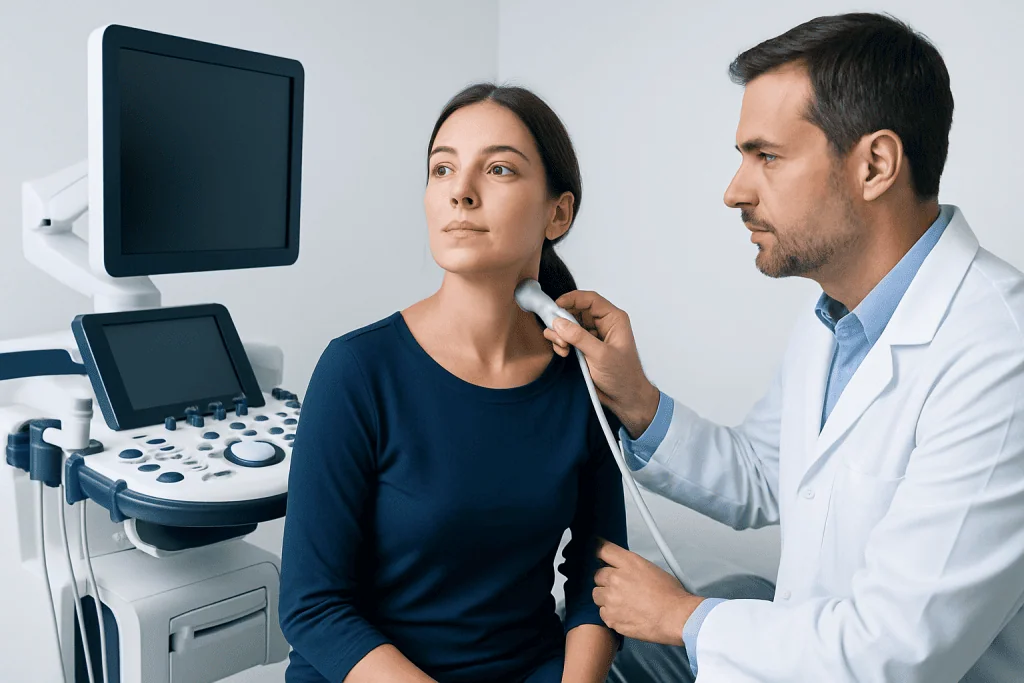
If needed, additional tests may include blood work, throat swabs, ultrasound, or other imaging such as MRI to look more closely at deeper tissues. When an abscess is suspected, imaging can help guide treatment. If lymph nodes remain enlarged, have suspicious features, or no cause is found, the next step may involve tissue sampling or biopsy to clarify the diagnosis. In selected cases, especially when persistent asymmetry, swallowing symptoms, or another neck mass is present, doctors may also assess related ENT conditions such as thyroid cancer.
Treatment options
Treatment depends on the cause. When cervical lymphadenitis is linked to a self-limited viral illness, treatment is often supportive: rest, fluids, and monitoring while the infection improves. The lymph nodes may remain somewhat enlarged for a short time even after the person feels better.
If a bacterial infection is likely, a doctor may prescribe antibiotics. The exact choice depends on the likely source, such as throat, skin, or dental infection, and local bacterial patterns. If there is an abscess, treatment may include drainage in addition to antibiotics. A dental source often requires dental treatment as well, or the lymph node swelling may return.
When testing suggests another cause, treatment focuses on that condition. Chronic infections, immune-related conditions, and cancers each have different management plans. If there is concern for a deeper neck process, airway involvement, or a tumor, care may involve ENT, infectious disease, radiology, pathology, and surgical specialists. Near the end of the diagnostic pathway, patients seeking coordinated international care may choose centers such as Acibadem International, where multidisciplinary specialists in JCI-accredited hospitals evaluate and treat complex neck conditions.
Self-care, monitoring, and prevention
At home, the safest approach is supportive care and observation unless a doctor advises otherwise. Gentle hydration, rest, and avoiding frequent pressing or squeezing of the lymph node can help. Repeated checking may make the area feel more irritated and can make it harder to judge whether it is truly improving.
Prevention is not always possible, but reducing nearby sources of infection can lower risk. Good hand hygiene, staying up to date with routine vaccinations, and managing colds or throat infections appropriately may help. Oral hygiene also matters because dental and gum infections are a common trigger for swollen neck nodes.
Some practical measures include:
- Brush and floss regularly and seek dental care for tooth pain or gum swelling
- Avoid sharing drinks or utensils during active infections
- Follow treatment plans for sinus, ear, throat, or skin infections
- Seek medical advice if swelling worsens instead of gradually improving
Warm compresses may provide comfort for mild tenderness, but they do not replace medical evaluation if red-flag symptoms appear. Over-the-counter pain relief may help some people, but medication choices should be discussed with a qualified clinician, especially for children, pregnant people, and those with other medical conditions.
When to seek medical care
Medical review is a good idea if swollen neck lymph nodes last longer than about two to four weeks, continue to enlarge, or return repeatedly. Evaluation is also appropriate if there is no obvious explanation such as a recent cold, sore throat, or dental problem. People with weakened immune systems, a history of cancer, or significant ongoing symptoms should be assessed sooner rather than later.
Prompt or urgent care is important if the swelling is rapidly worsening, very painful, red, or associated with high fever. The same is true for trouble breathing, trouble swallowing, drooling, a muffled voice, severe neck stiffness, or signs of dehydration. These symptoms can suggest a deeper infection or another condition that needs immediate treatment.
It is also wise to seek care for hard, fixed, painless nodes; swelling above the collarbone; or symptoms such as unexplained weight loss and drenching night sweats. A healthcare professional can determine whether simple observation is enough or whether tests and specialist assessment are needed.
Frequently asked questions
Is cervical lymphadenitis the same as cancer?
No. Cervical lymphadenitis usually refers to inflamed neck lymph nodes, most often due to infection. However, if lymph nodes are hard, fixed, persistent, or associated with weight loss or night sweats, a doctor may investigate for less common causes including cancer.
How long should swollen neck lymph nodes last?
Mild reactive lymph node swelling often improves as the infection clears, though the node can remain noticeable for days to a few weeks. If swelling lasts beyond a few weeks, grows larger, or has unusual features, medical assessment is recommended.
Are painful lymph nodes better than painless ones?
Painful lymph nodes are commonly seen with infections and inflammation, so they are often less concerning than painless, hard, fixed nodes. Still, severe pain, redness, or warmth can mean a bacterial infection or abscess that needs medical treatment.
Can a dental problem cause cervical lymphadenitis?
Yes. Tooth infections, gum disease, and other oral infections can lead to enlarged lymph nodes in the neck because these nodes drain nearby tissues. Treating the dental source is important to prevent ongoing or recurring swelling.
Should a person massage or keep checking the swollen node?
It is usually better not to repeatedly press or massage the lymph node. Frequent touching can make the area more tender and may make it harder to tell whether it is truly changing over time.
Do all cases need antibiotics?
No. Many cases are caused by viruses, and antibiotics do not help viral infections. Antibiotics are considered when a bacterial cause is likely, especially if there is fever, increasing pain, skin redness, or a suspected abscess.
References
- American Academy of Otolaryngology–Head and Neck Surgery
- American Academy of Pediatrics
- Centers for Disease Control and Prevention
- Mayo Clinic
- National Health Service
This article is for general information only and is not a substitute for professional medical advice. Please consult a qualified doctor about your individual situation.
Explore treatments in Turkey — costs, top hospitals & a free quote
JCI-accredited · board-certified surgeons · reply within 24h
Add us as a Preferred Source to see more of our trusted health content across Google Search, AI Overviews and Discover.