Cervical Radiculopathy: What Is Normal, What Is Not, and When to Seek Care

Cervical radiculopathy happens when a nerve in the neck is compressed or inflamed. Pain that radiates from the neck into one arm is common; numbness or weakness can also occur.
Key Takeaways
- Cervical radiculopathy happens when a nerve in the neck is compressed or inflamed.
- Pain that radiates from the neck into one arm is common; numbness or weakness can also occur.
- Many cases improve with rest, physical therapy, posture changes, and medication guided by a doctor.
- Loss of hand strength, worsening symptoms, balance problems, or bladder or bowel changes need urgent medical review.
- Diagnosis is based on symptoms, physical examination, and sometimes imaging or nerve tests.
Cervical radiculopathy is irritation or compression of a nerve root in the neck, often causing pain, tingling, numbness, or weakness that travels into the shoulder, arm, or hand. Some symptoms can improve with time and conservative care, but progressive weakness, severe pain, or symptoms linked to injury or spinal cord warning signs should be assessed promptly.
Overview: what cervical radiculopathy is, and what may be normal or not
Cervical radiculopathy means a nerve root in the cervical spine, or neck, is irritated or compressed. This often causes pain that starts in the neck or shoulder blade area and travels down one arm. Tingling, numbness, or a feeling of weakness in the arm or hand may happen too, depending on which nerve is affected.
What can be considered relatively common or “expected” in milder cases is one-sided radiating arm pain that changes with neck position, along with intermittent pins and needles. Some people notice symptoms after sleeping awkwardly, working for long periods at a computer, lifting, or after a flare of underlying neck wear-and-tear. Mild symptoms may settle gradually over days to weeks, especially with activity changes and guided conservative care.
What is not considered normal is steadily worsening weakness, dropping objects because of poor grip, trouble with balance, symptoms in both arms, or any loss of bladder or bowel control. Severe pain after a fall, sports injury, or traffic accident also needs prompt assessment. These features can suggest a more serious problem than a simple irritated nerve and should not be ignored.
Symptoms and how they can feel in daily life
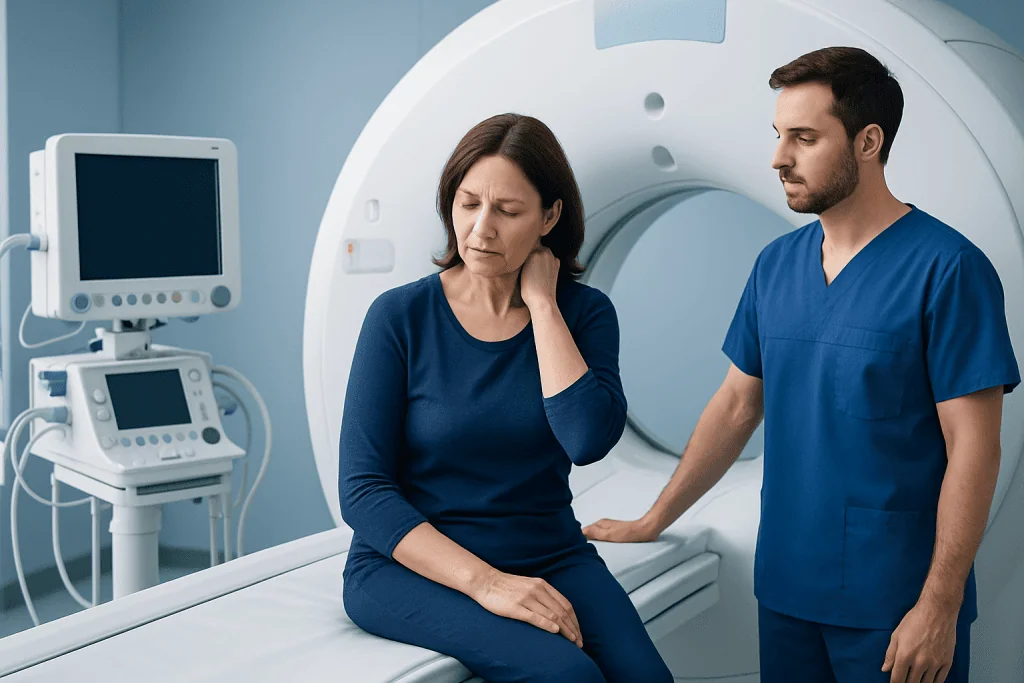
The hallmark symptom of cervical radiculopathy is radiating pain. Rather than staying only in the neck, discomfort often moves into the shoulder, upper arm, forearm, or fingers. People may describe the pain as sharp, burning, electric, aching, or shooting. Neck movement, especially turning the head or looking up, may make symptoms worse.
Sensory symptoms are also common. These include tingling, pins and needles, numbness, or altered sensation in part of the arm or hand. The exact pattern may help a clinician identify which cervical nerve root is involved. Some people feel symptoms mostly in the thumb and index finger, while others notice them more in the middle finger or ring and little fingers.
Muscle weakness can occur if the affected nerve supplies strength to the shoulder, arm, or hand. This may show up as difficulty lifting objects, pushing, pulling, typing, or gripping. Weakness is more important medically than pain alone, because it can indicate more significant nerve involvement. A clinician may compare reflexes and strength from one side to the other during examination.
Symptoms can overlap with other conditions. For example, shoulder disorders, peripheral nerve compression, or inflammatory conditions may also cause arm pain or numbness. In some cases, doctors consider related neck conditions such as cervical disc herniation when evaluating the source of symptoms.
Why it happens: causes and risk factors

The most common causes are age-related changes in the cervical spine and disc problems. As discs lose water content over time, they can bulge or herniate and irritate a nearby nerve root. Bony overgrowth, often called bone spurs, may also narrow the space where the nerve exits the spine. This process is frequently linked to cervical spondylosis, the general term for wear-related changes in the neck.
Not every case is caused by aging alone. Repetitive neck strain, physically demanding work, poor workstation setup, and prolonged positions can contribute to symptoms. Sudden loading of the neck during sports or an accident may also trigger nerve irritation. Some people develop symptoms after sleeping in a position that leaves the neck stiff and inflamed.
Certain factors can increase risk or complicate recovery. Smoking, low physical activity, previous neck injury, and weak postural support muscles may all play a role. Conditions that affect nerves or spine health, such as diabetes or inflammatory arthritis, can also influence symptoms and healing. However, imaging changes in the neck are common with age, so a scan finding alone does not always explain pain.
How doctors diagnose cervical radiculopathy
Diagnosis starts with a careful medical history and physical examination. A doctor usually asks where the pain travels, whether there is tingling or numbness, how long symptoms have been present, and whether weakness is developing. They will also ask about injuries, fever, unexplained weight loss, cancer history, and any problems with walking, coordination, or bladder and bowel control.
During the examination, the clinician checks neck movement, muscle strength, reflexes, and sensation in the arms and hands. Certain maneuvers may reproduce symptoms and help localize the irritated nerve root. The goal is to distinguish a neck nerve problem from shoulder disease, circulation problems, or entrapment of nerves farther down the arm.
Imaging is not always needed immediately, especially if symptoms are mild and there are no red flags. If symptoms persist, worsen, or include weakness, an MRI is often the preferred test because it shows discs, nerves, and soft tissues clearly. In some situations, X-rays or CT scans may help evaluate bony changes. Nerve conduction studies and electromyography can be useful when the diagnosis is uncertain or when doctors need to tell cervical radiculopathy apart from peripheral nerve conditions.
When spinal cord compression is a concern, doctors may also evaluate for signs related to cervical myelopathy, which is a different and more serious condition than a single pinched nerve root.
Treatment options and what recovery often involves
Many people improve without surgery. Early treatment usually focuses on reducing pain, calming inflammation, and restoring safe movement. A doctor may recommend a short period of relative rest, avoiding activities that clearly worsen symptoms, and using pain-relieving medicines when appropriate. Heat or cold packs may help some people, though responses vary.
Physical therapy is a common part of care. Treatment often includes posture correction, gentle range-of-motion work, strengthening of neck and shoulder support muscles, and guided exercises to reduce nerve irritation. Ergonomic changes at work or home can also be important, especially for people who spend long hours at a desk. Some patients benefit from a supervised physical therapy and rehabilitation program tailored to their symptoms and function.
If pain remains significant or neurological symptoms progress, doctors may consider additional options. These can include medications for nerve-related pain in selected cases or image-guided injections to reduce inflammation around the nerve root. The best choice depends on the likely cause, symptom severity, and overall health.
Surgery is usually reserved for situations such as progressive weakness, persistent disabling pain despite appropriate non-surgical treatment, or evidence of significant structural compression. Depending on the cause and level of compression, treatment may involve spine surgery to relieve pressure on the affected nerve. In carefully selected cases involving a disc problem, specialists may discuss procedures related to herniated disc surgery. The aim is to preserve or restore function, not simply to respond to imaging findings alone.
Self-care, prevention, and what may help at home
Self-care is most useful when it supports, rather than replaces, medical guidance. Many people do better when they stay gently active instead of remaining on strict bed rest. Short walks, frequent posture changes, and avoiding prolonged neck extension or slouched positions can reduce strain. It is usually wise to avoid heavy lifting or sudden twisting until symptoms are improving.
Attention to body mechanics matters. A screen at eye level, shoulders relaxed, elbows supported, and regular breaks from sitting can make a meaningful difference. Sleeping with the neck in a neutral position and using a pillow that does not force the head too far forward or sideways may also help. If a doctor or therapist provides exercises, they should be performed as instructed rather than copied from non-medical online sources.
Prevention is not always possible, especially when age-related changes are involved, but risk can be reduced. Strengthening the upper back and neck support muscles, maintaining general fitness, stopping smoking, and managing chronic health conditions may all support spine health. For people with recurring neck and arm symptoms, earlier evaluation can help prevent prolonged irritation and functional loss.
When to seek medical care
Medical care should be sought promptly if arm pain, tingling, or numbness is severe, persistent, or clearly getting worse. A person should also be assessed if symptoms follow an injury, if pain wakes them repeatedly from sleep, or if daily tasks such as dressing, writing, driving, or lifting become difficult.
Urgent assessment is important if there is new or worsening weakness, trouble gripping objects, loss of coordination, difficulty walking, or symptoms in both arms or legs. Bladder or bowel changes, fever, unexplained weight loss, or severe unrelenting pain are also warning signs that need timely evaluation. These symptoms may point to causes other than uncomplicated cervical radiculopathy.
If symptoms have not improved after a reasonable period of conservative care, or if the diagnosis is uncertain, specialist review may be helpful. Acibadem International’s multidisciplinary specialists in neurology, orthopedics, neurosurgery, and rehabilitation, working in JCI-accredited hospitals, diagnose and treat cervical radiculopathy for international patients when further evaluation or treatment is needed.
Frequently asked questions
Can cervical radiculopathy go away on its own?
Yes, many cases improve with time and conservative treatment, especially when symptoms are mild and there is no progressive weakness. Improvement may take days to several weeks, and some people need structured physical therapy to recover function more comfortably.
What does cervical radiculopathy usually feel like?
It often feels like pain that starts in the neck or shoulder and travels down one arm. Tingling, numbness, burning, or electric-shock sensations can occur, and some people notice weakness in the shoulder, arm, or hand.
Is cervical radiculopathy the same as a pinched nerve in the neck?
In everyday language, yes. Cervical radiculopathy is the medical term used when a nerve root in the neck is irritated or compressed, leading to symptoms that usually extend beyond the neck into the arm.
How long does recovery usually take?
Recovery time varies depending on the cause, severity, and whether weakness is present. Some people improve within a few weeks, while others need longer treatment and follow-up, particularly if structural compression is more significant.
When is cervical radiculopathy an emergency?
It needs urgent medical attention if there is rapidly worsening weakness, trouble walking, loss of coordination, bladder or bowel changes, or severe symptoms after trauma. These can suggest spinal cord involvement or another serious condition requiring prompt evaluation.
Will everyone with cervical radiculopathy need surgery?
No. Most people do not need surgery and improve with non-surgical care such as medication, activity modification, and physical therapy. Surgery is usually considered when there is progressive neurological loss, persistent disabling pain, or clear structural compression that is not improving.
References
- American Academy of Orthopaedic Surgeons
- National Institute of Neurological Disorders and Stroke
- National Institute for Health and Care Excellence
- American Association of Neurological Surgeons
- North American Spine Society
This article is for general information only and is not a substitute for professional medical advice. Please consult a qualified doctor about your individual situation.
Joint and spine care in Turkey — expert assessment & treatment
JCI-accredited · board-certified surgeons · reply within 24h
Add us as a Preferred Source to see more of our trusted health content across Google Search, AI Overviews and Discover.

More from the Health Library



Related Specialists

Gizem Adlı
Physical Medicine & Rehabilitation
Dr. Suna Ertok
Nuclear Medicine
Dr. Hatem Doğu
Anesthesiology
Prof. Dr. Ertap Akoğlu
Otorhinolaryngology