

Cervical Traction Explained: Causes, Management, and When to See a Doctor

Cervical traction is a treatment technique, not a diagnosis or a cure for the underlying cause of neck pain. It may provide short-term relief for some people with cervical radiculopathy, muscle-related neck pain, or certain degenerative cervical spine conditions.
Key Takeaways
- Cervical traction is a treatment technique, not a diagnosis or a cure for the underlying cause of neck pain.
- It may provide short-term relief for some people with cervical radiculopathy, muscle-related neck pain, or certain degenerative cervical spine conditions.
- A clinician should assess symptoms before traction, especially when pain is severe, follows an injury, or is accompanied by weakness or numbness.
- Home traction devices are not suitable for everyone and should be used only with professional guidance.
- New weakness, problems walking, loss of bladder or bowel control, or symptoms after major trauma require urgent medical assessment.
Cervical traction is a treatment that gently applies a pulling force to the neck. It may help selected people with neck pain or pain spreading into an arm, particularly when used as part of an individualized rehabilitation plan rather than as a stand-alone treatment.
Overview: What Is Cervical Traction?
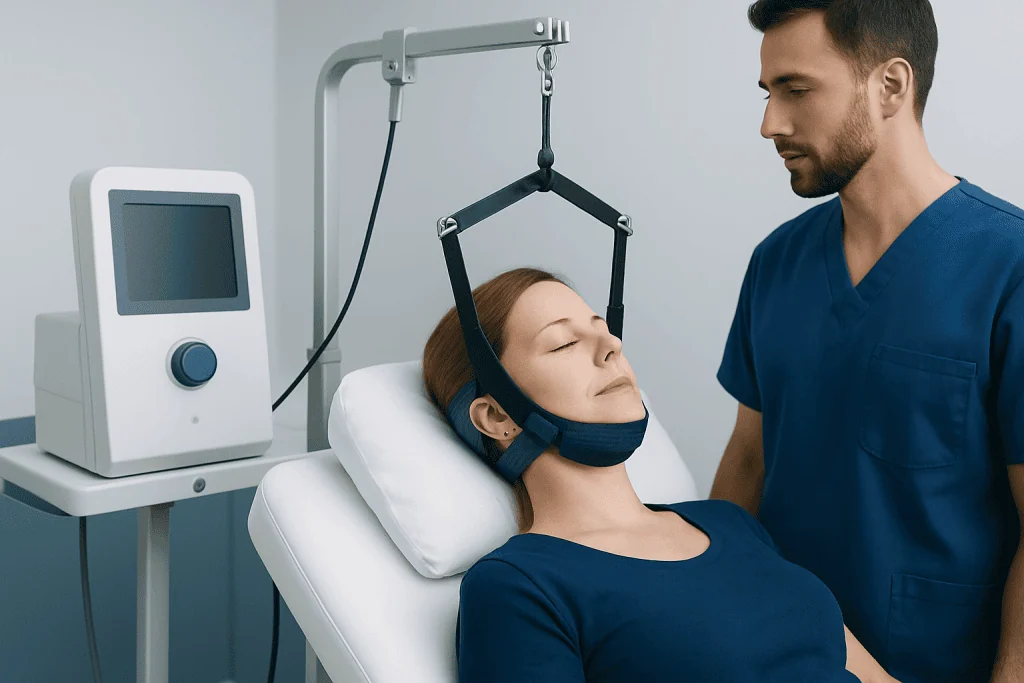
Cervical traction is a non-surgical treatment in which a gentle, controlled pulling force is applied to the head and neck. The purpose is to slightly separate the bones of the cervical spine, reduce pressure on irritated structures, and relax tight neck muscles. It may be delivered manually by a trained clinician, through a mechanical device in a clinic, or with selected home-use equipment after appropriate assessment.
It is important to understand that cervical traction treats symptoms and mechanical contributors to pain; it does not repair every cause of neck pain. Some people experience temporary relief of neck stiffness, headache associated with neck muscle tension, or pain that travels from the neck to the shoulder, arm, or hand. Others may not benefit, and traction can worsen symptoms in certain circumstances.
Traction is most often considered as one part of a broader care plan. This may include education about activity, posture and ergonomics, targeted exercises, pain-relief strategies, and treatment of any identified underlying condition. A clinician can help determine whether it is appropriate based on the person’s symptoms, medical history, examination findings, and, when needed, imaging results.
Why Might Cervical Traction Be Recommended?
Clinicians may consider cervical traction when symptoms suggest that a nerve in the neck is irritated or compressed. This is often called cervical radiculopathy. It can cause pain that begins in the neck and travels into one shoulder or arm, sometimes with tingling, numbness, or weakness. Common contributors include age-related changes in the spinal discs and joints, a bulging or herniated disc, or narrowing of the spaces where nerves leave the spine.
Traction may also be used for selected cases of persistent mechanical neck pain, muscle spasm, or reduced neck mobility. By decreasing load through the neck for a short period, it may make movement and rehabilitation exercises more comfortable. However, neck pain has many possible causes, and not all of them respond to traction.
The evidence for cervical traction suggests that it may offer modest, short-term benefit for some people, particularly when combined with exercise and physical therapy rather than used alone. Response varies widely. A treatment plan should therefore be reviewed over time, with changes made if symptoms do not improve or if they become worse.
Symptoms and Conditions That Need Assessment First

Neck discomfort can range from mild stiffness after prolonged desk work to symptoms caused by nerve compression or, less commonly, more serious spinal disease. Features that may lead a clinician to consider a cervical spine assessment include pain lasting several weeks, pain extending into the arm, recurring episodes of neck pain, restricted movement, or symptoms that interfere with sleep, work, or daily activities.
Symptoms related to a cervical nerve may include sharp, burning, electric, or aching pain in the shoulder or arm; pins and needles in the hand or fingers; altered sensation; or reduced strength. The pattern of symptoms can help identify which nerve may be affected, but self-diagnosis is not reliable. Similar symptoms can also arise from the shoulder, peripheral nerves, or other health conditions.
Cervical traction is not appropriate merely because an imaging scan shows disc wear or a disc bulge. Such findings are common, including in people without pain. Treatment decisions should be based on the full clinical picture: symptoms, neurological examination, functional limitations, overall health, and the person’s goals.
How Cervical Traction Is Given
Manual cervical traction is performed by a trained healthcare professional, often during a physiotherapy or rehabilitation session. The clinician supports the head and applies gentle, carefully adjusted force while monitoring comfort and symptoms. This approach allows immediate changes in angle, pressure, and duration according to the person’s response.
Mechanical traction uses a harness or head support connected to a device that delivers a measured pulling force. It may be applied continuously or in cycles of pulling and releasing. The neck position matters because different angles can influence different areas of the cervical spine. Sessions are typically combined with assessment and active rehabilitation rather than passive treatment alone.
Some people are advised about home traction devices, such as over-the-door or pneumatic systems. These devices should not be started without professional instruction. Incorrect positioning, unsuitable force, or continuing despite warning symptoms can aggravate pain. A clinician should explain how to use the device, how long to use it, which symptoms require stopping, and when follow-up is needed.
- Traction should feel tolerable and should not cause increasing arm pain, numbness, dizziness, or weakness.
- Benefits should be reassessed after a short trial rather than assumed to continue indefinitely.
- Active measures, including tailored neck and upper-back exercises, usually remain central to recovery.
Who Should Avoid Cervical Traction or Use Extra Caution?
Cervical traction is not safe for everyone. A healthcare professional should assess for conditions that could make stretching the neck risky, such as suspected spinal instability, a recent neck fracture or significant trauma, severe osteoporosis, certain inflammatory spine diseases, spinal infection, cancer affecting the spine, or severe narrowing causing spinal cord compression.
Extra caution is also needed for people with rheumatoid arthritis or other conditions that may affect upper-neck stability, known or suspected vascular problems in the neck, prior cervical spine surgery, and pregnancy-related symptoms or health concerns that require individualized advice. The suitability of traction depends on the specific clinical situation rather than a single diagnosis alone.
Before treatment, the clinician should ask about medical conditions, medications, past injuries, surgery, and symptoms such as dizziness, fainting, visual changes, or difficulty speaking. These symptoms are not typical effects to ignore during neck treatment. A careful evaluation helps ensure that traction is only used when its potential benefits outweigh possible risks.
Management Beyond Traction: Building a Recovery Plan
For many common neck problems, maintaining gentle movement is more helpful than prolonged rest. A clinician or physiotherapist may recommend exercises to improve neck mobility, strengthen the deep neck and shoulder-blade muscles, and gradually restore confidence with everyday movement. The exact exercises should be adapted to the individual, particularly if there is arm pain, nerve symptoms, or a history of injury.
Everyday adjustments can reduce strain on the neck. These may include taking regular breaks from screens, positioning monitors near eye level, avoiding sustained bending over a phone or laptop, using a supportive work setup, and varying positions during the day. Sleep comfort may improve with a pillow that keeps the neck in a neutral, comfortable position, although there is no single pillow type that is right for everyone.
Heat or cold packs may provide short-term comfort for some people. Over-the-counter pain relief may also be appropriate for selected adults, but choices depend on medical history, other medicines, pregnancy status, and possible side effects. A pharmacist or doctor can advise safely. If symptoms are persistent or progressive, a clinician may consider further rehabilitation, medication options, injections for selected conditions, or referral to a spine specialist.
Acibadem International’s multidisciplinary specialists and JCI-accredited hospitals assess and treat cervical spine conditions for international patients, with care plans based on individual clinical needs.
When to Seek Medical Care
Medical assessment is advisable for neck pain that persists beyond a few weeks, repeatedly returns, disrupts sleep or everyday activities, or spreads into the shoulder or arm. It is also appropriate to seek care before starting home cervical traction, particularly for people with previous neck surgery, inflammatory arthritis, osteoporosis, cancer, or a significant injury history.
Urgent medical care is needed after a major fall, vehicle collision, or other trauma involving the neck. Prompt assessment is also important for new or worsening arm or hand weakness, marked numbness, difficulty walking or keeping balance, loss of coordination, or changes in bladder or bowel control. These symptoms can indicate pressure on the spinal cord or another condition requiring timely evaluation.
Emergency evaluation is warranted if neck pain occurs with sudden severe headache, fainting, chest pain, shortness of breath, facial weakness, trouble speaking, vision changes, or other stroke-like symptoms. While these causes are uncommon, they should not be managed with traction or home exercises.
Frequently asked questions
What does cervical traction do?
Cervical traction gently stretches the neck to reduce mechanical pressure and ease muscle tension. In some people, it may temporarily reduce neck pain or arm symptoms related to an irritated cervical nerve. It is usually most useful when combined with guided exercise and other rehabilitation measures.
Can cervical traction help a pinched nerve in the neck?
It may help some people with cervical radiculopathy, a term for symptoms caused by irritation or compression of a nerve in the neck. Relief is not guaranteed, and the response depends on the underlying cause and severity of symptoms. A clinical assessment is important before traction is attempted.
Is cervical traction safe to do at home?
Home cervical traction can be appropriate for selected people, but only after instruction from a qualified clinician. It should be stopped if it increases pain, tingling, numbness, dizziness, headache, or weakness. People with recent injury, spinal instability, osteoporosis, previous neck surgery, or neurological symptoms should seek medical advice first.
How quickly does cervical traction work?
Some people notice a temporary change in symptoms during or shortly after a session, while others notice no benefit. If traction is helpful, it is generally used as a short trial within a broader treatment plan. Ongoing or worsening symptoms should be reassessed rather than managed by increasing traction use.
Can cervical traction make neck pain worse?
Yes. Traction can worsen symptoms when the technique, force, position, or underlying diagnosis is not suitable. Increasing pain traveling into the arm, new numbness, weakness, dizziness, or severe headache are reasons to stop and contact a healthcare professional.
Does cervical traction fix a herniated disc?
Cervical traction does not repair a herniated disc directly. It may reduce symptoms in some people by temporarily changing pressure around irritated tissues and allowing more comfortable movement. Many disc-related neck symptoms improve with conservative care, while persistent neurological deficits require specialist assessment.
References
- American Physical Therapy Association
- American Academy of Orthopaedic Surgeons
- National Institute of Neurological Disorders and Stroke
- National Institute for Health and Care Excellence
- Mayo Clinic
This article is for general information only and is not a substitute for professional medical advice. Please consult a qualified doctor about your individual situation.
Joint and spine care in Turkey — expert assessment & treatment
JCI-accredited · board-certified surgeons · reply within 24h
Add us as a Preferred Source to see more of our trusted health content across Google Search, AI Overviews and Discover.

More from the Health Library



Related Specialists

Prof. Dr. Kerim Sarıyılmaz
Orthopedic Surgery & Traumatology
Dr. Tural Khalilov
Orthopedic Surgery & Traumatology
Prof. Dr. U.Emrah Altıparmak
Ophthalmology
Dr. Nesrin Yılmaz Baıramov
Physical Medicine & Rehabilitation