Chalazion Specialist: An Evidence-Based Patient Guide

A chalazion is a blocked eyelid oil gland that causes a usually painless, localized lump. An ophthalmologist can assess persistent or recurrent eyelid lumps and rule out conditions that need different treatment.
Key Takeaways
- A chalazion is a blocked eyelid oil gland that causes a usually painless, localized lump.
- An ophthalmologist can assess persistent or recurrent eyelid lumps and rule out conditions that need different treatment.
- Warm compresses and gentle eyelid massage are first-line measures for many chalazia.
- Incision and curettage or steroid injection may be considered when conservative care does not work.
- A recurring lump in the same location, lash loss, bleeding, or an atypical appearance deserves prompt eye-specialist review.
A chalazion specialist is typically an ophthalmologist, preferably one experienced in eyelid conditions, who can distinguish a chalazion from other eyelid lumps and recommend the most appropriate care. Many chalazia improve with consistent warm compresses, while persistent, recurrent, or uncertain lumps may need an in-office procedure or further assessment.
Overview: What Does a Chalazion Specialist Do?
A chalazion specialist is usually an ophthalmologist, a medical doctor who diagnoses and treats eye and eyelid conditions. Some ophthalmologists have additional expertise in oculoplastic surgery, which focuses on the eyelids, tear system, and tissues around the eyes. They can confirm whether an eyelid lump is a chalazion, advise on home treatment, and offer office-based treatment if it persists.
A chalazion develops when an oil-producing meibomian gland in the eyelid becomes blocked. The trapped oily material triggers localized inflammation, creating a firm lump. It is not usually an infection and often causes little or no pain, although a large chalazion can create pressure, blur vision by pressing on the eye, or cause cosmetic concern.
This chalazion patient education guide explains when specialist assessment is useful, what removal involves, and how to care for the eyelid safely. It is not a substitute for an individual examination, especially when an eyelid lump is new, changing, or recurrent.
What Type of Doctor Should I See for a Chalazion?
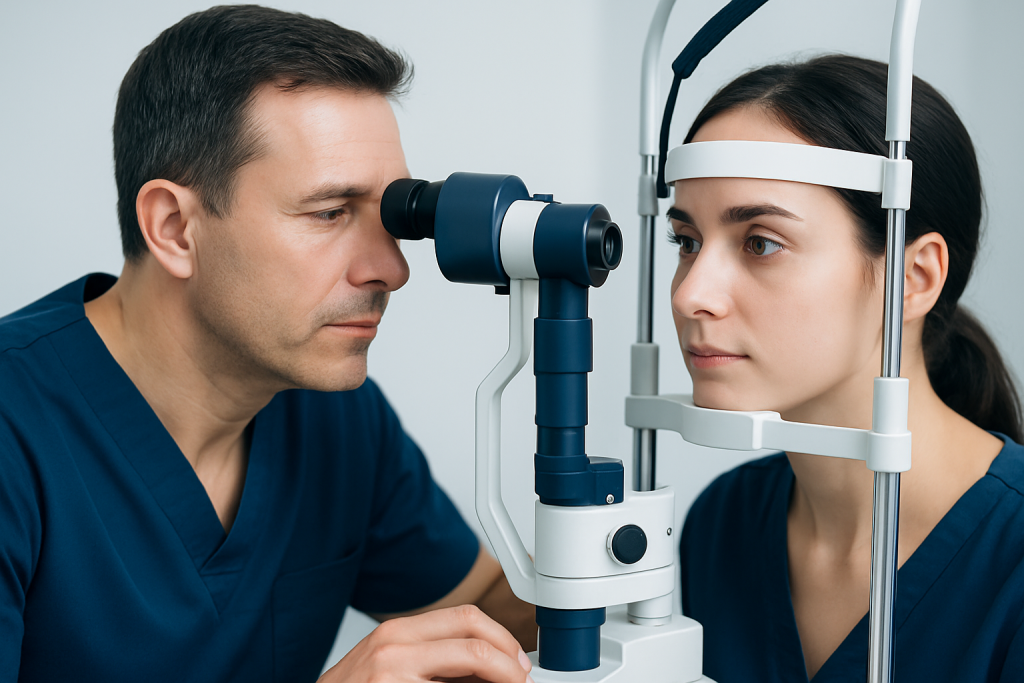
An ophthalmologist is the most appropriate doctor for a chalazion that is persistent, recurrent, unusually large, affecting vision, or difficult to identify. An ophthalmologist can examine the eyelid and eye surface with specialized equipment and determine whether the lump can be managed conservatively or needs a procedure. An oculoplastic ophthalmologist may be involved when removal is needed or when the diagnosis is uncertain.
A primary care clinician, pediatrician, or optometrist may also identify a likely chalazion and recommend initial warm compresses. However, referral to an ophthalmologist is appropriate if the lump does not improve after several weeks of consistent self-care, returns in the same place, or has concerning features such as eyelash loss, skin ulceration, bleeding, or an irregular appearance.
A painful, red, tender eyelid swelling may instead be a stye, also called a hordeolum. A stye is often associated with an acute infection, whereas a chalazion is generally a noninfectious blockage. The two can overlap, and an eye specialist can clarify the diagnosis when symptoms are not typical.
What Is the Stuff Inside a Chalazion?

The material inside a chalazion is mainly thickened, retained oil from a blocked meibomian gland, together with inflammatory cells and surrounding tissue reaction. Meibomian glands normally release an oily substance that helps prevent tears from evaporating too quickly. When the gland opening becomes blocked, its contents cannot drain normally.
Although a chalazion may contain material that looks thick or paste-like if it is drained, it is not simply a pocket of pus. This distinction matters because antibiotics are not routinely needed for an uncomplicated chalazion. Antibiotics may be considered when an eye clinician finds signs of a bacterial eyelid infection or another specific reason to use them.
Chalazia can occur more often in people with chronic eyelid-margin inflammation, known as blepharitis, skin conditions such as rosacea, or meibomian gland dysfunction. Good eyelid hygiene can help address these contributing factors and may reduce future episodes.
Conservative Care and Chalazion Patient Instructions
For many people, the first approach is regular warm compresses. A clean warm washcloth or purpose-designed eye compress can be placed over the closed eyelid for about 10 to 15 minutes several times daily. The warmth can soften the retained oil and encourage natural drainage. The compress should be comfortably warm, not hot enough to burn the skin.
After a warm compress, gentle massage of the eyelid may help. The movement should be light and directed toward the eyelid margin, without squeezing, puncturing, or attempting to pop the lump. Hands should be washed before touching the eye area. Contact lenses and eye makeup may be best avoided if the eyelid is irritated until a clinician advises they are safe to resume.
A useful chalazion patient handout includes daily eyelid hygiene: gently cleaning the lash line as advised by an eye clinician, removing makeup thoroughly, and replacing eye cosmetics regularly. People should not share towels, makeup, or eye products. A downloadable chalazion patient education PDF or chalazion patient handout PDF can be helpful for following an individualized care plan, but instructions from the treating clinician should take priority.
- Use warm compresses consistently rather than intermittently.
- Do not use needles, lancets, or home drainage methods.
- Avoid rubbing the eyes and wash hands often.
- Arrange review if symptoms worsen, vision changes, or the lump persists.
Do All Chalazions Eventually Go Away?
No. Many chalazia gradually become smaller over several weeks with warm compresses and eyelid care, but some persist for months or leave a small residual lump. A chalazion may also recur, particularly if underlying eyelid inflammation or meibomian gland dysfunction is not addressed.
When a chalazion is not improving, an ophthalmologist may recommend continued observation, a steroid injection, or drainage through a minor procedure. The choice depends on the lump’s size, duration, location, effect on vision, prior treatment, and the person’s medical history. Children and adults with frequent chalazia may benefit from assessment for contributing eyelid or skin conditions.
Any lesion that repeatedly returns in the same location or looks different from a typical chalazion should be assessed carefully. Rarely, an eyelid growth can resemble a chalazion. The specialist may recommend sending removed tissue for laboratory examination when the appearance, behavior, or recurrence pattern warrants it.
Chalazion Removal: How the Procedure Works
Chalazion removal is commonly performed as an outpatient procedure called incision and curettage. It may be considered for a chalazion that remains despite conservative care, causes visual distortion or significant discomfort, is large, or requires diagnostic confirmation. A steroid injection is another option for selected patients and may be discussed when appropriate.
Before treatment, the ophthalmologist reviews symptoms, medications, allergies, bleeding risks, and prior eye history. The eyelid is examined to confirm that the procedure is suitable. In many adults, local anesthetic is sufficient; children or people unable to tolerate the procedure while awake may need a different anesthesia plan determined by the treating team.
During incision and curettage, the clinician numbs the eyelid, often turns it gently outward, and makes a small incision on the inner eyelid surface when possible. The retained material and inflammatory tissue are removed with a small instrument. Because the incision is frequently inside the eyelid, visible skin scarring is usually avoided. The clinician may apply pressure, ointment, or a brief dressing afterward.
The potential benefit is more rapid resolution of a persistent lump and, where needed, tissue assessment. Risks are generally uncommon but can include bruising, swelling, bleeding, infection, incomplete removal, recurrence, eyelid contour changes, or effects related to anesthetic. An ophthalmologist can explain the expected benefits and risks in the context of the individual case.
Recovery Timeline, Follow-Up, and When to Seek Medical Care
After chalazion removal, mild soreness, tearing, redness, swelling, or bruising can occur for several days. Most people can return to usual light activities quickly, but the care team may advise avoiding eye makeup, contact lenses, swimming, strenuous activity, or rubbing the eye for a short period. Prescribed drops or ointment should be used exactly as directed, and follow-up should be kept if arranged.
Recovery varies according to the size and location of the chalazion and the treatment used. The eyelid often looks noticeably better within one to two weeks, though complete settling of residual swelling can take longer. Continued warm compresses or eyelid hygiene may be recommended to support healing and reduce recurrence.
Medical care should be sought promptly for worsening pain, spreading redness, fever, marked swelling around the eye, reduced or double vision, inability to open the eye, significant discharge, or a sudden change in vision. A clinician should also review any eyelid lump that is recurrent, does not improve, has an unusual appearance, or is associated with loss of eyelashes.
Acibadem International’s multidisciplinary specialists and JCI-accredited hospitals can assess and treat eyelid conditions, including chalazia, for international patients. A consultation with an ophthalmologist can help determine whether home care, monitoring, or a procedure is the most suitable next step.
Will Insurance Cover Chalazion Removal?
Insurance coverage for chalazion removal varies by country, insurer, policy terms, healthcare setting, and the reason for treatment. Removal may be more likely to qualify for medical coverage when the chalazion is persistent, affects vision, causes significant symptoms, or needs evaluation to exclude another diagnosis. Coverage for treatment performed primarily for cosmetic reasons may be handled differently.
Before scheduling a procedure, patients can contact their insurer or benefits administrator to ask whether ophthalmology visits, office procedures, pathology testing, anesthesia, and prescribed medications require prior authorization or have separate out-of-pocket costs. The ophthalmology office may be able to provide diagnostic and procedure information needed for this discussion.
Coverage decisions are made by the insurer and are separate from the clinical decision about whether treatment is appropriate. A chalazion specialist can document the medical findings and explain why observation, medication, injection, or incision and curettage has been recommended.
Frequently asked questions
How long should I try warm compresses before seeing a chalazion specialist?
A new, typical chalazion can often be managed initially with regular warm compresses and gentle eyelid hygiene. If it is not getting smaller after several weeks, is large, recurrent, painful, or affects vision, an ophthalmologist should assess it sooner. Immediate assessment is appropriate for concerning symptoms such as vision changes or spreading redness.
Can a chalazion be removed without surgery?
Sometimes. Consistent warm compresses may allow a chalazion to drain or shrink naturally, and some patients may be candidates for a steroid injection. An ophthalmologist can explain whether these options are appropriate based on the lesion and the person's health history.
Is chalazion removal painful?
The eyelid is usually numbed before an incision and curettage procedure, so sharp pain during treatment should be minimized. Pressure or brief discomfort may still be felt. Mild tenderness and swelling afterward are common and generally improve over several days.
Can I wear contact lenses with a chalazion?
Contact lenses may irritate an already inflamed eyelid or complicate hygiene, particularly if there is redness or discharge. It is often sensible to pause lens wear until the eyelid is comfortable and an eye clinician says it is safe to restart. Clean lens cases and follow normal lens-care instructions carefully.
Why does my chalazion keep coming back?
Recurrent chalazia can be linked with blocked meibomian glands, blepharitis, rosacea, or chronic eyelid irritation. Regular eyelid hygiene and management of underlying conditions can reduce recurrence for some people. A lump returning in the exact same spot should be evaluated by an ophthalmologist.
Should I try to pop or drain a chalazion at home?
No. Squeezing, puncturing, or attempting to drain an eyelid lump at home can injure the eyelid and increase the risk of infection or scarring. Warm compresses and advice from an ophthalmologist are safer approaches.
References
- American Academy of Ophthalmology
- American Society of Ophthalmic Plastic and Reconstructive Surgery
- National Eye Institute
- Mayo Clinic
This article is for general information only and is not a substitute for professional medical advice. Please consult a qualified doctor about your individual situation.
Chalazion in Turkey — costs, top hospitals & a free quote
JCI-accredited · board-certified surgeons · reply within 24h
Add us as a Preferred Source to see more of our trusted health content across Google Search, AI Overviews and Discover.

Ophthalmology
Comprehensive eye care from laser vision correction to retina, cornea and cataract surgery.
75 specialists in this unitMore from the Health Library



Related Specialists
Dr. Özgür Güler
Anesthesiology
Assoc. Prof. Dr. Eser Çolak
Vitro Fertilization and Reproductive Medicine Center
Dr. Ali Recai Bitkay
Emergency Service
Prof. Dr. Hüseyin Hayrı Kertmen
Neurosurgery