Chemotherapy for Acute Myeloid Leukemia: How It Works, Results and What to Expect

AML chemotherapy commonly begins with induction treatment to achieve remission, followed by consolidation treatment to lower the chance of relapse. The exact number of chemotherapy cycles and total treatment time vary substantially between individuals and AML risk groups.
Key Takeaways
- AML chemotherapy commonly begins with induction treatment to achieve remission, followed by consolidation treatment to lower the chance of relapse.
- The exact number of chemotherapy cycles and total treatment time vary substantially between individuals and AML risk groups.
- Blood counts often fall during treatment, so close monitoring, infection prevention and supportive care are essential.
- AML is serious but is not automatically terminal; many people achieve remission, and some may be cured.
- A hematology-oncology team uses bone marrow and genetic test results to guide chemotherapy, targeted medicines and possible stem cell transplantation.
Chemotherapy for <a href="https://acibademinternational.com/diseases/acute-myeloid-leukemia/”>acute myeloid leukemia (AML) is a core treatment that uses anti-cancer medicines to destroy leukemia cells in the blood and bone marrow. Treatment is individualized according to the person’s age, overall health, AML subtype, genetic findings and response to initial therapy.
Overview: how chemotherapy for acute myeloid leukemia works
Chemotherapy for acute myeloid leukemia uses medicines that damage or stop the growth of rapidly dividing leukemia cells. AML begins in the bone marrow, where abnormal immature white blood cells multiply and interfere with normal production of red blood cells, platelets and healthy infection-fighting cells. Chemotherapy aims to clear these abnormal cells from the blood and bone marrow so normal blood formation can recover.
For many adults who are fit enough for intensive treatment, chemotherapy is delivered in two broad phases: induction and consolidation. Induction is intended to achieve complete remission, meaning no leukemia is visible using standard tests and blood counts recover. Consolidation follows remission and treats small amounts of leukemia that may remain below the level of routine detection.
Some people are offered lower-intensity chemotherapy or medicines that target specific leukemia-related genetic changes instead. The treatment plan may also include bone marrow transplantation when the expected risk of AML returning is high or when AML does not respond adequately to initial treatment. A specialist hematology-oncology team reviews the options with the person and their family.
Who may be a candidate for AML chemotherapy?
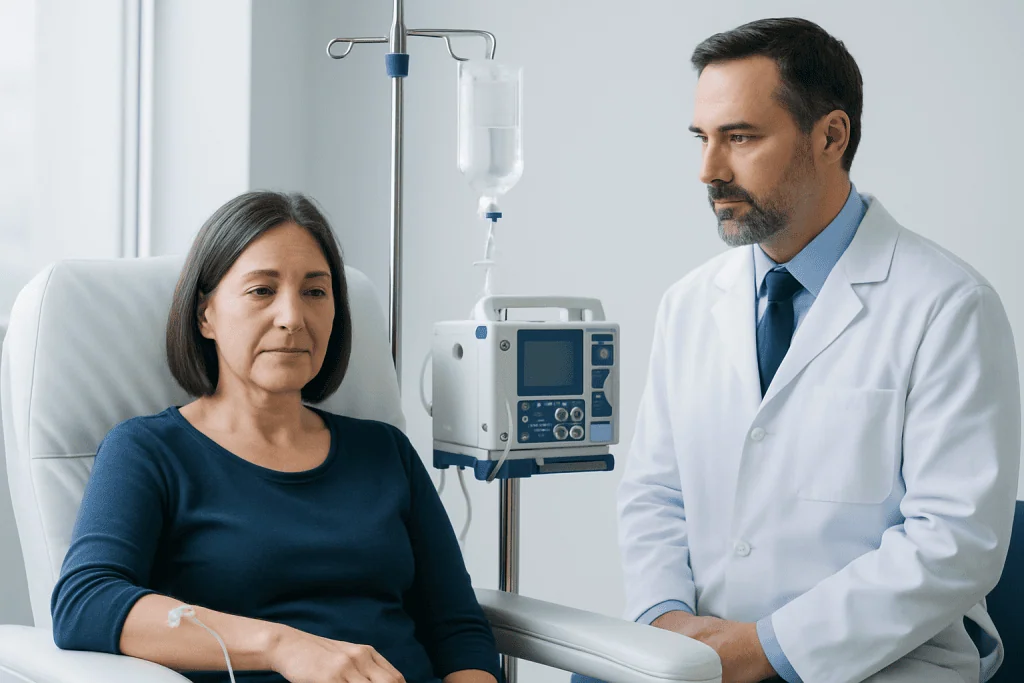
Most people diagnosed with AML are assessed for chemotherapy promptly because the disease can progress quickly. However, the best approach is not identical for everyone. Before treatment starts, the team considers physical fitness, age, other medical conditions, kidney and liver function, current infections, previous cancer treatment and the person’s goals and preferences.
Testing the leukemia cells is especially important. Bone marrow samples are examined under a microscope and tested for chromosome changes and gene mutations. These findings help classify AML, estimate the likelihood of response or relapse, and identify whether a targeted medicine may be appropriate alongside or instead of standard chemotherapy.
Intensive chemotherapy is often considered for people who can tolerate its short-term effects. For people who are older, frail or living with significant medical conditions, lower-intensity regimens may offer a safer balance of benefit and risk. Supportive care is important at every stage, including transfusions, infection prevention, nutrition support and symptom management.
What happens during AML chemotherapy?

Before treatment, the care team performs blood tests, bone marrow testing and assessments of heart, kidney and liver function. A central venous catheter may be placed to make intravenous treatment, blood sampling and transfusions more manageable. The team also discusses fertility preservation where appropriate, as some treatments can affect future fertility.
Induction chemotherapy is commonly given in hospital because it can lower blood counts profoundly and requires frequent monitoring. Medicines may be given through a vein over several days. Although the infusion phase may be relatively short, hospitalization can continue for weeks while blood counts recover and clinicians watch for infection, bleeding or other complications.
After induction, a bone marrow examination is usually performed to assess response. If remission is achieved, consolidation therapy is planned. This may involve additional chemotherapy cycles, targeted therapy for selected AML types, or preparation for a stem cell transplant. The exact schedule depends on AML risk features and recovery after each phase.
- Before treatment: tests, treatment planning and placement of venous access if needed.
- Induction: treatment designed to bring AML into remission.
- Response assessment: blood and bone marrow tests after treatment.
- Consolidation: further treatment to reduce the chance of relapse.
How many rounds of chemo is normal for AML?
There is no single normal number of chemotherapy rounds for AML. Many people receive one induction course, while some need a second course if the first does not produce remission. Once remission is reached, consolidation usually involves additional courses, but the number, intensity and timing depend on the individual treatment plan.
AML risk category has an important role. People with favorable-risk disease may receive chemotherapy-based consolidation, whereas those with higher-risk genetic features may be advised to consider a stem cell transplant in first remission if they are eligible. Lower-intensity treatment approaches may be given in repeated cycles over a longer period.
The oncology team does not decide on treatment by counting cycles alone. Bone marrow results, minimal residual disease testing where available, side effects, blood count recovery and the person’s overall condition all help determine whether treatment should continue, change or move to transplant planning.
How long does chemo take for acute myeloid leukemia?
The active infusion days for an AML chemotherapy course may last days, but the overall treatment and recovery period is usually much longer. Intensive induction often requires a hospital stay of several weeks because blood counts can remain low after chemotherapy. This is followed by testing to confirm whether remission has been achieved.
Consolidation treatment may take several additional months, with time between courses to allow the bone marrow and body to recover. Appointments continue after treatment for blood tests, follow-up visits and, when indicated, bone marrow examinations. The total timeline can therefore range from months to longer, particularly when lower-intensity ongoing therapy or transplantation is part of care.
Recovery schedules differ considerably. Some people regain strength gradually between cycles, while others need more time because of infection, fatigue, nutritional concerns or effects on other organs. The treating team can provide the most accurate estimate based on the selected regimen and the person’s progress.
Benefits, risks and recovery during treatment
The key potential benefit of chemotherapy is achieving remission and reducing the amount of leukemia in the body. Further treatment after remission is intended to lower the risk that AML returns. In selected circumstances, chemotherapy can also prepare the body for a transplant, which may offer an additional chance of long-term disease control for some people.
Because chemotherapy affects healthy rapidly dividing cells as well as leukemia cells, side effects are common. These can include tiredness, nausea, mouth sores, appetite changes, hair loss, diarrhea or constipation, and temporary changes in fertility. The most important short-term risks are low white blood cell counts, infection, anemia and low platelets that may increase bruising or bleeding.
During low blood counts, the team may provide antibiotics or other preventive medicines, blood or platelet transfusions, anti-sickness medicines and nutritional support. People should follow their team’s advice about hand hygiene, food safety, activity, medicines and contact with people who are unwell. Side effects should be reported early, as many can be treated or managed effectively.
At Acibadem International, multidisciplinary hematology and oncology specialists in JCI-accredited hospitals assess and treat AML for international patients, coordinating chemotherapy, supportive care and transplant evaluation when appropriate.
Is AML considered a terminal illness?
AML is a serious and potentially life-threatening blood cancer, but it is not automatically considered a terminal illness. Outcomes vary according to the AML subtype, genetic features, age, general health, response to treatment and whether the disease returns after remission. Modern treatment plans are increasingly tailored using these factors.
Some people achieve remission after initial treatment and remain free of detectable leukemia long term. Others may need further therapy if AML does not respond fully or returns. Even when cure is less likely, treatment may still help control leukemia, relieve symptoms and support quality of life.
Clear discussions with the hematology team can help people understand their own outlook rather than relying on general predictions. Supportive and palliative care can be used alongside active cancer treatment at any stage to help manage symptoms, emotional wellbeing and practical needs.
Can you fully recover from acute myeloid leukemia?
Some people can achieve long-term remission and may be considered cured of AML, especially when leukemia does not return after an extended period of follow-up. However, no clinician can promise cure at diagnosis because AML is biologically diverse and relapse remains possible for some individuals.
The likelihood of long-term recovery depends on factors such as the genetic profile of the leukemia cells, whether complete remission is achieved, the depth of response on sensitive testing, age and overall health. Consolidation chemotherapy, targeted therapies and stem cell transplantation are chosen to improve the chance of durable disease control when appropriate.
Follow-up after treatment is an important part of recovery. It commonly includes regular blood counts, clinical reviews and bone marrow testing if there are concerns about relapse. Emotional recovery, rebuilding physical strength and managing late effects also deserve attention after intensive treatment.
When to seek medical care
Anyone receiving AML chemotherapy should contact their treatment team promptly if they develop a fever, chills, new cough, shortness of breath, burning when passing urine, severe diarrhea, persistent vomiting, confusion, severe weakness, unusual bruising or bleeding. These symptoms can be signs of infection, low blood counts or treatment complications that need timely assessment.
Emergency care is appropriate for severe breathing difficulty, chest pain, fainting, uncontrolled bleeding, sudden confusion or a rapidly worsening condition. People should not take fever-reducing medicines to mask a fever before speaking with their oncology team unless they have been specifically advised to do so.
Before chemotherapy begins, the care team provides a direct contact number and explains which symptoms require urgent review. Keeping this information accessible, attending scheduled blood tests and raising concerns early can make treatment safer and more manageable.
Frequently asked questions
What is the main goal of chemotherapy for acute myeloid leukemia?
The first goal is usually to bring AML into remission by clearing detectable leukemia cells from the blood and bone marrow. Treatment after remission aims to eliminate remaining leukemia cells and reduce the chance that AML returns.
Is chemotherapy always used for AML?
Chemotherapy is a central treatment for many people with AML, particularly those able to receive intensive therapy. Some people may receive lower-intensity medicines, targeted therapies, supportive care, or a combination of approaches based on their health and AML characteristics.
Will AML chemotherapy require a hospital stay?
Intensive induction chemotherapy commonly requires hospitalization because blood counts may become very low and complications need close monitoring. Later treatment may sometimes be delivered partly as an outpatient, depending on the regimen and the person’s clinical condition.
What happens if AML does not go into remission after chemotherapy?
The care team may recommend another treatment regimen, a targeted medicine if an appropriate genetic change is present, a clinical trial, or evaluation for stem cell transplantation. The choice depends on previous treatment, test results and overall health.
Can chemotherapy side effects be managed?
Many side effects can be prevented, reduced or treated with supportive medicines and close monitoring. Transfusions, infection prevention, anti-nausea treatment, nutritional support and early assessment of symptoms are important parts of AML care.
How is relapse monitored after AML treatment?
Follow-up usually includes regular clinical visits and blood tests. Bone marrow testing and specialized tests may be used when needed to look for signs of residual or returning leukemia.
References
- National Cancer Institute
- American Cancer Society
- Leukemia & Lymphoma Society
- National Comprehensive Cancer Network
- World Health Organization
This article is for general information only and is not a substitute for professional medical advice. Please consult a qualified doctor about your individual situation.
Chemotherapy in Turkey — costs, top hospitals & a free quote
JCI-accredited · board-certified surgeons · reply within 24h
Add us as a Preferred Source to see more of our trusted health content across Google Search, AI Overviews and Discover.

Medical Oncology Department
Medical treatment of cancer with chemotherapy, immunotherapy and targeted therapies under a multidisciplinary tumor board.
60 specialists in this unit