

Chemotherapy Pump: How It Works, Results and What to Expect

Chemotherapy pumps provide controlled, continuous treatment over hours to several days. They may be connected to a port, central venous catheter or PICC line rather than a vein in the hand.
Key Takeaways
- Chemotherapy pumps provide controlled, continuous treatment over hours to several days.
- They may be connected to a port, central venous catheter or PICC line rather than a vein in the hand.
- A pump should be checked regularly for leaks, alarms, changes in flow or damage to the tubing.
- Most people can continue light daily activities, but must protect the pump and follow their oncology team's instructions.
- Urgent medical advice is needed for fever, chest pain, breathing difficulty, significant leakage or signs of a line infection.
A chemotherapy pump is a portable device that delivers anticancer medicine at a prescribed rate over a set period, often allowing a person to leave the clinic between appointments. The type of pump, treatment duration and care instructions depend on the cancer, treatment plan and the access device used.
Chemotherapy Pump Overview
A chemotherapy pump is a small device used to deliver cancer medicines steadily over a planned amount of time. Instead of receiving all treatment during a single clinic visit, a person may wear or carry the pump while it gives medicine continuously for hours or days. This approach can help maintain a consistent amount of medicine in the bloodstream when a particular chemotherapy regimen requires continuous infusion.
Some pumps are electronic and programmable, while others are elastomeric pumps: soft, balloon-like devices that use pressure to deliver medicine at a fixed rate. The pump is usually connected to a central venous access device, such as an implanted port, a peripherally inserted central catheter (PICC) or another central line. The oncology team selects the device and schedule based on the medicine, treatment goals and individual needs.
A pump is not a treatment result in itself; it is a delivery method. Whether chemotherapy is effective is assessed through symptoms, physical examinations, blood tests and imaging at scheduled intervals. Treatment response varies according to the cancer type, stage, biology and medicines used.
How a Chemotherapy Pump Works
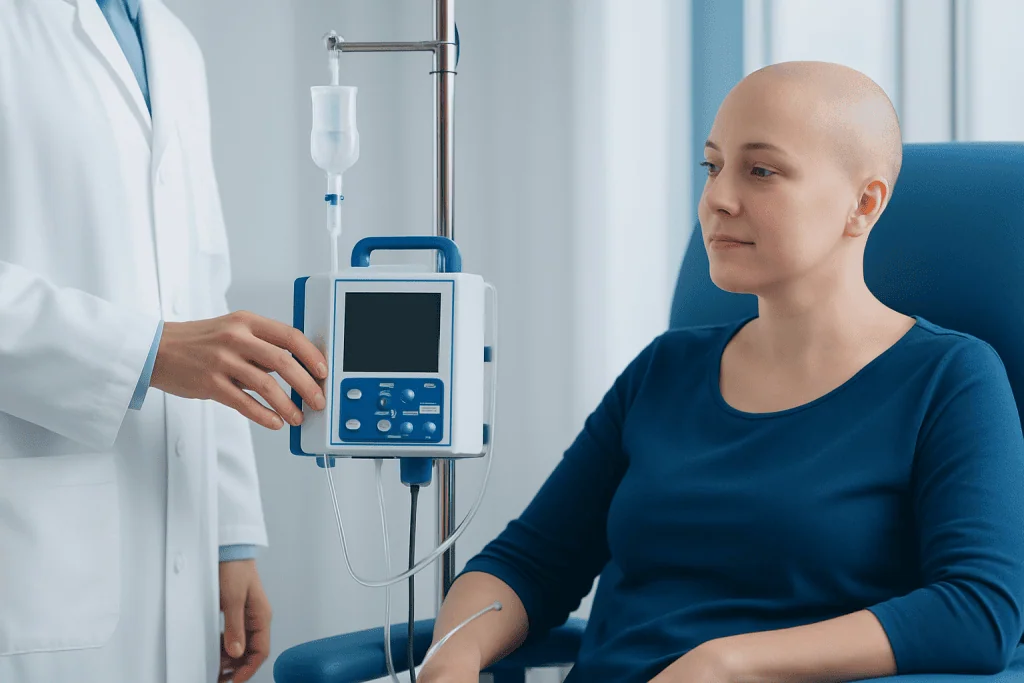
Before treatment, the oncology team prescribes the chemotherapy medicine, total amount, infusion speed and duration. A pharmacist prepares the medication using safety procedures, and a trained nurse connects the filled pump to the person’s central line in the clinic. The pump is then started or activated according to its design.
Electronic ambulatory pumps typically run on batteries and may have a screen, buttons and alarms. They are programmed to deliver a precise rate and may be carried in a pouch. Elastomeric pumps contain a medication reservoir that gradually deflates as the medicine flows through tubing. They are generally quiet and do not require batteries, but their rate can be affected by temperature and placement.
Continuous infusions are used in several cancer treatment plans, including some regimens for gastrointestinal cancers. For example, a pump may be part of treatment for colorectal cancer or other solid tumors when the oncology team considers it appropriate. At the end of the prescribed infusion, the patient returns to the clinic, or occasionally receives arranged home-care support, for safe disconnection and line care.
Who May Be a Candidate for a Chemo Pump?
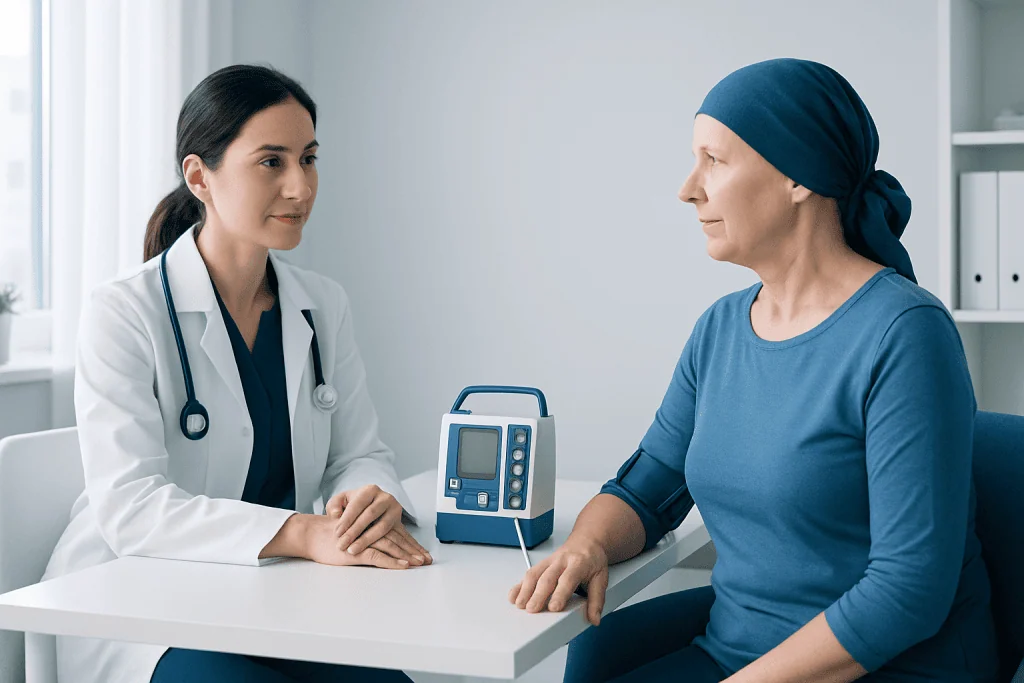
A chemo pump may be considered when a treatment protocol calls for medicine to be given continuously rather than as a shorter infusion. It can be particularly useful for people who are medically stable enough to spend time outside the treatment unit and who can follow pump-care instructions or have a reliable caregiver who can help.
Before recommending a pump, the care team reviews the person’s cancer diagnosis, proposed regimen, vein and central-line access, kidney and liver function, infection risk, home circumstances and ability to attend planned follow-up visits. The person should be able to contact the treatment team promptly if there is an alarm, a leak or a change in how they feel.
A pump may not be suitable for everyone. Significant difficulty managing equipment, an unsafe environment for protecting the device, uncontrolled symptoms or complications involving the central line may require a different arrangement. These decisions are individualized and should be made with the oncology team.
- Ask how long the infusion will run and when disconnection is scheduled.
- Ask who to call during working hours and after hours.
- Confirm which symptoms require urgent medical attention.
- Bring a list of regular medicines and allergies to each treatment visit.
What Happens During Pump Connection and Disconnection?
At the treatment visit, a nurse checks the central line site and confirms the treatment plan. Blood tests may be reviewed first, because chemotherapy can affect blood counts and organ function. The line is cleaned using sterile technique, and the nurse connects the pump tubing, confirms that the clamps and connections are secure, and explains the expected infusion period.
For an electronic device, the nurse verifies the programmed settings and demonstrates what normal operation looks like. For an elastomeric pump, the nurse may show the medication reservoir and explain how it should gradually change in size over time. The patient is usually given written instructions, a protective carrying bag and contact details for the oncology service.
During the infusion, the pump should remain connected unless the care team specifically instructs otherwise. At the planned completion time, the patient returns for disconnection. The nurse confirms that the treatment has infused as expected, flushes the line when indicated, removes the pump and checks the access site. Central-line care is an important part of safe cancer treatment, including chemotherapy delivered by a pump.
How Do I Know If My Chemo Pump Is Working?
A chemotherapy pump is usually working if it is operating as the nurse explained, the tubing is connected and unclamped, and the medication reservoir or displayed volume changes gradually as expected. With an electronic pump, the screen may show that it is running and may display the remaining volume or time. With an elastomeric pump, the inner balloon generally becomes smaller over the course of treatment.
It is important not to judge whether the pump is working based only on how a person feels. Some people have side effects, while others feel relatively well during the infusion; neither response confirms that the correct amount of medicine is being delivered. The pump and line should be checked visually at intervals, following the instructions from the treatment team.
Contact the oncology service if the pump alarms, the screen shows an error, the reservoir does not seem to change when it should, tubing appears kinked, a clamp is closed, the device is dropped or damaged, or fluid is seen around the connection. Do not try to reprogram, disconnect or repair the pump without professional guidance.
What Are the Three Major Problems of Infusion Pumps?
Three broad problems can occur with infusion pumps: delivery problems, equipment or connection problems, and complications related to the catheter or medicine. Delivery problems include an infusion that is too slow, too fast or interrupted. An alarm, unexpected remaining medication or a pump that does not appear to progress may indicate a problem that needs prompt assessment.
Equipment and connection problems include kinked tubing, loose connections, a closed clamp, battery issues in electronic pumps, or accidental damage to the device. Leakage can expose the skin or surrounding area to chemotherapy medicine and should be reported immediately. The oncology team will provide specific instructions for handling a spill or suspected leak.
Catheter-related concerns include blockage, displacement, irritation, infection or medicine leaking into surrounding tissue rather than entering the bloodstream. Pain, redness, swelling, warmth, drainage or tenderness near the port or line should be discussed promptly. Although problems are not inevitable, knowing what to watch for supports safer treatment at home.
Daily Life, Showering and Recovery Timeline
Many people can walk, eat, sleep and do gentle everyday activities while wearing a pump, although fatigue and other chemotherapy side effects may limit activity. The pump should be kept secure in its carrying pouch and protected from pulling, crushing, extreme heat and water. Avoid contact sports, heavy lifting and activities that could catch or dislodge the tubing.
Can you shower with a chemo pump on? In many cases, a brief shower is possible, but only if the oncology team has said it is safe for that specific pump and central-line dressing. The pump, tubing and dressing generally need to stay dry. A waterproof cover may be recommended; baths, swimming pools, hot tubs and soaking are usually avoided while the pump is connected because they can wet the dressing or increase infection risk.
How long does a chemo pump last? The pump is used only for the prescribed infusion period, commonly from about one day to several days, depending on the regimen. Some treatment plans use a 46-hour continuous infusion, but schedules vary. The reusable electronic device may be used again for later cycles, whereas the medication reservoir and tubing are typically replaced for each infusion.
After disconnection, recovery depends more on the medicines received than on the pump itself. Side effects such as tiredness, nausea, bowel changes, appetite changes or low blood counts can occur days later. The team may schedule blood tests and follow-up visits before the next treatment cycle.
Benefits, Risks and When to Seek Medical Care
The main benefit of a chemotherapy pump is controlled delivery of a medicine over the time required by the treatment plan, with less time spent sitting in an infusion chair. It may support greater flexibility between clinic visits, but it also requires careful attention to the equipment and central line. The oncology team balances these practical benefits against the complexity of managing a device at home.
Possible risks include pump malfunction, leakage, tubing blockage, central-line infection, blood clots, skin irritation, accidental disconnection and chemotherapy side effects. The specific side effects depend on the medicines being infused. Patients should keep their emergency contact information nearby and follow the individual instructions provided by their cancer center.
When to seek medical care: Contact the oncology team urgently for a pump alarm that cannot be resolved using the provided instructions, a leak or spill, a disconnected line, new swelling or pain around the catheter, or a dressing that is wet, loose or visibly soiled. Seek urgent medical assessment for fever as defined by the care team, chills, shortness of breath, chest pain, confusion, severe vomiting or diarrhea, uncontrolled pain, facial or arm swelling, or signs of a serious allergic reaction.
Acibadem International’s multidisciplinary specialists and JCI-accredited hospitals support international patients receiving cancer care, including treatment plans that may use ambulatory infusion technology. Questions about suitability, pump training and follow-up should be discussed directly with a qualified oncology team.
Frequently asked questions
Does a chemotherapy pump hurt?
The pump itself should not cause pain. Some people notice mild discomfort at the port or catheter site after it is accessed, but increasing pain, burning, swelling or redness should be reported to the oncology team promptly.
Can I sleep with a chemo pump?
Yes, most people can sleep while the pump is running. The pump should be secured so that tubing is not pulled, kinked or trapped under the body, and the person should follow the positioning advice provided by their nurse.
What should I do if my chemo pump alarms?
Check the instructions supplied by the treatment center and look for simple issues such as a kinked tube or closed clamp only if the team has taught the person how to do so. If the alarm continues, the cause is unclear or there is any leak or disconnection, contact the oncology service immediately.
Can a chemo pump be taken on an airplane?
Travel should be discussed with the oncology team before making plans. Security screening, access to urgent care, pump battery needs, medication handling and the timing of disconnection all need to be considered.
What happens if a chemo pump finishes early or still has medicine left?
The patient should contact the oncology team and should not disconnect, alter the settings or attempt to empty the device. The team can determine whether the pump needs to be checked, replaced or disconnected by a trained clinician.
Can I exercise while wearing a chemotherapy pump?
Gentle activity, such as short walks, may be appropriate if the person feels well and their oncology team agrees. Strenuous exercise, swimming, contact sports and activities that could pull on the catheter or damage the pump should usually be avoided during the infusion.
References
- National Cancer Institute
- American Cancer Society
- Oncology Nursing Society
- Centers for Disease Control and Prevention
This article is for general information only and is not a substitute for professional medical advice. Please consult a qualified doctor about your individual situation.
Chemotherapy in Turkey — costs, top hospitals & a free quote
JCI-accredited · board-certified surgeons · reply within 24h
Add us as a Preferred Source to see more of our trusted health content across Google Search, AI Overviews and Discover.

Medical Oncology Department
Medical treatment of cancer with chemotherapy, immunotherapy and targeted therapies under a multidisciplinary tumor board.
60 specialists in this unitMore from the Health Library



Related Specialists

Dyt. Ezgi Nur Zengin
Nutrition & Diet
Prof. Dr. Şükrü Aktan
General Surgery
Dr. Macit Dokur
Inpatient Clinic Physicians Clinical Service
Prof. Dr. Tevfik Fikret Çermik
Nuclear Medicine