Child Fever and Rash: Common Causes and When It May Be Serious

Many cases of child fever and rash are caused by common viral infections and improve with supportive care. The rash pattern, how quickly it appears, and the child’s overall condition help doctors narrow the cause.
Key Takeaways
- Many cases of child fever and rash are caused by common viral infections and improve with supportive care.
- The rash pattern, how quickly it appears, and the child’s overall condition help doctors narrow the cause.
- Urgent assessment is needed for trouble breathing, confusion, a non-blanching rash, dehydration, or a very unwell child.
- Children should not receive aspirin for fever unless specifically advised by a doctor.
- Parents should seek medical advice if a fever and rash is severe, persistent, or accompanied by concerning symptoms.
A child with fever and rash often has a common viral illness, but the combination can sometimes signal a more serious condition. Knowing what the rash looks like, how the child is acting, and whether warning signs are present can help families decide when to seek medical care.
Overview
Child fever and rash is a common reason for parents to seek medical advice. In many cases, the cause is a viral infection that gets better on its own with rest, fluids, and careful monitoring. Even so, fever and rash together can sometimes point to a bacterial infection, an allergic reaction, an inflammatory condition, or another illness that needs prompt treatment.
Fever is the body’s natural response to infection or inflammation. A rash is a visible change in the skin, such as redness, bumps, spots, or patches. When these symptoms happen together, doctors look at several details: the child’s age, recent exposures, vaccination history, other symptoms, and the appearance and spread of the rash.
Parents do not need to identify the exact diagnosis at home. What matters most is noticing whether the child seems comfortable and alert or unusually sleepy, irritable, dehydrated, or short of breath. A medical evaluation can help determine whether the illness is likely to be mild and self-limited or whether it needs testing and treatment.
Common Symptoms and Rash Patterns
Fever may come before the rash, appear at the same time, or start afterward. Some children have a mild fever and remain playful, while others feel tired, achy, or less interested in food and fluids. The rash may be flat, raised, blotchy, lace-like, itchy, or made up of tiny spots. It may start on the face, chest, trunk, hands, feet, or diaper area and then spread.
Other symptoms can provide important clues. These may include a runny nose, cough, sore throat, red eyes, vomiting, diarrhea, mouth sores, swollen glands, or joint aches. Some illnesses also cause a “sandpaper-like” rash, blisters, peeling skin, or red spots on the palms and soles.
Doctors often ask whether the rash blanches, meaning it fades briefly when pressed. A blanching rash is commonly seen with viral illnesses. A rash that does not blanch, especially if it looks purple, dark red, or bruise-like, can be more concerning and should be assessed urgently.
- Common rash descriptions include maculopapular, hive-like, blistering, petechial, or purpuric.
- Itching may suggest allergies, hives, eczema flare, or some viral rashes.
- Painful rash, rapidly spreading redness, or skin peeling may require urgent review.
Common Causes of Fever and Rash in Children
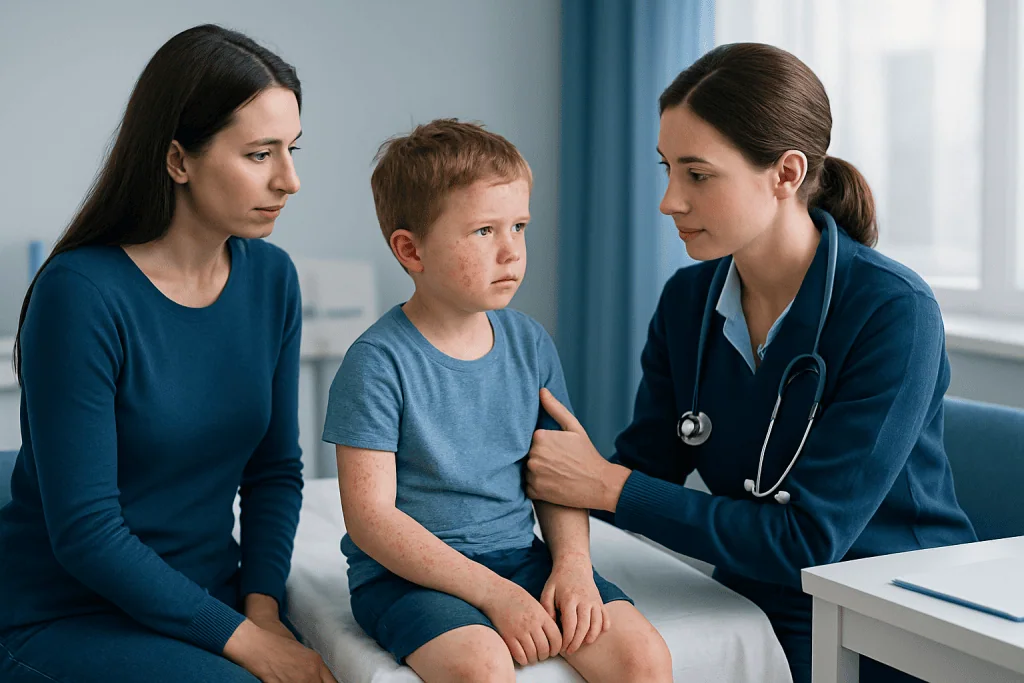
Many cases of child fever and rash are caused by viruses. Examples include roseola, hand-foot-and-mouth disease, fifth disease, chickenpox in unvaccinated children, and nonspecific viral exanthems. These illnesses often come with cold-like symptoms, mild stomach upset, or mouth sores and usually improve with time and supportive care.
Bacterial infections can also cause fever and rash. Scarlet fever may produce a sore throat and a fine, rough rash with a sandpaper texture. Skin infections may lead to redness, warmth, swelling, and fever. In rarer but more serious situations, conditions such as meningococcal infection can cause fever with a non-blanching rash and a rapidly worsening general condition.
Not every fever and rash is due to infection. Allergic reactions to medicines can cause widespread rash and fever, although fever is less typical with simple hives. Inflammatory conditions, including Kawasaki disease and multisystem inflammatory syndrome in children, can also present with persistent fever and skin changes. Some children may have a flare of an existing skin condition such as eczema while also having a separate infection causing the fever.
Travel history, insect bites, animal contact, recent vaccinations, and exposure to sick contacts can all help guide the diagnosis. A doctor may also consider whether the child has had recent antibiotic use, which can sometimes be linked to drug-related rashes or altered infection patterns.
When It May Be Serious
Although most children recover well, some signs suggest the need for urgent or emergency care. Families should seek immediate medical help if the child has trouble breathing, severe drowsiness, confusion, seizures, stiff neck, repeated vomiting, signs of dehydration, or a rash that does not fade when pressed. A child who looks very pale, floppy, difficult to wake, or suddenly much worse should also be assessed right away.
Age matters too. Babies younger than 3 months with fever should be evaluated promptly, even if the rash seems mild. Young infants can become unwell more quickly, and infections may be harder to recognize at home. Persistent high fever, poor feeding, very few wet diapers, or unusual crying are especially important warning signs.
Certain rash patterns deserve urgent attention. These include purple or bruise-like spots, widespread blistering, peeling skin, swelling of the lips or tongue, and a rash with breathing difficulty. A child with ongoing fever for several days, red eyes, cracked lips, swollen hands or feet, or swollen neck glands may need urgent review for inflammatory conditions.
How Doctors Diagnose the Cause
Diagnosis starts with a careful history and physical examination. The doctor will ask when the fever began, when the rash appeared, whether the rash is itchy or painful, and whether the child has been around anyone who is ill. Information about medications, allergies, vaccinations, travel, school or daycare attendance, and any underlying medical conditions is also helpful.
The physical exam looks at the rash closely, including its color, texture, location, and whether it blanches. The doctor will also check the child’s temperature, hydration status, breathing, throat, ears, eyes, lymph nodes, and abdomen. In many mild viral cases, no special tests are needed.
If the child appears more unwell, tests may be recommended. These can include throat swabs, blood tests, urine tests, or imaging in selected situations. When skin findings are unclear or persistent, a specialist may assess whether there is an infectious rash, an inflammatory condition, or another skin disorder such as psoriasis or a severe eczema flare.
Treatment Options
Treatment depends on the underlying cause. For many viral illnesses, supportive care is the main approach. This includes rest, fluids, lightweight clothing, and fever relief as advised by a doctor. Children should not be given aspirin unless a doctor specifically recommends it.
When a bacterial infection is diagnosed, treatment may include antibiotics. Children who have significant dehydration, trouble breathing, or signs of serious infection may need hospital-based care and monitoring. If the rash is linked to an allergy or medicine reaction, the suspected trigger may need to be stopped under medical guidance, and additional treatment may be used depending on severity.
Skin discomfort can sometimes be eased with gentle skincare. Lukewarm baths, fragrance-free moisturizers, and loose cotton clothing may help if the rash is irritating. If doctors suspect a skin-specific condition, they may recommend evaluation through services such as dermatology care or, when infection is a concern, pediatric assessment.
In more complex cases, a multidisciplinary approach may be useful. Near the end of the care pathway, families seeking international care may wish to know that Acibadem International’s multidisciplinary specialists in JCI-accredited hospitals diagnose and treat children with fever, rash, and related conditions when specialist evaluation is needed.
Prevention and Self-Care at Home
Not every illness can be prevented, but practical steps can reduce risk. Keeping vaccinations up to date helps protect against several infections that can cause fever and rash. Good handwashing, avoiding close contact with sick individuals when possible, and teaching children not to share drinks or utensils can also lower the spread of infection.
At home, the main goals are comfort, hydration, and observation. Parents can offer frequent fluids, monitor wet diapers or urination, and encourage rest. The rash should be checked for any quick changes, spreading, blistering, or darkening. It can help to take clear photos over time to show the doctor how the skin findings evolve.
Overheating can make some rashes look more intense, so a cool, comfortable room is often best. Harsh soaps, heavily fragranced creams, and tight clothing may irritate sensitive skin. If a child has an existing skin condition such as hives, the doctor may advise steps to reduce triggers and manage itching safely.
When to See a Doctor
Medical advice is appropriate whenever parents are unsure about the cause of a child’s fever and rash. A same-day medical review is sensible if the fever is persistent, the child is not drinking well, the rash is spreading quickly, or the child seems more uncomfortable than expected. Infants, children with chronic illnesses, and those with weakened immune systems may need earlier evaluation.
Emergency care is needed for severe warning signs such as breathing difficulty, blue lips, unresponsiveness, a stiff neck, seizures, severe dehydration, or a non-blanching rash. Parents should trust their instincts if a child looks much sicker than with a usual cold or viral illness. Acting early is especially important when symptoms are rapidly changing.
Most cases turn out to be manageable and temporary, but professional assessment can bring reassurance and guide safe treatment. When in doubt, contacting a pediatrician or urgent care service is the safest step.
Frequently asked questions
Is fever with rash in a child usually serious?
Not usually. Many children develop fever and rash from common viral infections that improve with rest, fluids, and time. However, some causes are more serious, so the child’s overall behavior and the type of rash matter.
What type of rash is most concerning with fever?
A rash that does not fade when pressed, especially if it looks purple, dark red, or bruise-like, needs urgent medical assessment. Blistering, peeling skin, or rash with swelling of the face or breathing trouble are also concerning signs.
Should a child with fever and rash stay home from school or daycare?
Yes, in most cases the child should stay home until a doctor advises it is safe to return or until the child is fever-free and well enough for normal activities. Some infections are contagious, so keeping the child home can help protect others.
Can teething cause fever and rash?
Teething may cause mild gum discomfort and drooling, but it does not usually cause a significant fever or a widespread rash. If a child has a true fever and rash, another cause should be considered.
What can parents do at home while waiting for medical advice?
They can offer fluids, encourage rest, keep the child comfortably cool, and monitor for changes in breathing, alertness, and urination. It is also helpful to note when the fever started, whether the rash blanches, and if any new medicines or foods were introduced.
Can an allergy cause fever and rash together?
Allergies can cause rashes such as hives, but fever is less common with a simple allergic reaction. When fever and rash occur together, doctors often look for infection, inflammatory illness, or a medication-related reaction.
References
- World Health Organization
- American Academy of Pediatrics
- Centers for Disease Control and Prevention
- National Health Service
- National Institute for Health and Care Excellence
This article is for general information only and is not a substitute for professional medical advice. Please consult a qualified doctor about your individual situation.
Explore treatments in Turkey — costs, top hospitals & a free quote
JCI-accredited · board-certified surgeons · reply within 24h
Add us as a Preferred Source to see more of our trusted health content across Google Search, AI Overviews and Discover.