Childhood Developmental Delay: When a Neuropediatric Assessment May Help

Developmental delay can affect motor, language, social, cognitive, or daily living skills. Early assessment is helpful because many causes are treatable or can be better supported when identified sooner.
Key Takeaways
- Developmental delay can affect motor, language, social, cognitive, or daily living skills.
- Early assessment is helpful because many causes are treatable or can be better supported when identified sooner.
- A neuropediatric assessment looks at a child’s development, nervous system, medical history, and sometimes hearing, vision, imaging, or genetic factors.
- Not every late milestone means a serious problem, but persistent delays or loss of skills should be evaluated promptly.
- Family support, therapy, and regular follow-up often play an important role in improving function and participation.
Childhood developmental delay describes slower-than-expected progress in skills such as movement, speech, learning, or social interaction. A neuropediatric assessment may help clarify whether a child simply needs monitoring, targeted therapies, or further medical evaluation.
Overview
Childhood developmental delay means a child is reaching expected milestones more slowly than other children of the same age. These milestones may involve large movements such as sitting or walking, fine motor skills such as grasping objects, language and communication, learning and problem-solving, or social and emotional development. Some children have a delay in just one area, while others show delays across several areas.
Development varies naturally from child to child, so a single milestone reached later than expected does not always mean there is a medical problem. However, when delays are persistent, affect daily life, or involve more than one developmental domain, further evaluation can be helpful. A careful assessment aims to understand the child’s strengths as well as any areas needing support.
A neuropediatric assessment is one way to evaluate developmental concerns, especially when symptoms may involve the brain, nerves, muscles, behavior, or learning. A neuropediatrician is a doctor trained to assess neurological and developmental conditions in children. The goal is not simply to label a child, but to identify possible causes and guide practical next steps for care, therapy, and follow-up.
Symptoms and Developmental Signs
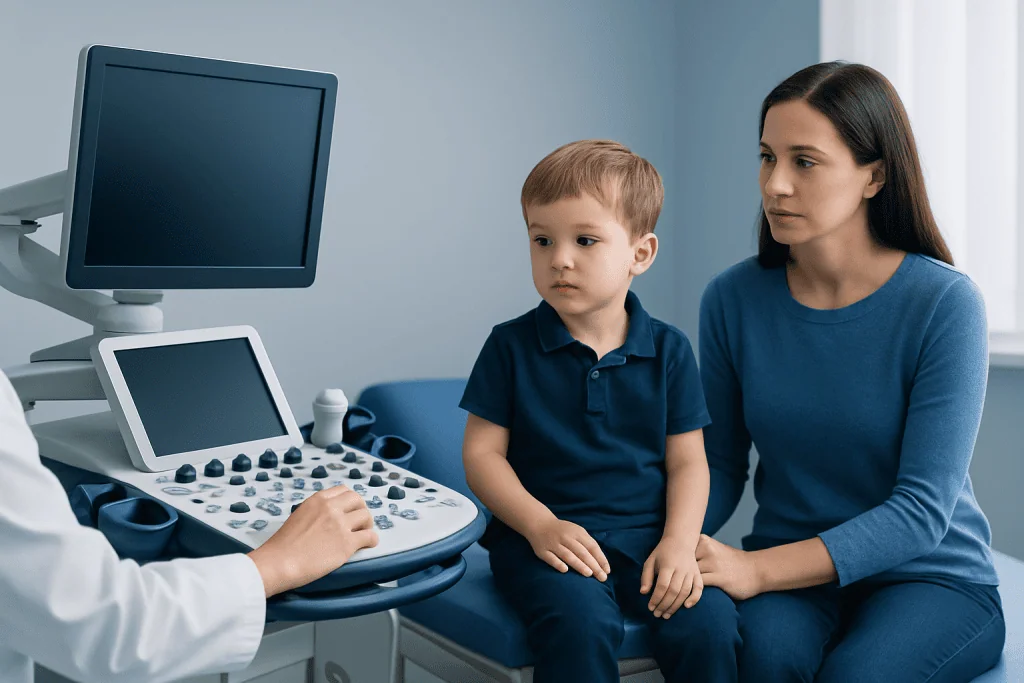
The signs of childhood developmental delay depend on the area affected. Some children are late to roll, sit, crawl, stand, or walk. Others may have delayed speech, difficulty understanding language, limited eye contact, trouble playing with others, or challenges with attention and learning. In some cases, parents notice differences in feeding, coordination, muscle tone, or everyday independence.
Doctors often look at development in broad domains. Concerns may include:
- Gross motor: poor head control, delayed sitting, walking later than expected, frequent falls
- Fine motor: difficulty holding toys, stacking blocks, using utensils, or drawing
- Speech and language: delayed babbling, few words, unclear speech, trouble following simple instructions
- Social and behavioral: limited interaction, reduced pretend play, difficulty with transitions, unusual repetitive behaviors
- Cognitive and adaptive skills: problems with learning, memory, problem-solving, dressing, feeding, or toileting
Another important warning sign is a loss of previously acquired skills. For example, a child who used words and then stops speaking, or one who walked independently and later struggles to walk, should be assessed without delay. Regression can signal an underlying neurological or metabolic problem that needs medical attention.
Parents and caregivers are often the first to notice subtle differences. If a child seems significantly behind peers, struggles to keep up in nursery or school, or has ongoing concerns raised by teachers or health visitors, it is reasonable to ask for a structured developmental review.
Causes and Risk Factors

Developmental delay is not a single disease. It is a descriptive term that can have many possible causes, and sometimes no single clear cause is found. In some children, the delay is temporary or related to limited opportunities to practice certain skills. In others, it may reflect an underlying neurological, genetic, sensory, or medical condition.
Possible causes include birth-related complications, prematurity, low birth weight, cerebral palsy, epilepsy, hearing loss, vision problems, autism spectrum disorder, intellectual disability, neuromuscular conditions, genetic syndromes, thyroid disorders, nutritional deficiencies, and rare metabolic diseases. A history of serious infections, head injury, or prolonged seizures may also affect development.
Risk factors can increase the likelihood of developmental concerns, even though they do not always lead to delay. These include:
- Premature birth or a stay in neonatal intensive care
- Complications during pregnancy or delivery
- Family history of developmental, neurological, or genetic conditions
- Chronic medical illness
- Significant hearing or vision impairment
- Limited access to stimulation, play, or early learning opportunities
Some conditions overlap with developmental delay. For example, delays in speech, social communication, or behavior may raise concern for autism spectrum disorder, while delays in movement and coordination may lead doctors to evaluate for cerebral palsy or other neurological causes. Identifying the reason for the delay helps shape the most useful treatment plan.
When a Neuropediatric Assessment May Help
A neuropediatric assessment may be useful when developmental concerns are persistent, involve multiple skill areas, or are accompanied by neurological signs. Examples include unusual muscle stiffness or floppiness, asymmetrical movements, tremors, seizures, persistent headaches, poor coordination, or regression of milestones. It can also help when a child has already started therapy but the underlying cause remains unclear.
During the appointment, the specialist usually takes a detailed history. This includes pregnancy and birth history, early feeding and sleep, medical illnesses, family history, school or nursery observations, and the child’s pattern of milestone achievement. Parents may be asked when the child first smiled, sat, walked, used words, or showed social interest. Videos from home can sometimes be useful, especially for intermittent events or movement concerns.
The physical and neurological examination looks at muscle tone, strength, reflexes, coordination, posture, gait, cranial nerves, head growth, and behavior. The doctor also observes communication, attention, play, and problem-solving at a level appropriate for the child’s age. The aim is to build a complete picture rather than focus on one symptom in isolation.
Sometimes the neuropediatrician may recommend input from a wider team, such as developmental pediatrics, psychology, speech and language therapy, physiotherapy, occupational therapy, audiology, ophthalmology, or genetics. This multidisciplinary approach can be especially helpful when delays affect daily life, school participation, or social development.
How Developmental Delay Is Diagnosed
Diagnosis usually begins with developmental screening and clinical assessment rather than a single test. Doctors compare the child’s progress with expected developmental patterns and look for clues to an underlying cause. Standardized questionnaires or formal developmental tests may be used to measure language, motor, cognitive, and social skills more precisely.
Additional tests are chosen according to the child’s symptoms and examination findings. A hearing test is very important in children with speech delay, and a vision assessment may be needed if there are concerns about visual tracking or eye contact. Blood tests may check for thyroid problems, anemia, nutritional deficiencies, or metabolic disorders. Genetic testing may be considered if there are dysmorphic features, global delay, or a family history suggesting an inherited condition.
If neurological signs are present, the doctor may recommend brain or nerve-related investigations. These can include an electroencephalogram for suspected seizures or brain MRI when structural causes are possible. Some children may also benefit from EEG testing or other neurophysiological studies, depending on the clinical picture.
The result of the assessment may be described in different ways, such as isolated speech delay, global developmental delay, developmental coordination difficulties, or a specific neurodevelopmental disorder. In some children, the specialist may advise close monitoring over time before a final diagnosis is made. Regular follow-up is often important because developmental patterns become clearer as a child grows.
Treatment Options and Support
Treatment depends on the cause of the developmental delay and the child’s individual needs. In many cases, the most important step is early supportive therapy. Speech and language therapy can help communication and feeding issues, physiotherapy can support posture and movement, and occupational therapy can improve fine motor skills, sensory processing, and everyday independence.
When an underlying medical condition is identified, treatment may also address that specific problem. For example, seizures may require specialist management, hearing loss may need hearing support, and nutritional or hormonal problems may be treated medically. Some children benefit from behavioral therapy, developmental education plans, or specialist school support. Care is often coordinated across home, school, and healthcare settings.
The treatment plan may evolve with time. A child who first presents with delayed walking may later need help with coordination, confidence, or classroom participation. Likewise, children with communication difficulties may need reassessment as language demands increase with age. In selected cases, broader neurological evaluation and pediatric neurology care can help guide long-term management.
Near the end of the diagnostic process, families may also wish to understand where ongoing care can be organized. Acibadem International’s multidisciplinary specialists and JCI-accredited hospitals diagnose and treat developmental and neurological conditions in children, including cases that may require advanced assessment or coordinated rehabilitation support.
Prevention, Monitoring, and Self-care for Families
Not all developmental delay can be prevented, but healthy early childhood care supports the best possible development. Regular well-child visits, routine vaccinations, good nutrition, safe sleep, and prompt treatment of hearing or vision problems are all important. Children also benefit from responsive interaction, play, reading, singing, and opportunities to move and explore safely.
Families can help by observing progress over time rather than focusing on one isolated day or skill. Keeping a simple record of new words, motor milestones, behavior changes, or concerns from nursery or school can make medical appointments more productive. If a doctor recommends therapy, regular attendance and home practice often improve progress.
It is also helpful for caregivers to remember that delays are not caused by poor parenting. Many families experience worry or guilt while waiting for answers, but a supportive and structured environment can make a meaningful difference whatever the cause. Parent education, school collaboration, and emotional support are valuable parts of care.
If there are concerns about complex motor symptoms, regression, or associated neurological issues, some children may need further investigation or pediatric rehabilitation services as part of a longer-term plan. Early, coordinated support often helps children participate more fully in family life, learning, and play.
When to See a Doctor
Parents should consider medical advice if a child is consistently missing milestones, has speech that is much less developed than expected, shows poor eye contact or limited social engagement, or struggles with movement, balance, feeding, or coordination. Concerns raised by teachers, nursery staff, or routine child health checks are also worth discussing with a doctor.
Prompt assessment is especially important if the child loses previously learned skills, has seizures, unusual movements, persistent stiffness or floppiness, weakness on one side, severe headaches, or changes in behavior together with developmental concerns. These signs do not always mean a serious condition, but they deserve timely evaluation.
In many cases, the first step is to speak with a pediatrician or family doctor, who may refer the child for specialist assessment. A neuropediatric review can be particularly helpful when development and the nervous system may both be involved. Early clarification often reduces uncertainty and helps families access the right support sooner.
Frequently asked questions
What is the difference between a developmental delay and a developmental disorder?
Developmental delay describes slower progress in one or more areas, such as speech, movement, or learning. A developmental disorder is a more specific diagnosis that may explain the delay, such as autism spectrum disorder, cerebral palsy, or an intellectual disability. Some children with delay later receive a specific diagnosis, while others improve with time and support.
At what point should parents worry about missed milestones?
Parents do not need to panic about one milestone that is slightly late, because normal development varies. However, they should seek advice if delays are persistent, affect several skill areas, or interfere with daily activities, communication, or social interaction. Loss of previously learned skills should always be assessed promptly.
Can a child outgrow developmental delay?
Some children do catch up, especially when the delay is mild or related to one area of development. Others continue to need support over time, particularly if there is an underlying neurological, genetic, or learning condition. Early assessment helps doctors understand which pattern is more likely and what support may help.
What happens during a neuropediatric assessment?
The doctor reviews the child’s medical, developmental, and family history and asks detailed questions about milestones, behavior, and learning. A neurological and developmental examination follows, looking at movement, tone, coordination, communication, and interaction. Depending on findings, the specialist may suggest therapy referrals or additional tests.
Does speech delay always mean autism?
No. Speech delay can have many causes, including hearing problems, developmental language disorder, global developmental delay, or environmental factors. Autism may be considered when speech delay occurs alongside differences in social communication, play, eye contact, or repetitive behaviors, but only a proper assessment can determine this.
What tests might a child need for developmental delay?
Testing depends on the child’s symptoms and exam findings. Common evaluations may include hearing and vision checks, developmental testing, blood tests, genetic testing, EEG, or brain imaging in selected cases. Not every child needs every test, and the assessment is usually tailored to the most likely causes.
References
- World Health Organization
- Centers for Disease Control and Prevention
- American Academy of Pediatrics
- National Institute of Neurological Disorders and Stroke
- UNICEF
This article is for general information only and is not a substitute for professional medical advice. Please consult a qualified doctor about your individual situation.
Developmental Delay in Turkey — costs, top hospitals & a free quote
JCI-accredited · board-certified surgeons · reply within 24h
Add us as a Preferred Source to see more of our trusted health content across Google Search, AI Overviews and Discover.

Physical Medicine & Rehabilitation
Restoring movement and function after injury, surgery or neurological conditions.
150 specialists in this unitMore from the Health Library



Related Specialists

Assoc. Prof. Dr. Murat İçen
Check Up & Wellness Center
Dr. Aydın Halefoğlu
Anesthesiology
Dr. Ferhat Oto
Internal Medicine
Prof. Dr. Ersin Erek
Cardiovascular Surgery