Cholangiocarcinoma Treatment: How It Works, Results and What to Expect

Surgery offers the main possibility of long-term disease control when cholangiocarcinoma is localized and can be fully removed. Chemotherapy is often used after surgery, before surgery in selected cases, or to control unresectable or metastatic disease.
Key Takeaways
- Surgery offers the main possibility of long-term disease control when cholangiocarcinoma is localized and can be fully removed.
- Chemotherapy is often used after surgery, before surgery in selected cases, or to control unresectable or metastatic disease.
- Targeted therapies and immunotherapy may be options for some tumors after molecular testing.
- Biliary drainage using a stent or catheter can reduce jaundice, itching, infection risk, and other symptoms caused by blockage.
- Treatment planning is best carried out by a multidisciplinary team with expertise in liver, pancreatic, and biliary cancers.
Cholangiocarcinoma treatment is individualized according to where the bile duct cancer began, whether it can be removed, its molecular features, and a person’s overall health. Care commonly combines cancer-directed treatment with procedures that relieve blocked bile ducts and supportive care to protect comfort and quality of life.
Overview: How cholangiocarcinoma treatment works
Cholangiocarcinoma treatment aims to remove or control cancer, slow its growth, relieve bile duct blockage, and maintain the best possible quality of life. The most suitable approach depends on whether the cancer is inside the liver, at the liver hilum where bile ducts join, or farther down the bile duct near the pancreas. Its size, spread, relationship to blood vessels, liver function, general health, and tumor biology all help guide decisions.
For a small number of people with localized disease, surgery may remove the tumor completely. When surgery is not possible initially, chemotherapy, radiation-based treatments, liver-directed procedures, targeted medicines, immunotherapy, or a combination may be considered. Some treatment plans are designed to shrink or stabilize disease before reconsidering surgery, while others focus on long-term control and symptom relief.
Blocked bile flow can cause jaundice, dark urine, pale stools, itching, infection, or impaired liver function. Endoscopic or image-guided drainage may place a stent or catheter to restore bile flow. This supportive procedure can be important before surgery or systemic treatment and can also improve day-to-day comfort.
Assessment and candidacy for treatment
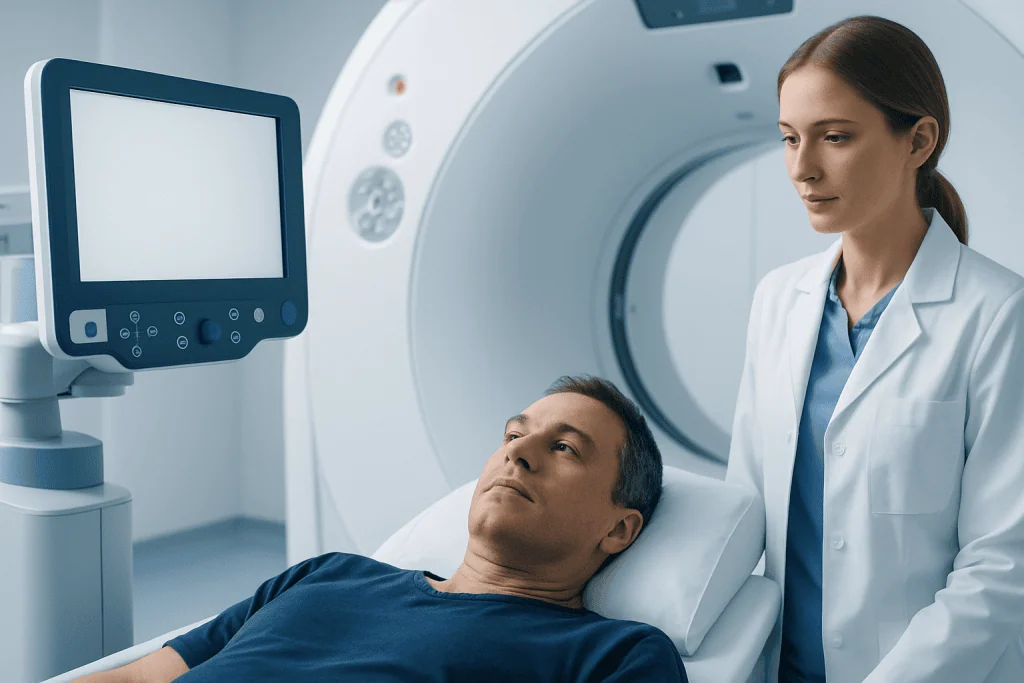
Before treatment starts, the care team confirms the diagnosis and stages the cancer. Evaluation usually includes blood tests, contrast-enhanced CT or MRI scans, and sometimes PET imaging. A biopsy may be needed to confirm the diagnosis and obtain tissue for molecular testing, although the exact approach depends on the tumor’s location and whether surgery is planned.
Specialists assess whether a tumor is resectable, meaning it can potentially be removed with clear margins while leaving enough healthy liver or preserving essential structures. This assessment can be complex because bile ducts lie close to major blood vessels and the liver. A tumor that is not removable at diagnosis may still be treated with non-surgical therapies, and the plan can be reviewed as treatment response becomes clearer.
Molecular testing looks for changes in the tumor that may guide medication choices. Depending on the cancer type and treatment history, findings such as FGFR2 fusions or rearrangements, IDH1 mutations, HER2 alterations, BRAF mutations, NTRK fusions, mismatch-repair deficiency, or high tumor mutational burden may be relevant. Not every tumor has an actionable change, but testing can broaden appropriate options.
- Fitness for major surgery, including heart, lung, kidney, and liver function
- The location and extent of the cancer and whether it has spread
- Symptoms from bile duct obstruction or infection
- Previous treatment and personal treatment goals
- Results of pathology and molecular testing
Step-by-step: surgery, procedures, and systemic treatment

Treatment is usually planned in a multidisciplinary meeting involving hepatobiliary surgeons, medical oncologists, gastroenterologists, interventional radiologists, radiation oncologists, pathologists, radiologists, nurses, and supportive-care specialists. The team reviews imaging, pathology, laboratory results, and the person’s priorities before recommending a sequence of care.
When surgery is feasible, the operation varies by location. Intrahepatic tumors may require removal of a portion of the liver. Perihilar tumors may require liver resection together with involved bile ducts and reconstruction of bile drainage. Distal bile duct tumors are often treated with pancreaticoduodenectomy, also called a Whipple procedure. Nearby lymph nodes are usually assessed or removed for staging. In carefully selected circumstances, transplant-based protocols may be considered at specialized centers.
For advanced, recurrent, or unresectable cancer, systemic therapy circulates throughout the body. Chemotherapy is commonly the first treatment approach, sometimes alongside immunotherapy when appropriate. If the cancer progresses, further chemotherapy regimens, targeted therapy based on molecular testing, or immunotherapy for selected biomarkers may be discussed. Clinical trials can also be an important option.
When bile ducts are blocked, an endoscopist may use ERCP to insert a stent, or an interventional radiologist may place a drain through the skin. Radiation therapy may be used in selected localized cases to help control disease or symptoms. Liver-directed approaches, such as embolization or ablation, may be considered for selected tumors centered in the liver, but they are not appropriate for every person.
Benefits, risks, and recovery timeline
The potential benefit of surgery is removal of all visible cancer, which offers the best opportunity for long-term disease control when the tumor is localized. However, recurrence can still occur, which is why follow-up and, in some situations, chemotherapy after surgery may be recommended. For unresectable cancer, medicines and local treatments may reduce or stabilize tumor burden, ease symptoms, and help preserve function.
Major bile duct or liver surgery carries meaningful risks, including bleeding, infection, bile leak, blood clots, pneumonia, liver dysfunction, delayed stomach emptying after some operations, and complications related to reconstruction of the bile ducts. The precise risks depend on the operation, liver reserve, other health conditions, and extent of disease. The surgical team discusses these factors individually before consent.
Hospital recovery after a major operation often lasts about one to two weeks, although it can be longer if complications arise or recovery is slower. Regaining stamina commonly takes several weeks to months. Follow-up includes wound care, nutrition support, pain control, blood tests, and imaging. New fever, increasing abdominal pain, worsening jaundice, vomiting, drainage from a wound, or shortness of breath should be reported promptly.
Chemotherapy may cause fatigue, nausea, appetite changes, lowered blood counts, infection risk, numbness or tingling, and changes in kidney or liver tests, depending on the medicines used. Targeted therapy and immunotherapy have different side-effect patterns, including skin, digestive, hormonal, liver, lung, or immune-related effects. Regular monitoring allows the team to prevent, identify, and manage side effects early.
How effective is chemo for bile duct cancer?
Chemotherapy can be effective for bile duct cancer, but its effect varies widely between individuals and disease situations. For cancer that cannot be removed or has spread, chemotherapy can slow growth, reduce tumor size in some people, improve cancer-related symptoms, and extend survival compared with supportive care alone. It is generally used to control disease rather than to promise a cure in advanced stages.
Combination chemotherapy is commonly used as initial treatment for advanced cholangiocarcinoma. In appropriate patients, immunotherapy may be added to chemotherapy. After surgery, chemotherapy may also be recommended to reduce the chance of recurrence, depending on pathology findings and overall recovery. The oncologist reviews the intended goal of treatment before it begins.
Response is monitored with symptoms, physical examinations, blood tests, tumor markers when useful, and repeat imaging. A scan may show shrinkage, stability, or growth; all three results can inform the next step. If one regimen stops working or causes difficult side effects, the team may adjust treatment, consider molecularly targeted options, or discuss clinical trials and supportive care.
How long can you live with bile duct cancer with treatment?
Life expectancy with bile duct cancer varies greatly and cannot be accurately predicted from one diagnosis label alone. The cancer’s location and stage, whether it can be completely removed, response to treatment, tumor molecular profile, liver health, and general fitness all affect outlook. Some people with localized cancer who undergo successful surgery live for many years, while advanced cancer usually requires ongoing treatment and monitoring.
Oncologists often avoid relying on a single survival estimate because group averages cannot predict one person’s experience. Instead, they can explain the purpose of each treatment, review how the cancer is responding over time, and discuss realistic next steps. Asking about the treatment goal—curative, recurrence-reducing, disease-controlling, or symptom-relieving—can help patients and families understand the plan.
Supportive care is valuable at every stage and is not limited to end-of-life care. Managing jaundice, pain, nutrition, fatigue, emotional strain, and practical needs can help a person remain as well and active as possible during treatment.
How long does it take for cholangiocarcinoma to spread?
There is no reliable fixed timeline for cholangiocarcinoma to spread. Some tumors grow and spread relatively slowly, while others behave more aggressively. Because early cholangiocarcinoma may cause few symptoms, it may already be advanced when it is found; this does not mean that every case spreads quickly.
Imaging at diagnosis helps show whether cancer is localized, involves nearby lymph nodes or blood vessels, or has spread to distant sites. Repeat scans during and after treatment help the care team evaluate the pace of disease and whether the current plan is working. Scan intervals are individualized according to the treatment setting and symptoms.
Prompt assessment is important because bile duct obstruction can become urgent even if the cancer itself is progressing slowly. Restoring bile drainage, treating infection, and addressing reduced liver function may allow cancer treatment to proceed more safely.
How painful is bile duct cancer and when to seek medical care
Bile duct cancer is not always painful, especially early on. Some people develop a dull discomfort or pressure in the upper right abdomen, back, or upper abdomen as the tumor grows or blocks bile flow. Pain severity ranges from mild to significant and may also be influenced by infection, procedures, treatment effects, or spread to other areas.
Pain should be assessed regularly and treated individually. Options may include non-drug measures, medicines, procedures to improve bile drainage, radiation in selected circumstances, and specialist palliative-care support. Good pain control is a routine part of cancer care and can be combined with active anti-cancer treatment.
Medical advice should be sought promptly for yellowing of the skin or eyes, fever or chills, worsening abdominal pain, confusion, persistent vomiting, inability to keep fluids down, or rapidly worsening weakness. Fever with jaundice or abdominal pain can indicate a bile duct infection and requires urgent medical assessment. Anyone with unexplained jaundice, persistent itching, pale stools, dark urine, or unintentional weight loss should arrange a timely medical evaluation.
Acibadem International’s multidisciplinary specialists and JCI-accredited hospitals assess and treat biliary cancers for international patients, coordinating surgical, medical, interventional, and supportive care when appropriate.
Frequently asked questions
Can cholangiocarcinoma be cured?
Cholangiocarcinoma may be curable when it is found early enough to be completely removed with surgery. Even after successful surgery, follow-up is essential because the cancer can recur. When complete removal is not possible, treatment can still control disease and relieve symptoms.
What is usually the first treatment for bile duct cancer?
The first treatment depends on stage and location. Resectable localized tumors are usually evaluated for surgery, while advanced or unresectable disease is commonly treated with systemic therapy. If bile flow is blocked, drainage with a stent or catheter may be needed before or alongside cancer treatment.
Is immunotherapy used for cholangiocarcinoma?
Immunotherapy may be used with chemotherapy in some people with advanced bile duct cancer. It may also be considered in specific biomarker-defined situations. Eligibility depends on the treatment setting, medical history, and tumor testing results.
Why is molecular testing important in cholangiocarcinoma?
Molecular testing can identify genetic or protein changes in a tumor that may be treated with a targeted medicine or guide immunotherapy decisions. It is particularly useful in advanced disease and is often performed using tumor tissue or, in some cases, a blood-based test. Results should be interpreted by an oncology team.
Can a bile duct stent treat the cancer itself?
A bile duct stent does not remove or destroy the cancer. It opens a narrowed bile duct to improve bile flow and can reduce jaundice, itching, and infection risk. It may also help improve liver function so other treatments can be given more safely.
What follow-up is needed after cholangiocarcinoma treatment?
Follow-up commonly includes visits to review symptoms and recovery, blood tests, and imaging scans at intervals set by the care team. The schedule depends on the treatment received, cancer stage, and risk of recurrence. New jaundice, fever, persistent pain, or unexplained weight loss should be reported between scheduled visits.
References
- National Cancer Institute
- American Cancer Society
- European Society for Medical Oncology
- National Comprehensive Cancer Network
- American Society of Clinical Oncology
This article is for general information only and is not a substitute for professional medical advice. Please consult a qualified doctor about your individual situation.
Oncology care in Turkey — second opinion and treatment plan
JCI-accredited · board-certified surgeons · reply within 24h
Add us as a Preferred Source to see more of our trusted health content across Google Search, AI Overviews and Discover.