Cholesterol Molecule — Explained by Medical Evidence, Not Myths

Cholesterol is essential for normal body functions and is not inherently harmful. Because cholesterol does not dissolve in blood, it travels in particles called lipoproteins.
Key Takeaways
- Cholesterol is essential for normal body functions and is not inherently harmful.
- Because cholesterol does not dissolve in blood, it travels in particles called lipoproteins.
- LDL cholesterol is a key treatment target because elevated levels can promote plaque buildup in arteries.
- HDL cholesterol helps transport cholesterol, but a high HDL result does not cancel the risks of high LDL cholesterol.
- A lipid panel and an individual cardiovascular risk assessment guide decisions about lifestyle changes and medicines.
A cholesterol molecule is a waxy, fat-like substance that the body needs to build cell membranes, make certain hormones and produce bile acids for digestion. Cholesterol becomes a health concern mainly when too much is carried in the blood by LDL-containing particles, which can contribute to artery disease over time.
Overview: What Is a Cholesterol Molecule?
A cholesterol molecule is a type of lipid, or fat-like substance, found in every cell of the body. It has a compact structure made of carbon, hydrogen and oxygen atoms, including a characteristic ring-shaped core. This structure helps cholesterol fit into cell membranes, where it contributes to membrane strength, flexibility and normal cell signaling.
The body makes most of the cholesterol it needs, mainly in the liver. Cholesterol is also present in animal-derived foods, although the cholesterol measured in a blood test reflects much more than dietary intake alone. Genetics, liver function, body weight, physical activity, health conditions and some medicines can all influence blood cholesterol levels.
Cholesterol itself is not “good” or “bad.” The clinically important question is how much cholesterol is circulating in the bloodstream and which transport particles are carrying it. Over time, an excess of cholesterol in certain particles can enter artery walls and contribute to atherosclerosis, the gradual buildup of fatty plaque.
Why the Body Needs Cholesterol

Cholesterol has several important biological roles. It is a building block of cell membranes, helping cells maintain the right balance between firmness and fluidity. This is important throughout the body, including in the brain, nerves, muscles, skin and organs.
The body also uses cholesterol to make steroid hormones. These include cortisol, which helps regulate stress responses and metabolism; aldosterone, which helps control salt and fluid balance; and sex hormones such as estrogen and testosterone. Cholesterol is also needed to produce vitamin D after the skin is exposed to sunlight.
In the liver, cholesterol is converted into bile acids. Bile acids are released into the digestive system and help the body absorb dietary fats and fat-soluble vitamins. These essential roles explain why the goal of cholesterol care is not to remove cholesterol from the body, but to keep harmful blood levels and cardiovascular risk appropriately low.
Cholesterol and Lipoproteins: Understanding LDL and HDL
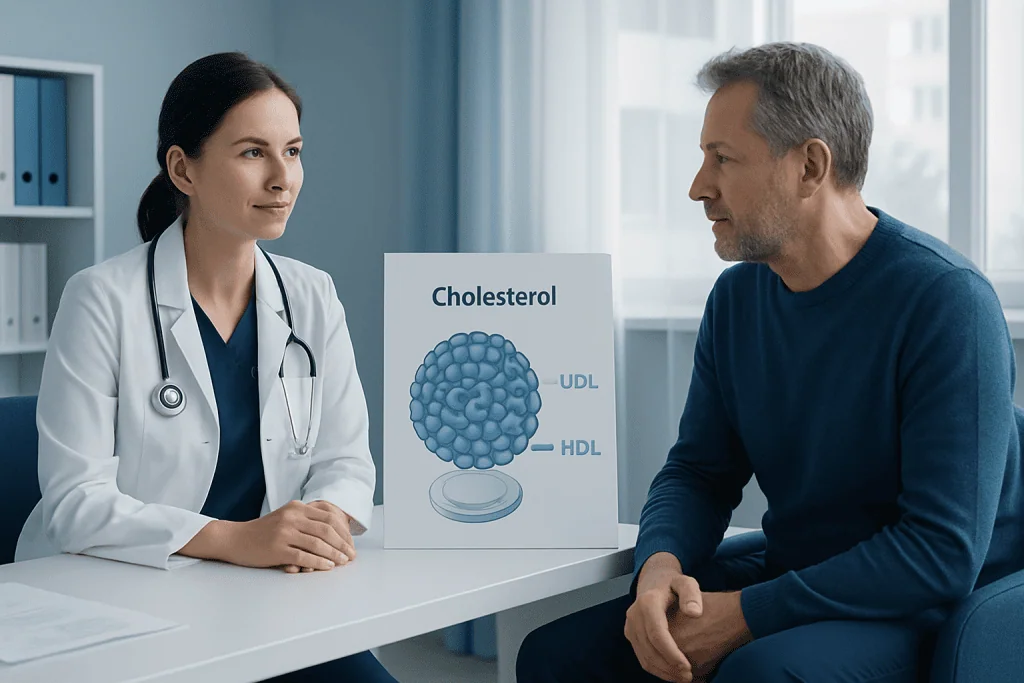
Cholesterol cannot travel freely through blood because it does not mix well with water. It is therefore carried in lipoproteins, which are tiny particles made of lipids and proteins. A blood test often reports the cholesterol contained within these particles, rather than measuring cholesterol molecules in isolation.
Low-density lipoprotein, usually called LDL cholesterol, carries cholesterol from the liver to tissues. When there is too much LDL in the bloodstream, LDL-containing particles can cross into artery walls. The body may respond with inflammation, and plaque can develop over years. For this reason, LDL cholesterol is commonly described as “bad” cholesterol, although LDL particles have normal functions in the body.
High-density lipoprotein, or HDL cholesterol, participates in transporting cholesterol back toward the liver. It is often called “good” cholesterol, but this label can be oversimplified. A higher HDL value does not reliably offset the risk from high LDL cholesterol, smoking, diabetes, high blood pressure or a strong family history of early cardiovascular disease.
- Non-HDL cholesterol represents cholesterol carried in potentially artery-promoting particles and is calculated from total cholesterol minus HDL cholesterol.
- Triglycerides are another type of blood fat; elevated levels may occur with excess alcohol, uncontrolled diabetes, obesity, kidney disease or some medications.
- Apolipoprotein B (apoB) may be used in selected people to estimate the number of cholesterol-carrying particles linked with atherosclerosis.
What a Cholesterol Blood Test Can Show
A lipid panel usually measures total cholesterol, LDL cholesterol, HDL cholesterol and triglycerides. Some laboratories calculate LDL from other results, while others measure it directly in particular circumstances. The test may be done without fasting for routine screening, though a clinician may request fasting when triglycerides are high or when a more detailed assessment is needed.
Results should be interpreted in context rather than judged as isolated numbers. A level that may be reasonable for one person may need more active management for another person with diabetes, kidney disease, established cardiovascular disease, a previous stroke, or a high inherited risk. Age, blood pressure, smoking status and family history are also important.
Clinicians may repeat a lipid test to confirm an unexpected result, monitor the response to treatment or assess changes after a lifestyle intervention. Tests for blood glucose, thyroid function, kidney function or liver health may sometimes be considered, since some medical conditions can affect lipid levels.
What Raises Cholesterol-Related Cardiovascular Risk?
Elevated LDL cholesterol can result from a combination of inherited and lifestyle factors. Diets high in saturated fat may increase LDL cholesterol in many people, while trans fats can raise LDL and lower HDL. Limited physical activity, excess body weight, smoking and frequent heavy alcohol intake can also worsen the overall lipid pattern for some individuals.
Medical conditions can contribute as well. These include diabetes, underactive thyroid, chronic kidney disease and certain liver or inflammatory disorders. Some medicines may affect blood lipids, so people should not stop prescribed treatment on their own; a clinician can review whether an alternative or additional monitoring is appropriate.
In some families, very high LDL cholesterol is caused by an inherited condition called familial hypercholesterolemia. This can lead to high cholesterol from an early age and substantially increase lifetime cardiovascular risk if untreated. A personal or family history of unusually high cholesterol, heart attack, stroke or artery disease at a young age should be discussed with a doctor.
Evidence-Based Ways to Manage Cholesterol
Heart-healthy habits can improve cholesterol levels and lower cardiovascular risk. Helpful patterns generally emphasize vegetables, fruit, legumes, whole grains, nuts, seeds and unsaturated fats such as olive oil. Choosing fish, lean protein sources and lower-fat dairy products when appropriate, while reducing processed meats and foods high in saturated or trans fats, can be useful.
Regular physical activity, avoiding tobacco, obtaining adequate sleep and working toward a sustainable weight can support heart health. These changes are worthwhile even when medication is needed, but lifestyle measures alone may not reduce LDL enough for everyone. This is particularly true for people with very high LDL cholesterol, familial hypercholesterolemia or established cardiovascular disease.
When overall risk is elevated, clinicians may recommend cholesterol-lowering medication. Statins are often the first option because they effectively lower LDL cholesterol and have strong evidence for preventing cardiovascular events in appropriate patients. Other medicines may be considered based on LDL level, health history, medication tolerance and treatment goals. Decisions should be individualized through a discussion with a qualified clinician, including expected benefits, possible side effects and follow-up testing.
Cholesterol Myths and Facts
Myth: All cholesterol is harmful. In fact, cholesterol is necessary for cell membranes, hormone production and bile acid formation. The concern is an excess of cholesterol carried in particles that can contribute to plaque formation in arteries.
Myth: Eating cholesterol-rich food always directly causes high blood cholesterol. Dietary cholesterol can affect some people, but blood cholesterol is influenced by many factors. Saturated and trans fats, genetics, health conditions and overall dietary pattern often have a greater effect on LDL cholesterol than a single food does.
Myth: High HDL means there is no need to worry about LDL. HDL is only one part of a lipid profile and cardiovascular assessment. Managing high LDL cholesterol remains important regardless of HDL level. Myth: High cholesterol causes obvious symptoms. Most people feel well, which is why screening and risk-based testing are valuable.
When to Seek Medical Care
People should arrange a routine medical appointment to discuss cholesterol testing if they have not been screened as advised for their age and health history, have diabetes or high blood pressure, smoke, have kidney disease, or have a close relative with early heart disease or very high cholesterol. A clinician can explain which tests are suitable and how often they should be repeated.
Prompt medical evaluation is important for symptoms that could suggest a heart or circulation emergency, including chest pressure or pain, sudden shortness of breath, fainting, or sudden weakness, facial drooping, speech difficulty or vision loss. These symptoms require urgent local emergency care and should not be attributed to cholesterol alone.
For people seeking coordinated assessment, Acibadem International’s multidisciplinary specialists and JCI-accredited hospitals diagnose and manage cholesterol-related cardiovascular risk for international patients. Care plans should be based on the person’s test results, medical history and preferences, with regular follow-up where needed.
Frequently asked questions
Is cholesterol a fat?
Cholesterol is a lipid, or fat-like substance, but it is chemically different from triglycerides, which are the main form of stored fat. It is an essential component of cell membranes and a starting material for several hormones and bile acids.
Why is LDL cholesterol considered harmful?
LDL cholesterol is considered harmful when levels are too high because LDL-containing particles can deposit cholesterol within artery walls. Over time, this can contribute to plaque buildup and raise the risk of heart attack, stroke and peripheral artery disease.
Can a person have high cholesterol without symptoms?
Yes. High cholesterol usually does not cause symptoms, even when levels are significantly elevated. A blood test is the reliable way to identify an abnormal lipid profile and discuss cardiovascular risk with a clinician.
Does high HDL cholesterol protect against high LDL cholesterol?
No. HDL cholesterol is associated with cholesterol transport processes, but a high HDL result does not eliminate the risks linked to elevated LDL cholesterol. Clinicians assess the full lipid profile and other cardiovascular risk factors rather than relying on HDL alone.
Can diet lower cholesterol without medication?
A heart-healthy dietary pattern can lower LDL cholesterol, especially when combined with regular activity, weight management where appropriate and avoiding tobacco. However, some people need medication because of very high LDL levels, inherited conditions or an elevated overall cardiovascular risk.
How often should cholesterol be checked?
The appropriate interval depends on age, prior results, medical conditions, family history and whether treatment is being used. A doctor can recommend a testing schedule tailored to the individual, and more frequent checks may be needed after starting or changing cholesterol-lowering treatment.
This article is for general information only and is not a substitute for professional medical advice. Please consult a qualified doctor about your individual situation.
Explore treatments in Turkey — costs, top hospitals & a free quote
JCI-accredited · board-certified surgeons · reply within 24h
Add us as a Preferred Source to see more of our trusted health content across Google Search, AI Overviews and Discover.
Check your numbers in seconds
BMI, calories, due date, blood pressure and 30+ more clinical calculators — free, instant, doctor-reviewed ranges.

More from the Health Library

Upturned Nose — Explained by Medical Evidence, Not Myths

Optical Coherence Tomography: An Evidence-Based Guide for Patients

Pulmonary Hypertension: What Patients Need to Know

Xanax Recall: An Evidence-Based Guide for Patients

Presyncope: A Complete Medical Overview