Clinical Neurophysiology: Conditions It Helps Diagnose and What to Expect
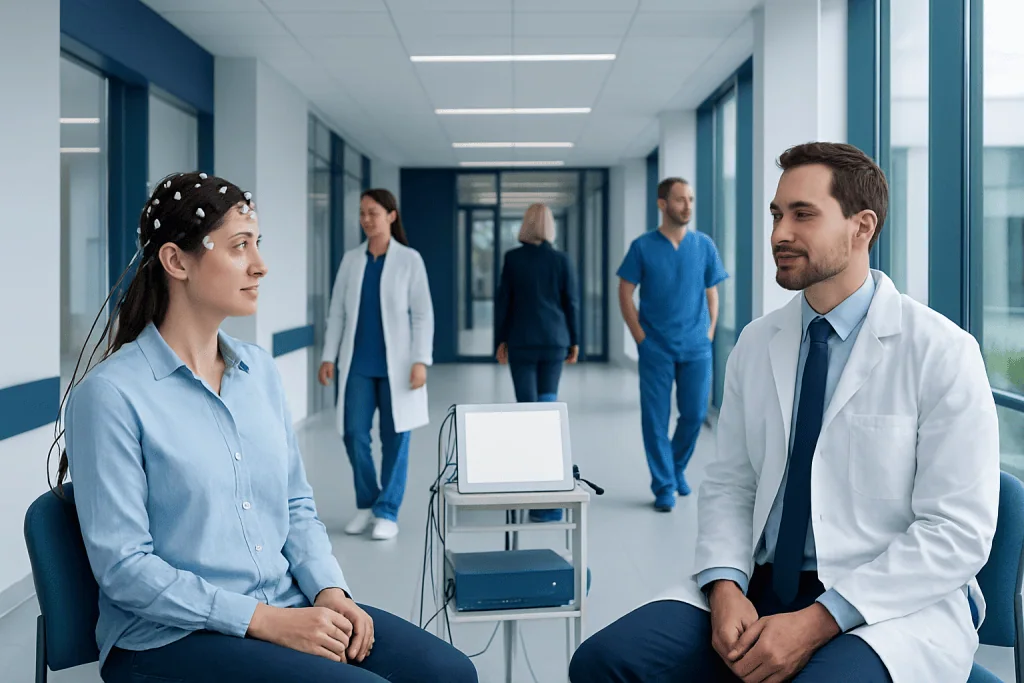
Clinical neurophysiology evaluates the electrical activity of the brain, nerves, and muscles. Common tests include EEG, EMG, nerve conduction studies, evoked potentials, and sleep-related recordings.
Key Takeaways
- Clinical neurophysiology evaluates the electrical activity of the brain, nerves, and muscles.
- Common tests include EEG, EMG, nerve conduction studies, evoked potentials, and sleep-related recordings.
- These tests can help diagnose epilepsy, neuropathy, muscle disorders, nerve compression, and some sleep or movement disorders.
- Most neurophysiology tests are outpatient procedures and do not require major recovery time.
- Preparation depends on the test and may include clean skin or hair, avoiding lotions, or adjusting medications only if a doctor advises it.
Clinical neurophysiology uses specialized tests to measure how the brain, spinal cord, nerves, and muscles function. These studies help doctors investigate symptoms such as seizures, weakness, numbness, sleep problems, and changes in consciousness, often guiding diagnosis and treatment planning.
Overview of Clinical Neurophysiology
Clinical neurophysiology is a medical specialty that studies how the nervous system works by recording electrical signals from the brain, spinal cord, peripheral nerves, and muscles. Rather than looking mainly at structure, as scans such as MRI or CT do, clinical neurophysiology focuses on function. This can be especially helpful when symptoms suggest a problem with signaling between nerves and muscles, abnormal brain activity, or changes in sensation or movement.
Doctors may recommend clinical neurophysiology when a person has symptoms such as fainting, seizures, muscle weakness, numbness, tingling, pain, tremor, unusual movements, balance problems, or disturbed sleep. The results can support a diagnosis, narrow down possible causes, or help monitor a known condition over time. In many cases, these tests are used alongside neurological examination, blood tests, and imaging rather than replacing them.
Common branches of clinical neurophysiology include electroencephalography (EEG), electromyography (EMG), nerve conduction studies (NCS), evoked potentials, and sleep studies that include neurophysiological recordings. Each test has a different role, but all aim to measure how efficiently and normally the nervous system is communicating.
Conditions Clinical Neurophysiology Can Help Diagnose
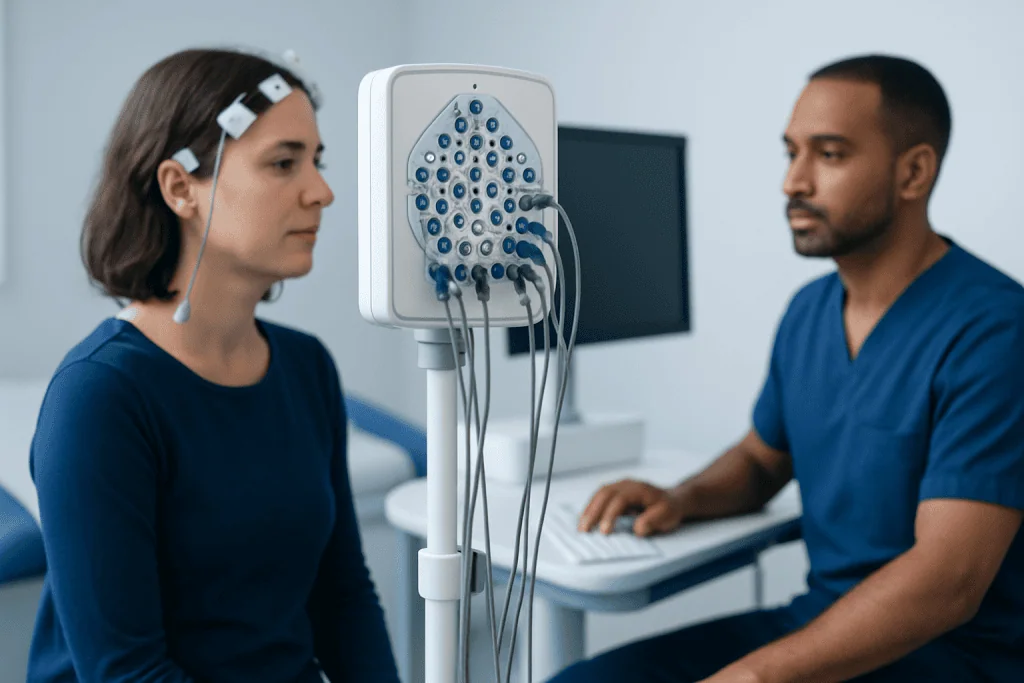
Clinical neurophysiology can help investigate a wide range of conditions affecting the central and peripheral nervous system. Brain-related tests such as EEG are often used when seizures are suspected and may support evaluation of epilepsy, episodes of altered awareness, blackouts, or unexplained confusion. EEG may also be used in some cases of encephalopathy, sleep-related events, or after head injury when doctors need more information about brain activity.
Tests of nerves and muscles, especially EMG and nerve conduction studies, are commonly used when there is weakness, muscle wasting, numbness, tingling, burning pain, or suspected nerve compression. These studies can help evaluate conditions such as peripheral neuropathy, carpal tunnel syndrome, radiculopathy from spine problems, motor neuron disorders, and some muscle diseases. They may also help distinguish whether symptoms come mainly from the muscle, the nerve, the nerve root, or the connection between nerve and muscle.
Evoked potential studies may be used when doctors want to assess how signals travel along specific pathways, such as visual, auditory, or sensory routes. This can be useful in selected cases of optic nerve disease, demyelinating disorders, or spinal cord pathway problems. Sleep-related neurophysiology tests may support the assessment of parasomnias, nocturnal seizures, or other events that happen during sleep.
Importantly, these tests usually do not provide answers in isolation. Their value is greatest when interpreted together with a person’s symptoms, examination findings, and other investigations. A normal result can also be helpful, because it may rule out certain conditions and guide the next steps in care.
Main Types of Tests Used in Clinical Neurophysiology
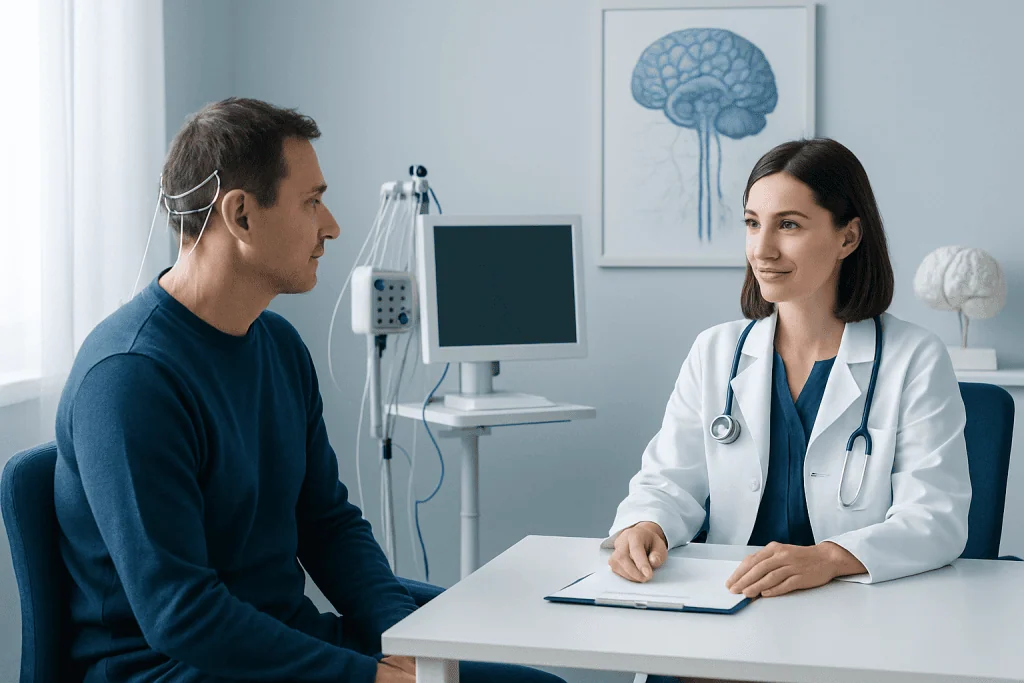
Electroencephalography, or EEG, records the brain’s electrical activity using small sensors placed on the scalp. It is painless and often used to assess seizures, staring spells, episodes of loss of consciousness, and some sleep or brain function concerns. Depending on the reason for testing, an EEG may be brief, prolonged, performed after sleep deprivation, or combined with video monitoring.
Electromyography and nerve conduction studies are often performed together. Nerve conduction studies use small electrical impulses to see how fast and how strongly nerves carry signals. EMG involves inserting a very thin needle electrode into selected muscles to assess their electrical activity at rest and during movement. These tests are widely used to investigate nerve injury, trapped nerves, neuromuscular junction disorders, and muscle disease. In some cases, doctors may pair these findings with imaging such as MRI scanning if there is concern about the spine or brain.
Evoked potentials measure the nervous system’s response to a specific stimulus, such as a visual pattern, a sound, or a mild touch. They help evaluate whether signals are being delayed or disrupted along a pathway. Other specialized studies may include autonomic testing for dizziness or abnormal sweating, and intraoperative neurophysiological monitoring during certain surgeries to help protect nerve function.
Some patients also undergo sleep-related tests when symptoms occur overnight or are linked with fatigue and disrupted sleep. Depending on the clinical question, this may include neurophysiological monitoring as part of a broader sleep evaluation, sometimes alongside sleep study testing. The choice of test depends on the symptom pattern and the doctor’s assessment.
What to Expect Before, During, and After Testing
Preparation depends on the specific test. For an EEG, patients are often advised to arrive with clean, dry hair and avoid hair sprays, oils, or gels so the scalp electrodes can adhere properly. For EMG and nerve conduction studies, it usually helps to avoid applying lotions or creams to the skin on the day of the appointment. A doctor may also review medicines, because a small number can affect test interpretation; medications should only be adjusted if the healthcare team specifically advises it.
During an EEG, small sensors are attached to the scalp, and the patient may be asked to rest quietly, breathe deeply, or look at flashing lights. The test is generally painless. During nerve conduction studies, brief electrical pulses are delivered to the skin, which can feel unusual or mildly uncomfortable but are usually well tolerated. During EMG, the thin needle electrode may cause brief discomfort similar to an injection or muscle cramp.
Most tests are done as outpatient procedures, and people usually go home the same day. After an EMG, a few muscles may feel sore for a short time, but serious side effects are uncommon. Patients can often return to normal activities unless told otherwise. Results may be discussed on the same day in some clinics, but formal interpretation often takes place after the specialist reviews the complete study in context.
For many people, knowing what the test is for reduces anxiety. These studies are not designed to “catch someone out”; they are tools to understand why symptoms are happening. Asking questions before the appointment can help patients feel more prepared and comfortable.
How Doctors Interpret the Results
Clinical neurophysiology results are interpreted by trained specialists who look for patterns rather than single numbers alone. In EEG, for example, the doctor evaluates the background rhythm, whether there are abnormal discharges, and how the brain responds during the recording. In EMG and nerve conduction studies, the specialist considers whether the findings suggest damage to a nerve, a muscle disorder, a disorder affecting the nerve root, or a problem at the neuromuscular junction.
Abnormal results do not automatically point to one disease, and normal results do not always rule every condition out. Some disorders are intermittent, very early, or affect areas not captured during a particular study. For that reason, findings are interpreted together with the medical history, physical examination, and other tests such as blood work or CT scanning when needed.
The results also help guide treatment planning. They may show whether symptoms are likely due to a reversible compression neuropathy, an inflammatory nerve problem, an inherited condition, or a brain-related electrical disturbance. In follow-up care, repeat studies may sometimes be used to monitor change over time, evaluate recovery, or assess the effect of treatment.
Benefits, Limitations, and Safety
One of the main benefits of clinical neurophysiology is that it offers direct information about nervous system function. This can make diagnosis more precise and can prevent unnecessary treatments by clarifying the source of symptoms. It is especially useful when symptoms are difficult to describe, fluctuate, or overlap between several possible conditions.
These tests are generally safe. EEG uses surface electrodes and does not expose the patient to radiation. Nerve conduction studies and EMG are also considered safe when performed by qualified professionals, though EMG may cause temporary soreness or minor bruising in some people. Patients should tell the team about bleeding disorders, implanted devices, pregnancy, or medicines that affect bleeding so the test can be planned safely.
At the same time, clinical neurophysiology has limitations. Results may be normal even when symptoms are real, particularly if the problem is intermittent or outside the scope of the test. The studies also do not replace a full neurological assessment. Their best use is as part of a broader diagnostic process guided by a clinician who understands the person’s overall health picture.
When to See a Doctor
A person should seek medical advice if they have repeated fainting episodes, unexplained blackouts, possible seizures, persistent numbness or tingling, muscle weakness, tremor, burning pain, or symptoms that interfere with sleep, walking, or daily activities. Evaluation is also important when symptoms are progressing, affecting one side of the body, or accompanied by changes in speech, vision, memory, or coordination.
Urgent medical attention is needed for sudden severe weakness, facial drooping, loss of speech, a first prolonged seizure, repeated seizures without recovery, severe head injury, or a sudden change in consciousness. These symptoms can have several causes and should be assessed promptly. Early diagnosis may improve treatment planning and reduce unnecessary uncertainty.
In specialist centers, clinical neurophysiology is often part of a multidisciplinary neurology service. Near the end of the diagnostic journey, some patients may benefit from coordinated care involving neurologists, neurophysiologists, radiologists, rehabilitation experts, and other specialists. Acibadem International’s multidisciplinary specialists and JCI-accredited hospitals diagnose and treat neurological conditions for international patients when this level of assessment is needed.
Frequently asked questions
Is clinical neurophysiology the same as brain imaging?
No. Clinical neurophysiology measures how the nervous system functions electrically, while imaging tests such as MRI or CT mainly show structure. Doctors often use both because they answer different but complementary questions.
Are EEG and EMG painful?
An EEG is usually painless because the electrodes sit on the scalp surface. EMG and nerve conduction studies can cause brief discomfort, but most people tolerate them well and can return to normal activities afterward.
How long do neurophysiology tests take?
The length depends on the test and the reason it is being done. A routine EEG may take under an hour, while EMG and nerve conduction studies can vary depending on how many nerves and muscles need to be tested.
Can clinical neurophysiology diagnose epilepsy?
It can provide important evidence, especially through EEG, but diagnosis is not based on the test alone. Doctors also consider the person’s description of events, witness accounts, examination findings, and sometimes imaging or longer-term monitoring.
Do I need to stop my medications before testing?
Usually, medications should not be stopped unless the healthcare team specifically advises it. Some medicines can affect results, so it is important to bring an up-to-date medication list to the appointment.
What if my test result is normal but I still have symptoms?
A normal result does not always mean that nothing is wrong. Some problems are intermittent, early, or outside the scope of a particular test, so the doctor may recommend follow-up, repeat testing, or different investigations.
References
- World Health Organization
- National Institute of Neurological Disorders and Stroke
- International Federation of Clinical Neurophysiology
- American Clinical Neurophysiology Society
This article is for general information only and is not a substitute for professional medical advice. Please consult a qualified doctor about your individual situation.
Clinical Neurophysiology in Turkey — costs, top hospitals & a free quote
JCI-accredited · board-certified surgeons · reply within 24h
Add us as a Preferred Source to see more of our trusted health content across Google Search, AI Overviews and Discover.

Neurology
Diagnosis and treatment of disorders of the brain, spinal cord, nerves and muscles.
51 specialists in this unit