Clinical Neurophysiology Explained: How Brain, Nerve, and Muscle Function Are Evaluated

Clinical neurophysiology evaluates electrical activity in the brain, nerves, and muscles. Common tests include EEG, EMG, nerve conduction studies, evoked potentials, and sleep studies.
Key Takeaways
- Clinical neurophysiology evaluates electrical activity in the brain, nerves, and muscles.
- Common tests include EEG, EMG, nerve conduction studies, evoked potentials, and sleep studies.
- These tests help diagnose or clarify conditions affecting the nervous system and muscles.
- Most neurophysiology tests are outpatient procedures and are generally well tolerated.
- Results are interpreted together with symptoms, physical examination, and imaging when needed.
Clinical neurophysiology is a medical field that measures how the brain, spinal cord, nerves, and muscles work. It helps doctors investigate symptoms such as seizures, weakness, numbness, tingling, sleep problems, and changes in movement or sensation.
Overview of Clinical Neurophysiology
Clinical neurophysiology is a branch of medicine that studies how the nervous system and muscles function in real time. Rather than focusing only on anatomy, it looks at electrical signals and responses in the brain, spinal cord, peripheral nerves, and muscles. This helps doctors understand whether these systems are working normally, too slowly, too quickly, or in an uncoordinated way.
It is often used when a person has symptoms that are difficult to explain with routine examination alone. Examples include fainting episodes, suspected seizures, muscle weakness, numbness, tingling, tremor, balance problems, unusual movements, memory-related events, or sleep disturbances. Neurophysiological tests can provide objective information that supports a diagnosis or helps narrow down the possibilities.
Clinical neurophysiology does not usually replace other medical tests. Instead, it works alongside a neurological examination, blood tests, and imaging such as MRI or CT when appropriate. By combining these sources of information, doctors can build a clearer picture of what is happening and choose the most suitable next steps for care.
What Does It Evaluate?
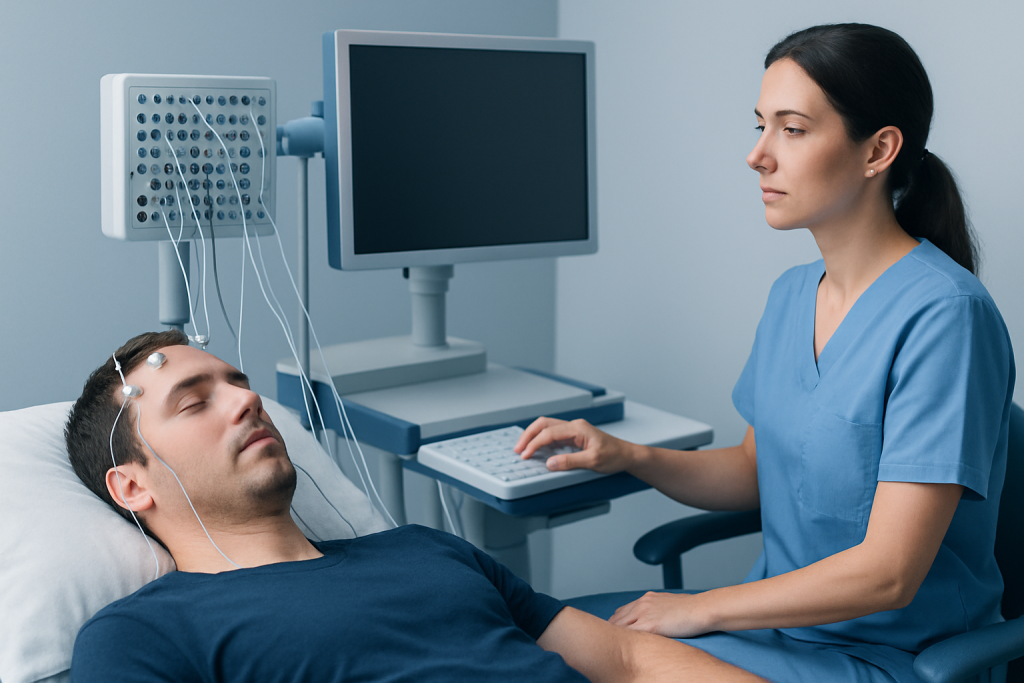
The main aim of clinical neurophysiology is to evaluate how electrical messages travel through the nervous system. The brain produces electrical activity continuously, and nerves carry signals between the brain, spinal cord, organs, skin, and muscles. Muscles then respond to those signals by contracting in a coordinated way. If any part of this chain is affected, symptoms may develop.
Different tests focus on different parts of the system. Some assess brain wave patterns, while others measure how quickly nerves conduct impulses or how muscles respond. Certain studies also test how the brain reacts to sound, touch, or visual signals. These measurements can identify whether a problem lies in the central nervous system, peripheral nerves, the neuromuscular junction, or the muscles themselves.
Clinical neurophysiology may be helpful in the evaluation of conditions such as epilepsy, peripheral neuropathy, nerve compression syndromes, muscle diseases, sleep disorders, and some movement disorders. It can also help monitor known neurological conditions over time and guide treatment planning.
Common Neurophysiology Tests
One of the best-known tests is the electroencephalogram, or EEG. EEG records the brain’s electrical activity using small sensors placed on the scalp. It is commonly used when seizures are suspected, but it may also help assess episodes of confusion, unexplained loss of awareness, and some sleep-related events. In many settings, doctors may recommend an EEG test as part of a broader neurological evaluation.
Electromyography, or EMG, examines muscle activity, often together with nerve conduction studies. During nerve conduction testing, small electrical pulses are used to measure how fast and how strongly signals travel along a nerve. EMG uses a very fine recording needle in selected muscles to assess how those muscles behave at rest and during movement. These tests are often requested for numbness, tingling, weakness, muscle cramps, or suspected nerve injury, and may be arranged as EMG and nerve testing.
Evoked potential studies measure how the nervous system responds to specific stimuli such as visual patterns, sounds, or gentle electrical stimulation. Sleep studies may be used when there is concern about unusual movements during sleep, daytime sleepiness, or breathing-related sleep problems. In selected cases, doctors may also suggest longer-term monitoring such as video EEG monitoring to capture events as they happen, especially when symptoms are intermittent.
- EEG: records brain wave activity
- EMG: assesses muscle electrical activity
- Nerve conduction studies: evaluate signal speed and strength in nerves
- Evoked potentials: test responses to sensory input
- Sleep studies: assess sleep-related brain and body function
Symptoms and Situations That May Lead to Testing
Doctors may request clinical neurophysiology testing when symptoms suggest a problem in the brain, nerves, or muscles. The tests themselves do not diagnose every condition on their own, but they can provide very useful clues. For many people, they help explain why symptoms are happening and whether the cause is likely to be neurological, muscular, or related to another body system.
Common symptoms that may prompt testing include episodes of staring or unresponsiveness, jerking movements, fainting-like events, persistent headaches with neurological features, weakness in the hands or legs, loss of balance, numbness, burning sensations, facial twitching, and changes in speech or swallowing. Testing may also be useful after injuries, in suspected nerve entrapment, or when symptoms develop gradually over time.
In children and adults, clinical neurophysiology can support the assessment of developmental concerns, sleep-related behaviors, unexplained daytime fatigue, and involuntary movements. In some cases, it is also used to monitor disease progression or treatment response, especially when symptoms are changing or when a diagnosis remains uncertain after routine evaluation.
How Doctors Prepare, Perform, and Interpret These Tests
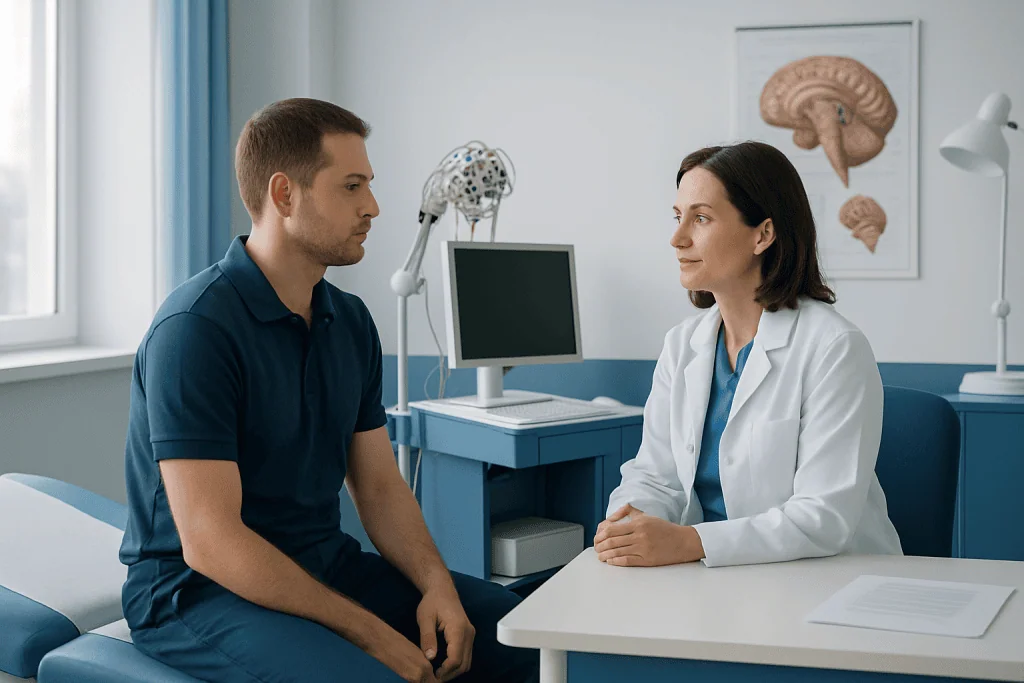
Preparation depends on the specific test. Before an EEG, patients may be advised to arrive with clean, dry hair and avoid hair products. For EMG and nerve conduction studies, it is often helpful to avoid heavy lotions on the skin. The medical team usually reviews current symptoms, medications, relevant medical history, and any previous imaging or test results before the study begins.
Most neurophysiology tests are performed on an outpatient basis. EEG is painless and noninvasive, with sensors placed on the scalp to record signals. Nerve conduction studies involve brief electrical pulses, which may feel unusual but are usually short-lived. EMG can cause temporary discomfort because a fine recording needle is inserted into selected muscles. The team explains each step carefully so the patient knows what to expect.
Results are interpreted by a doctor trained in clinical neurophysiology, usually together with the patient’s symptoms and examination findings. An abnormal result may show where a problem is located, how severe it may be, and whether it appears acute or long-standing. However, normal results can also be important, because they may help rule out certain conditions and guide the next stage of investigation.
What the Results Can Help Diagnose
Clinical neurophysiology helps doctors investigate a wide range of neurological and neuromuscular conditions. EEG can support the evaluation of seizures and other events involving altered awareness. It may also help classify seizure types, which can influence treatment planning. This is especially useful when symptoms are brief, intermittent, or not easily observed during a clinic visit.
EMG and nerve conduction studies can help diagnose peripheral neuropathy, nerve compression problems such as carpal tunnel syndrome, radiculopathy related to the spine, neuromuscular junction disorders, and some muscle diseases. They may also help determine whether weakness is caused by a nerve problem, a muscle condition, or a disorder affecting communication between nerve and muscle.
Evoked potentials and related studies can add information in conditions that affect sensory pathways. Sleep-related neurophysiology tests may help evaluate seizures during sleep, abnormal movements, and some sleep disorders. Sometimes these studies are part of the work-up for broader neurological conditions such as Parkinson’s disease or other disorders that affect movement, awareness, or coordination, though they are interpreted within the full clinical context.
Benefits, Limits, and Safety
The main benefit of clinical neurophysiology is that it provides direct functional information. Imaging tests show structure, but neurophysiology shows how signals are actually behaving. This can be especially valuable when symptoms are real but imaging findings are unclear, mild, or absent. It can also help localize a problem more precisely and support more tailored treatment decisions.
These tests do have limitations. Some neurological symptoms come and go, so an event may not occur during a short recording period. Certain results are nonspecific and must be interpreted alongside examination findings. A normal test does not always exclude a condition, and an abnormal test does not always point to one single diagnosis. This is why careful interpretation by an experienced specialist is important.
Most clinical neurophysiology tests are considered safe. EEG does not expose the body to radiation. Nerve conduction studies and EMG are generally well tolerated, though temporary discomfort or minor soreness can occur. If prolonged monitoring is needed, doctors explain the purpose, expected duration, and any practical considerations in advance. For international patients seeking advanced evaluation, Acibadem International’s multidisciplinary specialists and JCI-accredited hospitals provide diagnosis and treatment in this field.
When to See a Doctor and Next Steps
A person should consider medical advice if they have repeated episodes of loss of awareness, unexplained shaking, progressive numbness, ongoing tingling, weakness, trouble walking, muscle wasting, or symptoms that interfere with daily life. Sudden neurological symptoms such as one-sided weakness, severe difficulty speaking, or loss of consciousness need urgent medical assessment. Early evaluation can help clarify whether neurophysiology testing is likely to be useful.
After the tests, the next steps depend on the findings. Some people may only need reassurance and follow-up. Others may need medication changes, rehabilitation, sleep assessment, further imaging, or referral to a neurologist, neurosurgeon, or another specialist. In selected cases, more advanced diagnostic procedures may be recommended to better understand difficult or complex symptoms.
Good preparation for an appointment can be very helpful. Keeping a record of symptoms, noting when they happen, how long they last, and what was happening beforehand can give valuable context. Bringing a medication list and details of previous test results may also help the care team decide which neurophysiology study, if any, is the most appropriate choice.
Frequently asked questions
What is clinical neurophysiology in simple terms?
Clinical neurophysiology is the medical study of how the brain, nerves, and muscles work. It uses electrical recordings and response tests to help doctors understand symptoms such as seizures, weakness, numbness, and sleep-related problems.
Is an EEG the same as clinical neurophysiology?
No. EEG is one test within clinical neurophysiology. The field also includes EMG, nerve conduction studies, evoked potentials, and some sleep-related tests.
Are neurophysiology tests painful?
Many neurophysiology tests are painless or cause only mild discomfort. EEG is noninvasive and painless, while nerve conduction studies and EMG may feel briefly uncomfortable but are usually well tolerated.
How long do these tests usually take?
The length depends on the test being performed. A routine EEG may take less than an hour, while EMG and nerve conduction studies often take longer depending on the area being examined. Extended monitoring or sleep studies can last several hours or overnight.
Can neurophysiology tests confirm a diagnosis by themselves?
Sometimes they provide strong evidence, but they are usually interpreted together with symptoms, examination findings, and imaging or laboratory tests. They are one important part of the diagnostic process rather than a complete answer on their own.
When might a doctor order EMG and nerve conduction studies?
Doctors commonly order these tests for weakness, tingling, numbness, suspected nerve compression, muscle cramps, or possible nerve injury. They help show whether the main problem is in the nerve, muscle, or the connection between them.
References
- World Health Organization
- National Institute of Neurological Disorders and Stroke
- International Federation of Clinical Neurophysiology
- American Clinical Neurophysiology Society
This article is for general information only and is not a substitute for professional medical advice. Please consult a qualified doctor about your individual situation.
Clinical Neurophysiology in Turkey — costs, top hospitals & a free quote
JCI-accredited · board-certified surgeons · reply within 24h
Add us as a Preferred Source to see more of our trusted health content across Google Search, AI Overviews and Discover.

Neurology
Diagnosis and treatment of disorders of the brain, spinal cord, nerves and muscles.
51 specialists in this unitMore from the Health Library



Related Specialists

Büşra Zeybek
Physical Medicine & Rehabilitation
Assoc. Prof. Dr. Özgür Timurkaynak
Dermatology
Prof. Dr. İsmet Tamer
Check Up & Wellness Center
Dr. Hacer Dönmez
Internal Medicine