Cochlea Function: An Evidence-Based Guide for Patients

The cochlea is the hearing organ of the inner ear. Its main job is to turn sound vibrations into nerve signals the brain can interpret.
Key Takeaways
- The cochlea is the hearing organ of the inner ear.
- Its main job is to turn sound vibrations into nerve signals the brain can interpret.
- Tiny hair cells inside the cochlea help detect different pitches and sound intensity.
- Damage to cochlear hair cells can lead to permanent sensorineural hearing loss.
- Hearing changes, tinnitus, dizziness, or sudden hearing loss should be assessed by a doctor.
Cochlea function is the process by which the inner ear changes sound vibrations into electrical signals that travel to the brain. This small, spiral-shaped structure is essential for hearing clarity, pitch recognition, and the ability to understand speech.
Overview: what cochlea function means
Cochlea function refers to the way the cochlea, a spiral-shaped part of the inner ear, converts sound into electrical messages for the brain. In simple terms, the cochlea allows a person not just to hear that a sound exists, but also to recognize differences in pitch, loudness, and speech detail.
The cochlea sits deep in the inner ear and is filled with fluid and specialized sensory cells. When sound enters the ear, mechanical vibrations eventually reach the cochlea, where those vibrations are transformed into nerve impulses. The brain then interprets these impulses as meaningful sounds such as voices, music, or environmental noise.
This function is highly precise. Different parts of the cochlea respond to different sound frequencies, helping the brain distinguish a high-pitched whistle from a low-pitched drum. Because the cochlea is so specialized, even small injuries or diseases affecting it can change hearing quality.
How the cochlea works in the hearing process
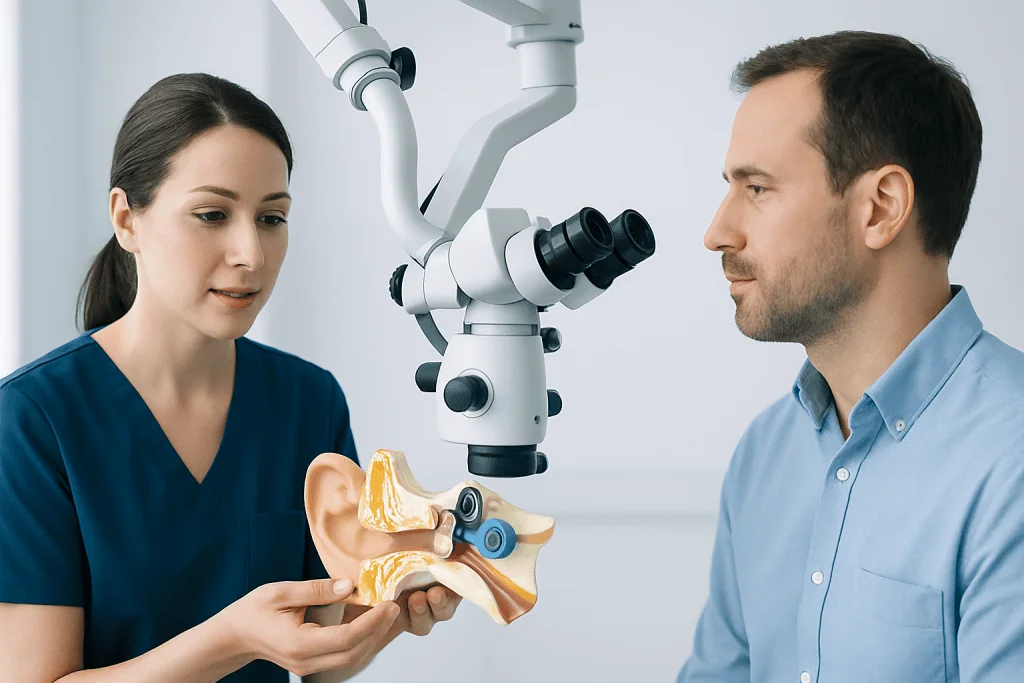
Hearing begins when sound waves enter the outer ear and travel down the ear canal to the eardrum. The eardrum vibrates, and those vibrations are passed through the tiny middle-ear bones to the oval window, an opening that leads into the cochlea.
Inside the cochlea, these vibrations create waves in the inner-ear fluid. The movement bends delicate sensory hair cells located on the basilar membrane within the organ of Corti. When the hair cells bend, they open ion channels and generate electrical signals.
These signals are carried by the auditory nerve to the brainstem and then to hearing centers in the brain. This is the key part of cochlea function: converting physical sound energy into neural information the brain can understand.
The cochlea also separates sounds by frequency in an orderly way. High-frequency sounds stimulate one end of the cochlea, while low-frequency sounds stimulate the other. This organized mapping is one reason people can tell the difference between many tones and speech sounds.
Parts of the cochlea and what they do

Although very small, the cochlea has several important structures that work together. It contains fluid-filled chambers, membranes, sensory hair cells, and supporting cells. Each part contributes to accurate hearing.
The basilar membrane moves in response to sound vibrations, and the organ of Corti sits on top of it. Within the organ of Corti are inner and outer hair cells. Inner hair cells are mainly responsible for sending sound information to the brain, while outer hair cells help fine-tune and amplify sound.
The cochlear fluids, called perilymph and endolymph, help transmit movement through the inner ear. The stria vascularis helps maintain the chemical environment needed for hair cells to function properly. The auditory nerve then carries the final electrical signals toward the brain.
- Inner hair cells: convert movement into nerve signals
- Outer hair cells: sharpen sound sensitivity and frequency tuning
- Basilar membrane: vibrates in a frequency-specific pattern
- Auditory nerve: sends hearing information to the brain
Why cochlea function matters for daily life
Healthy cochlea function supports much more than basic hearing. It helps a person follow conversation, especially in noisy places, recognize familiar voices, appreciate music, and detect warning sounds such as alarms or traffic. Good cochlear performance is especially important for speech understanding.
When cochlea function is reduced, hearing may become muffled, distorted, or unclear. Some people can hear sounds but struggle to understand words, particularly higher-pitched consonants. Others notice ringing in the ears, known as tinnitus, which may occur alongside cochlear damage.
Cochlear problems are also a common cause of hearing loss, especially sensorineural hearing loss. In some cases, inner-ear disorders that affect nearby structures can also be associated with dizziness or balance symptoms, although the cochlea itself is mainly responsible for hearing rather than balance.
What can affect cochlea function
Several medical and environmental factors can interfere with cochlea function. One of the most common is aging, which can gradually damage hair cells and reduce hearing sensitivity over time. Long-term noise exposure, such as loud music, industrial noise, or repeated use of high-volume headphones, can also harm the cochlea.
Infections, reduced blood flow, certain medications, head trauma, and inherited conditions may also affect the inner ear. Once cochlear hair cells are significantly damaged, they usually do not regenerate in humans. That is why prevention and early assessment are important.
Some disorders involve the inner ear more broadly and may affect both hearing and balance. Examples include vertigo related to inner-ear conditions and tinnitus, which may appear as ringing, buzzing, or hissing sounds. A doctor can help determine whether symptoms are linked to the cochlea, the auditory nerve, or another part of the hearing pathway.
- Aging-related hearing changes
- Repeated or sudden loud noise exposure
- Ear or viral infections affecting the inner ear
- Ototoxic medications
- Head injury or barotrauma
- Genetic or congenital causes
How doctors evaluate cochlear problems
Doctors assess possible cochlear dysfunction by combining a symptom history, ear examination, and hearing tests. A person may describe muffled hearing, difficulty hearing speech in background noise, one-sided hearing loss, tinnitus, or sudden changes in hearing. These details help guide the evaluation.
Common tests include pure-tone audiometry, speech discrimination testing, and tympanometry. Otoacoustic emissions may help assess outer hair cell function, while auditory brainstem response testing can evaluate how sound signals travel along the hearing pathway. In some situations, imaging such as MRI may be recommended to rule out other causes.
If hearing loss is confirmed, the pattern on testing can help show whether the issue is likely conductive, sensorineural, or mixed. Cochlear problems usually cause sensorineural hearing loss. Early assessment is especially important if symptoms appear suddenly, affect only one ear, or are associated with severe dizziness.
Treatment options and hearing support
Treatment depends on the cause of the problem rather than on the cochlea alone. If a temporary condition is affecting hearing, such as inflammation or an underlying illness, treatment may improve hearing function. If hair cell damage is permanent, the goal usually becomes improving communication and supporting hearing as effectively as possible.
For many people, hearing aids can amplify sounds and improve speech understanding. When severe cochlear damage limits the benefit of standard amplification, cochlear implants may be considered. These devices bypass damaged parts of the cochlea and directly stimulate the auditory nerve.
Some patients also benefit from hearing rehabilitation, communication strategies, and sound therapy for tinnitus. Protection from additional noise exposure is an important part of treatment planning. In complex cases, evaluation by ENT, audiology, and neuro-otology specialists can help tailor care to the person’s hearing needs.
Near the end of the care pathway, some international patients may seek multidisciplinary assessment at centers such as Acibadem International, where JCI-accredited hospitals evaluate and treat hearing conditions with coordinated specialist input.
Prevention, self-care, and when to seek medical care
Protecting cochlea function starts with reducing avoidable damage. Using ear protection in loud environments, lowering headphone volume, limiting prolonged noise exposure, and following medication guidance can all help preserve hearing. Managing cardiovascular health and chronic conditions may also support inner-ear health because the cochlea depends on a healthy blood supply.
People who notice gradual hearing changes should arrange a hearing assessment rather than waiting for symptoms to interfere with daily life. Family members often notice communication difficulties before the affected person does, especially when speech must be repeated frequently or television volume increases over time.
Medical care should be sought promptly for sudden hearing loss, hearing loss in one ear, significant new tinnitus, ear fullness with rapid hearing change, or dizziness accompanied by hearing symptoms. Early evaluation can help identify urgent problems and guide timely treatment. Patients who need advanced options may be referred for specialist services such as ear surgery when appropriate.
Frequently asked questions
What is the main function of the cochlea?
The main function of the cochlea is to convert sound vibrations into electrical signals that travel through the auditory nerve to the brain. This allows the brain to recognize sound, speech, pitch, and loudness.
Is the cochlea responsible for balance too?
The cochlea is mainly responsible for hearing, not balance. Balance is handled by nearby inner-ear structures called the vestibular system, although some inner-ear conditions can affect both hearing and balance at the same time.
Can damaged cochlear hair cells grow back?
In humans, cochlear hair cells generally do not regenerate once they are significantly damaged. This is why hearing loss caused by inner-ear hair cell injury is often permanent and why hearing protection is important.
What symptoms may suggest a cochlear problem?
Possible symptoms include muffled hearing, trouble understanding speech, ringing in the ears, sensitivity to loud sounds, or hearing loss in one or both ears. Some people also notice difficulty hearing high-pitched sounds or following conversation in noisy settings.
How is cochlear dysfunction diagnosed?
Doctors usually diagnose cochlear dysfunction through hearing tests, symptom review, and an ear examination. Additional tests such as otoacoustic emissions, auditory brainstem response, or MRI may be used when the cause is unclear or symptoms are sudden or one-sided.
Can people hear without a normally working cochlea?
A normally working cochlea is essential for natural hearing because it converts sound into nerve signals. If it is severely damaged, hearing may be greatly reduced, but devices such as hearing aids or cochlear implants can help many patients communicate more effectively.
References
- National Institute on Deafness and Other Communication Disorders
- American Speech-Language-Hearing Association
- Merck Manual Consumer Version
- Mayo Clinic
- World Health Organization
This article is for general information only and is not a substitute for professional medical advice. Please consult a qualified doctor about your individual situation.
Explore treatments in Turkey — costs, top hospitals & a free quote
JCI-accredited · board-certified surgeons · reply within 24h
Add us as a Preferred Source to see more of our trusted health content across Google Search, AI Overviews and Discover.