

Cochlear Implant Audiology: An Evidence-Based Patient Guide
A cochlear implant does not restore natural hearing, but it can provide useful access to sound for eligible children and adults with significant hearing loss. Audiologists perform detailed hearing assessments, help determine candidacy, activate and program the device, and support listening rehabilitation.
Key Takeaways
- A cochlear implant does not restore natural hearing, but it can provide useful access to sound for eligible children and adults with significant hearing loss.
- Audiologists perform detailed hearing assessments, help determine candidacy, activate and program the device, and support listening rehabilitation.
- Candidacy depends on hearing test results, benefit from hearing aids, communication needs, medical factors, and personal goals.
- The external sound processor must be removed for swimming, showering, and hair washing unless a manufacturer-approved waterproof accessory is being used.
- Benefits may include improved speech understanding and communication, while limitations include surgery, adjustment time, and variable hearing outcomes.
Cochlear implant audiology is the specialized assessment, programming, and hearing rehabilitation that helps people use a cochlear implant safely and effectively. An audiologist works closely with ENT surgeons, speech and language professionals, and the patient before surgery and throughout long-term follow-up.
Overview: what cochlear implant audiology involves
Cochlear implant audiology is the part of hearing care focused on assessing whether a cochlear implant may help, preparing a person for treatment, programming the device after surgery, and supporting long-term listening progress. A cochlear implant is an electronic hearing device for people with severe to profound sensorineural hearing loss who receive limited benefit from appropriately fitted hearing aids.
Unlike a hearing aid, which makes sound louder, a cochlear implant bypasses damaged parts of the inner ear and directly stimulates the auditory nerve with electrical signals. The brain learns to interpret these signals as meaningful sound. Hearing with an implant is therefore different from natural hearing, and improvement usually develops over time with regular use, programming appointments, and rehabilitation.
A cochlear implant team commonly includes an ENT or otologic surgeon, cochlear implant audiologist, speech and language therapist or auditory-verbal specialist, radiologist, and other professionals as needed. This collaborative approach helps ensure that medical suitability, communication goals, and practical needs are all considered.
How does a cochlear implant work?
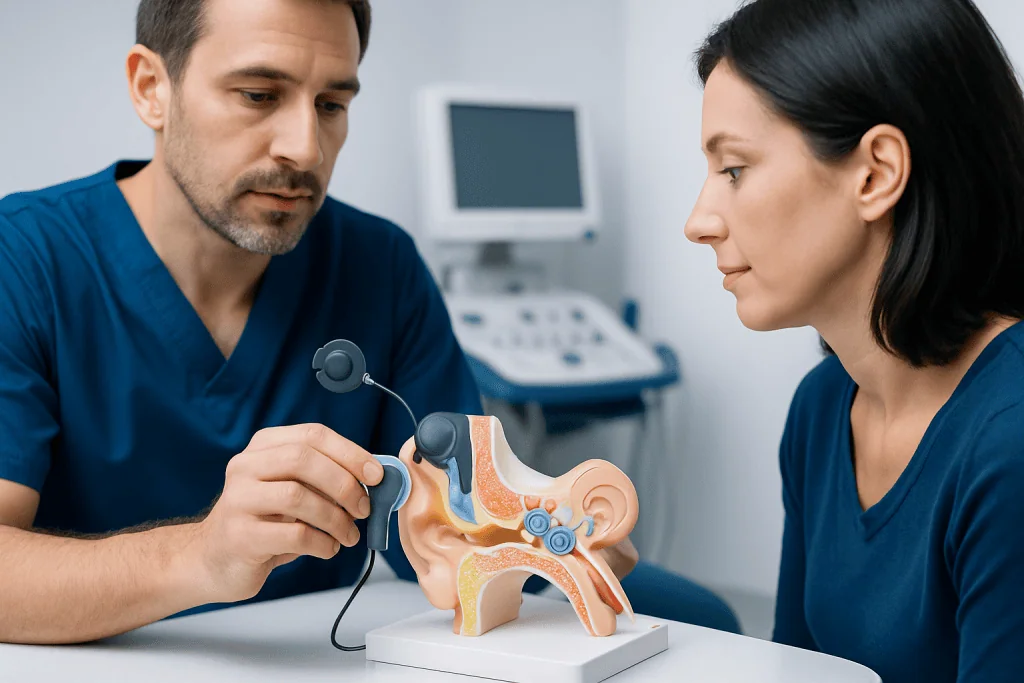
The system has internal and external components. During surgery, an internal receiver-stimulator is placed under the skin behind the ear, and a thin electrode array is inserted into the cochlea. The external part generally includes a microphone, sound processor, and transmitting coil held in place over the internal implant by a magnet.
The microphone collects sound, and the processor converts it into coded signals. These signals pass through the skin to the internal device, which sends controlled electrical stimulation along the electrode array. The auditory nerve carries this information to the brain, where it can be recognized as sound.
The implant is usually activated after the surgical site has healed. At activation and later appointments, the audiologist adjusts the sound processor settings, often called maps. These settings are individualized to provide sound that is audible, comfortable, and as clear as possible for the user.
Outcomes vary. Many people improve their ability to detect environmental sounds and understand speech, particularly in quiet settings. Some also benefit in more challenging listening environments, but background noise, distance, unfamiliar voices, and music may remain difficult.
What does a cochlear implant audiologist do?
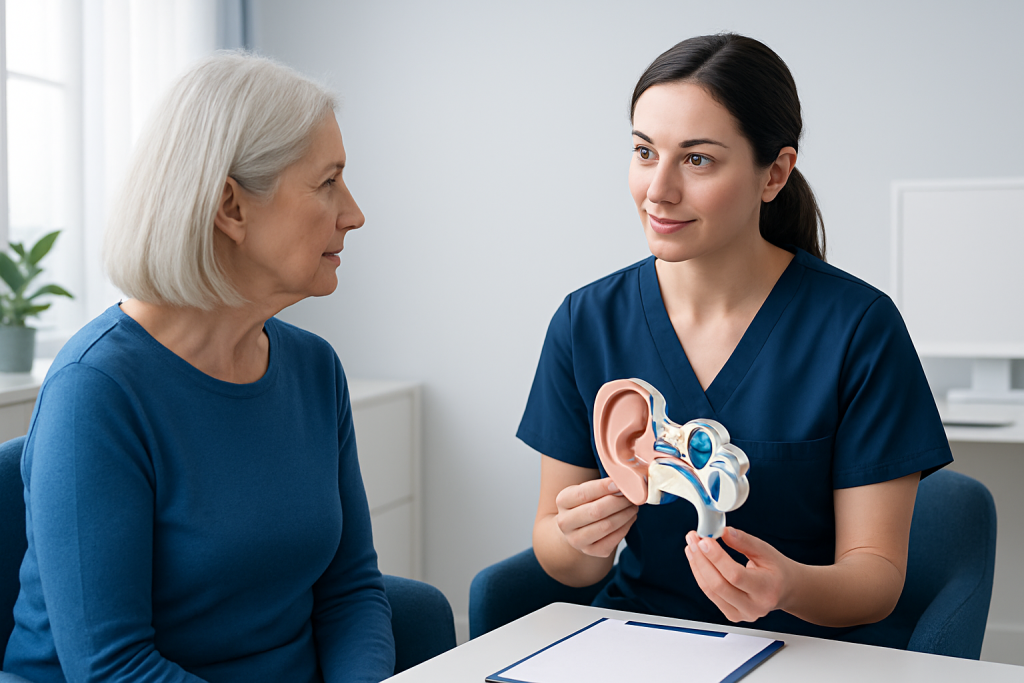
A cochlear implant audiologist is a hearing specialist who provides clinical care before and after implantation. Before surgery, the audiologist completes a cochlear implant evaluation, reviews hearing aid benefit, discusses realistic expectations, and contributes to the team decision about candidacy. This cochlear implant eval is more detailed than a routine hearing test because it assesses both hearing thresholds and functional communication.
After surgery, the audiologist activates the sound processor and performs mapping appointments. Mapping involves checking responses to sound, setting safe and comfortable stimulation levels, and making adjustments as the brain adapts. Early mappings may be more frequent, with follow-up continuing over the long term.
The audiologist also checks equipment, counsels patients on daily device care, recommends communication strategies, and coordinates rehabilitation. For children, the audiologist works closely with caregivers and educational professionals because consistent sound access and language development support are particularly important.
Professional cochlear implant clinical guidelines and each manufacturer’s cochlear clinical guidance document inform safe evaluation and follow-up. However, a personalized plan remains important because hearing history, anatomy, communication preferences, and daily listening demands differ from person to person.
Candidacy and the cochlear implant evaluation protocol
Cochlear implant candidacy is based on more than one hearing test result. Adults and children may be considered when they have significant sensorineural hearing loss and limited benefit from well-fitted hearing aids. Current cochlear implant guidelines for adults generally emphasize referral for a specialist assessment when hearing aids do not provide enough speech understanding or communication benefit.
A typical cochlear implant evaluation protocol includes a complete hearing assessment, testing of speech understanding with hearing aids, review of hearing aid use, medical and surgical assessment, and imaging of the inner ear when appropriate. The team may also discuss communication style, work or school demands, support at home, and readiness to attend follow-up visits.
Medical imaging, such as CT or MRI, can help the surgeon assess the cochlea and auditory nerve. Some people need additional testing because of prior ear surgery, chronic middle-ear disease, balance concerns, neurological conditions, or complex medical histories. A person can be a candidate for one ear or, in selected circumstances, both ears.
Evaluation is not a commitment to surgery. It is an opportunity to understand the likely advantages, limitations, alternatives, and responsibilities involved. Continued use of hearing aids, assistive listening technology, communication therapy, or other hearing strategies may remain appropriate for some people.
Procedure and recovery timeline
Cochlear implant surgery is usually performed under general anesthesia by an experienced ear surgeon. The surgeon makes an incision behind the ear, places the internal receiver-stimulator, and inserts the electrode array into the cochlea. The exact surgical approach depends on anatomy and the implant system selected.
Most people return home the same day or after a short hospital stay, depending on their health and the surgical plan. Mild pain, swelling, pressure, numbness around the incision, or temporary changes in taste can occur. The surgical team provides individualized instructions about wound care, medicines, activity, and follow-up.
The implant is commonly activated several weeks after surgery, once healing is adequate. Initial sound may seem unusual, mechanical, quiet, or overwhelming. The brain needs time to adapt, and progress often continues over months. Regular mapping and listening practice are central parts of recovery rather than optional extras.
People should ask their team about driving, exercise, air travel, MRI safety, sports, and work plans. Recommendations vary by implant type and individual recovery. The external processor is not normally worn during the operation or until activation, even though the internal implant has already been placed.
Benefits, limitations, and risks
The potential benefit of a cochlear implant is improved access to sound when hearing aids are no longer providing sufficient help. This may support speech understanding, conversations with family and colleagues, awareness of alarms and environmental sounds, telephone use for some people, and participation in work, education, and social life.
What is the downside to cochlear implants? The main limitations are that surgery is required, sound quality is not the same as natural hearing, and benefits cannot be predicted exactly. The device requires lifelong follow-up, external equipment care, periodic programming, and regular listening practice. Some people continue to find speech in noise or music challenging.
As with any surgery, risks include infection, bleeding, dizziness, taste disturbance, facial nerve injury, tinnitus changes, device failure, and the need for further surgery. There can also be loss of any remaining natural hearing in the implanted ear. Serious complications are uncommon, but they should be discussed clearly with the surgical team.
Vaccination against certain bacteria that can cause meningitis may be recommended before implantation, depending on local guidance and personal medical history. The team also reviews MRI conditions because scan safety and preparation requirements vary by device model.
Daily care: what not to do and how to wash hair
What not to do with cochlear implants? People should not immerse the external sound processor in water unless it is specifically designed and prepared for waterproof use. They should avoid dropping or crushing the equipment, using unapproved accessories, or changing settings without guidance. Contact sports, strong impacts near the implant site, and certain workplace exposures may need individual advice.
How do you wash your hair with cochlear implants? The external processor, coil, and other removable external components should usually be taken off before showering or washing hair. The surgical incision must be kept dry until the surgeon confirms it has healed. Once healed, hair can generally be washed normally while the external equipment remains off and safely stored.
Waterproof cases or approved water-use accessories may allow sound processor use during selected activities, but instructions differ by manufacturer and device model. A patient should confirm the correct approach with their audiologist rather than assuming that all components are water resistant.
Good routine care includes drying equipment if it becomes damp, storing it safely overnight as advised, keeping spare batteries or charging options available, and checking cables, microphones, and coils when sound quality changes. The audiology team can help troubleshoot persistent problems.
When to seek medical care
Contact the cochlear implant team promptly after surgery if there is increasing redness, swelling, drainage, fever, severe pain, a wound that opens, sudden facial weakness, persistent vomiting, or significant worsening dizziness. These symptoms do not always indicate a serious problem, but timely assessment is important.
After activation, arrange audiology review if sound suddenly stops, becomes distorted, the processor will not connect, the magnet site becomes painful or irritated, or hearing performance changes unexpectedly. Equipment issues are common and often manageable, but they should be checked rather than ignored.
Urgent medical attention is needed for symptoms that could suggest meningitis, such as severe headache, stiff neck, fever, confusion, unusual sleepiness, or a new rash. Anyone with sudden neurological symptoms should seek emergency care immediately.
Acibadem International’s multidisciplinary ENT, audiology, rehabilitation, and surgical specialists can assess cochlear implant candidates and provide coordinated care for international patients through its JCI-accredited hospitals.
Frequently asked questions
Who may benefit from cochlear implant audiology?
Cochlear implant audiology may benefit adults or children with significant sensorineural hearing loss who have limited benefit from appropriately fitted hearing aids. Eligibility is determined through detailed hearing, medical, and communication assessments rather than by one test alone.
How long does it take to adjust to a cochlear implant?
Adjustment varies widely. Some people notice useful sound awareness early, while speech understanding and listening confidence may develop gradually over several months or longer. Regular processor programming and rehabilitation can support this process.
Will a cochlear implant cure hearing loss?
A cochlear implant does not cure hearing loss or restore natural hearing. It provides electrical sound information to the auditory nerve, which the brain learns to interpret over time.
Can a person wear a hearing aid with a cochlear implant?
Yes. Some people use a hearing aid in the non-implanted ear together with a cochlear implant, often called bimodal hearing. The audiologist can assess whether this approach offers better overall listening than using the implant alone.
Can people have an MRI after cochlear implant surgery?
Many current cochlear implant systems are MRI-conditional, meaning an MRI may be possible under specific conditions. Requirements differ by device model and scan strength, so the radiology department and implant team must verify the device information before any scan.
How often are cochlear implant programming appointments needed?
Appointments are usually more frequent in the first months after activation because settings often need refinement as listening changes. Long-term follow-up is still important, although the schedule becomes individualized based on age, experience, device needs, and hearing goals.
References
- World Health Organization
- American Academy of Otolaryngology–Head and Neck Surgery
- American Speech-Language-Hearing Association
- National Institute on Deafness and Other Communication Disorders
- U.S. Food and Drug Administration
This article is for general information only and is not a substitute for professional medical advice. Please consult a qualified doctor about your individual situation.
Cochlear Implant in Turkey — costs, top hospitals & a free quote
JCI-accredited · board-certified surgeons · reply within 24h
Add us as a Preferred Source to see more of our trusted health content across Google Search, AI Overviews and Discover.

Otorhinolaryngology (ENT)
Care for ear, nose, throat and head-and-neck conditions, including hearing and balance disorders.
126 specialists in this unitMore from the Health Library



Related Specialists
Embriyolog Firuze Sönmez
Vitro Fertilization and Reproductive Medicine Center
Assoc. Prof. Dr. Ali Erhan Kayalar
Neurosurgery
Dr. Ayşe Cennet Sarimehmetoğlu
Cardiology
Dt. Ferah Kuybulu
Oral & Dental Health