Cognitive Therapy Chronic Pain: How It Works, Results and What to Expect

CBT for chronic pain focuses on improving function and coping, even when pain does not disappear completely. Treatment commonly combines education, goal setting, pacing, relaxation and changes in pain-related thinking patterns.
Key Takeaways
- CBT for chronic pain focuses on improving function and coping, even when pain does not disappear completely.
- Treatment commonly combines education, goal setting, pacing, relaxation and changes in pain-related thinking patterns.
- CBT is usually time-limited and involves practicing skills between sessions.
- It can be used alongside medical treatment, physiotherapy, exercise, medication and specialist pain care.
- New severe pain, neurological symptoms, fever or pain after significant injury needs prompt medical assessment.
Cognitive therapy for chronic pain, often delivered as cognitive behavioral therapy (CBT), helps people change unhelpful pain-related thoughts and behaviors while building practical skills for sleep, activity, stress and daily functioning. It does not suggest that pain is imaginary; it addresses the real ways persistent pain affects the nervous system, emotions and quality of life.
Overview: how cognitive therapy supports chronic pain
Cognitive therapy chronic pain care is a structured psychological approach that helps a person respond differently to persistent pain and its effects. The best-known form is cognitive behavioral therapy (CBT). It teaches practical strategies to reduce pain-related distress, improve confidence and support safer participation in meaningful daily activities.
Chronic pain is generally pain that lasts longer than expected healing time, often for three months or more. It may continue after an injury has healed, occur with conditions such as arthritis or migraine, or be linked to changes in how the nervous system processes pain. Pain is real, regardless of whether a clear ongoing tissue injury is found.
CBT does not promise to eliminate all pain and does not tell people that symptoms are “all in the mind.” Instead, it recognizes that pain, sleep, movement, mood, attention and stress can influence one another. By addressing this cycle, CBT may help a person live more fully alongside appropriate medical care.
What does chronic pain feel like?
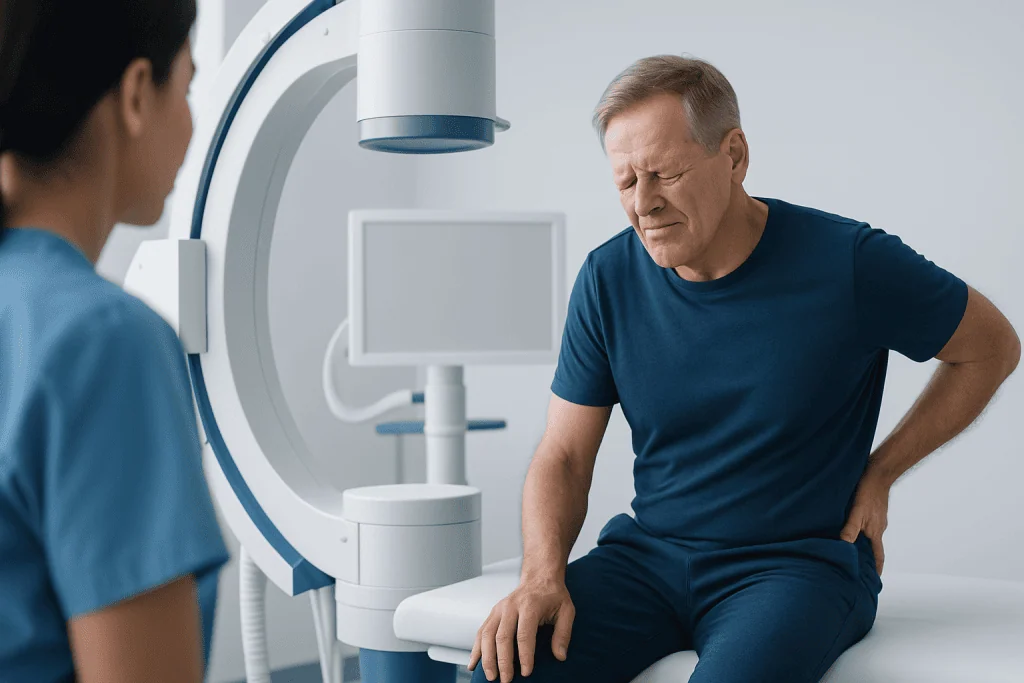
Chronic pain can feel very different from one person to another. It may be aching, burning, throbbing, stabbing, electric, tight, sore or sensitive to touch. Some people have pain in one area, such as the back, neck or joints, while others experience more widespread discomfort, headaches, nerve pain or pelvic pain.
Persistent pain can also affect energy, concentration, sleep and mood. A person may become less active because movement feels threatening or exhausting, then notice stiffness, reduced fitness or lower confidence. Others may push through on better days and need prolonged rest afterward. These patterns are understandable responses to pain, but they can make daily life less predictable.
A careful assessment is important because pain can have many causes. For example, long-lasting back pain may need evaluation alongside related conditions such as chronic back pain. A clinician can help identify possible contributors, rule out urgent problems and create an individualized care plan.
How can cognitive behavioral therapy (CBT) be used to manage chronic pain?

CBT helps people notice the links between pain sensations, thoughts, emotions and actions. For instance, a flare may lead to the thought that activity will always cause damage, followed by fear, avoidance and reduced activity. A therapist helps the person examine this pattern compassionately and test more balanced, realistic responses.
Sessions may include pain education, relaxation or breathing skills, attention-management techniques, sleep strategies and problem solving. CBT often uses graded activity and pacing: activities are planned at manageable levels and increased gradually when appropriate, rather than alternating between overdoing tasks and complete rest. These methods aim to improve consistency and function without dismissing symptoms.
Therapy also supports values-based goals, such as returning to a hobby, taking a short walk, completing household tasks or spending time with family. CBT can be part of a broader rehabilitation plan that may include physical therapy and rehabilitation, medical treatment and lifestyle support. The approach is tailored to the person’s diagnosis, physical abilities and priorities.
Who may benefit and what happens during treatment?
CBT may be suitable for adults or adolescents with pain that has persisted and is interfering with sleep, work, relationships, activity or emotional wellbeing. It can be helpful whether pain has a clearly identified physical cause or is associated with increased nervous-system sensitivity. It is not a replacement for medical assessment, especially when symptoms are new, changing or unexplained.
The first appointment usually includes a discussion of the pain history, medical conditions, medication, activity, sleep, mood and personal goals. The therapist may ask the person to keep a brief record of pain, activities, thoughts and symptoms. This is not to judge the pain; it helps identify patterns that can guide treatment.
During later sessions, the therapist and patient choose one or two skills to practice. Examples include scheduling a brief, manageable activity, planning rest before pain becomes overwhelming, challenging an all-or-nothing thought, or creating a wind-down routine for sleep. Progress is reviewed regularly, and treatment can be adapted if a strategy is not useful.
- Set functional goals that matter to the individual.
- Learn to recognize pain-related stress and avoidance patterns.
- Practice pacing, relaxation and more flexible coping responses.
- Build a plan for flares and longer-term self-management.
How many sessions does CBT usually take?
CBT for chronic pain is commonly delivered as a time-limited program, often over several weekly sessions. Many programs involve approximately 6 to 12 sessions, although the number can be shorter or longer depending on the person’s needs, the treatment format and whether individual, group or online care is used.
Each session usually lasts around 45 to 60 minutes, with practical exercises between appointments. The most meaningful changes often come from regular practice in everyday life, not from discussion alone. Some people benefit from occasional follow-up sessions after the main program ends.
There is no single timeline for improvement. A person may first notice better sleep, less fear of movement or greater ability to complete activities before noticing changes in pain intensity. Reviewing goals and outcomes with the therapist helps ensure that care remains useful and realistic.
Benefits, limits and possible challenges
Research supports CBT as one component of multidisciplinary chronic pain care. Potential benefits include improved coping, better physical functioning, less pain-related distress, improved sleep and a stronger sense of control. For some people, average pain intensity also decreases, but results vary and should not be measured only by a pain score.
CBT is generally low risk when delivered by a qualified professional. However, discussing the impact of pain can bring up difficult emotions, and activity changes may temporarily feel challenging. A therapist should work at a safe pace, coordinate with other clinicians when needed and adjust plans for medical limitations.
CBT may not be sufficient on its own when pain is caused by a condition requiring specific medical, surgical or interventional treatment. It also does not mean medication should be stopped or changed without medical advice. The most appropriate plan may include evaluation by pain medicine, rehabilitation, neurology, rheumatology, orthopedics or mental health professionals.
Is there a cure for chronic pain?
There is not one universal cure for chronic pain because its causes and mechanisms differ. Some pain improves substantially when an underlying condition is treated, while other forms may require longer-term management. The goal is often to reduce suffering, maintain function and improve quality of life rather than to promise complete pain elimination.
Effective care is individualized. It may include treatment of the underlying cause, movement and rehabilitation, sleep support, psychological therapies, medication when appropriate and procedures for selected conditions. For people with persistent pain, building skills to manage flares and stay engaged in valued activities can be an important part of recovery.
Acibadem International’s multidisciplinary specialists and JCI-accredited hospitals support diagnosis and treatment planning for international patients with persistent pain, including coordinated rehabilitation and psychological care where appropriate.
When to seek medical care
A person should arrange medical evaluation for pain that lasts beyond expected healing, repeatedly disrupts sleep or daily activities, or is becoming harder to manage. Assessment is also appropriate when pain is accompanied by low mood, anxiety, fear of movement or reduced ability to work and participate in family life. These concerns are common and treatable parts of chronic pain care.
Urgent medical care is needed for severe or sudden pain with symptoms such as chest pressure, difficulty breathing, fainting, new weakness, numbness in the groin area, loss of bladder or bowel control, confusion, high fever, a stiff neck, or pain after a major injury. These symptoms may require prompt investigation and should not be managed with CBT alone.
People considering cognitive therapy can ask their doctor or pain specialist whether CBT is appropriate and whether other evaluations are needed first. A collaborative plan can combine medical safety checks with practical strategies for restoring everyday function.
Frequently asked questions
Does CBT mean chronic pain is psychological rather than physical?
No. Chronic pain is real and can involve physical, neurological and biological processes. CBT addresses the thoughts, emotions, stress responses and behavior patterns that can amplify suffering and limit daily function, while medical causes are assessed and treated as needed.
Can CBT reduce pain without medication?
Some people experience less pain-related distress and improved function with CBT, with or without medication. Whether medication is needed depends on the cause and severity of pain, other health conditions and individual treatment goals. Any medication changes should be discussed with the prescribing clinician.
How quickly does CBT for chronic pain work?
Some people notice early changes in sleep, confidence or activity patterns within a few sessions. Meaningful benefits usually depend on repeated skills practice over time. The pace of progress varies with the type of pain, coexisting conditions and personal circumstances.
Is CBT appropriate during a pain flare?
Yes, CBT can include a personalized flare-management plan. This may involve pacing, relaxation, gentle return to usual activities when safe and reviewing unhelpful thoughts that increase fear. A new or unusually severe flare should still be medically assessed.
Can CBT be combined with physiotherapy?
Yes. CBT and physiotherapy often complement each other, particularly when pain has led to fear of movement, deconditioning or inconsistent activity. The care team can coordinate goals so that physical rehabilitation progresses at a safe and realistic pace.
Do online CBT programs help chronic pain?
Structured online CBT programs may be helpful for some people, particularly when guided by a qualified clinician. Suitability depends on the person’s symptoms, access to support and comfort with digital care. In-person assessment may be preferable when pain is complex or symptoms are changing.
References
- International Association for the Study of Pain
- National Institute for Health and Care Excellence
- Centers for Disease Control and Prevention
- American Psychological Association
- World Health Organization
This article is for general information only and is not a substitute for professional medical advice. Please consult a qualified doctor about your individual situation.
Chronic Pain in Turkey — costs, top hospitals & a free quote
JCI-accredited · board-certified surgeons · reply within 24h
Add us as a Preferred Source to see more of our trusted health content across Google Search, AI Overviews and Discover.

Physical Medicine & Rehabilitation
Restoring movement and function after injury, surgery or neurological conditions.
152 specialists in this unit