Cold Cap Chemo: How It Works, Results and What to Expect

Cold caps lower scalp temperature before, during and after chemotherapy, reducing chemotherapy exposure to hair follicles. Results vary widely and depend on the chemotherapy medicines, dose schedule, cap fit and consistent use.
Key Takeaways
- Cold caps lower scalp temperature before, during and after chemotherapy, reducing chemotherapy exposure to hair follicles.
- Results vary widely and depend on the chemotherapy medicines, dose schedule, cap fit and consistent use.
- Scalp cooling can reduce hair shedding but cannot reliably prevent it completely.
- Common effects include feeling cold, headache, scalp discomfort and temporary neck or shoulder tension.
- The oncology team should confirm whether scalp cooling is appropriate for the person’s cancer type and treatment plan.
Cold cap chemo, also called scalp cooling, is a supportive treatment used during some chemotherapy regimens to reduce the chance and amount of hair loss. It does not change how chemotherapy treats cancer, but it may help some people retain more of their hair during treatment.
Cold Cap Chemo: What It Is and How It Works
Cold cap chemo is a method of scalp cooling used to help reduce chemotherapy-related hair loss. A close-fitting cap circulates chilled liquid around the scalp, or in some settings a frozen cap is changed at regular intervals. The cap is worn before chemotherapy begins, throughout the infusion and for a period afterward.
Cooling narrows small blood vessels in the scalp and slows activity in hair follicles. As a result, less chemotherapy medicine may reach the follicles while the drugs are circulating in the bloodstream. This can make the follicles less likely to be damaged, which may reduce shedding.
Scalp cooling is supportive care, not cancer treatment. It is not intended to interfere with chemotherapy’s action against cancer elsewhere in the body. Whether it is suitable depends on the cancer diagnosis, the medicines being used and the individual’s clinical circumstances, so the oncology team should make this decision with the patient.
Who May Be a Candidate for Scalp Cooling
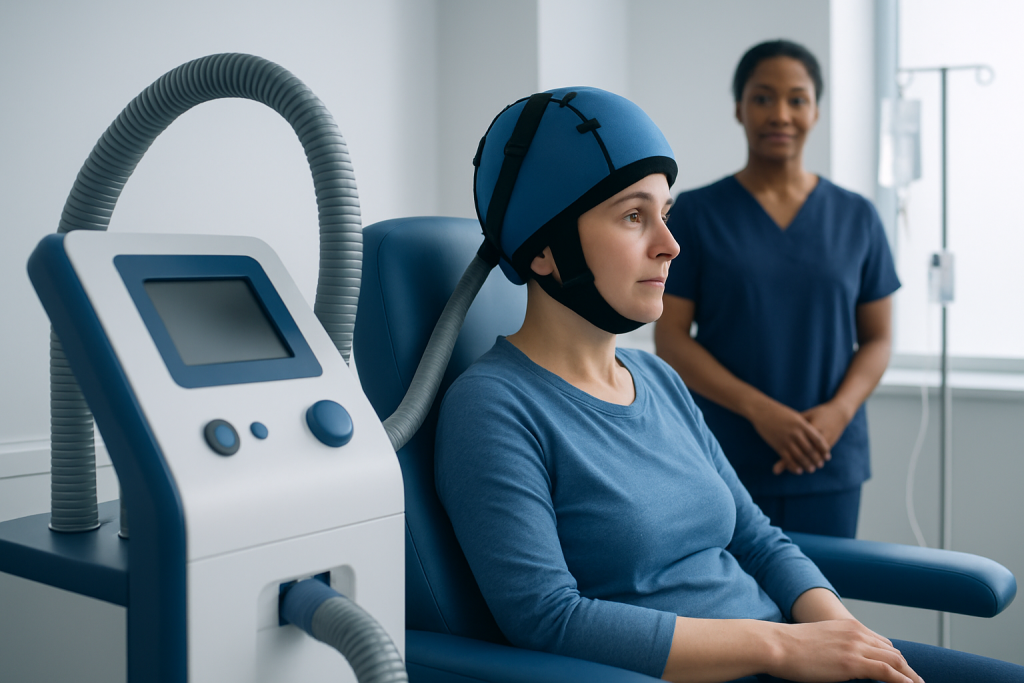
Scalp cooling is most often considered for people receiving chemotherapy for solid tumors, including many breast cancer treatments. It may be more successful with chemotherapy regimens that carry a moderate rather than very high risk of complete hair loss. However, even within the same regimen, cold cap chemo results differ from person to person.
It may not be recommended for certain blood cancers or cancers involving the scalp, and it may be unsuitable for people with particular cold-sensitive conditions. The treating oncologist will also consider whether a person can safely tolerate the additional time and physical discomfort involved.
A consultation before the first infusion is helpful. The team can explain the likely risk of hair loss from the planned regimen, discuss realistic expectations, assess cap sizing and identify practical support needs. Hair preservation should never delay or alter a medically necessary chemotherapy plan without guidance from the treating cancer specialist.
- Best candidates are often people receiving chemotherapy with a known but variable risk of hair loss.
- A secure cap fit and following the recommended cooling schedule are important for the best possible result.
- People may still experience thinning, patchy shedding or loss of body hair despite successful scalp cooling.
Cold Cap Chemo Step by Step: What to Expect on Treatment Day
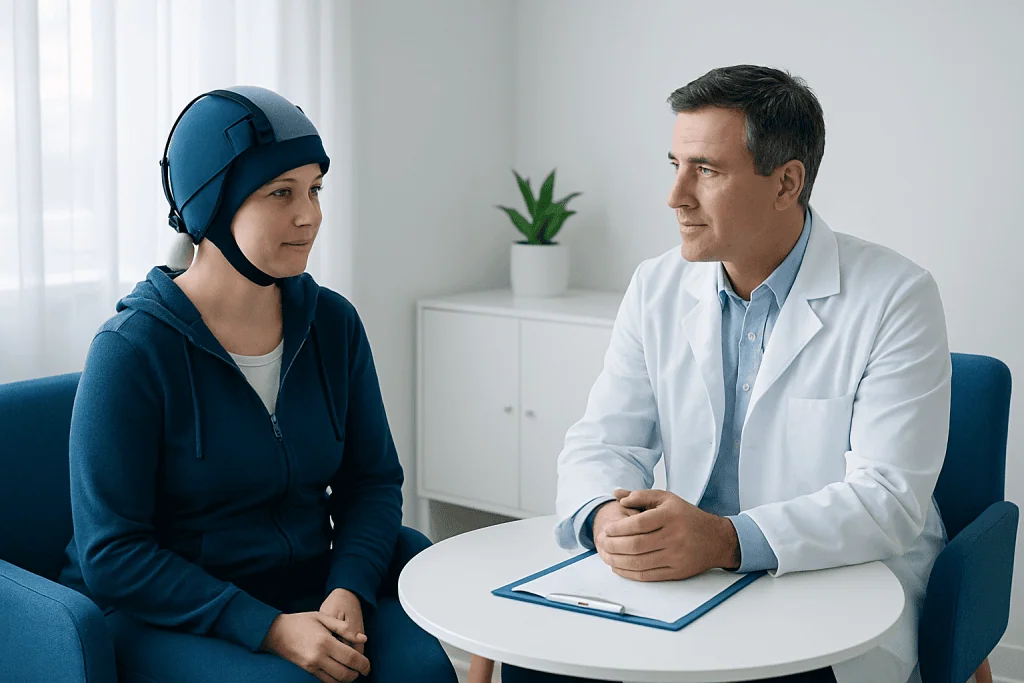
Before treatment, the patient’s hair is usually dampened and conditioned to improve contact between the cap and scalp. The cap is then fitted firmly, with special attention to areas that may otherwise be harder to cool, such as the crown, hairline and temples. It should feel snug but should not cause severe or persistent pain.
Cooling begins before chemotherapy, commonly for a period set by the device protocol and the medication being given. The cap remains on during the infusion. After chemotherapy is complete, post-infusion cooling continues because chemotherapy drugs may remain in circulation for a time. This can extend the total visit considerably.
The first 10 to 15 minutes are often the most uncomfortable because the scalp adapts to the cold. Warm blankets, warm drinks if permitted, relaxation techniques and quiet entertainment may help. The oncology nurses monitor the person throughout treatment and can help with cap adjustment, comfort measures and concerns.
After the session, hair should be handled gently. Many centers advise avoiding excessive heat styling, tight hairstyles, harsh chemical treatments and vigorous brushing during chemotherapy. The care team can provide hair-care guidance tailored to the patient’s treatment schedule and scalp condition.
Benefits, Limitations and Cold Cap Chemo Results
The potential benefit of cold cap chemo is retaining enough scalp hair that hair loss is less noticeable or that a wig, scarf or other head covering may be less necessary. For many people, preserving hair can support self-image, privacy and a sense of continuity during cancer treatment. These personal benefits are valid, but the decision is optional and individual.
Cold cap chemo results should be viewed as reduction in hair loss rather than a promise of no hair loss. Some people retain most of their hair, while others have diffuse thinning or substantial shedding. Effectiveness is influenced by the chemotherapy drugs and schedule, correct cap placement, adherence to cooling times, hair characteristics and individual response.
The cap does not generally prevent loss of eyelashes, eyebrows, facial hair or body hair, because these areas are not cooled. Hair that is retained may still become drier, more fragile or temporarily different in texture. If shedding occurs, it often begins several weeks after chemotherapy starts, though timing varies by regimen.
Scalp cooling can also require a longer appointment and may be uncomfortable. The patient and oncology team can balance its potential benefits with treatment-day logistics, physical tolerance and the expected chance of meaningful hair preservation.
How Do You Know If the Cold Cap Is Working?
The clearest sign that a cold cap is working is less hair shedding than might otherwise be expected for the chemotherapy regimen. A person may notice some shedding when washing or brushing their hair, especially after the first few cycles, but still retain enough overall coverage that the scalp remains less visible.
There is no immediate test that confirms success during the infusion itself. A properly fitted cap that remains consistently cold is important, but it cannot predict an individual result with certainty. The oncology or scalp-cooling team may check the cap fit and ask about comfort because loose areas can reduce cooling in those parts of the scalp.
It is useful to monitor changes gently rather than counting every shed hair. Taking occasional photographs in the same lighting, noting any widening part or visible patches, and reporting scalp symptoms to the care team can provide a more balanced picture. Hair loss does not mean chemotherapy is failing, and good hair retention does not indicate that chemotherapy is less effective.
What Are Good Signs That Chemo Is Working?
Hair changes, appetite changes and the severity of side effects are not reliable measures of whether chemotherapy is working. Some people have significant side effects and others have few, yet both may respond well. Similarly, preserving hair with scalp cooling does not mean chemotherapy is being weakened.
Doctors assess response using the methods appropriate for the cancer type and treatment goal. These may include physical examinations, symptom review, blood tests, tumor markers when relevant, imaging scans or pathology findings. The timing of these assessments varies, and an early scan is not always needed after every treatment cycle.
Possible improvements in cancer-related symptoms, such as less pain, easier breathing or more energy, can be encouraging in some situations. However, symptoms alone cannot confirm treatment response. The most dependable information comes from planned follow-up assessments discussed with the oncology team.
What Week of Chemo Is the Hardest?
There is no single hardest week of chemotherapy because experiences differ according to the medicines used, treatment frequency, supportive medications, overall health and personal circumstances. For some people, the days immediately after each infusion are most difficult. For others, fatigue and emotional strain build gradually over several cycles.
Many chemotherapy side effects follow a pattern. Nausea, tiredness, appetite changes or bowel changes may appear in the first days after treatment, while some blood counts can reach their lowest level later in the cycle. The oncology team explains the expected timing for the specific regimen and provides instructions for managing common symptoms.
Keeping a brief symptom record can help the team adjust supportive care. Patients should report symptoms that are difficult to manage rather than waiting for the next appointment. Rest, regular fluids where appropriate, small nourishing meals and accepting help from others can make treatment weeks more manageable.
Is a Cold Cap During Chemo Worth It?
Whether a cold cap during chemo is worth it depends on the individual’s priorities, likely benefit and tolerance of the process. Some people feel that even partial hair retention is highly meaningful and find the extra time worthwhile. Others prefer to avoid the cold, longer appointments or the uncertainty of variable results.
A helpful discussion includes the expected risk of hair loss from the specific chemotherapy regimen, the center’s scalp-cooling process, how long each session may take, likely out-of-pocket considerations where applicable, and what level of hair retention is realistic. The person should not feel pressure to use a cold cap or to continue it if it becomes too burdensome.
It may also help to prepare for either outcome. Gentle hair care, a shorter haircut before treatment, head coverings if desired and emotional support can all be considered whether or not scalp cooling is used. The oncology nurse, social worker or cancer support team may offer practical guidance.
Risks, Recovery and When to Seek Medical Care
Most people can return to their usual activities after a scalp-cooling session, although they may feel chilled or tired following a long infusion day. Common cold cap effects include scalp discomfort, headache, a sensation of intense cold, forehead pressure, neck or shoulder tension and temporary light-headedness. The care team should be told promptly if the cap feels intolerable or causes concerning pain.
There is no separate physical recovery period from the cap itself. Hair shedding, if it occurs, may continue during treatment and often improves after chemotherapy ends, although regrowth timing varies. New hair can initially be finer, curlier, straighter or a different color before settling over time.
Medical care should be sought urgently according to the oncology team’s instructions, especially for fever, chills, shortness of breath, chest pain, confusion, severe weakness, uncontrolled vomiting or diarrhea, unusual bleeding, or signs of an allergic reaction. These symptoms may relate to chemotherapy or infection rather than the cold cap, but they require timely clinical advice.
For international patients, Acibadem International’s multidisciplinary specialists and JCI-accredited hospitals can assess cancer treatment plans and supportive-care options, including scalp cooling when clinically appropriate.
Frequently asked questions
Does cold cap chemo prevent all hair loss?
No. Cold cap chemo may reduce the amount of scalp hair lost, but it cannot guarantee complete hair preservation. Results depend on the chemotherapy regimen, cap fit, cooling schedule and individual response.
Can a cold cap make chemotherapy less effective?
Scalp cooling is designed to limit chemotherapy exposure in the scalp hair follicles and does not replace or reduce the prescribed chemotherapy dose. The oncology team will determine whether it is appropriate for the specific cancer diagnosis and treatment plan.
When does hair shedding start during chemotherapy?
If shedding occurs, it often begins a few weeks after chemotherapy starts, but timing varies. With scalp cooling, some shedding can still occur while enough hair may remain to provide coverage.
Does scalp cooling hurt?
The cap can feel intensely cold, particularly during the first 10 to 15 minutes. Some people experience headache, pressure or scalp discomfort, but comfort measures and careful fitting can help.
Can someone wash their hair while using a cold cap?
Hair can usually be washed, but gentle care is generally recommended during chemotherapy. The care team may advise using lukewarm water, mild products, a wide-tooth comb and avoiding heat styling, bleaching, coloring or tight hairstyles.
Does cold cap chemo protect eyebrows and eyelashes?
No. A cold cap cools only the scalp, so it does not reliably protect eyebrows, eyelashes or body hair. These hairs may still thin or fall out depending on the chemotherapy medicines used.
References
- American Cancer Society
- National Cancer Institute
- Oncology Nursing Society
- European Society for Medical Oncology
- U.S. Food and Drug Administration
This article is for general information only and is not a substitute for professional medical advice. Please consult a qualified doctor about your individual situation.
Hair transplant in Turkey — costs, graft counts & a free assessment
JCI-accredited · board-certified surgeons · reply within 24h
Add us as a Preferred Source to see more of our trusted health content across Google Search, AI Overviews and Discover.