Colonoscopy Rvu: Preparation, Procedure and Results

Colonoscopy RVUs are billing measures, not a measure of procedure quality or a patient’s health status. The RVU value depends on the exact procedure code and whether tissue sampling, polyp removal, or other interventions are performed.
Key Takeaways
- Colonoscopy RVUs are billing measures, not a measure of procedure quality or a patient’s health status.
- The RVU value depends on the exact procedure code and whether tissue sampling, polyp removal, or other interventions are performed.
- A clean bowel is essential because it helps the clinician inspect the colon carefully and may reduce the need for an earlier repeat procedure.
- Most people receive sedation, go home the same day with a responsible adult, and can usually return to normal activities the following day.
- Urgent evaluation is important for severe abdominal pain, persistent vomiting, heavy rectal bleeding, fever, or fainting after colonoscopy.
Colonoscopy RVU refers to relative value units used in healthcare billing to describe the professional work and resources associated with different colonoscopy services. For patients, the most important aspects are safe preparation, understanding the procedure, and discussing results and follow-up with a gastroenterology specialist.
Colonoscopy RVU: What It Means
Colonoscopy RVU is a term used mainly in medical coding and reimbursement. RVU stands for relative value unit, a standardized measure used in the United States to help describe the physician work, practice costs, and professional liability costs associated with a service. It is not a clinical score, does not determine whether a colonoscopy is necessary, and should not be used to compare the quality of care between clinicians.
A colonoscopy is an examination of the rectum and colon using a flexible tube with a small camera. It can help investigate symptoms such as rectal bleeding, unexplained changes in bowel habits, iron-deficiency anemia, or ongoing abdominal symptoms. It is also used for colorectal cancer screening and surveillance, and it allows the clinician to take tissue samples or remove many polyps during the same examination.
Searches for colonoscopy RVU 2023 or current colonoscopy RVUs often relate to annual coding updates. Values and payment calculations can change over time and differ according to payer rules, setting, modifiers, and the exact service documented. A billing office, medical coder, or the applicable current coding resources can clarify the value associated with a particular claim.
How Colonoscopy Works and Who May Need It
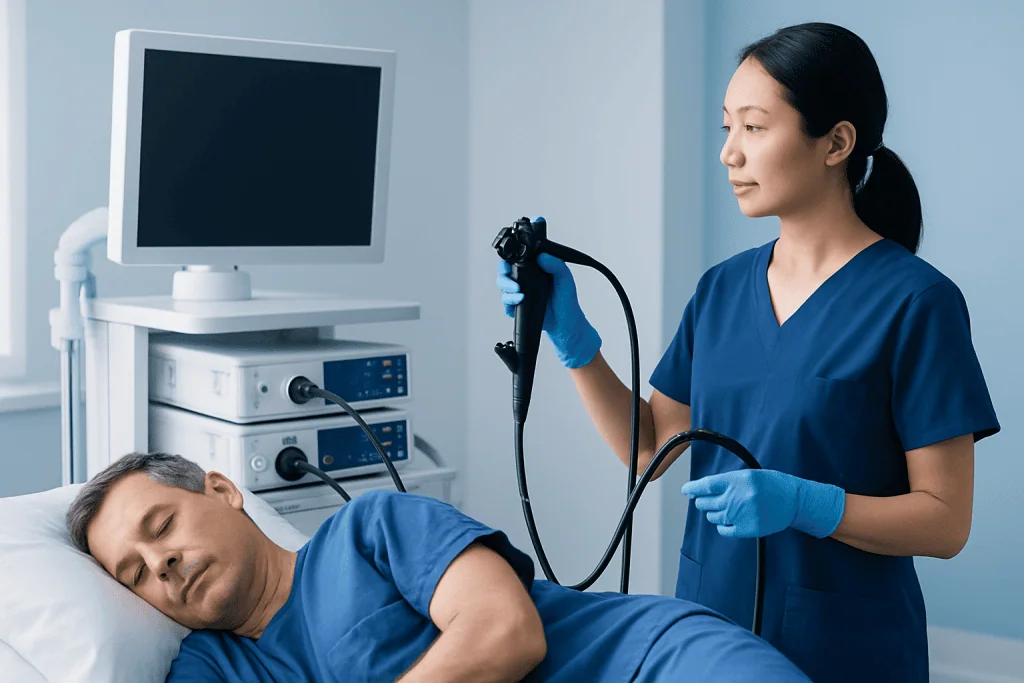
During colonoscopy, a gastroenterologist gently advances a colonoscope through the rectum and around the large bowel. The camera transmits images to a monitor, while air or carbon dioxide is used to open the bowel slightly for a clearer view. Small instruments can pass through the scope to collect a biopsy, stop limited bleeding, or remove a polyp.
People may be offered colonoscopy as a screening test based on age and individual risk, after an abnormal stool-based screening test, or to assess symptoms. Earlier or more frequent surveillance may be advised for people with a personal history of polyps or colorectal cancer, inflammatory bowel disease, certain inherited cancer syndromes, or a significant family history. The clinician considers medical history, medications, previous test findings, and overall health when deciding whether colonoscopy is appropriate.
Colonoscopy is not the only way to assess colorectal cancer risk. Stool tests and imaging-based options may suit some people, but an abnormal result often still requires colonoscopy to inspect the bowel directly and, when needed, obtain tissue or remove polyps. Discussion with a qualified clinician can help identify the most appropriate approach.
Preparation and Bowel Cleanliness

Successful colonoscopy depends on a clean colon. Patients usually follow a temporary low-fiber diet, then a clear-liquid diet, and take a prescribed bowel-cleansing solution before the appointment. Exact instructions vary, so the endoscopy unit’s written plan should take priority. It is particularly important to ask in advance about diabetes medicines, blood thinners, iron supplements, kidney disease, constipation, pregnancy, and any prior difficulty with bowel preparation.
The hardest part of colonoscopy prep is often drinking the cleansing solution and managing frequent, urgent bowel movements. Taste, fullness, nausea, disrupted sleep, and the need to remain close to a toilet can also be challenging. Chilling the solution, using a straw if permitted, following split-dose instructions, protecting the skin around the anus, and arranging a comfortable bathroom setup may make the process more manageable.
Preparation quality is commonly documented using the Boston Bowel Preparation Scale, which rates cleanliness in three areas of the colon. In general, a total score of 6 or higher, with each segment scoring at least 2, is considered adequate for a reliable examination. A “good colonoscopy prep score” is therefore one that allows the clinician to see the bowel lining well enough to complete the intended assessment; the individual report and follow-up recommendation matter more than the score alone.
What Happens During the Procedure and Recovery
Before the procedure, the care team confirms medical information, reviews allergies and medicines, obtains consent, and checks vital signs. Most patients receive sedation or anesthesia tailored to the setting and their health needs. The examination commonly takes less than an hour, although preparation, recovery, and discussion time mean the overall visit is longer.
During colonoscopy, the clinician examines the colon lining while withdrawing the scope. If a suspicious area is seen, a biopsy may be taken. Many polyps can be removed immediately, which can help prevent some colorectal cancers from developing. Removing a polyp or taking a biopsy is usually painless because the bowel lining does not sense cutting in the same way as the skin.
Patients remain in a recovery area until the effects of sedation have eased. Mild bloating, gas, or brief cramping may occur because of the air or carbon dioxide used during the examination. A responsible adult should accompany the patient home after sedation; driving, operating machinery, drinking alcohol, and making important decisions are generally avoided for the rest of that day. Many people resume usual meals and routine activities the next day, unless the care team gives different instructions.
Initial findings may be discussed before discharge, but biopsy or polyp pathology results usually take longer. These results help determine whether a future colonoscopy is needed and when. Follow-up intervals vary according to the reason for the procedure, bowel preparation quality, findings, personal history, and pathology report.
How Many RVUs Do You Get for a Colonoscopy?
There is no single answer to “how many RVUs do you get for a colonoscopy?” because the answer depends on the specific billing code and the component of RVUs being discussed. Coding systems may separate physician work RVUs from practice expense and malpractice RVUs, and total values can change with annual updates. Payment is also not determined by RVUs alone.
A diagnostic colonoscopy, a screening colonoscopy, and a colonoscopy with a therapeutic intervention may be reported differently. The documented reason for the procedure, findings, technique used, place of service, payer policy, and any applicable modifiers can all affect coding and reimbursement. For this reason, a general online figure should not be relied on for a specific claim or contract.
Patients generally do not need RVU information to prepare for or recover from the examination. Those who have questions about out-of-pocket responsibilities should contact their insurer and the hospital or clinic billing team before the procedure. They can ask which service is planned, whether it is expected to be preventive or diagnostic under their plan, and how unexpected biopsy or polyp removal may affect coverage.
How Many RVUs Is a Colonoscopy With Biopsy?
A colonoscopy with biopsy is usually represented by a different procedure code from a colonoscopy without tissue sampling, so its colonoscopy RVU may differ. However, the precise work RVUs and total RVUs should be checked against the current official coding resources and the relevant payer requirements. These values are periodically revised and are not fixed clinical facts.
Biopsy means that a small piece of tissue is collected for laboratory examination. It may be taken from an area that looks inflamed, irritated, ulcerated, or otherwise unusual, and it may also be used to investigate microscopic conditions that are not visible to the eye. A biopsy does not by itself mean cancer is present.
When a polyp is removed, coding depends on the removal technique, such as snare removal or other methods, rather than simply on the word “biopsy.” Accurate documentation is important for both clinical follow-up and coding. Patients can focus on understanding why tissue was collected, when results are expected, and what follow-up is recommended.
Benefits, Risks, and When to Seek Medical Care
The main benefits of colonoscopy are direct examination of the colon, the ability to obtain biopsies, and the opportunity to remove many precancerous polyps during one procedure. It can provide important answers when symptoms or screening tests need further evaluation. No test is perfect, but a carefully performed colonoscopy with adequate bowel preparation is a valuable diagnostic and preventive tool.
Colonoscopy is generally safe, but it has uncommon risks. These include a reaction to sedation, bleeding after a biopsy or polyp removal, infection, or a tear in the colon wall. Risk may be higher when a large or complex polyp is removed or when a person has certain medical conditions. The clinician explains relevant individual risks before consent.
When to seek medical care: Patients should contact the procedure team promptly for worsening or severe abdominal pain, persistent vomiting, fever, dizziness or fainting, a swollen abdomen, or bleeding that is heavy, ongoing, or accompanied by weakness. A small amount of blood after a biopsy or polyp removal may occur, but any concern after the procedure deserves medical advice. Emergency care is appropriate for severe symptoms or signs of significant bleeding.
For international patients, Acibadem International’s multidisciplinary specialists and JCI-accredited hospitals can assess digestive symptoms, perform colonoscopy when indicated, and coordinate follow-up care. A gastroenterology team can also explain preparation instructions, sedation planning, pathology results, and recommended surveillance in clear terms.
Frequently asked questions
What does colonoscopy RVU mean?
Colonoscopy RVU refers to relative value units assigned to colonoscopy-related medical services for billing and reimbursement purposes. The value may include components for clinician work, practice expense, and professional liability costs. It is not a measure of the quality of a patient’s procedure or of medical necessity.
How many RVUs do you get for a colonoscopy?
The number varies because different colonoscopy codes describe different services, such as a diagnostic examination, screening, biopsy, or polyp removal. Current values may change with coding updates and can be affected by the payer and care setting. A coding professional or billing department can verify the applicable value for a particular service.
What is a good colonoscopy prep score?
The Boston Bowel Preparation Scale is often used to document bowel cleanliness. A total score of at least 6, with a score of 2 or more in each colon segment, is generally considered adequate. The endoscopist’s assessment and recommended follow-up interval are the most meaningful indicators for the patient.
What is the hardest part of colonoscopy prep?
Many people find drinking the bowel-cleansing solution and coping with frequent bowel movements the most difficult parts. Nausea, poor sleep, and temporary hunger can also make preparation uncomfortable. Following split-dose instructions and contacting the care team early if the solution cannot be tolerated can help.
How many RVUs is a colonoscopy with biopsy?
A colonoscopy with biopsy is coded differently from a colonoscopy without tissue sampling, and its RVU value may therefore be different. There is no reliable single number that applies in every year, payer system, or clinical setting. Current official coding information should be used for billing questions.
When can a person return to normal after a colonoscopy?
Most people go home the same day and return to usual activities the following day. Sedation can affect judgment and coordination for the rest of the procedure day, so driving and important decisions should be avoided. Recovery may take longer if a complex polyp was removed or if the clinician gives specific instructions.
References
- American Society for Gastrointestinal Endoscopy
- American College of Gastroenterology
- U.S. Centers for Medicare & Medicaid Services
- National Institute of Diabetes and Digestive and Kidney Diseases
- World Health Organization
This article is for general information only and is not a substitute for professional medical advice. Please consult a qualified doctor about your individual situation.
Persistent digestive symptoms? Get evaluated in Turkey
JCI-accredited · board-certified surgeons · reply within 24h
Add us as a Preferred Source to see more of our trusted health content across Google Search, AI Overviews and Discover.