Colorectal Screening vs Colonoscopy: Differences Explained

Colorectal cancer screening includes stool-based tests and visual examinations such as colonoscopy. Colonoscopy is both a screening and diagnostic procedure because it can identify, biopsy, and remove polyps.
Key Takeaways
- Colorectal cancer screening includes stool-based tests and visual examinations such as colonoscopy.
- Colonoscopy is both a screening and diagnostic procedure because it can identify, biopsy, and remove polyps.
- A positive stool test usually needs follow-up colonoscopy to determine the cause.
- The most suitable test depends on age, personal and family history, symptoms, preferences, and access to testing.
- New rectal bleeding, persistent bowel changes, unexplained anemia, or unintentional weight loss should be medically assessed rather than managed through routine screening alone.
Colorectal screening is the broader process of checking for colorectal cancer or precancerous changes in people without symptoms. Colonoscopy is one screening option that directly examines the colon and rectum, allows biopsies, and can remove many polyps during the same procedure.
Overview: colorectal screening vs colonoscopy
Colorectal screening vs colonoscopy is not an either-or comparison in every situation. Colorectal screening is an umbrella term for tests used to look for colorectal cancer or precancerous polyps before symptoms develop, while colonoscopy is one of the most comprehensive screening tests available. It examines the lining of the rectum and entire colon and can often remove polyps before they become cancerous.
The difference between colorectal screening and colonoscopy is mainly scope and method. Screening may involve a stool sample collected at home, a blood-based test in selected settings, or an examination of the bowel. Colonoscopy is a procedure performed by a trained specialist using a flexible camera, usually with sedation, after the bowel has been carefully prepared.
Although the terms colorectal cancer screening and colon cancer screening are often used interchangeably, standard screening generally considers both the colon and rectum. The best approach is individualized: some people may begin with a stool-based test, while others benefit more from colonoscopy because of their medical or family history.
How colorectal screening tests and colonoscopy work
Stool-based screening tests look for signs that may be associated with cancer or larger polyps. A fecal immunochemical test (FIT) detects tiny amounts of blood in stool that may not be visible. Stool DNA tests combine blood detection with testing for certain DNA changes shed into stool by abnormal cells. These tests are convenient and do not require sedation, but they do not directly view the bowel or remove polyps.
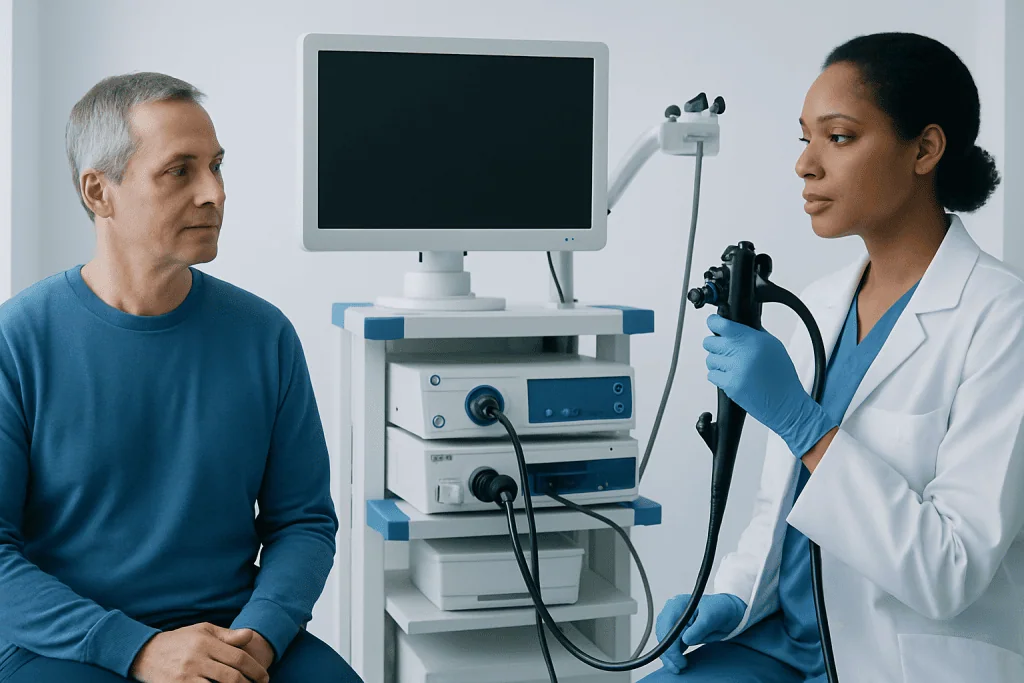
Colonoscopy uses a thin, flexible tube with a light and camera, called a colonoscope. The specialist gently passes it through the rectum to inspect the full length of the large intestine. Air or carbon dioxide is introduced to open the bowel for viewing, and small instruments can be passed through the scope to take tissue samples or remove polyps.
Other visual options may include CT colonography, sometimes called virtual colonoscopy, or flexible sigmoidoscopy, which examines only the rectum and lower part of the colon. A clinician can explain how these compare with colonoscopy and whether a particular test is appropriate. Importantly, an abnormal non-colonoscopy screening result commonly requires colonoscopy for confirmation and possible treatment.
Who should consider screening and how candidacy is decided

Average-risk adults should discuss colorectal cancer screening with a healthcare professional from midlife onward. In many guidelines, routine screening begins at age 45 for people at average risk, although recommendations can vary by country, health system, and individual circumstances. The appropriate interval depends on the test used and the result.
Earlier or more frequent screening may be advised for people with a first-degree relative who had colorectal cancer or advanced polyps, a personal history of polyps or colorectal cancer, long-standing inflammatory bowel disease, or an inherited cancer syndrome. Conditions such as ulcerative colitis may require a specialist-led surveillance plan rather than standard average-risk screening.
Colonoscopy may be preferred when someone has a higher-than-average risk, has had a positive stool test, or needs evaluation of concerning symptoms. It is not usually considered a routine screening test for a person with new symptoms; in that context, it becomes a diagnostic assessment. A clinician will also consider overall health, medication use, ability to complete bowel preparation, and the person’s preferences.
What happens during colonoscopy and recovery
Preparation is essential because the colon must be empty for the lining to be seen clearly. In the days before the procedure, the care team gives instructions about dietary changes, bowel-cleansing medication, and whether medicines such as blood thinners, diabetes treatments, iron supplements, or certain weight-management medicines need adjustment. People should not change prescribed medication without individualized medical advice.
On the day, the patient is assessed and an intravenous line may be placed. Sedation is commonly used to improve comfort. During the examination, which often takes less than an hour but varies depending on findings and treatment, the clinician examines the bowel and may remove polyps or take biopsies. Removing a polyp is generally painless because the bowel lining does not sense cutting in the same way as skin.
Afterward, patients are monitored until the sedative effects lessen. Mild bloating, gas, or temporary cramping can occur and usually improves the same day. Anyone who receives sedation needs a responsible adult to take them home and should avoid driving, alcohol, important decisions, and operating machinery for the period advised by the care team, often until the next day.
Pathology results are needed if tissue was collected, and the follow-up plan depends on what was found. The next screening or surveillance interval may be longer after a normal examination or shorter after certain polyps. This personalized schedule is more useful than applying a single interval to everyone.
Benefits, limitations, and possible risks
The key benefit of colonoscopy is that it can detect cancer and find or remove many polyps in one session. This makes it both a detection test and, in many cases, a preventive procedure. Stool-based tests can also be valuable because they are less invasive and may make regular participation easier for some people.
However, no test is perfect. Stool tests can miss some cancers or polyps, and a positive result does not by itself mean cancer is present. Colonoscopy is highly detailed but depends on good bowel preparation, complete examination, and careful inspection. Rarely, abnormalities may be missed, particularly when bowel cleansing is incomplete.
Colonoscopy has uncommon but important risks, including bleeding after polyp removal, a tear in the bowel wall, reactions related to sedation, and infection. The likelihood varies with the person’s health, the procedure performed, and whether a polyp is removed. The endoscopy team reviews individual risks and warning signs before the test so that patients can make an informed decision.
- Seek urgent medical advice after colonoscopy for severe or worsening abdominal pain, fever, fainting, persistent vomiting, or heavy rectal bleeding.
- Small amounts of blood can occasionally occur after a biopsy or polyp removal, but the care team should be contacted if bleeding is more than minimal or continues.
What is the 90 second test instead of a colonoscopy?
The phrase “90 second test” is often used in advertising or informal discussions to describe a quick, noninvasive screening option, most commonly a stool-based test such as FIT. Collecting the sample itself may take only a short time at home, but the test still requires laboratory processing and follow-up of the result. It is not a direct replacement for colonoscopy in every person or every clinical situation.
A FIT checks stool for hidden blood and is typically repeated at regular intervals when used for screening. It does not require bowel preparation, sedation, or a camera examination. If the result is positive, colonoscopy is generally needed to identify the source of bleeding, which may be due to polyps, cancer, hemorrhoids, inflammation, or other causes.
Stool tests can be an effective part of population screening when completed as recommended. They do not remove polyps, take biopsies, or reliably assess every cause of bowel symptoms. A qualified clinician can help a person choose between a stool test, colonoscopy, or another recommended strategy.
Can you screen for colorectal cancer without a colonoscopy?
Yes. Colorectal cancer can be screened for without a colonoscopy using stool-based tests, CT colonography in selected circumstances, or flexible sigmoidoscopy. Which choices are available and recommended differs by location and health system. For average-risk people who are unwilling or unable to have colonoscopy, a validated alternative is often preferable to having no screening at all.
It is important to understand the next step in advance. When a stool-based test or CT colonography identifies an abnormality, colonoscopy is commonly recommended because it can clarify the finding and remove polyps during the same examination. In this sense, noninvasive testing may be the first step in a screening pathway rather than a permanent substitute for colonoscopy.
Cologuard is considered colorectal screening because it is a stool DNA test designed to identify markers associated with colorectal cancer and some advanced precancerous lesions in average-risk adults. It is not a diagnostic test, and a positive result requires colonoscopy. It may not be suitable for people with a personal history of colorectal cancer or polyps, certain inherited syndromes, or inflammatory bowel disease.
At what age are colonoscopies no longer recommended?
There is no single age at which colonoscopies automatically stop for every person. Many guidelines advise that routine colorectal cancer screening for average-risk adults should be individualized between ages 76 and 85, taking account of health status, prior screening results, functional ability, and estimated life expectancy. Routine screening is generally not recommended after age 85 in many guideline frameworks.
Age alone should not determine the decision. A healthy older adult who has never been screened may benefit differently from someone who has had several normal, high-quality colonoscopies and has significant medical conditions. People who are undergoing surveillance because of prior high-risk polyps, inflammatory bowel disease, or a hereditary syndrome may also need individualized specialist guidance.
Colonoscopy can still be appropriate at any age when there is a clear diagnostic reason, such as unexplained bleeding or anemia. The decision should balance expected benefit with the burden of preparation, sedation, and procedure-related risks. Shared decision-making with a clinician is especially useful for older adults.
When to seek medical care
Routine screening is designed for people without symptoms. A person should arrange medical assessment rather than rely only on a home screening test if they notice rectal bleeding, black or tar-like stools, a persistent change in bowel habits, ongoing abdominal pain, unexplained iron-deficiency anemia, unexplained weight loss, or unusual tiredness. These symptoms often have causes other than cancer, but they deserve timely evaluation.
Urgent care is appropriate for heavy bleeding, severe abdominal pain, fainting, marked weakness, or signs of bowel obstruction such as persistent vomiting with abdominal swelling and inability to pass stool or gas. A clinician can determine whether colonoscopy, imaging, blood tests, or another investigation is needed.
At Acibadem International, multidisciplinary specialists and JCI-accredited hospitals assess colorectal concerns and provide screening, endoscopy, pathology, surgery, and oncology care for international patients when needed. People can discuss their individual risk factors and the most suitable screening approach with a qualified healthcare professional.
Frequently asked questions
Is a colonoscopy the same as colorectal cancer screening?
A colonoscopy is one type of colorectal cancer screening test, but the term screening includes several other options. Stool-based tests, CT colonography, and flexible sigmoidoscopy may also be used in appropriate circumstances. Colonoscopy is distinctive because it can inspect the entire colon and often remove polyps during the same procedure.
What is the difference between colorectal screening and colonoscopy?
Colorectal screening refers to the overall effort to find colorectal cancer or precancerous changes before symptoms develop. Colonoscopy is a specific procedure that uses a camera to examine the rectum and colon directly. Unlike stool tests, it can also take biopsies and remove many polyps.
Is Cologuard considered colorectal screening?
Yes. Cologuard is a stool DNA test used for colorectal cancer screening in certain average-risk adults. A positive result does not diagnose cancer and should be followed by colonoscopy. It is not appropriate for everyone, particularly some people at increased risk.
Can a stool test replace colonoscopy?
For some average-risk people, a stool test can be an accepted screening choice when repeated at the recommended interval. However, it does not examine the bowel directly or remove polyps. A positive stool test generally needs follow-up colonoscopy.
How often is colonoscopy needed?
The interval depends on the reason for the procedure and its findings. A person with a normal, high-quality screening colonoscopy may have a longer interval than someone who had certain polyps removed or has increased risk. The endoscopy clinician will recommend an individualized follow-up plan.
Do symptoms mean a person should have a screening test?
Symptoms such as rectal bleeding, persistent bowel changes, unexplained anemia, or unintentional weight loss should be assessed by a clinician. In that situation, testing is diagnostic rather than routine screening. The clinician will choose the most suitable investigation based on the symptoms and medical history.
References
- American Cancer Society
- U.S. Preventive Services Task Force
- National Cancer Institute
- Centers for Disease Control and Prevention
- World Gastroenterology Organisation
This article is for general information only and is not a substitute for professional medical advice. Please consult a qualified doctor about your individual situation.
Persistent digestive symptoms? Get evaluated in Turkey
JCI-accredited · board-certified surgeons · reply within 24h
Add us as a Preferred Source to see more of our trusted health content across Google Search, AI Overviews and Discover.