Colposcopy Biopsy: Procedure, Recovery and Results

A colposcopy biopsy is usually performed after an abnormal HPV test, Pap test or cervical screening result. Most people can return to normal gentle activities the same day, although light bleeding or discharge may occur for several days.
Key Takeaways
- A colposcopy biopsy is usually performed after an abnormal HPV test, Pap test or cervical screening result.
- Most people can return to normal gentle activities the same day, although light bleeding or discharge may occur for several days.
- Biopsy results often show no cancer; they may identify normal tissue, inflammation, HPV-related cell changes or precancerous changes.
- Avoid vaginal intercourse, tampons and swimming until bleeding or discharge has stopped, or for the period advised by the clinician.
- Urgent medical advice is needed for heavy bleeding, fever, worsening pelvic pain or foul-smelling discharge.
A colposcopy biopsy is a short outpatient procedure in which a clinician uses magnification to examine the cervix, vagina or vulva and removes a small tissue sample if an area looks unusual. It is commonly recommended after an abnormal cervical screening result and helps identify whether cell changes need monitoring, treatment or further assessment.
Colposcopy Biopsy Overview
A colposcopy biopsy is a procedure used to examine areas of the lower genital tract more closely and, when needed, take a very small sample of tissue for laboratory testing. The clinician uses a colposcope, a magnifying instrument that stays outside the body, to view the cervix. A biopsy may be taken from the cervix, vagina or vulva if an area appears different after a special solution is applied.
The procedure is often arranged after cervical screening finds high-risk human papillomavirus (HPV), abnormal cells, or changes that need clarification. An abnormal screening result does not mean a person has cancer. Screening identifies people who may benefit from closer assessment, while a biopsy helps provide a more definite diagnosis.
Colposcopy and biopsy are important parts of preventing cervical cancer because they can detect precancerous cell changes before they become cancer. The results guide whether a person needs reassurance, repeat monitoring, treatment to remove abnormal cells, or further tests.
Why a Colposcopy Biopsy May Be Recommended
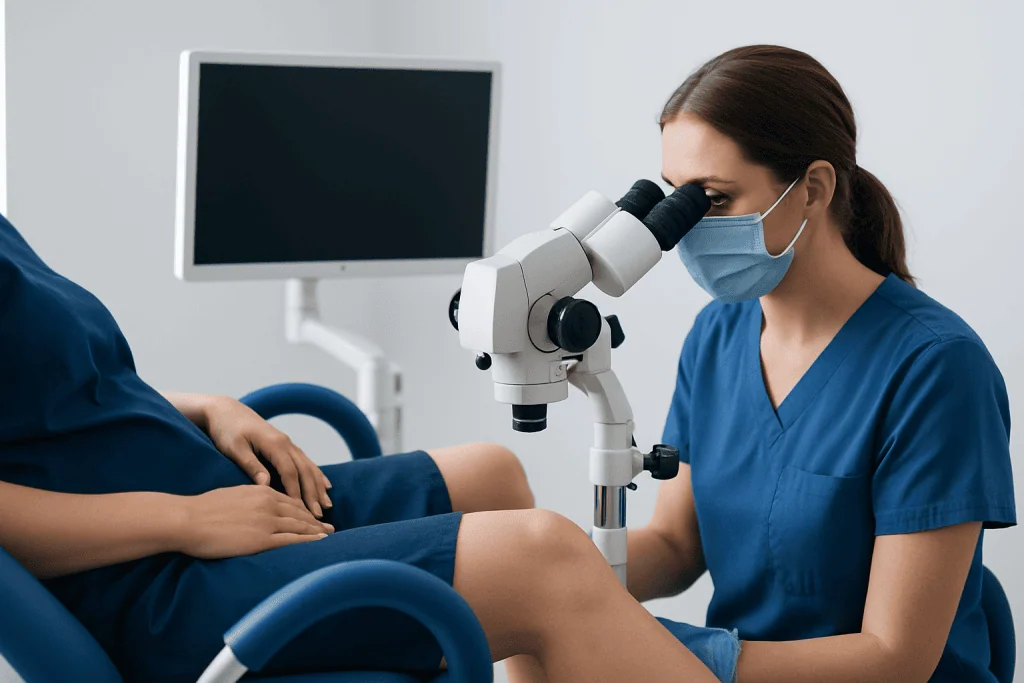
A clinician may recommend colposcopy when a cervical screening test shows HPV infection with abnormal cell changes, persistent HPV infection, or other findings that require closer examination. It may also be used when the cervix looks unusual during a pelvic examination or when there are unexplained symptoms, such as bleeding after sex, that need assessment.
Not every colposcopy includes a biopsy. If the cervix appears healthy and there is no suspicious area, the clinician may decide that tissue sampling is unnecessary. If a biopsy is needed, it is directed at the specific area that appears most likely to explain the screening result.
People who are pregnant, taking anticoagulant medicines, have a bleeding disorder, have an allergy to iodine or latex, or think they may have a vaginal infection should tell the clinical team before the appointment. Colposcopy can often be performed during pregnancy, but decisions about biopsy and treatment are individualized.
- Abnormal HPV or cervical screening results
- Persistent high-risk HPV infection
- Visible changes on the cervix, vagina or vulva
- Symptoms needing assessment, including unexplained bleeding after sex
- Follow-up after previous treatment for cervical cell changes
How a Colposcopy Biopsy Is Performed
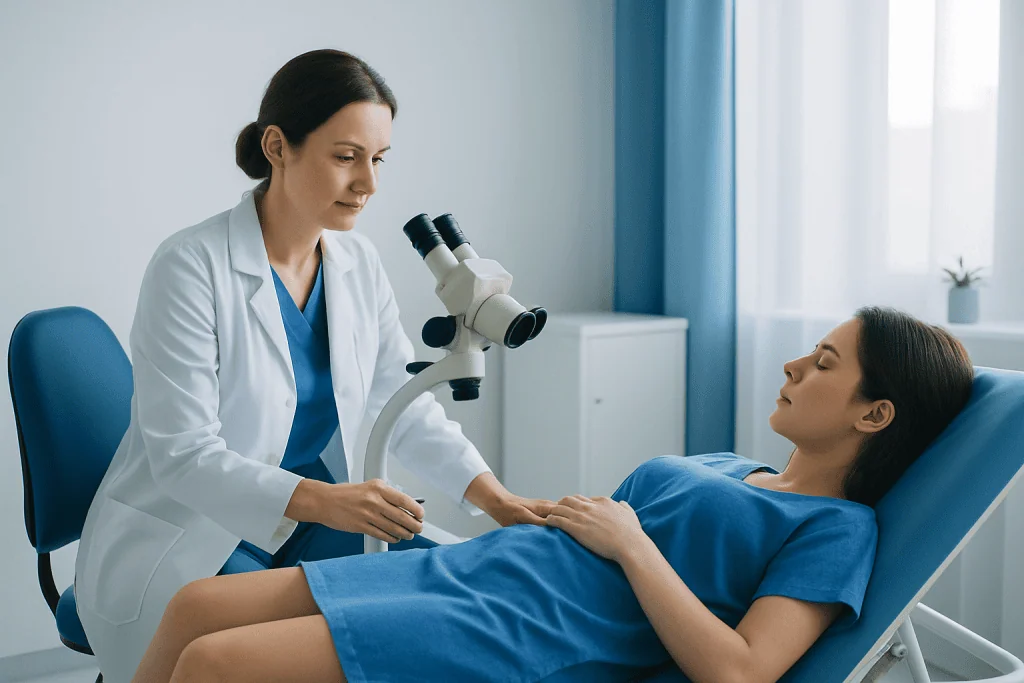
A colposcopy biopsy is usually done in an outpatient clinic and commonly takes about 10 to 20 minutes, although the visit may take longer for discussion and preparation. In many cases, a person can eat and drink normally beforehand unless they have received different instructions. Scheduling the appointment outside of a menstrual period can sometimes make the cervix easier to assess, but bleeding does not always require cancellation.
The person lies on an examination couch with their legs supported, similar to a cervical screening examination. The clinician gently inserts a speculum to hold the vaginal walls apart and positions the colposcope a short distance away. The colposcope does not enter the vagina. A dilute acetic acid solution, similar to vinegar, is placed on the cervix to make abnormal cells easier to see; it can cause a brief mild stinging sensation.
If an area requires testing, the clinician uses a small instrument to remove a tiny tissue sample. People may feel a quick pinch, cramp or pressure. A paste or solution may be applied to reduce bleeding, and this can later cause dark brown or black discharge. Occasionally, a sample is also taken from inside the cervical canal; this may cause stronger cramping for a short time.
Local anaesthetic is not always required for a small cervical biopsy, but it may be offered in some circumstances, especially for vulvar biopsy or when a larger procedure is planned. People should feel able to ask questions, request a pause, or discuss pain-relief options before the examination begins.
Recovery Timeline After a Colposcopy Biopsy
Most people feel well enough to go home shortly after a colposcopy biopsy and resume routine, non-strenuous activities that day. Mild period-like cramps, spotting and watery, brown or black discharge are common. The discharge may result from the solution used to control minor bleeding rather than from infection.
Light bleeding or discharge often lasts a few days and can sometimes continue for up to a week. A sanitary pad is generally preferable to a tampon while healing. The clinician may advise avoiding vaginal intercourse, tampons, menstrual cups, douching and swimming until bleeding and discharge have stopped, or for a specified number of days. These precautions help reduce irritation and infection risk.
Simple pain relief that is safe for the individual may help with cramps. It is best to follow the care team’s advice, particularly for anyone taking blood-thinning medicines or who has stomach, kidney or liver conditions. A person should contact the clinic if symptoms are not improving or if they are uncertain about aftercare instructions.
For people seeking coordinated assessment of abnormal screening findings and cervical conditions, colposcopy assessment and follow-up care may be organized through a gynecology team.
Benefits, Risks and Limitations
The main benefit of a colposcopy biopsy is that it provides tissue for microscopic examination. This can distinguish benign changes from precancerous changes and cancer, allowing clinicians to recommend appropriate monitoring or treatment. It may also prevent unnecessary treatment when the biopsy shows no significant abnormality.
Complications are uncommon. Mild pain, brief cramping, light bleeding and discharge are expected effects. Less commonly, bleeding may be heavier or infection may develop. Very rarely, a biopsy may not provide enough tissue or may not fully explain the screening result, and repeat testing or another procedure may be needed.
A biopsy is a diagnostic test rather than treatment for most cervical abnormalities. If high-grade precancerous changes are found, the clinician may discuss a procedure to remove the affected area, such as a loop excision or cone biopsy. The recommended approach depends on the biopsy result, the size and location of the changes, age, pregnancy status and future fertility plans.
Understanding Colposcopy Biopsy Results
Biopsy samples are examined by a pathologist, and results may take several days to a few weeks depending on local laboratory processes. The clinic should explain how and when results will be provided. Waiting can be stressful, but an abnormal screening result or a biopsy referral does not by itself diagnose cancer.
Results may show normal tissue, inflammation, HPV-related changes, low-grade changes that often resolve without treatment, or high-grade changes that may need treatment to prevent cancer. Terms such as cervical intraepithelial neoplasia (CIN) describe abnormal cells on the surface of the cervix; they are not the same as invasive cancer.
If cancer cells are suspected or confirmed, the person is referred promptly to a gynecologic cancer specialist for further evaluation. Further testing may include additional imaging, examination and, sometimes, a larger biopsy or procedure to determine the extent of disease. Care is planned individually, and treatment may involve surgery, radiotherapy, chemotherapy or a combination, depending on the diagnosis and stage.
Acibadem International’s multidisciplinary specialists and JCI-accredited hospitals support international patients requiring assessment and treatment for cervical abnormalities and gynecologic cancers.
When to Seek Medical Care
After a colposcopy biopsy, mild spotting and cramping are usually expected. However, a person should contact the clinic or seek medical advice promptly if they have bleeding heavier than a normal period, bleeding that does not ease, severe or increasing lower abdominal pain, fever, chills, dizziness, or foul-smelling vaginal discharge. These symptoms may indicate a complication that needs assessment.
Medical advice should also be sought before the appointment if there is a possibility of pregnancy, active pelvic infection symptoms, or concerns about medicines that affect bleeding. Anyone with persistent bleeding after sex, bleeding between periods, unusual discharge, or ongoing pelvic pain should arrange a medical review rather than waiting for the next routine screen.
Attending follow-up appointments is important even when symptoms are absent. HPV-related cervical changes often do not cause noticeable symptoms, and scheduled surveillance helps ensure that any changes are managed at the appropriate time.
Frequently asked questions
How long should you rest after a colposcopy biopsy?
Most people do not need bed rest after a colposcopy biopsy and can return to gentle daily activities the same day. It may be helpful to avoid strenuous exercise for the rest of the day if cramping or bleeding occurs. Follow the clinic's instructions about intercourse, tampons, swimming and other vaginal activities while the biopsy site heals.
What happens if they find cancer during a colposcopy?
A colposcopy itself cannot confirm cancer; confirmation requires examination of a biopsy sample by a pathologist. If cancer is suspected or confirmed, the person is referred promptly to a gynecologic oncology team for further tests and a personalized treatment plan. The next steps depend on the type of cancer and whether it has spread beyond the cervix.
What is the 2 week rule for colposcopy?
The phrase “2 week rule” can mean different things in different healthcare systems and is not a universal medical rule for all colposcopy patients. It may refer to an urgent referral or target timeframe for assessment when symptoms or test findings raise concern. The timing of an appointment and results should always be clarified with the referring clinic, as local pathways vary.
What percentage of colposcopy finds cancer?
Most colposcopies do not find invasive cancer. They are commonly performed because screening has detected HPV or cell changes, and many biopsies show normal tissue, minor changes or precancerous changes instead. The chance of cancer varies according to the screening result, symptoms, age, HPV type and previous history, so an individual clinician is best placed to explain personal risk.
Is a colposcopy biopsy painful?
People experience the procedure differently. The speculum may feel like a routine cervical screening examination, while the biopsy can cause a brief pinch, pressure or period-like cramp. Discussing anxiety, previous painful examinations or pain-control preferences with the team beforehand can help make the appointment more comfortable.
How long does it take to get colposcopy biopsy results?
Results often take from several days to a few weeks, depending on the laboratory and local healthcare process. The clinic should explain how results will be communicated and what timeframe to expect. A person can contact the clinic if results have not arrived by the expected date.
References
- World Health Organization
- American College of Obstetricians and Gynecologists
- National Cancer Institute
- Centers for Disease Control and Prevention
- Royal College of Obstetricians and Gynaecologists
This article is for general information only and is not a substitute for professional medical advice. Please consult a qualified doctor about your individual situation.
Oncology care in Turkey — second opinion and treatment plan
JCI-accredited · board-certified surgeons · reply within 24h
Add us as a Preferred Source to see more of our trusted health content across Google Search, AI Overviews and Discover.