Complete Av Block: An Evidence-Based Patient Guide

Complete AV block is a third-degree heart block in which atrial electrical signals do not reach the ventricles. Symptoms may include fainting, dizziness, fatigue, shortness of breath, chest discomfort, or confusion, but some people have few symptoms.
Key Takeaways
- Complete AV block is a third-degree heart block in which atrial electrical signals do not reach the ventricles.
- Symptoms may include fainting, dizziness, fatigue, shortness of breath, chest discomfort, or confusion, but some people have few symptoms.
- An ECG confirms the rhythm, while blood tests, monitoring, imaging, and medication review can help identify a cause.
- A permanent pacemaker is the usual long-term treatment when complete AV block is persistent or not due to a reversible cause.
- New fainting, severe breathlessness, chest pain, or a very slow pulse needs urgent medical care.
Complete AV block, also called complete heart block or third-degree AV block, occurs when the heart’s upper and lower chambers beat independently because electrical signals are fully blocked between them. It can cause a dangerously slow heartbeat and requires prompt medical assessment, although effective treatment is available for many people.
Overview: what complete AV block means
Complete AV block is a serious disturbance of the heart’s electrical system. Normally, an electrical signal begins in the atria, the two upper heart chambers, and travels through the atrioventricular (AV) node to activate the ventricles, the lower chambers that pump blood to the body. In complete AV block, also called third-degree AV block or complete heart block, none of these signals reaches the ventricles.
The ventricles may still beat because a backup electrical rhythm takes over, but that rhythm is usually slower and may be unreliable. As a result, the heart may not pump enough blood to meet the body’s needs. The condition may begin suddenly or develop gradually, and its urgency depends on the heart rate, symptoms, underlying cause, and stability of the backup rhythm.
Complete AV block is not the same as first-degree or many forms of second-degree heart block, where some electrical conduction remains. It should be assessed promptly by a cardiology team because identifying a reversible cause and protecting the heart rate are important parts of care.
How serious is a complete heart block?
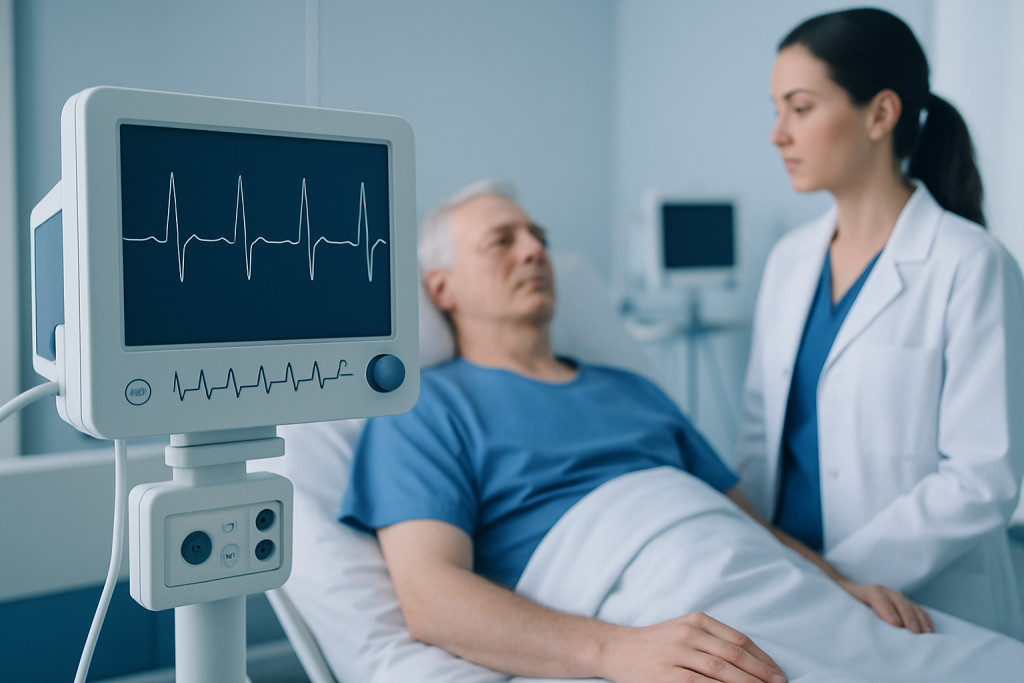
Complete heart block can be life-threatening, particularly when it causes a very slow or unstable ventricular rhythm. Reduced blood flow to the brain may lead to sudden dizziness, fainting or near-fainting. In severe cases, it can lead to dangerously low blood pressure, heart failure symptoms, cardiac arrest, or injury from a collapse.
Its seriousness varies from person to person. A person who develops complete AV block during a heart attack, severe infection, medication reaction, or electrolyte disturbance may need immediate treatment of both the rhythm problem and its cause. Some people have a steadier escape rhythm and initially feel relatively well, but they still need timely specialist evaluation because the rhythm can deteriorate without warning.
The outlook is often much improved once the cause is addressed and, when indicated, a pacemaker provides a dependable heart rhythm. Symptoms such as fainting, chest pain, marked breathlessness, confusion, or weakness should never be dismissed as normal aging or stress.
How to explain complete heart block to a patient?

A simple explanation is that the heart has its own wiring system. In complete heart block, the electrical message from the upper chambers to the lower pumping chambers is completely interrupted. The lower chambers then use their own emergency backup signal, which may be too slow to provide enough blood flow.
This does not necessarily mean the heart muscle has permanently failed. It means the timing and communication between its chambers are not working normally. The immediate priority is to make sure the person has a safe heart rate and stable blood pressure; the next step is to look for causes that may be treatable, such as a medication effect or an underlying heart condition.
For many people, a pacemaker is recommended because it can take over when the natural electrical pathway fails. It is understandable to feel worried after hearing this diagnosis, but cardiology teams can explain the findings, treatment choices, activity considerations, and follow-up plan in clear, individual terms.
Causes, risk factors and complete AV block pathophysiology
Complete AV block pathophysiology refers to the failure of electrical conduction through the AV node or the specialized conduction tissue below it. The blockage can occur at different levels of this pathway. A lower-level block is more likely to produce a slow, less reliable backup rhythm, while some blocks at the AV node may have a more stable escape rhythm. An ECG helps clinicians understand the pattern, although further assessment is often needed.
In adults, common causes include age-related scarring of the heart’s electrical system, coronary artery disease and heart attack, prior heart surgery or catheter-based procedures, inflammation of the heart muscle, and certain infiltrative or structural heart diseases. It may also be present from birth. In younger people, clinicians may consider conditions such as myocarditis, Lyme disease in appropriate geographical and exposure settings, autoimmune disease, or congenital heart disease.
Some medicines can slow AV conduction, including certain beta-blockers, calcium channel blockers, digoxin, and antiarrhythmic drugs. High potassium levels and other metabolic disturbances can also contribute. Medication-related or metabolic complete AV block may improve when the cause is corrected, but this must be done under medical supervision; prescribed medicines should not be stopped abruptly without advice.
- Older age and known conduction disease can increase risk.
- A history of heart attack, cardiac surgery, or structural heart disease may be relevant.
- New symptoms after starting or changing a heart-rate-lowering medicine should be reported promptly.
Symptoms and complete AV block diagnosis
Symptoms depend on how slowly the ventricles are beating and whether the body can compensate. Some people notice fatigue, reduced exercise tolerance, dizziness, palpitations, shortness of breath, or difficulty concentrating. Others have episodes of sudden fainting, often called syncope. A slow pulse may be present, but pulse rate alone cannot diagnose the type of heart block.
Complete AV block diagnosis begins with a clinical assessment and a 12-lead electrocardiogram (ECG). On the ECG, the atria and ventricles beat independently: P waves continue at their own rate, while QRS complexes occur at a separate, usually slower, rate. The clinician also evaluates blood pressure, oxygen level, symptoms, and signs of poor circulation to determine whether emergency treatment is required.
Further testing may include continuous cardiac monitoring, ambulatory ECG monitoring if episodes come and go, echocardiography to examine heart structure and pumping function, blood tests for electrolytes and other reversible factors, and a review of medications. Depending on the situation, investigations for ischemia, infection, inflammation, or inherited conditions may be appropriate. This careful assessment guides safe complete AV block treatment.
What is the treatment for complete AV block?
Treatment is determined by clinical stability and cause. A person with low blood pressure, fainting, chest pain, heart failure symptoms, or signs of poor blood flow requires emergency monitoring and treatment in a setting equipped for cardiac care. Temporary pacing may be used to support the heart rate while the team investigates and manages the underlying problem.
When complete AV block is persistent, symptomatic, acquired, or unlikely to resolve, implantation of a permanent pacemaker is generally the standard long-term treatment. A pacemaker is a small device that monitors the heart’s rhythm and delivers a gentle electrical impulse when needed, helping the ventricles beat at a safe rate. It does not cure every underlying heart condition, but it addresses the slow rhythm caused by the blocked electrical pathway.
The procedure is usually performed with local anesthetic and sedation when appropriate. A cardiologist makes a small incision, commonly below the collarbone, guides one or more leads through a vein into the heart using imaging, connects them to the pacemaker generator, and programs the system. In selected patients, leadless or specialized pacing approaches may be considered based on anatomy and cardiac needs.
People are considered for pacing after a specialist review of symptoms, ECG findings, likely reversibility, heart structure, and overall health. If medication toxicity, an electrolyte imbalance, or another reversible issue is clearly responsible, treatment may focus first on correcting that cause while providing temporary support if necessary. Decisions should be individualized rather than based on heart rate alone.
Pacemaker recovery, benefits and possible risks
After pacemaker implantation, monitoring commonly continues for several hours or overnight, depending on the person’s condition and the procedure. The incision may feel sore or bruised for several days. Many people resume light daily activities relatively soon, while the clinical team gives individualized guidance about wound care, driving, work, exercise, and lifting with the arm on the implant side during early healing.
Follow-up appointments check the wound, battery status, lead performance, and device settings. Pacemakers can often be monitored remotely as well as in clinic. The generator battery eventually needs replacement, usually through a smaller procedure, but the timing varies with the device and how much pacing is required.
Important benefits include prevention of excessively slow heart rates and a reduced risk of symptoms related to low blood flow, such as fainting. As with any procedure, there are risks, including bleeding, infection, bruising, lead movement, blood vessel or lung injury, and the need for later device-related procedures. These complications are uncommon but should be discussed before consent.
Acibadem International’s multidisciplinary cardiology and cardiac rhythm specialists at JCI-accredited hospitals assess and treat complete AV block for international patients, including evaluation for pacemaker therapy when appropriate.
What should you avoid with a heart block? When to seek medical care
Until a cardiologist has assessed the condition, a person with suspected or diagnosed complete AV block should avoid driving, climbing ladders, swimming alone, or other situations where sudden dizziness or fainting could cause harm. Strenuous activity should be discussed with a clinician, especially if it brings on symptoms. Alcohol, recreational drugs, dehydration, and unapproved supplements may worsen symptoms or interact with medicines in some people.
It is important not to start, stop, or change heart-rate-lowering medicines without medical advice. Patients should tell every healthcare professional about their heart block and bring an up-to-date medication list to appointments. After pacemaker implantation, they should follow the device team’s instructions about recovery, follow-up, and avoiding close or prolonged exposure to strong electromagnetic sources when advised.
Seek emergency medical care immediately for fainting, severe dizziness, chest pain, severe shortness of breath, new confusion, collapse, or symptoms of a very slow heartbeat. A person with newly detected complete AV block on an ECG, even without severe symptoms, should be evaluated urgently. Ongoing fatigue, exercise intolerance, or intermittent light-headedness also deserves prompt medical review.
Frequently asked questions
Can complete AV block go away on its own?
Complete AV block can improve if it is caused by a reversible problem, such as a medication effect, electrolyte imbalance, or some forms of inflammation or infection. However, it should never be watched at home without medical assessment. Persistent complete AV block commonly requires a permanent pacemaker.
Is complete AV block the same as third-degree heart block?
Yes. Complete AV block, complete heart block, and third-degree AV block are terms used for the same condition. They describe complete interruption of electrical conduction from the atria to the ventricles.
Can a person live a normal life with a pacemaker for complete heart block?
Many people return to daily activities and enjoy good quality of life after pacemaker implantation. The individual outlook also depends on the underlying cause of the heart block and other heart conditions. Regular device checks and cardiology follow-up remain important.
What does complete AV block look like on an ECG?
The ECG shows atrial activity and ventricular activity that are independent of each other. P waves occur regularly, but they do not have a consistent relationship to the QRS complexes. A trained clinician interprets the ECG together with symptoms and other findings.
Can medicines cause complete heart block?
Some medicines can slow electrical conduction and may contribute to AV block, particularly in people with underlying conduction disease. Examples include certain beta-blockers, calcium channel blockers, digoxin, and antiarrhythmic medicines. A clinician should review all prescription medicines, over-the-counter products, and supplements before any changes are made.
What should a person do if they faint and have heart block?
Fainting in someone known or suspected to have heart block should be treated as an emergency, especially if there is chest pain, breathing difficulty, injury, or ongoing weakness. Emergency services should be contacted rather than driving to hospital. The person should not be left alone while help is arranged.
References
- American Heart Association
- American College of Cardiology
- Heart Rhythm Society
- Mayo Clinic
- National Heart, Lung, and Blood Institute
This article is for general information only and is not a substitute for professional medical advice. Please consult a qualified doctor about your individual situation.
Explore treatments in Turkey — costs, top hospitals & a free quote
JCI-accredited · board-certified surgeons · reply within 24h
Add us as a Preferred Source to see more of our trusted health content across Google Search, AI Overviews and Discover.
Check your numbers in seconds
BMI, calories, due date, blood pressure and 30+ more clinical calculators — free, instant, doctor-reviewed ranges.

More from the Health Library



Related Specialists

Fzt. Merve Güvendi
Physical Medicine & Rehabilitation
Dr. Leila Mohammadi
Emergency Service
Dr. Ahmet Talha Kayataş
Emergency Service
Prof. Dr. S.Tolga Aydoğ
Physical Medicine & Rehabilitation