

Concussion Screening Tool: How It Works, Results and What to Expect
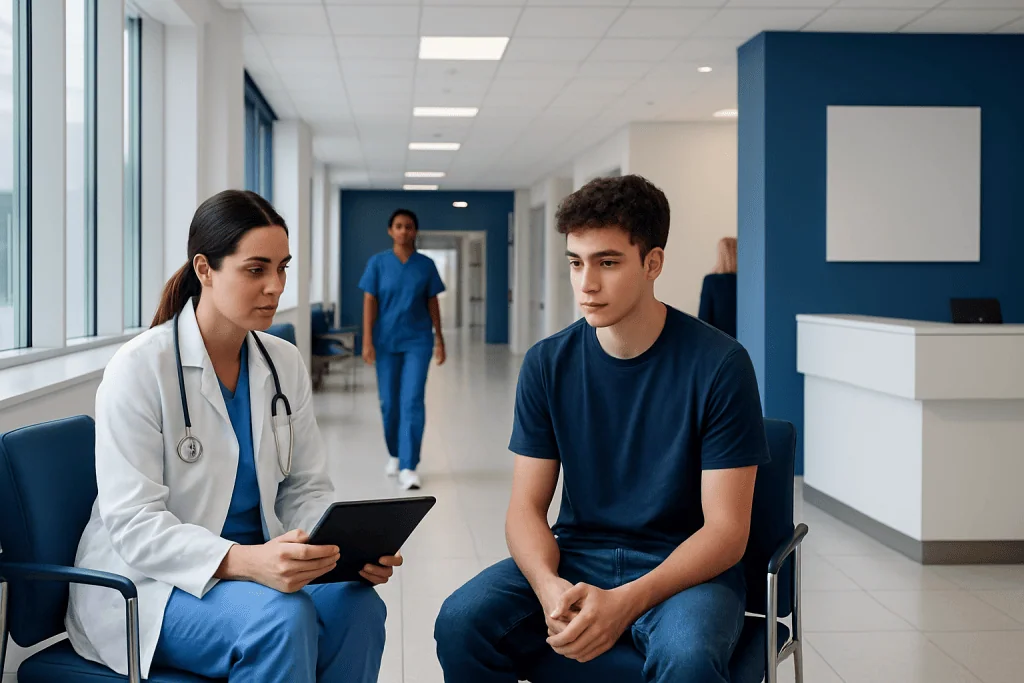
Concussion screening combines symptom questions with tests of memory, concentration, balance, coordination and neurological function. A normal score does not always rule out concussion, especially when symptoms develop or worsen hours after an injury.
Key Takeaways
- Concussion screening combines symptom questions with tests of memory, concentration, balance, coordination and neurological function.
- A normal score does not always rule out concussion, especially when symptoms develop or worsen hours after an injury.
- Brain imaging is not routinely needed for every concussion, but may be urgent when warning signs suggest bleeding or another serious injury.
- Most people improve with relative rest followed by a gradual, clinician-guided return to school, work, exercise and sport.
- Emergency evaluation is needed for worsening headache, repeated vomiting, seizure, increasing confusion, weakness, unusual behavior or difficulty staying awake.
A concussion screening tool is a structured assessment used after a possible head injury to check symptoms, thinking, balance, vision and neurological function. It helps clinicians decide whether urgent imaging, observation, follow-up or a gradual return to normal activity is appropriate, but no single screening result can confirm or exclude concussion on its own.
Overview: What a concussion screening tool does
A concussion screening tool is a structured set of questions and brief examinations used after a blow, jolt or forceful movement involving the head or body. It helps a trained healthcare professional identify possible concussion-related changes in symptoms, attention, memory, balance, eye movements and coordination. These assessments are commonly used in clinics, emergency departments, sports settings and schools.
A concussion is a mild traumatic brain injury. It can occur without loss of consciousness, a visible head wound or an abnormal scan. Screening is therefore one part of a broader clinical assessment: the clinician considers how the injury happened, the person’s symptoms, medical history and examination findings before making recommendations.
Different tools are designed for different age groups and settings. Examples include symptom checklists, sideline assessments, neurological examinations and standardized cognitive or balance tasks. A screening tool is most useful when interpreted by a qualified clinician and compared with the person’s usual functioning, when a pre-injury baseline is available.
How the screening works and who may need it
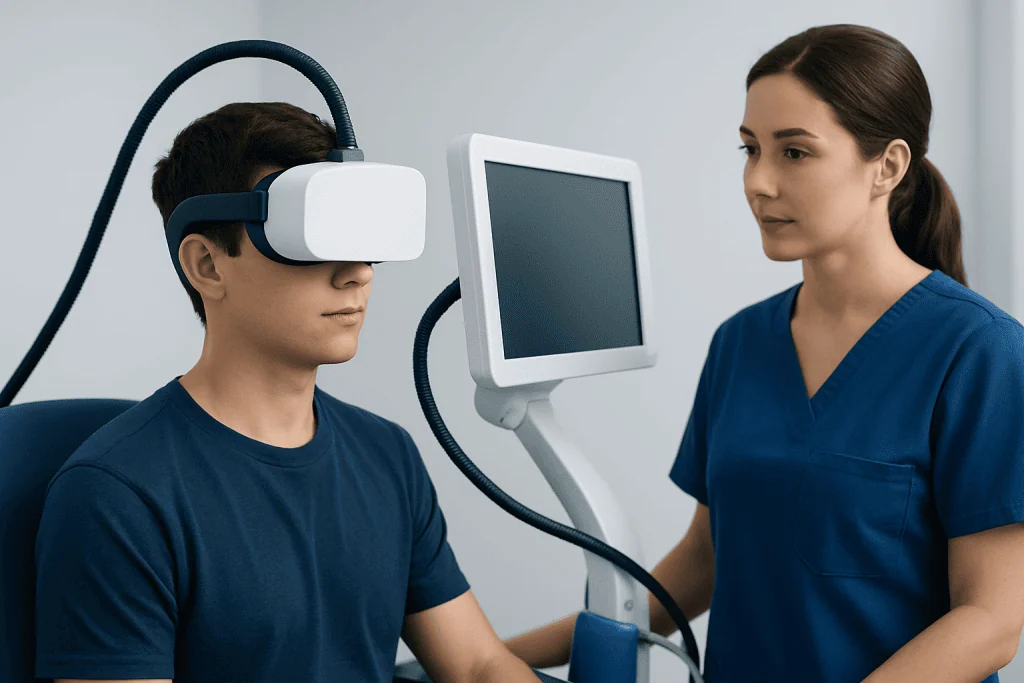
Screening may be appropriate for anyone who develops symptoms after a possible head injury, including a fall, vehicle collision, workplace accident, assault or sports impact. Symptoms can begin immediately, but some appear gradually over the following hours or days. Children, older adults, people taking blood-thinning medicines and people with previous concussions may need particularly careful assessment.
The process is not invasive and usually takes a short time, although a detailed evaluation can take longer. It may be performed shortly after injury and repeated at follow-up visits because concussion symptoms and performance can change during recovery.
A clinician may use screening findings to decide whether the person can be monitored at home, needs a period of observation, should avoid sport or driving, requires specialist follow-up, or needs emergency imaging. The goal is not simply to produce a number; it is to make safe, individualized decisions.
- Recent impact to the head, face, neck or body with force transmitted to the head
- Headache, dizziness, nausea, visual changes or sensitivity to light or noise
- Feeling slowed down, foggy, confused, unusually tired or emotionally different
- Difficulty concentrating, remembering events or maintaining balance
What does a concussion screening consist of?
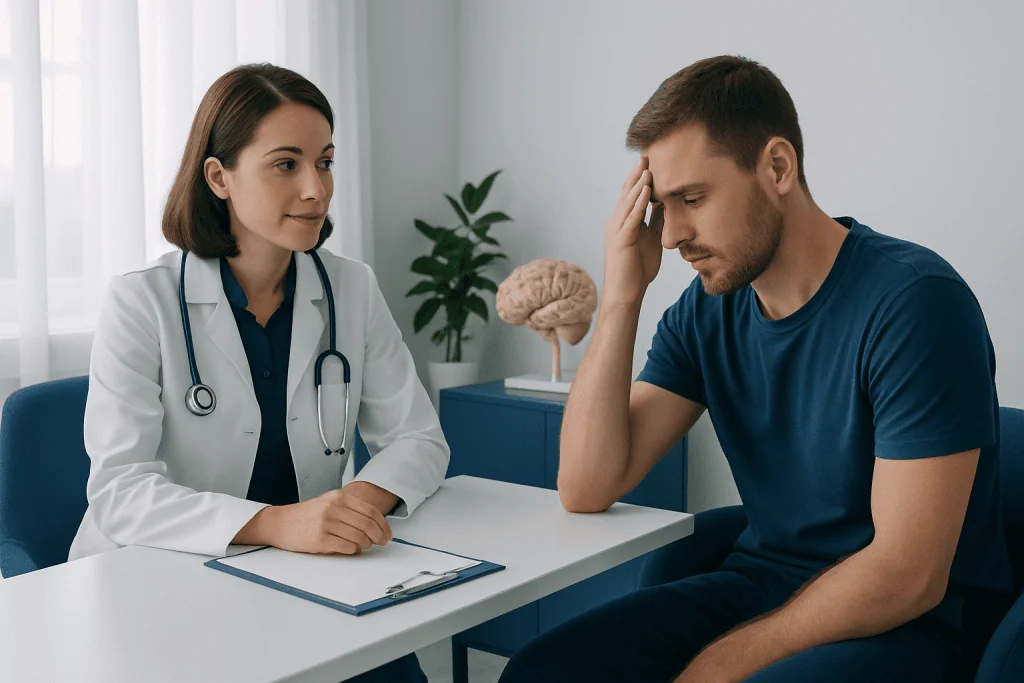
A concussion screening commonly begins with questions about the event: when it occurred, whether there was loss of consciousness, memory loss, seizure, vomiting, neck pain or immediate symptoms. The clinician also asks about prior concussions, migraine, learning or attention conditions, medications and other health factors that may affect recovery or testing.
Next, the person may complete a symptom inventory. This checks concerns such as headache, pressure in the head, dizziness, nausea, blurred vision, fatigue, sleep changes, irritability, sadness and difficulty thinking clearly. Symptoms are assessed in context because they can also occur with neck injury, dehydration, stress, infection or other conditions.
The examination can include orientation questions, immediate and delayed memory tasks, concentration exercises, speech and coordination checks, pupil response, eye tracking, balance and walking assessment. Some evaluations include vestibular and visual testing, since dizziness and visual discomfort are common after concussion. The clinician may also examine the neck, as neck injury can contribute to headache and dizziness.
CT or MRI scans are not concussion screening tools and do not show most uncomplicated concussions. Imaging is used when the history or examination raises concern for bleeding, skull fracture or another structural brain injury. A clinician will determine whether imaging is needed based on established head-injury decision rules and the individual situation.
Step-by-step: what to expect during assessment
First, the clinician checks immediate safety. They assess alertness, breathing, circulation and the severity of the injury, and ask whether there are danger signs that require urgent emergency care. If the injury happened during sport, play should stop immediately; a person with suspected concussion should not return the same day without appropriate medical clearance.
Second, the clinician takes a focused history and records symptoms. They may ask what the person remembers before and after the event, whether symptoms are improving or worsening, and whether daily activities such as reading, using screens, walking or attending school trigger symptoms.
Third, brief physical and cognitive tests are performed. The person may be asked to recall words, repeat numbers, answer date-related questions, follow a moving target with their eyes, stand in different positions or walk while completing a simple mental task. Results are documented and may be compared over time rather than viewed as a single final answer.
Finally, the clinician discusses next steps. This may include instructions for observation, symptom management, a follow-up appointment and a gradual return-to-learn or return-to-activity plan. Persistent symptoms may lead to referral for neurological, vestibular, visual, psychological or rehabilitation assessment.
What is a good score on a concussion test?
There is no universal “good” score on a concussion test. Different tools use different scales, and results vary with age, language, education, fatigue, pain, anxiety, attention conditions and whether the person has a pre-injury baseline result. A higher or lower score alone cannot reliably confirm that a person has, or does not have, a concussion.
For some tools, fewer reported symptoms and stronger performance on memory, concentration or balance tasks may be reassuring. However, a person can have clinically important symptoms despite a seemingly normal screening result. Conversely, pain, lack of sleep or stress can affect performance without indicating a concussion.
Clinicians interpret scores alongside the injury history and neurological examination. Repeat testing can be helpful because a trend toward improving symptoms and function is usually more informative than a single score. Return to sport, driving, school or safety-sensitive work should be based on symptom recovery and professional guidance, not a score alone.
How do I tell if I’m mildly concussed?
Possible signs of a mild concussion include headache, dizziness, nausea, balance problems, feeling dazed, slowed thinking, trouble concentrating, forgetfulness, sensitivity to light or noise, visual discomfort, fatigue and sleep changes. Some people also notice irritability, anxiety, low mood or feeling unlike themselves. Loss of consciousness is not required.
It is not always possible to tell independently whether symptoms represent concussion, particularly because similar symptoms may occur with neck strain, migraine, inner-ear problems or emotional stress after an accident. A healthcare professional can assess symptoms and look for signs that need more urgent investigation.
Until assessed, the person should avoid activities with a risk of another head impact. They should not return to contact sport, cycling in traffic, climbing, operating machinery or other high-risk tasks while dizzy, confused, slowed or unsteady. If symptoms are mild but persist, interfere with daily life or are uncertain, a timely medical review is advisable.
Recovery, benefits and limits of screening
The main benefit of concussion screening is that it identifies people who need closer observation, further evaluation or support during recovery. It also provides a record that can guide a gradual return to education, work, exercise and sport. Early recognition can reduce the chance of returning to risk too soon while symptoms are still present.
Most people with concussion improve over days to weeks, although recovery is individual. In the first 24 to 48 hours, relative rest is generally advised: this means reducing activities that clearly worsen symptoms while maintaining gentle daily routines as tolerated. Complete isolation or prolonged strict rest is usually not necessary unless a clinician specifically recommends it.
After the initial period, many people benefit from a gradual increase in physical and cognitive activity below the level that causes a significant or lasting symptom flare. A clinician can tailor this progression, especially for children, athletes and people whose work involves driving, heights, machinery or complex concentration.
Screening has limitations. It may not identify every concussion at the first assessment, and it cannot predict recovery with certainty. Persistent headaches, dizziness, sleep disturbance, mood changes or difficulty returning to normal activities deserve follow-up. Depending on symptoms, care may include neurology assessment and individualized rehabilitation support.
What is the 4-hour rule for concussion?
The “4-hour rule” is not a universal medical rule for concussion. It is sometimes used informally to describe observing a person closely for several hours after a head injury, especially when immediate emergency warning signs are absent. However, the appropriate observation period and location depend on the person’s age, symptoms, medications, injury mechanism and ability to be monitored safely.
A person should not wait four hours to seek help if warning signs are present. Emergency assessment is needed for worsening or severe headache, repeated vomiting, increasing confusion, unusual behavior, seizure, weakness or numbness, slurred speech, unequal pupils, fluid or blood from the ears or nose, loss of consciousness, or difficulty waking the person.
During home observation, a responsible adult should follow the discharge instructions provided by the healthcare team. Sleep is generally allowed if the person has been assessed and is otherwise stable, but the clinician may advise specific checks depending on the circumstances. Alcohol, recreational drugs and activities with risk of another injury should be avoided during recovery.
When to seek medical care
Urgent medical care is important after any head injury with red-flag symptoms, or when there is uncertainty about the person’s condition. Older adults, infants and young children, people taking anticoagulants or antiplatelet medicines, and people with bleeding disorders should seek prompt advice after a significant head impact, even when symptoms seem mild.
Emergency evaluation is needed if symptoms worsen rather than improve, if vomiting occurs repeatedly, or if the person becomes increasingly drowsy, confused, agitated or difficult to wake. New weakness, numbness, poor coordination, seizure, worsening neck pain, vision loss or trouble speaking also require urgent assessment.
For ongoing symptoms, follow-up can identify treatable contributors such as migraine-type headache, vestibular dysfunction, visual difficulties, sleep disruption or anxiety. Acibadem International’s multidisciplinary specialists and JCI-accredited hospitals provide assessment and care for international patients with concussion-related concerns.
Frequently asked questions
Can a concussion screening tool diagnose a concussion?
A screening tool can identify symptoms and findings that are consistent with concussion, but it does not diagnose the condition by itself. Diagnosis is based on the injury history, symptoms, neurological examination and, when needed, follow-up assessment. Imaging may be used to rule out more serious injury rather than to confirm an uncomplicated concussion.
How soon after a head injury should concussion screening be done?
Screening should be done as soon as practical after a suspected concussion, particularly when symptoms are present. Symptoms can evolve, so a normal early assessment does not remove the need for monitoring. Repeat evaluation may be recommended if symptoms appear, worsen or continue.
Can someone have a concussion without passing out?
Yes. Most concussions do not involve loss of consciousness. Headache, dizziness, confusion, memory problems, visual changes or feeling mentally slowed after an impact can all occur without fainting.
Should a person with suspected concussion sleep?
Sleep is usually permitted after assessment if the person is alert, stable and has no emergency warning signs. A clinician may give specific observation instructions based on the injury and medical history. It is important to seek urgent care if the person is unusually difficult to wake or becomes more confused.
Why might a concussion test be repeated?
Symptoms and test performance may change during the hours and days after an injury. Repeating selected parts of the assessment helps clinicians monitor recovery and make safer decisions about returning to school, work, driving or sport. Trends over time can be more useful than one isolated score.
When can someone return to sport after concussion?
Return to sport should be gradual and guided by a qualified healthcare professional. The person should first return to normal daily activities and progress through increasing levels of exercise without a significant return of symptoms. They should not return to contact or collision sport until medically cleared.
References
- Centers for Disease Control and Prevention
- American Academy of Neurology
- Concussion in Sport Group
- National Institute for Health and Care Excellence
- World Health Organization
This article is for general information only and is not a substitute for professional medical advice. Please consult a qualified doctor about your individual situation.
Explore treatments in Turkey — costs, top hospitals & a free quote
JCI-accredited · board-certified surgeons · reply within 24h
Add us as a Preferred Source to see more of our trusted health content across Google Search, AI Overviews and Discover.

More from the Health Library
Related Specialists

Prof. Dr. Bülent Değertekin
Gastroenterology
Atilla Murat Ünver
Physical Medicine & Rehabilitation
Dr. Cennet Yıldırım
Psychiatry
Embriyolog Hasan Benli
Vitro Fertilization and Reproductive Medicine Center