Contact High: A Complete Medical Overview
A contact high is most often associated with secondhand cannabis smoke, rather than simply being near a person who has used cannabis. Significant symptoms are uncommon in open or well-ventilated places but can occur with intense smoke exposure in enclosed spaces.
Key Takeaways
- A contact high is most often associated with secondhand cannabis smoke, rather than simply being near a person who has used cannabis.
- Significant symptoms are uncommon in open or well-ventilated places but can occur with intense smoke exposure in enclosed spaces.
- Secondhand cannabis smoke contains irritants and many of the same combustion-related chemicals found in tobacco smoke.
- Young children, pregnant people, older adults and people with heart or lung disease should avoid cannabis smoke exposure.
- Feeling unwell after exposure should be taken seriously, especially if symptoms include chest pain, trouble breathing, fainting or severe confusion.
A contact high describes feeling affected by cannabis after being around someone who is using it, usually through exposure to secondhand smoke. In ordinary, well-ventilated settings, clinically meaningful intoxication is unlikely, but heavy smoke exposure in a small enclosed area can cause temporary symptoms and may occasionally affect sensitive drug tests.
What Is a Contact High?
A contact high is a nonmedical term for feeling intoxicated or experiencing cannabis-related symptoms after being exposed to another person’s cannabis smoke. It is sometimes called a passive high. The term generally refers to inhaling secondhand smoke in the same environment, not to touching a person, sharing a room after the smoke has cleared, or being near someone who used cannabis earlier.
The main psychoactive compound in cannabis is delta-9-tetrahydrocannabinol, commonly called THC. When cannabis is smoked, THC-containing particles enter the surrounding air. A person nearby may inhale some of these particles, along with smoke released directly from the burning cannabis product and smoke exhaled by the person using it.
Whether a person develops a noticeable effect depends greatly on the setting. Research suggests that brief exposure in outdoor areas or well-ventilated rooms is unlikely to produce substantial THC levels or clear intoxication in most adults. Exposure becomes more relevant when large amounts of cannabis are smoked over time in a small, closed, poorly ventilated area.
What a Contact High Can Feel Like
People who believe they have experienced a contact high may report lightheadedness, sleepiness, headache, dry mouth, reduced concentration, altered sense of time, anxiety or a feeling of being unusually relaxed. Some symptoms can resemble those associated with active cannabis use, but they are usually milder and short-lived after passive exposure.
These symptoms are not specific to cannabis exposure. A hot, crowded room, lack of sleep, dehydration, anxiety, alcohol, nicotine, strong odors and other substances can also cause dizziness, nausea, headache or difficulty concentrating. This is why symptoms alone cannot prove that someone has absorbed enough THC to be intoxicated.
Secondhand smoke can also irritate the eyes, nose, throat and airways even when it does not cause a psychoactive effect. Coughing, throat discomfort, wheezing or a burning sensation in the eyes may reflect smoke irritation rather than a contact high. Anyone who feels impaired should avoid driving, operating equipment or making important safety-sensitive decisions until they feel fully well.
How Secondhand Cannabis Smoke Exposure Happens
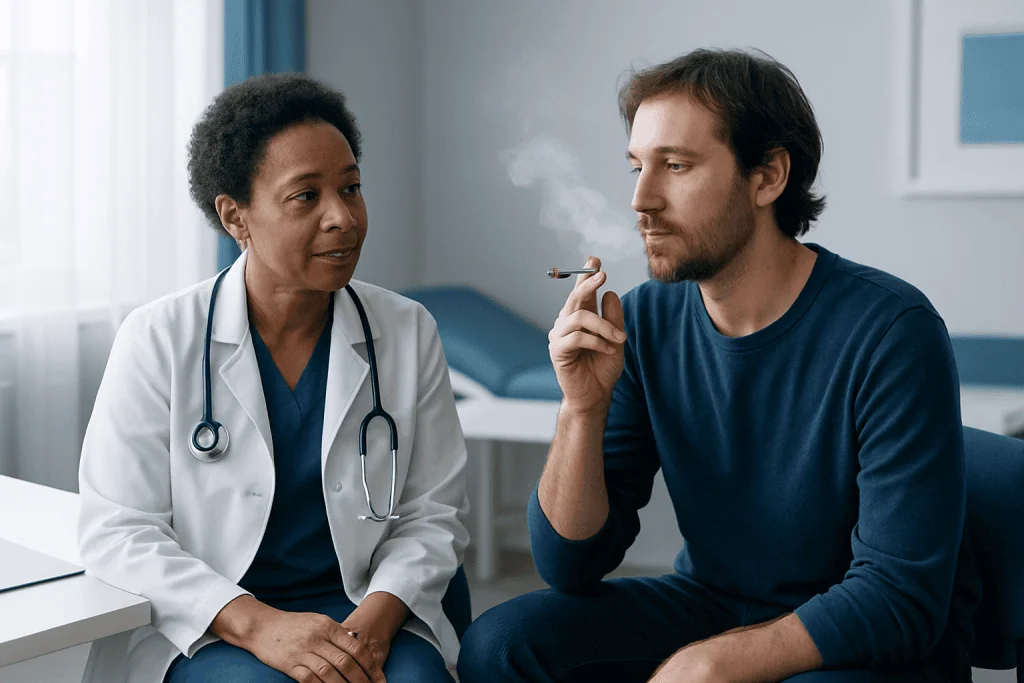
Smoke exposure is influenced by the amount of cannabis being used, the duration of exposure, the number of people smoking, room size and air circulation. An enclosed vehicle, small room, tent or similarly confined space can allow smoke particles to build up quickly. Open windows may help somewhat, but they do not eliminate exposure, particularly when smoking continues for a prolonged period.
Secondhand cannabis smoke is not the same as simply smelling cannabis. Odor can travel through buildings or outdoor spaces even when the amount of inhaled THC is too low to cause measurable effects. Likewise, being around a person who has used cannabis does not itself transfer THC through casual contact, conversation, hugging or sharing a nearby space.
Vaping cannabis may reduce some products of combustion compared with smoking, but it does not make indoor exposure risk-free. Aerosols may still contain THC and other substances, and product ingredients vary. Cannabis edibles do not create secondhand smoke exposure, although they should be stored securely because accidental ingestion, especially by children, can lead to significant illness.
Can a Contact High Cause a Positive Drug Test?
Under typical real-world conditions, passive exposure is unlikely to cause a positive cannabis drug test. Most routine exposures, such as passing someone smoking outdoors or spending a limited time in a ventilated space, are not expected to produce enough THC in the body to trigger standard testing thresholds.
However, studies have shown that extreme passive exposure can sometimes lead to detectable THC or related metabolites. This is most plausible after prolonged exposure to dense cannabis smoke in an unventilated or poorly ventilated enclosed environment. The type of test, timing of collection, laboratory cutoff level and extent of exposure all affect the result.
A person concerned about a workplace, legal or medical test should not rely on assumptions about passive exposure. They should follow the testing organization’s procedures and discuss questions with an occupational health professional, clinician or other appropriate qualified adviser. It is also important to remember that drug tests do not, by themselves, determine whether a person is currently impaired.
Health Considerations for Children and Other Sensitive Groups
Children should not be exposed to cannabis smoke or vapor. Their lungs and brains are still developing, and young children may be more vulnerable to respiratory irritation and accidental cannabis ingestion. Because children spend more time close to the ground and may touch contaminated surfaces, avoiding indoor cannabis use also helps reduce residue exposure in the home.
Pregnant people and those trying to become pregnant should avoid cannabis and secondhand cannabis smoke. While researchers continue to study all possible effects, avoiding exposure is a prudent approach because THC can reach the developing fetus and smoke contains potentially harmful combustion by-products.
People with asthma, chronic obstructive pulmonary disease, heart disease, arrhythmias, migraines or anxiety disorders may be more sensitive to smoke, odors or cannabis-related symptoms. Older adults may also have a higher risk of dizziness and falls. Individuals with chronic breathing symptoms can speak with a clinician about evaluation and asthma management if relevant, although no diagnosis should be assumed from smoke-related symptoms alone.
Reducing Exposure and Supporting Recovery
The most reliable way to prevent a contact high and smoke-related irritation is not to smoke cannabis indoors or in shared spaces. Moving to a different room, opening a window or using a fan may reduce odor but cannot fully remove the smoke particles that others can inhale. Avoiding use in homes, cars, workplaces and around children is especially important.
If someone feels mildly unwell after accidental exposure, they can move to fresh air, rest, drink water and avoid alcohol or other substances that may worsen dizziness or drowsiness. Symptoms usually improve as the exposure ends and the body clears the inhaled compounds. A person who feels impaired should arrange safe transportation rather than drive.
People who use cannabis and find it difficult to reduce or stop may benefit from nonjudgmental medical support. A clinician can assess substance use, mental health symptoms, sleep concerns and co-occurring conditions, then discuss appropriate care options. Support is individualized and may include counseling, behavioral approaches and referral to addiction medicine services when needed.
When to Seek Medical Care
Urgent medical assessment is appropriate for chest pain, severe shortness of breath, blue or gray lips, fainting, seizures, severe agitation, confusion that does not improve, or symptoms of a serious allergic reaction such as swelling of the face or throat. Emergency care is also important if a child may have eaten a cannabis edible or another cannabis product.
A healthcare professional should be consulted for persistent coughing, wheezing, repeated dizziness, palpitations, worsening anxiety or symptoms that continue after leaving the smoky environment. These symptoms may be related to smoke exposure, but they can also have other causes that deserve evaluation. People with known heart or lung conditions should seek advice promptly if their usual symptoms worsen.
Acibadem International’s multidisciplinary specialists and JCI-accredited hospitals support international patients who need assessment for respiratory, cardiovascular or substance-related health concerns. A clinician can help distinguish temporary smoke irritation from a condition requiring further testing or treatment and provide guidance tailored to the person’s health history.
Frequently asked questions
Can someone get high just by being near a person who used cannabis?
Casual proximity to someone who used cannabis earlier does not normally cause a contact high. Meaningful exposure generally requires inhaling secondhand smoke or aerosol, particularly in an enclosed area with limited ventilation.
How long does a contact high last?
If symptoms occur after passive smoke exposure, they are usually temporary and should improve after leaving the environment. Duration varies with the intensity and length of exposure, as well as an individual’s sensitivity and any other substances involved.
Can smelling cannabis make a person high?
Cannabis odor alone does not necessarily mean a person has inhaled enough THC to become intoxicated. Smell can be noticeable at concentrations far below those expected to produce significant psychoactive effects.
Can secondhand cannabis smoke affect asthma?
Yes. Like other forms of smoke, secondhand cannabis smoke can irritate the airways and may trigger coughing, wheezing or asthma symptoms in susceptible people. Those with asthma should avoid smoke exposure and follow their clinician’s action plan if symptoms develop.
Can passive cannabis exposure make a drug test positive?
A positive test from ordinary passive exposure is unlikely. Detectable results have been reported in unusual situations involving intense and prolonged smoke exposure in closed, poorly ventilated environments, so avoiding these environments is sensible when testing is a concern.
What should a person do if they feel dizzy after secondhand cannabis smoke?
They should leave the smoky space, get fresh air, sit or lie down if needed, drink water and avoid driving. Medical care is advisable if dizziness is severe, persists, occurs with chest pain or breathing problems, or affects a child or a person with significant health conditions.
References
- Centers for Disease Control and Prevention
- National Institute on Drug Abuse
- National Academies of Sciences, Engineering, and Medicine
- American Lung Association
- Substance Abuse and Mental Health Services Administration
This article is for general information only and is not a substitute for professional medical advice. Please consult a qualified doctor about your individual situation.
Explore treatments in Turkey — costs, top hospitals & a free quote
JCI-accredited · board-certified surgeons · reply within 24h
Add us as a Preferred Source to see more of our trusted health content across Google Search, AI Overviews and Discover.