Corn on Foot: An Evidence-Based Guide for Patients

A corn on foot forms from repeated pressure or rubbing, most often from footwear or foot shape. Corns are different from warts and calluses, and correct diagnosis helps avoid unnecessary treatment.
Key Takeaways
- A corn on foot forms from repeated pressure or rubbing, most often from footwear or foot shape.
- Corns are different from warts and calluses, and correct diagnosis helps avoid unnecessary treatment.
- Many corns improve with better-fitting shoes, protective padding, and careful skin care.
- People with diabetes, nerve problems, or poor circulation should not try to cut or treat corns themselves.
- Medical care is important if a corn is very painful, looks infected, or returns despite self-care.
A corn on foot is a small, thickened area of skin that develops where repeated pressure or friction affects the foot or toes. Most corns are not dangerous, but they can be painful and may need treatment if they keep coming back, become inflamed, or occur in someone with diabetes or poor circulation.
What Is a Corn on Foot?
A corn on foot is a localized area of thickened skin that develops as the body tries to protect itself from repeated pressure or friction. It most often appears on the tops or sides of toes, between toes, or on parts of the sole that bear extra stress. In many cases, a corn is small but can feel disproportionately painful because it presses inward onto deeper tissues.
Corns are not the same as a general patch of dry skin. They usually have a dense central core and a more defined shape than a callus. Hard corns commonly form on bony areas exposed to shoe pressure, while soft corns tend to develop between toes where moisture keeps the skin pliable.
For many people, a corn on foot is a mechanical problem rather than a skin disease. The thickened skin forms because the foot is being rubbed or compressed in the same spot over time. Addressing the source of that pressure is often the most effective way to prevent recurrence.
How Corns Differ From Calluses and Warts
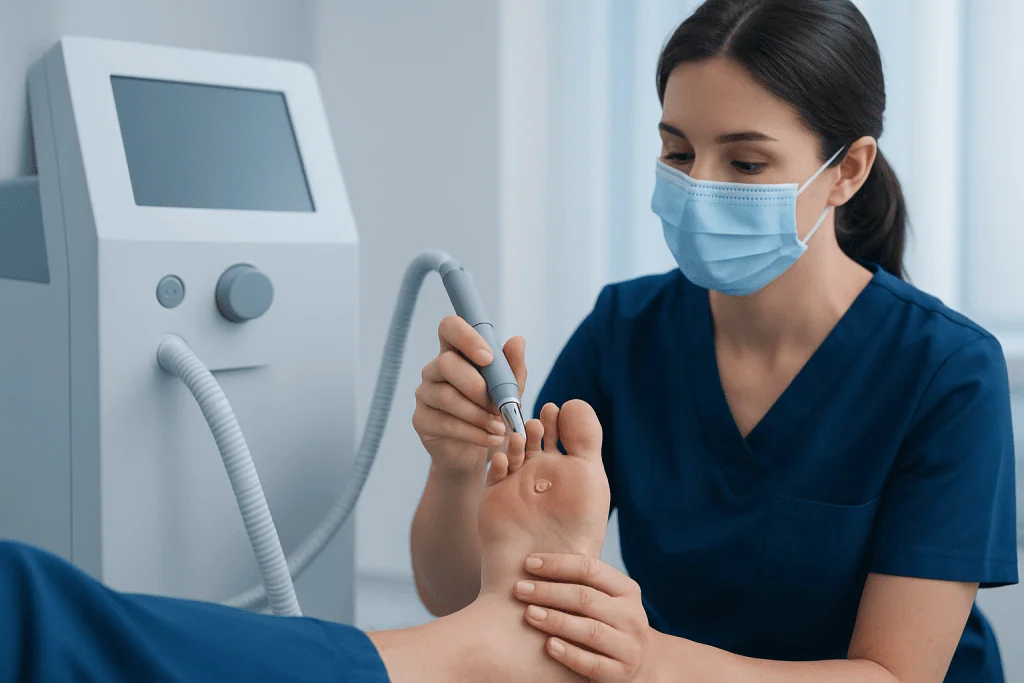
Corns and calluses are both caused by repeated friction or pressure, but they are not identical. A callus is usually broader, flatter, and less sharply defined. It often forms on weight-bearing parts of the foot such as the heel or ball of the foot, whereas a corn tends to be smaller, deeper, and more focused over a pressure point.
A wart can also resemble a corn, especially on the sole. However, plantar warts are caused by a virus rather than friction. They may interrupt the normal skin lines and sometimes contain tiny dark dots from small blood vessels. Because treatment differs, it is helpful to have uncertain lesions assessed by a qualified clinician, particularly if they are painful or persistent.
Some skin problems can coexist. For example, a person may have both a callus and a corn because of foot structure or shoe fit. In other cases, an apparently simple corn may actually be related to toe deformity, gait issues, or another foot condition that deserves attention.
Symptoms and What a Corn Feels Like
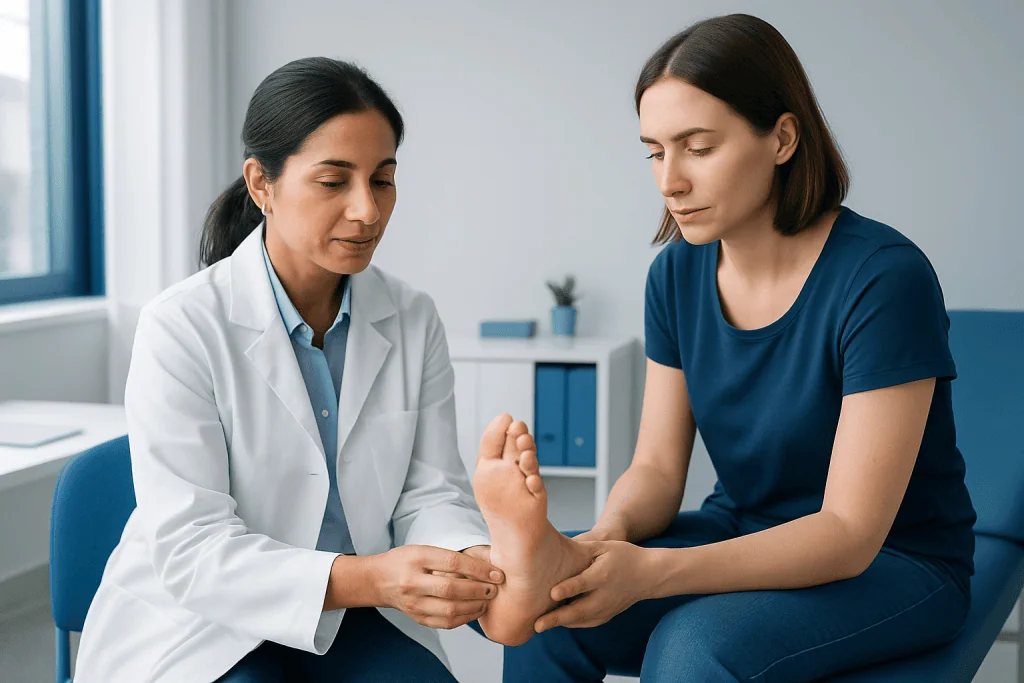
The most common symptom of a corn on foot is a small, round area of thickened skin that becomes tender when pressed or when walking. Many people describe a sensation of stepping on a pebble, especially if the corn is on the sole. Hard corns may feel firm and dry, while soft corns between the toes can look pale or rubbery because of moisture.
Symptoms can range from mild irritation to significant discomfort that affects daily activities. Shoes may suddenly feel tight in one area, and the skin can become red or inflamed around the corn. Some people also notice that the surrounding area becomes sensitive after long periods of standing or exercise.
- Localized thickened skin with a central hard core
- Pain with direct pressure or walking
- Tenderness over a toe joint or bony prominence
- Skin redness or irritation from rubbing
- Moist, whitish skin between toes in soft corns
If pain seems more severe than expected, or the skin changes color, drains fluid, or bleeds, the problem may not be a simple corn. In that situation, a clinician can help rule out infection, ulceration, or another diagnosis.
Causes and Risk Factors
The underlying cause of a corn on foot is repeated mechanical stress. Tight shoes, narrow toe boxes, high heels, and shoes that allow the foot to slide can all create friction and pressure points. Even a well-made shoe can contribute if its shape does not match the person’s foot.
Foot structure also matters. Bunions, hammertoes, claw toes, prominent joints, or differences in walking pattern can make certain parts of the foot absorb more force. Over time, the skin responds by thickening at those stressed points. People with active jobs, athletes, and those who spend long hours standing may be more likely to develop corns.
Risk also increases when the protective fat pad of the foot thins with age or when socks do not reduce friction well. Conditions that affect nerve sensation, circulation, or wound healing deserve special attention. In those situations, what looks like a corn may become more complicated and should be assessed promptly, especially in people with diabetic foot problems.
How Corns Are Diagnosed
Diagnosis is usually based on a clinical examination. A doctor, dermatologist, or podiatry professional looks at the location, size, shape, and texture of the lesion and asks about symptoms, footwear, and daily activity. Often, the pattern of pressure on the foot provides important clues.
The clinician may gently pare down the thickened skin to see whether a central core is present and whether the underlying area looks typical for a corn. This can also help distinguish a corn from a wart or another skin lesion. If the corn repeatedly returns in the same spot, the foot may be examined for toe deformities, gait changes, or bony prominences that are driving the problem.
Additional testing is not always necessary, but it may be recommended if circulation is poor, sensation is reduced, or the diagnosis is uncertain. In selected cases, imaging may help evaluate structural causes. If the lesion appears infected or unusually persistent, referral to a relevant specialist may be appropriate.
Treatment Options for a Corn on Foot
Treatment works best when it relieves pressure and carefully removes the build-up of hard skin. For many patients, the first step is changing footwear: shoes should have enough width and depth for the toes, a stable sole, and minimal rubbing over painful areas. Protective pads, toe sleeves, or separators may reduce friction when used correctly.
Professional trimming or paring of the corn can provide relief, especially when the corn is painful or thick. This should be done by a trained clinician rather than attempted at home with blades or sharp tools. If a structural foot problem such as a bunion or hammertoe is causing repeated pressure, treatment may also involve evaluation by specialists in orthopedic care.
Medicated products designed to soften thickened skin may help some adults, but they are not suitable for everyone. People with diabetes, poor circulation, neuropathy, fragile skin, or uncertain diagnosis should avoid self-treating with acids unless advised by a doctor. Moisturizing creams containing keratolytic ingredients may sometimes be recommended as part of supervised care.
When a corn persists because of a mechanical deformity, long-term management may include custom orthotics, pressure redistribution, or treatment of the underlying foot condition. If the skin issue is part of a broader pattern involving chronic irritation, skin thickening, or another diagnosis, assessment in dermatology can be helpful.
Prevention and Safe Self-Care
Prevention focuses on reducing repeated pressure before the skin has to protect itself. Shoes should fit the longest toe, allow room in the toe box, and feel comfortable from the start rather than needing a long break-in period. Socks that wick moisture and reduce rubbing can also help, especially during walking or sport.
Routine foot care is useful for people prone to corns. Washing and drying the feet well, especially between the toes, helps protect the skin. After bathing, gentle use of a pumice stone on thickened skin may be appropriate for some people, but only if the skin is intact and sensation is normal. Moisturizing the feet can reduce dryness and cracking, though creams should generally not be applied between the toes unless advised.
- Choose shoes with enough width and depth
- Avoid high heels or narrow toe boxes if they trigger pressure
- Use cushioning pads or toe protectors as recommended
- Keep toenails trimmed to reduce shoe crowding
- Check the feet regularly for pressure spots or skin changes
Self-care should stay gentle and low-risk. Cutting a corn with scissors, razors, or other sharp tools can cause injury and infection. People with diabetes, reduced sensation, poor circulation, or a history of foot ulcers should seek professional foot care rather than trying home removal methods.
When to Seek Medical Care
Medical review is a good idea if a corn on foot is very painful, keeps returning, interferes with walking, or does not improve after footwear changes and basic care. A clinician can confirm the diagnosis and look for an underlying cause such as toe deformity, abnormal pressure distribution, or another skin condition.
Prompt assessment is especially important if the area becomes red, warm, swollen, drains fluid, or bleeds, as these changes may suggest infection or skin breakdown. Anyone with diabetes, peripheral neuropathy, poor circulation, or immune system problems should seek medical advice early rather than waiting for the corn to worsen.
Specialist care may be needed when foot structure contributes to chronic pressure or when diagnosis is uncertain. Depending on the situation, this may involve foot imaging, gait assessment, skin evaluation, or management in a multidisciplinary clinic. Acibadem International’s multidisciplinary specialists and JCI-accredited hospitals diagnose and treat foot conditions for international patients, including problems that may require physical therapy and rehabilitation or specialist surgical assessment.
Frequently asked questions
Is a corn on foot dangerous?
A corn on foot is usually not dangerous, but it can become painful and interfere with walking. It needs more careful attention in people with diabetes, poor circulation, or reduced feeling in the feet because skin damage can be harder to notice and heal.
Can a corn go away on its own?
A corn may improve if the source of friction or pressure is removed, such as by changing shoes or using protective padding. However, if the same pressure continues, the corn often returns or stays painful.
What is the difference between a corn and a plantar wart?
A corn is caused by repeated pressure or friction, while a plantar wart is caused by a viral infection of the skin. They can look similar, so a professional examination is useful if the diagnosis is uncertain or the lesion does not improve.
Is it safe to cut off a corn at home?
No, cutting a corn at home with a blade or sharp tool is not recommended. This can injure the skin, lead to infection, and create serious problems, especially for people with diabetes or poor circulation.
Do corn removal pads always work?
Corn pads may reduce pressure and help with comfort, but not all medicated pads are appropriate for every person. Products containing acids can irritate healthy skin and should be used cautiously, especially if there is diabetes, neuropathy, or uncertain diagnosis.
Why does my corn keep coming back?
A recurring corn usually means that the original pressure point has not been corrected. Common reasons include shoe fit, toe deformity, walking mechanics, or a prominent bone under the skin.
This article is for general information only and is not a substitute for professional medical advice. Please consult a qualified doctor about your individual situation.
Explore treatments in Turkey — costs, top hospitals & a free quote
JCI-accredited · board-certified surgeons · reply within 24h
Add us as a Preferred Source to see more of our trusted health content across Google Search, AI Overviews and Discover.

More from the Health Library

Tooth Extraction: An Evidence-Based Guide for Patients

Grounding: An Evidence-Based Guide for Patients

Iris Whitening: An Evidence-Based Guide for Patients

Odynophagia: An Evidence-Based Guide for Patients

Gellan Gum — Explained by Medical Evidence, Not Myths