Iris Whitening: An Evidence-Based Guide for Patients

Iris whitening is not a standard medical treatment and is performed for cosmetic rather than health reasons. Laser pigment removal and cosmetic iris implants can permanently alter delicate eye structures.
Key Takeaways
- Iris whitening is not a standard medical treatment and is performed for cosmetic rather than health reasons.
- Laser pigment removal and cosmetic iris implants can permanently alter delicate eye structures.
- Potential complications include inflammation, raised eye pressure, corneal damage, vision loss, and the need for further surgery.
- A change in iris color that happens naturally should be assessed by an eye doctor, especially if it affects one eye.
- Professionally fitted, regulated colored contact lenses are generally a more reversible option for changing appearance.
- Redness, pain, blurred vision, light sensitivity, or halos after any eye procedure require urgent medical assessment.
Iris whitening refers to cosmetic attempts to lighten the colored part of the eye. Available methods have limited long-term evidence and may carry significant risks, so a full assessment by an ophthalmologist is essential before considering any eye-color procedure.
What is iris whitening?
Iris whitening is a term used for cosmetic procedures intended to make the iris, the colored ring around the pupil, appear lighter. People may seek a change from brown or hazel eyes to a lighter blue, green, or gray appearance. This is different from treating an eye disease: iris whitening is elective and does not improve vision or eye health.
The color of the iris depends mainly on the amount and distribution of melanin pigment in its front layers, as well as the way light scatters within iris tissue. Darker irises usually contain more melanin. Eye color is largely determined by genetics and is normally stable after early childhood, although subtle changes in appearance can occur with lighting, clothing, pupil size, and aging.
Online descriptions of iris whitening may use terms such as laser eye-color change, iris depigmentation, or eye-color surgery. These names can make a cosmetic procedure sound simple, but the iris is a living, highly specialized structure that helps regulate how much light enters the eye. Any intervention that disrupts it deserves careful consideration.
Which methods are promoted for changing iris color?
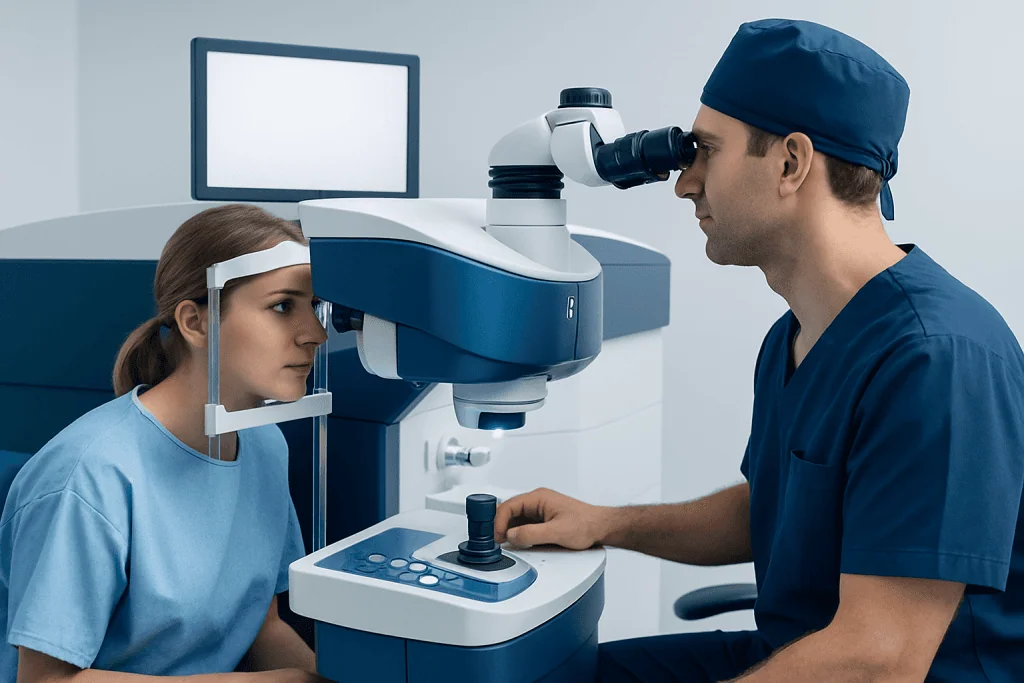
Laser-based iris lightening aims to break down pigment in the front layer of a brown iris. The body may then attempt to clear pigment particles through the eye’s drainage system. The intended color change is permanent, because removed pigment cannot be restored. While some clinics promote this approach, robust long-term evidence establishing its safety and effectiveness is limited.
Cosmetic iris implants are artificial colored devices placed inside the eye to change its visible appearance. Implants may have a role in carefully selected reconstructive cases, such as severe iris damage caused by injury or a congenital condition. However, inserting an implant solely to alter natural eye color is very different from reconstructive care and has been associated with serious complications.
Colored contact lenses change the appearance of the eye without altering the iris itself. They are temporary and can be removed, making them a more reversible option. However, decorative lenses are still medical devices in many countries and should be prescribed, fitted, and monitored by an eye-care professional rather than purchased from unregulated sellers.
No eye drops, supplements, exercises, or home remedies have been shown to safely whiten or permanently lighten the iris. Products that claim to change eye color without clinical assessment should be approached with caution, particularly when they do not clearly identify their ingredients or regulatory status.
What does the evidence say about safety and results?

There is currently no broadly accepted, routine ophthalmic procedure for cosmetic iris whitening. The available information on laser iris depigmentation includes early studies and reports, but there is not enough high-quality, long-term evidence to fully define the likelihood of complications over many years. A cosmetic result seen soon after treatment cannot establish that the eye will remain healthy over time.
A central concern is the release of pigment after laser treatment. Pigment particles may affect the eye’s drainage angle, the area that allows fluid to leave the eye. If fluid cannot drain normally, pressure inside the eye can rise. Persistently elevated pressure may damage the optic nerve and can lead to glaucoma.
Cosmetic iris implants have been linked in clinical reports to inflammation, corneal injury, cataracts, glaucoma, and reduced vision. Some people have required implant removal or additional eye surgery. Surgical removal does not always reverse damage that has already occurred, which is why a procedure being technically reversible does not necessarily make its risks reversible.
Outcomes also cannot be predicted precisely. Natural iris structure, pigment density, healing response, and pre-existing eye conditions vary from person to person. An ophthalmologist should explain both the known risks and the important uncertainties before any elective procedure affecting the inside of the eye.
Possible complications and who may face higher risk
The eye has limited tolerance for inflammation, trauma, and changes in pressure. Potential complications after iris color-changing procedures include eye pain, persistent redness, sensitivity to light, blurred vision, glare, halos around lights, and visual distortion. More serious concerns include uveitis, a form of inflammation inside the eye; corneal decompensation, in which the clear front surface of the eye loses function; cataract; and glaucoma.
People with glaucoma, ocular hypertension, pigment dispersion, uveitis, corneal disease, dry eye disease, previous eye surgery, diabetes-related eye disease, or a strong family history of glaucoma may have additional concerns. A history of contact-lens infections or difficulty attending follow-up appointments can also affect the safety of cosmetic choices involving the eyes.
Risk assessment should include more than a vision chart. An ophthalmologist may check eye pressure, inspect the cornea and iris under magnification, assess the drainage angle, evaluate the optic nerve, and measure corneal health. These examinations help identify conditions that may not cause symptoms in their early stages.
People should be especially cautious about procedures advertised as painless, risk-free, guaranteed, or suitable for everyone. A reputable clinician should discuss alternatives, explain uncertainty, allow time for reflection, and never discourage a patient from seeking an independent ophthalmology opinion.
How to make an informed decision about eye-color change
Before pursuing iris whitening, it is sensible to ask why a particular procedure is being recommended, what evidence supports it, and what follow-up care is included. The clinician should be a qualified ophthalmologist with appropriate experience in anterior-segment eye care, rather than a provider who cannot manage complications affecting eye pressure, the cornea, or the retina.
Useful questions include whether the procedure is approved or regulated where it is offered, what alternatives are available, how complications are detected, and who provides urgent care if problems develop. Patients should also ask whether the proposed results are permanent, whether changes can be reversed, and what may happen if the treatment does not produce the intended appearance.
For many people, professionally fitted colored contact lenses offer a less invasive way to explore a different look. They still require careful hygiene: hands should be washed before handling lenses, lenses should not be shared, and they should never be worn while sleeping unless specifically prescribed for overnight use. Lenses should be removed if discomfort, redness, or blurred vision occurs.
It can be helpful to allow time between a consultation and a decision, especially when a procedure is permanent. Discussing concerns with a trusted eye doctor and considering the impact of possible visual complications can support a decision that prioritizes long-term eye health over a short-term cosmetic change.
Protecting eye health before and after cosmetic choices
There is no proven home method to prevent natural iris pigment from changing or to safely whiten the iris. The most effective way to protect eye appearance and vision is to maintain general eye health: use ultraviolet-protective sunglasses outdoors, avoid smoking, manage conditions such as diabetes and high blood pressure, and attend routine eye examinations when recommended.
Anyone who has undergone an eye-color procedure should follow the treating ophthalmologist’s postoperative instructions closely and attend all scheduled reviews. Follow-up is important because raised eye pressure, inflammation, and corneal changes may develop gradually. Prescribed eye medicines should only be used as directed, and no additional drops should be started without medical advice.
After any procedure, rubbing the eyes, using non-prescribed cosmetic drops, swimming before clearance from the clinician, or wearing contact lenses too early may increase irritation or infection risk. A person should not assume that an eye is healthy simply because it looks normal or vision seems clear at first.
Acibadem International’s multidisciplinary specialists and JCI-accredited hospitals can assess eye concerns and discuss appropriate diagnostic and treatment options for international patients. For elective appearance-related questions, an ophthalmology consultation can help distinguish reversible cosmetic options from procedures that may place vision at risk.
When to seek medical care
A person should arrange a prompt ophthalmology assessment if one iris appears to change color without an obvious explanation, particularly if the change occurs in only one eye. New differences in iris color can occasionally be associated with inflammation, injury, glaucoma-related conditions, certain medicines, or other eye disorders that require evaluation.
Urgent medical care is needed for eye pain, sudden or worsening blurred vision, marked redness, light sensitivity, halos around lights, nausea with eye pain, flashes, or a sudden increase in floaters. These symptoms can occur with serious eye problems and should not be attributed to cosmetic treatment or contact lenses without an examination.
Anyone who develops symptoms after laser treatment, an implant procedure, or decorative contact-lens use should stop using lenses if applicable and contact an eye-care professional without delay. Early assessment may help limit complications and protect vision.
Frequently asked questions
Is iris whitening safe?
Iris whitening cannot currently be considered a routine, proven-safe cosmetic procedure. Laser pigment removal and cosmetic iris implants may cause inflammation, raised eye pressure, corneal damage, and vision-threatening complications. A qualified ophthalmologist can explain individual risks, but no elective eye-color procedure is risk-free.
Can laser treatment permanently change brown eyes to blue?
Laser procedures are promoted as a way to reduce visible brown iris pigment and create a lighter appearance. Any pigment removal is intended to be permanent, and the final color cannot be fully predicted. Long-term safety data remain limited, particularly regarding pigment-related pressure problems inside the eye.
Are cosmetic iris implants the same as medical iris implants?
No. Artificial iris devices can be medically useful in selected people with iris loss or significant iris damage. Using an implant in an otherwise healthy eye solely to change color carries different risks and is not equivalent to reconstructive treatment.
Do eye drops or supplements whiten the iris?
No eye drops, vitamins, or supplements have been proven to safely whiten or permanently change natural iris color. Products making such claims may be ineffective or unsafe, especially if their ingredients and regulatory status are unclear. An eye doctor should assess any product intended for use in or around the eyes.
Are colored contact lenses safer than iris whitening surgery?
Colored contact lenses do not change the iris and are removable, so they are generally a more reversible cosmetic option than surgery. They can still cause infection, corneal injury, or reduced vision if poorly fitted or used incorrectly. They should be obtained with a prescription and worn according to professional advice.
Why has one of my irises changed color?
A noticeable change in one iris should be checked by an ophthalmologist, especially if it is new or accompanied by pain, redness, blurred vision, or light sensitivity. Some changes are harmless, but others can be linked to injury, inflammation, medicines, or eye conditions that need treatment.
References
- American Academy of Ophthalmology
- U.S. Food and Drug Administration
- National Eye Institute
- Royal College of Ophthalmologists
This article is for general information only and is not a substitute for professional medical advice. Please consult a qualified doctor about your individual situation.
Explore treatments in Turkey — costs, top hospitals & a free quote
JCI-accredited · board-certified surgeons · reply within 24h
Add us as a Preferred Source to see more of our trusted health content across Google Search, AI Overviews and Discover.

More from the Health Library



Related Specialists

Dr. Yeliz Kantürk
Otorhinolaryngology
Prof. Dr. Murat Sungur
Internal Medicine
Prof. Dr. Kerim Sarıyılmaz
Orthopedic Surgery & Traumatology
Assoc. Prof. Dr. Lütfiye Kılıç
Pulmonary Medicine