Coronavirus Temperature Screening: How It Works, Results and What to Expect

Temperature screening measures body temperature but does not diagnose COVID-19. A fever is commonly defined as 38°C (100.4°F) or higher when measured orally, although thresholds can vary by method and setting.
Key Takeaways
- Temperature screening measures body temperature but does not diagnose COVID-19.
- A fever is commonly defined as 38°C (100.4°F) or higher when measured orally, although thresholds can vary by method and setting.
- Some people with COVID-19 never develop a fever, while fever can also occur with many non-COVID illnesses.
- Rapid antigen and molecular tests should be interpreted alongside symptoms, timing and exposure history.
- People with severe breathing difficulty, chest pain, confusion or blue/gray lips or skin need urgent medical assessment.
Coronavirus temperature screening is a quick, non-invasive check for fever that may help identify people who need further assessment for COVID-19 or another illness. A normal temperature does not rule out infection, so symptoms, exposure history and appropriate testing remain important.
Overview: what coronavirus temperature screening can tell you
Coronavirus temperature screening is a fast check of a person’s body temperature, often performed at entrances to healthcare facilities, workplaces, airports or other shared settings. It is designed to identify fever, which can be a symptom of COVID-19 and many other infections. The process is simple and usually takes only seconds, particularly when a non-contact infrared thermometer is used.
Temperature screening is a public-health measure rather than a diagnostic test. It cannot confirm whether a person has COVID-19, because many infected people have no fever and because fever may have causes unrelated to coronavirus infection. A raised reading should therefore lead to sensible next steps, such as repeating the measurement correctly, assessing symptoms and considering a COVID-19 test.
Screening can be useful as one layer of infection prevention, especially in healthcare environments. Its value is greatest when it is combined with staying home when unwell, good hand and respiratory hygiene, ventilation, vaccination where recommended, and testing when symptoms or exposure make COVID-19 possible.
How coronavirus temperature screening works
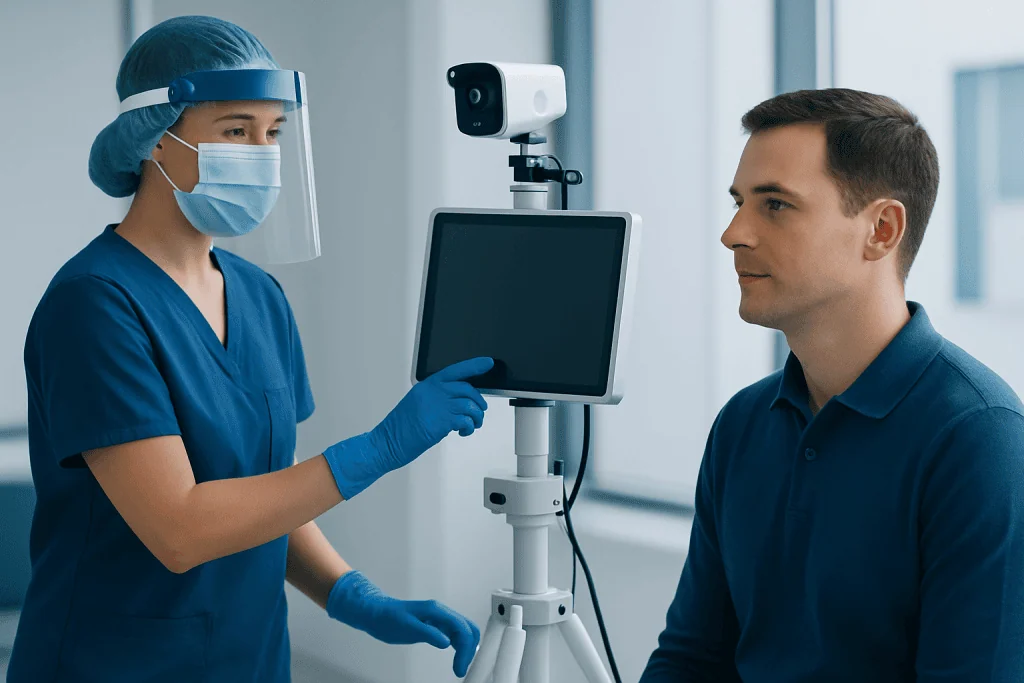
Body temperature can be measured with several devices. Contact thermometers may be used in the mouth, ear, armpit or rectum, while non-contact infrared devices estimate temperature from the surface of the forehead. Thermal cameras may screen groups of people, but an individual thermometer is usually needed to verify an elevated result.
For a forehead scan, the person stands still while the device is held at the manufacturer-recommended distance from the center of the forehead. The reading is displayed within seconds. Staff may ask the person to wait briefly and repeat the measurement if the result is higher than expected or if environmental factors could have affected it.
Results can vary with the measurement site, device quality and recent activity. Outdoor heat or cold, exercise, a hot drink, sweating, hats and direct sunlight can affect skin temperature readings. This is why a screening result should be treated as an initial check, not a diagnosis or a reason to ignore symptoms.
- Benefit: quick, painless and does not require a sample.
- Limitation: may miss COVID-19 in people without fever.
- Follow-up: an elevated result may need repeat measurement and clinical or laboratory assessment.
Who may have temperature screening and what happens step by step
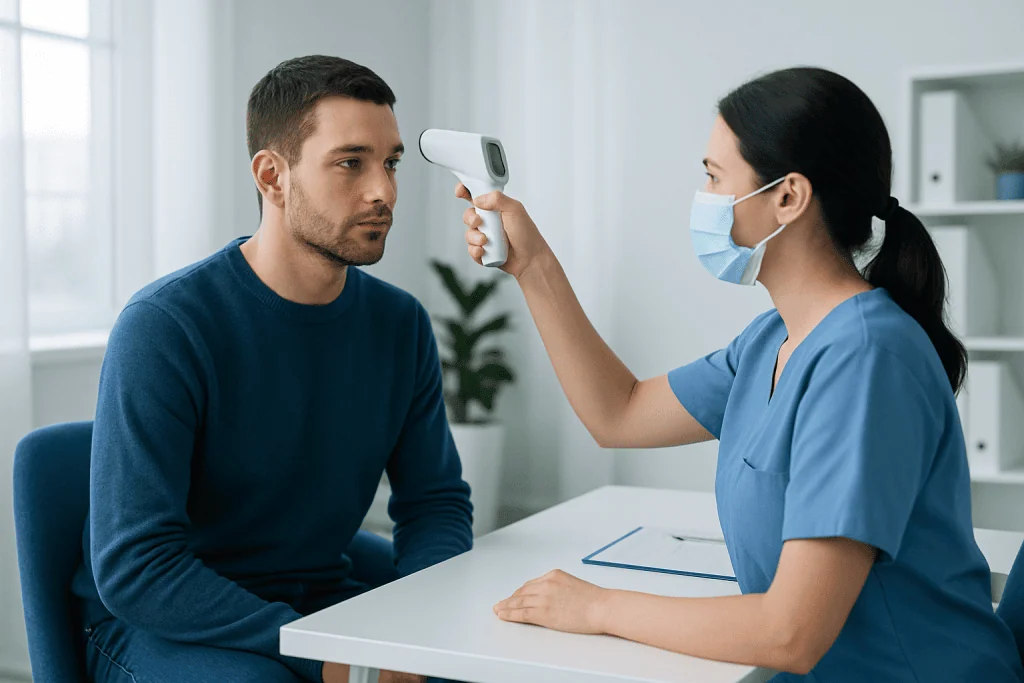
Temperature screening may be offered to adults and children entering certain settings, particularly when respiratory viruses are circulating or when an organization’s infection-control policy requires it. Most people can have a non-contact temperature check safely. It does not involve radiation, needles, medicines or recovery time.
Before screening, a person may be asked whether they have symptoms such as fever, chills, cough, sore throat, blocked or runny nose, new loss of taste or smell, unusual fatigue, headache, body aches, nausea or diarrhea. They may also be asked about recent close contact with someone who has COVID-19. These questions help place the temperature result in context.
During the procedure, staff may ask the person to remove a hat, move hair away from the forehead or wait indoors for a few minutes after coming in from extreme weather. A device then measures temperature. If the reading is raised, the check may be repeated with the same device or confirmed with a different thermometer.
There is no recovery period after screening. A normal result generally allows the person to continue with the setting’s usual rules, but they should still avoid close contact with others and seek testing if they feel unwell or have had a meaningful exposure. A high temperature may mean postponing non-urgent activities until the cause is clearer.
What temperature is considered a fever for COVID-19?
For COVID-19, fever is commonly considered a temperature of 38°C (100.4°F) or higher when measured orally. However, the exact reading can differ depending on where and how temperature is measured. Ear, forehead and armpit readings may not match oral readings precisely, and healthcare organizations may use different thresholds for screening.
A person can have COVID-19 with a temperature below 38°C (100.4°F), or with no fever at all. Conversely, a fever does not specifically indicate COVID-19; influenza, other respiratory viruses, urinary infections and inflammatory conditions are among many possible causes. Symptoms and testing are therefore more informative than temperature alone.
People should follow local advice and their clinician’s instructions, especially if they are older, pregnant, immunocompromised or living with chronic heart, lung, kidney or immune conditions. For infants and young children, temperature concerns should be discussed promptly with a qualified healthcare professional because age-specific guidance applies.
How to read COVID test results and when results turn positive
How to read COVID test results? A positive molecular test, such as a PCR or other nucleic acid amplification test, generally means that SARS-CoV-2 genetic material was detected and the person should follow current public-health and clinical advice. A positive rapid antigen test is also meaningful, particularly in someone with symptoms or a known exposure. Results should be considered alongside the test instructions, symptoms and timing.
A negative test means the virus was not detected in that sample at that time. It does not always exclude infection. A sample collected very early after exposure, taken incorrectly, or tested when viral levels are low can produce a negative result despite infection. People with symptoms may be advised to repeat an antigen test after 48 hours or to discuss molecular testing with a clinician, depending on local guidance.
When do COVID results show positive? Test timing varies between individuals. Molecular tests can become positive earlier in an infection than antigen tests, sometimes before symptoms begin. Antigen tests are more likely to turn positive when viral levels are higher, often around the start of symptoms, but they may be negative during the earliest stages.
If symptoms develop after a negative result, or if a close exposure occurred recently, repeating testing at the recommended interval can improve detection. People should use only in-date tests, follow the sampling instructions exactly and consult a clinician if symptoms are significant, persistent or worsening. More information about the illness is available in COVID-19 guidance.
Benefits, limits and practical self-care after screening
The main benefit of coronavirus temperature screening is speed. It may identify someone with a fever before they enter a shared environment, allowing time for a repeat check, rest, testing or medical advice. It is non-invasive and generally comfortable, making it practical for many settings.
Its limitations are equally important. A person may have COVID-19 without fever, may temporarily have a normal reading after taking fever-reducing medicine, or may have an inaccurate forehead result because of environmental conditions. Screening also cannot determine whether someone is contagious, how severe their illness may become or which virus is responsible.
After a raised reading, it is sensible to rest, drink fluids regularly and monitor symptoms. Avoid attending crowded indoor settings while feverish or otherwise unwell, particularly around people at higher risk of severe infection. If testing is appropriate, follow the instructions for the test and local recommendations on reducing spread.
Routine self-care should not replace medical assessment for concerning symptoms or for people at increased risk of complications. Acibadem International’s multidisciplinary specialists and JCI-accredited hospitals can assess respiratory symptoms and support international patients who need evaluation or treatment planning.
Am I still contagious if I test negative after having COVID?
Am I still contagious if I test negative after having COVID? A negative test after a recent COVID-19 infection usually suggests that the amount of virus in the sample is lower, but it cannot provide an absolute guarantee that a person is no longer contagious. The answer depends on the type of test, how long it has been since symptoms began, whether fever has resolved and whether symptoms are improving.
A negative rapid antigen test is generally reassuring, especially when repeated according to test instructions. However, people should still follow the current guidance in their location and take extra care around people who are older, immunocompromised or medically vulnerable. Wearing a well-fitting mask in shared indoor spaces and improving ventilation may reduce the chance of passing on respiratory viruses during recovery.
People who remain feverish, feel progressively worse or have substantial symptoms should not rely on a single negative result to make decisions about close contact. A healthcare professional can advise on repeat testing, alternative diagnoses and a safe return to work, school, travel or caregiving responsibilities.
When to seek medical care
Medical advice is appropriate for fever or respiratory symptoms that are severe, persistent, worsening, or difficult to manage at home. It is particularly important for people at higher risk of serious illness, including older adults, pregnant people and those with significant chronic medical conditions or weakened immunity. Early assessment may also be important because some treatments for COVID-19 are time-sensitive and depend on individual eligibility.
Urgent medical care is needed for trouble breathing, persistent chest pain or pressure, new confusion, inability to stay awake, signs of dehydration, or blue, gray or unusually pale lips, face or skin. In an emergency, local emergency services should be contacted rather than traveling alone to a clinic.
For mild symptoms, a clinician can help determine whether testing, monitoring or other care is needed. A temperature reading is useful information to share, along with the measurement method, the time it was taken, symptom onset, known exposures and any test results.
Frequently asked questions
Can a temperature check detect COVID-19?
No. A temperature check can identify fever, which may occur with COVID-19, but it cannot diagnose the infection. Many people with COVID-19 do not develop fever, and fever can have many other causes.
Should a high forehead temperature be checked again?
Yes, an unexpectedly high forehead reading is often repeated after the person has rested indoors briefly. A contact or ear thermometer may be used to confirm the result, depending on the setting and available equipment.
Can fever-reducing medicine affect temperature screening?
Yes. Medicines used to lower fever can temporarily reduce body temperature and may make screening less likely to detect fever. They do not rule out COVID-19 or other infections, so symptoms and exposures still matter.
Does a negative antigen test mean I do not have COVID-19?
Not always. Antigen tests can be negative early in infection or when the viral level in the sample is low. If symptoms continue or there has been a recent exposure, repeat testing or medical advice may be appropriate.
How long should I wait to test after a COVID-19 exposure?
The best timing depends on the test type, local recommendations and whether symptoms are present. Testing too soon can miss infection, so people should follow public-health guidance and repeat an antigen test when advised.
What should I do if I have a fever but a negative COVID test?
Rest, drink fluids and monitor symptoms, while considering other possible causes of fever. If symptoms are persistent, worsening or concerning, or if the person is at higher risk of complications, they should contact a healthcare professional.
References
- World Health Organization
- Centers for Disease Control and Prevention
- European Centre for Disease Prevention and Control
- U.S. Food and Drug Administration
- National Health Service
This article is for general information only and is not a substitute for professional medical advice. Please consult a qualified doctor about your individual situation.
Explore treatments in Turkey — costs, top hospitals & a free quote
JCI-accredited · board-certified surgeons · reply within 24h
Add us as a Preferred Source to see more of our trusted health content across Google Search, AI Overviews and Discover.